Miao Ziwei, Yu Fei, Ren Yahao, Yang Jun
Department of Developmental Cell Biology, Key Lab of Cell Biology, Ministry of Public Health, Key Laboratory of Medical Cell Biology, Ministry of Education, College of Basic Science, China Medical University, No. 77 Puhe Road, Shenyang North New Area, Shenyang 110122, China.
Department of Nutrition and Food Hygiene, School of Public Health, China Medical University, No. 77 Puhe Road, Shenyang North New Area, Shenyang 110122, China.
Int J Mol Sci. 2017 Jan 4;18(1):72. doi: 10.3390/ijms18010072.
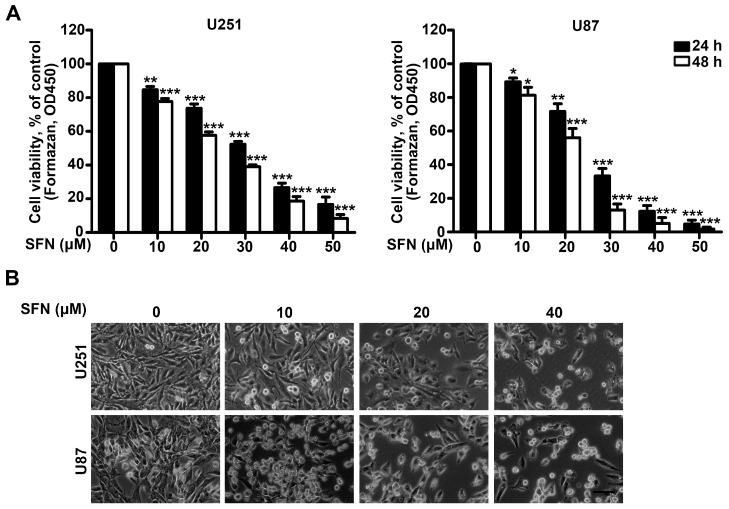
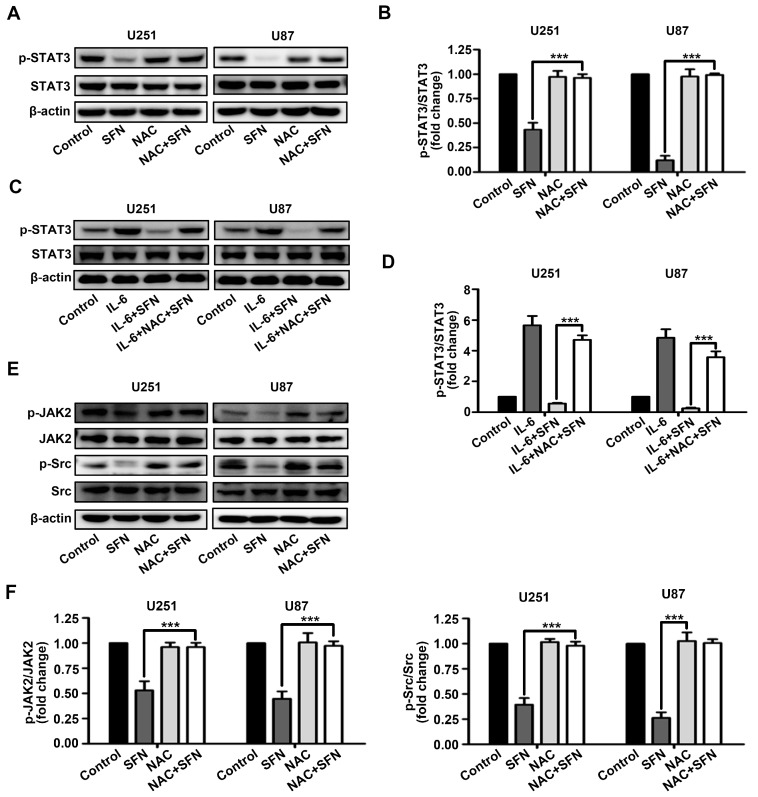
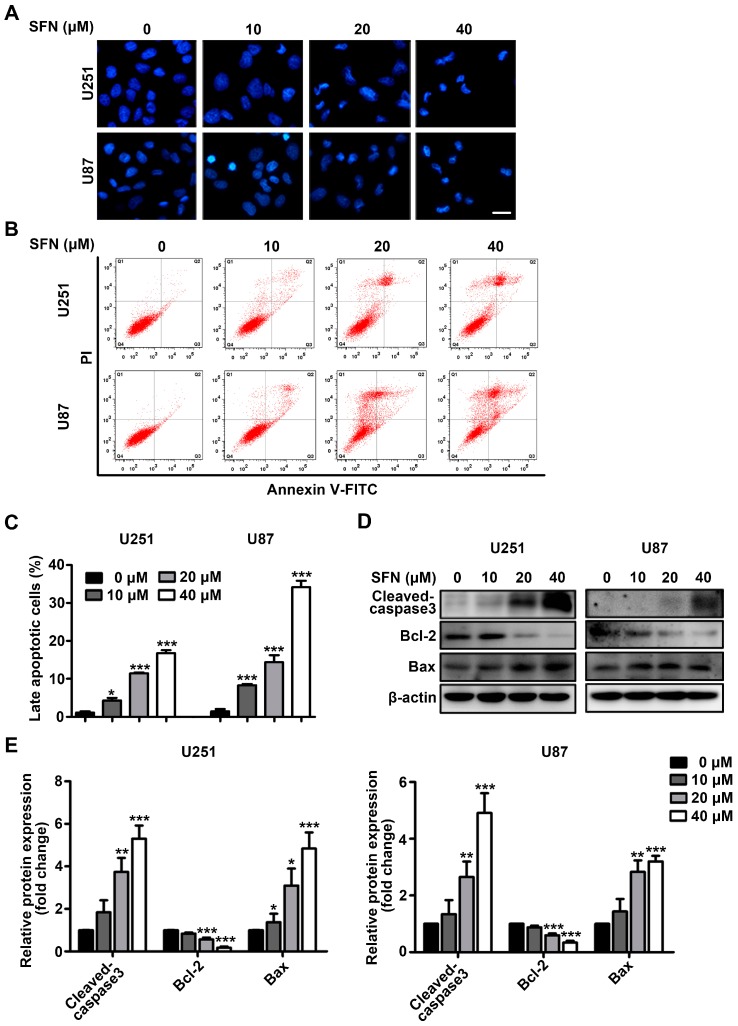
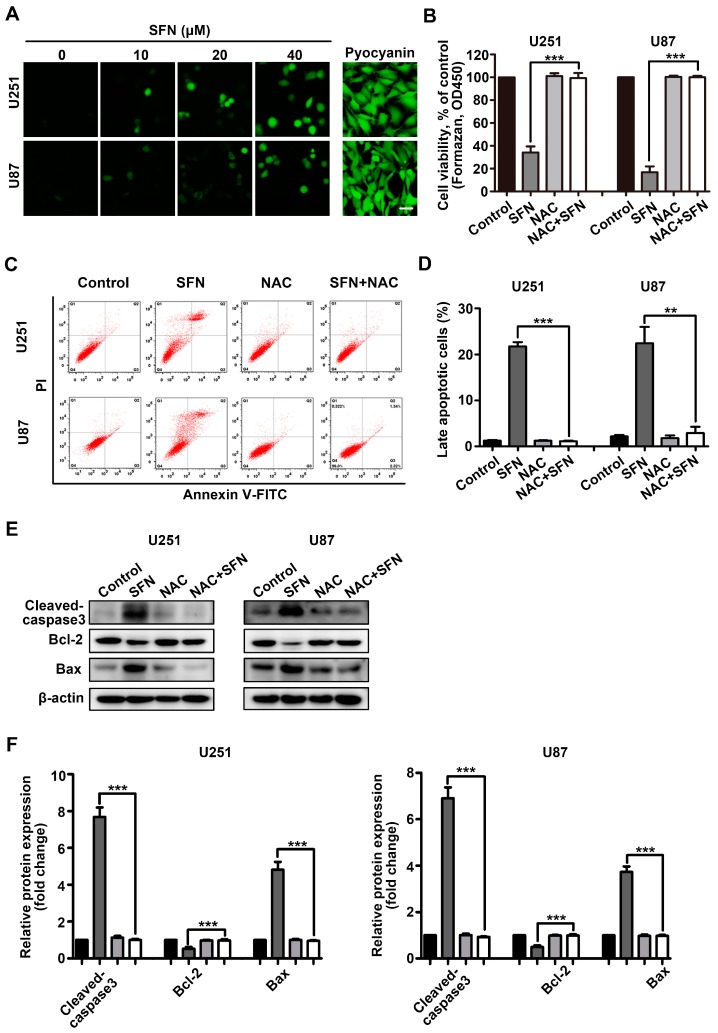
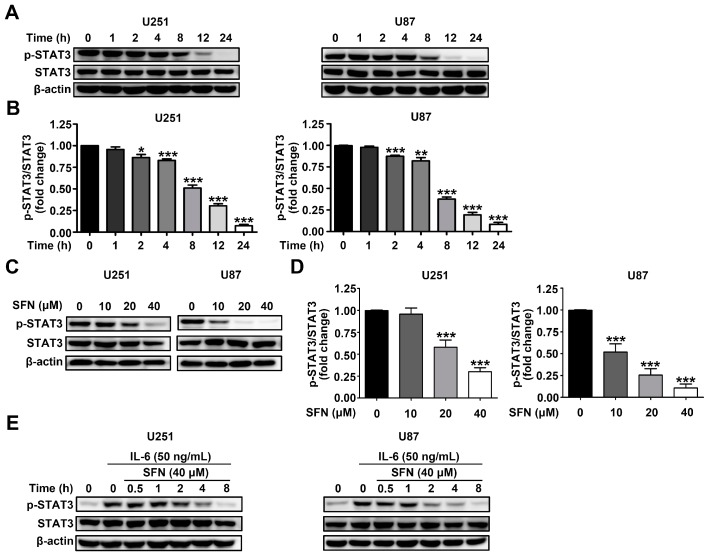
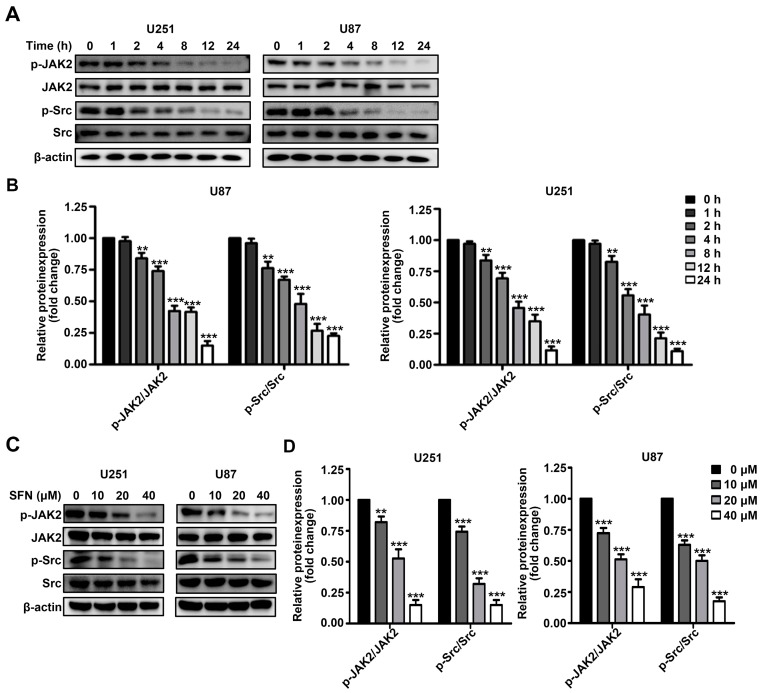
d,l-Sulforaphane (SFN), a synthetic analogue of broccoli-derived isomer l-SFN, exerts cytotoxic effects on multiple tumor cell types through different mechanisms and is more potent than the l-isomer at inhibiting cancer growth. However, the means by which SFN impairs glioblastoma (GBM) cells remains poorly understood. In this study, we investigated the anti-cancer effect of SFN in GBM cells and determined the underlying molecular mechanisms. Cell viability assays, flow cytometry, immunofluorescence, and Western blot results revealed that SFN could induced apoptosis of GBM cells in a dose- and time-dependent manner, via up-regulation of caspase-3 and Bax, and down-regulation of Bcl-2. Mechanistically, SFN treatment led to increase the intracellular reactive oxygen species (ROS) level in GBM cells. Meanwhile, SFN also suppressed both constitutive and IL-6-induced phosphorylation of STAT3, and the activation of upstream JAK2 and Src tyrosine kinases, dose- and time-dependently. Moreover, blockage of ROS production by using the ROS inhibitor -acetyl-l-cysteine totally reversed SFN-mediated down-regulation of JAK2/Src-STAT3 signaling activation and the subsequent effects on apoptosis by blocking the induction of apoptosis-related genes in GBM cells. Taken together, our data suggests that SFN induces apoptosis in GBM cells via ROS-dependent inactivation of STAT3 phosphorylation. These findings motivate further evaluation of SFN as a cancer chemopreventive agent in GBM treatment.
消旋萝卜硫素(SFN)是西兰花衍生的异构体左旋萝卜硫素的合成类似物,通过不同机制对多种肿瘤细胞类型发挥细胞毒性作用,在抑制癌症生长方面比左旋异构体更有效。然而,SFN损害胶质母细胞瘤(GBM)细胞的方式仍知之甚少。在本研究中,我们研究了SFN对GBM细胞的抗癌作用,并确定了潜在的分子机制。细胞活力测定、流式细胞术、免疫荧光和蛋白质印迹结果显示,SFN可通过上调半胱天冬酶-3和Bax以及下调Bcl-2,以剂量和时间依赖性方式诱导GBM细胞凋亡。从机制上讲,SFN处理导致GBM细胞内活性氧(ROS)水平升高。同时,SFN还剂量和时间依赖性地抑制组成型和IL-6诱导的STAT3磷酸化以及上游JAK2和Src酪氨酸激酶的激活。此外,使用ROS抑制剂乙酰半胱氨酸阻断ROS产生,通过阻断GBM细胞中凋亡相关基因的诱导,完全逆转了SFN介导的JAK2/Src-STAT3信号激活下调以及随后对凋亡的影响。综上所述,我们的数据表明,SFN通过ROS依赖性失活STAT3磷酸化诱导GBM细胞凋亡。这些发现促使人们进一步评估SFN作为GBM治疗中的癌症化学预防剂。