Ullah Abid, Sun Heng, Yang Xiyan, Zhang Xianlong
National Key Laboratory of Crop Genetic Improvement, Huazhong Agricultural University, Wuhan, Hubei, China.
Plant Biotechnol J. 2017 Mar;15(3):271-284. doi: 10.1111/pbi.12688.
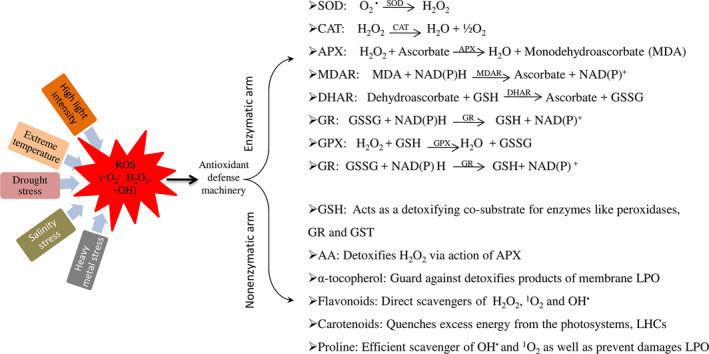
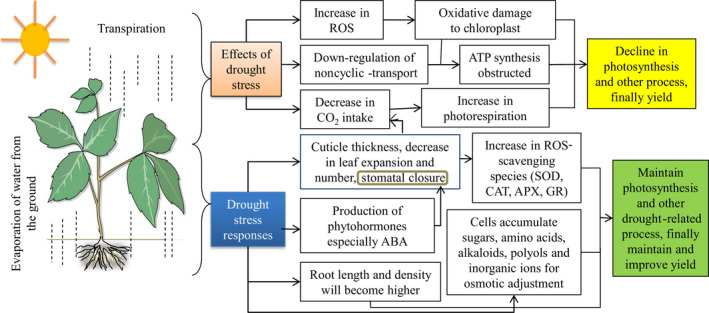
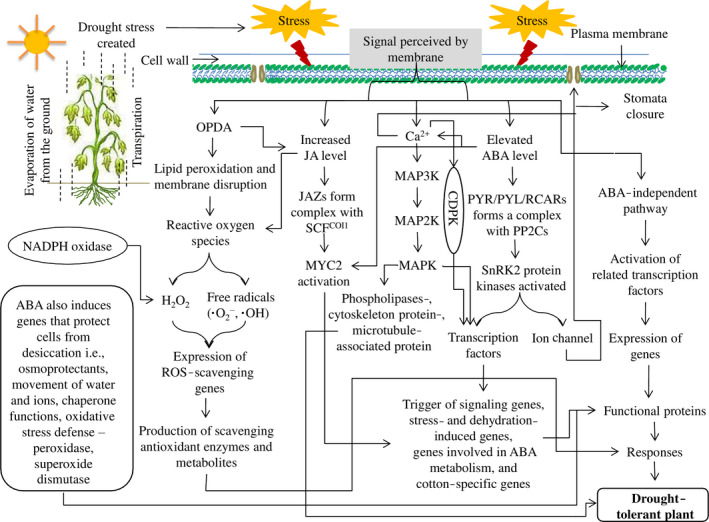
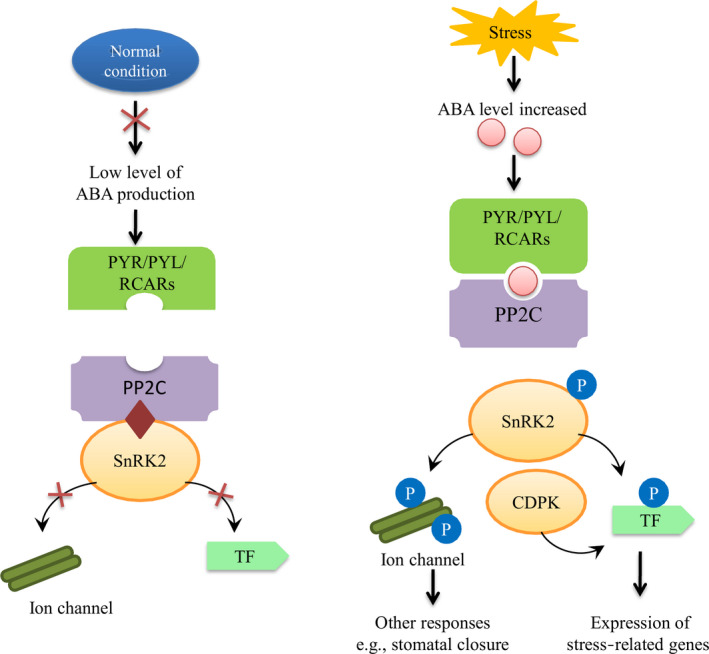
The growth and yield of many crops, including cotton, are affected by water deficit. Cotton has evolved drought specific as well as general morpho-physiological, biochemical and molecular responses to drought stress, which are discussed in this review. The key physiological responses against drought stress in cotton, including stomata closing, root development, cellular adaptations, photosynthesis, abscisic acid (ABA) and jasmonic acid (JA) production and reactive oxygen species (ROS) scavenging, have been identified by researchers. Drought stress induces the expression of stress-related transcription factors and genes, such as ROS scavenging, ABA or mitogen-activated protein kinases (MAPK) signalling genes, which activate various drought-related pathways to induce tolerance in the plant. It is crucial to elucidate and induce drought-tolerant traits via quantitative trait loci (QTL) analysis, transgenic approaches and exogenous application of substances. The current review article highlights the natural as well as engineered drought tolerance strategies in cotton.
包括棉花在内的许多作物的生长和产量都受到水分亏缺的影响。棉花已经进化出针对干旱的特定以及一般形态生理、生化和分子反应来应对干旱胁迫,本文对此进行了讨论。研究人员已经确定了棉花应对干旱胁迫的关键生理反应,包括气孔关闭、根系发育、细胞适应、光合作用、脱落酸(ABA)和茉莉酸(JA)的产生以及活性氧(ROS)清除。干旱胁迫诱导与胁迫相关的转录因子和基因的表达,如ROS清除、ABA或丝裂原活化蛋白激酶(MAPK)信号基因,这些基因激活各种与干旱相关的途径以诱导植物产生耐受性。通过数量性状位点(QTL)分析、转基因方法和外源物质应用来阐明和诱导耐旱性状至关重要。当前的综述文章强调了棉花中的天然以及工程耐旱策略。