Popitsch Niko, Bilusic Ivana, Rescheneder Philipp, Schroeder Renée, Lybecker Meghan
Wellcome Trust Centre for Human Genetics, University of Oxford, Oxford, UK.
Department of Biochemistry and Cell Biology, Max F. Perutz Laboratories, University of Vienna, Vienna, Austria.
BMC Genomics. 2017 Jan 5;18(1):28. doi: 10.1186/s12864-016-3398-3.
Transmission of Borrelia burgdorferi from its tick vector to a vertebrate host requires extensive reprogramming of gene expression. Small regulatory RNAs (sRNA) have emerged in the last decade as important regulators of bacterial gene expression. Despite the widespread observation of sRNA-mediated gene regulation, only one sRNA has been characterized in the Lyme disease spirochete B. burgdorferi. We employed an sRNA-specific deep-sequencing approach to identify the small RNA transcriptome of B. burgdorferi at both 23 °C and 37 °C, which mimics in vitro the transmission from the tick vector to the mammalian host.
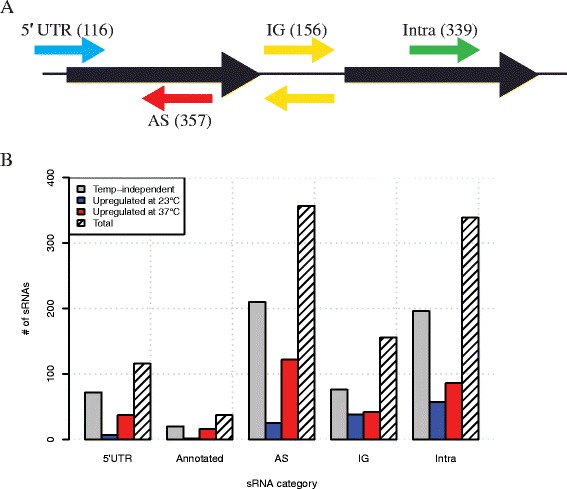
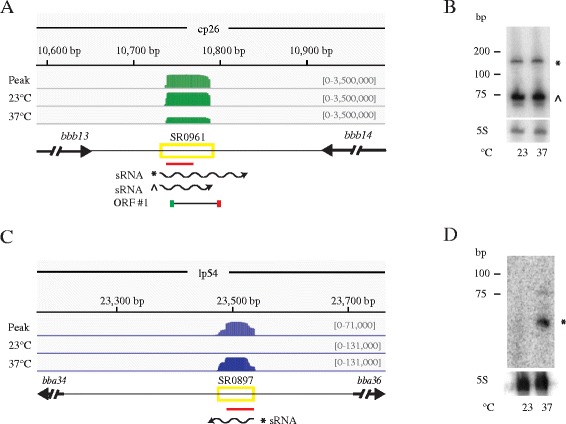
We identified over 1000 sRNAs in B. burgdorferi revealing large amounts of antisense and intragenic sRNAs, as well as characteristic intergenic and 5' UTR-associated sRNAs. A large fraction of the novel sRNAs (43%) are temperature-dependent and differentially expressed at the two temperatures, suggesting a role in gene regulation for adaptation during transmission. In addition, many genes important for maintenance of Borrelia during its enzootic cycle are associated with antisense RNAs or 5' UTR sRNAs. RNA-seq data were validated for twenty-two of the sRNAs via Northern blot analyses.
Our study demonstrates that sRNAs are abundant and differentially expressed by environmental conditions suggesting that gene regulation via sRNAs is a common mechanism utilized in B. burgdorferi. In addition, the identification of antisense and intragenic sRNAs impacts the broadly used loss-of-function genetic approach used to study gene function and increases the coding potential of a small genome. To facilitate access to the analyzed RNA-seq data we have set-up a website at http://www.cibiv.at/~niko/bbdb/ that includes a UCSC browser track hub. By clicking on the respective link, researchers can interactively inspect the data in the UCSC genome browser (Kent et al., Genome Res 12:996-1006, 2002).
伯氏疏螺旋体从其蜱载体传播至脊椎动物宿主需要基因表达的广泛重编程。在过去十年中,小调节RNA(sRNA)已成为细菌基因表达的重要调节因子。尽管sRNA介导的基因调控已被广泛观察到,但在莱姆病螺旋体伯氏疏螺旋体中仅鉴定出一种sRNA。我们采用sRNA特异性深度测序方法,在23°C和37°C下鉴定伯氏疏螺旋体的小RNA转录组,这在体外模拟了从蜱载体到哺乳动物宿主的传播。
我们在伯氏疏螺旋体中鉴定出1000多种sRNA,揭示了大量的反义sRNA和基因内sRNA,以及典型的基因间sRNA和5'UTR相关sRNA。很大一部分新的sRNA(43%)是温度依赖性的,并且在两种温度下差异表达,这表明其在传播过程中的适应基因调控中发挥作用。此外,许多对伯氏疏螺旋体在其生态循环中维持生存很重要的基因与反义RNA或5'UTR sRNA相关。通过Northern印迹分析对22种sRNA的RNA-seq数据进行了验证。
我们的研究表明,sRNA丰富且受环境条件差异表达,这表明通过sRNA进行基因调控是伯氏疏螺旋体中常用的机制。此外,反义sRNA和基因内sRNA的鉴定影响了广泛用于研究基因功能的功能丧失遗传方法,并增加了小基因组编码潜力。为便于获取分析的RNA-seq数据,我们在http://www.cibiv.at/~niko/bbdb/建立了一个网站,其中包括一个UCSC浏览器轨道中心。通过点击相应链接,研究人员可以在UCSC基因组浏览器中交互式检查数据(Kent等人,《基因组研究》12:996 - 1006,2002)。