Biancucci Marco, Dolores Jazel S, Wong Jennifer, Grimshaw Sarah, Anderson Wayne F, Satchell Karla J F, Kwon Keehwan
Department of Microbiology-Immunology, Feinberg School of Medicine, Northwestern University, 303 E. Chicago Avenue, Ward 6-205, Chicago, IL, 60611, USA.
Present address: Northwestern Memorial Hospital, Chicago, IL, USA.
BMC Biotechnol. 2017 Jan 5;17(1):1. doi: 10.1186/s12896-016-0323-4.
Recombinant protein purification is a crucial step for biochemistry and structural biology fields. Rapid robust purification methods utilize various peptide or protein tags fused to the target protein for affinity purification using corresponding matrices and to enhance solubility. However, affinity/solubility-tags often need to be removed in order to conduct functional and structural studies, adding complexities to purification protocols.
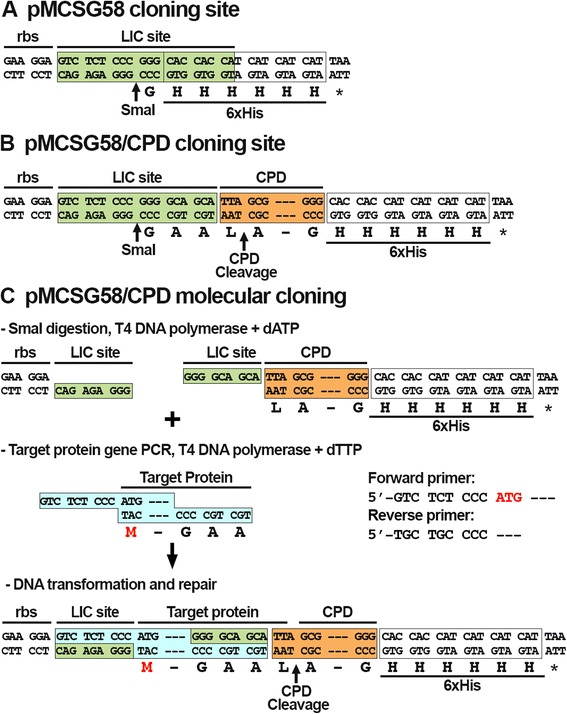
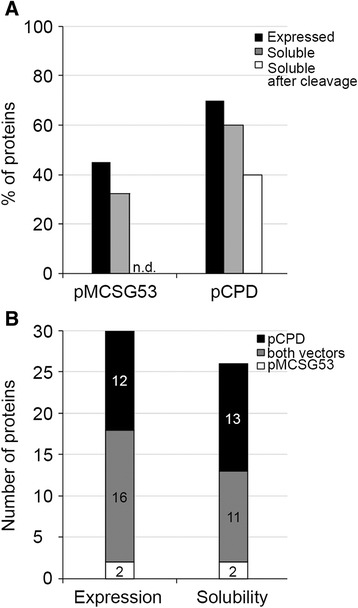
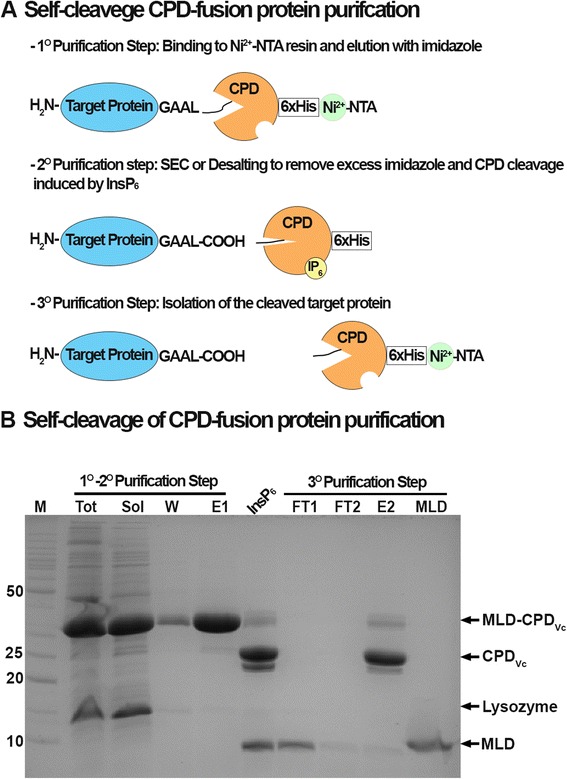
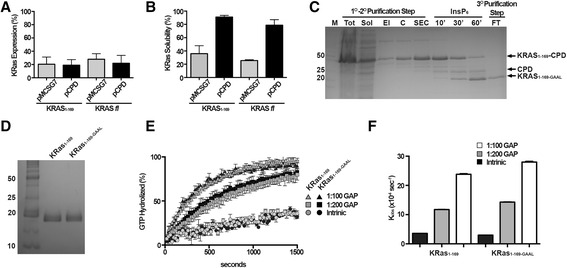
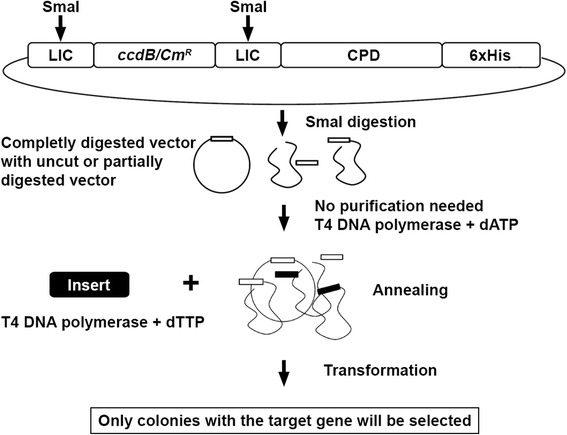
In this work, the Vibrio cholerae MARTX toxin Cysteine Protease Domain (CPD) was inserted in a ligation-independent cloning (LIC) vector to create a C-terminal 6xHis-tagged inducible autoprocessing enzyme tag, called "the CPD-tag". The pCPD and alternative pCPD/ccdB cloning vectors allow for easy insertion of DNA and expression of the target protein fused to the CPD-tag, which is removed at the end of the purification step by addition of the inexpensive small molecule inositol hexakisphosphate to induce CPD autoprocessing. This process is demonstrated using a small bacterial membrane localization domain and for high yield purification of the eukaryotic small GTPase KRas. Subsequently, pCPD was tested with 40 proteins or sub-domains selected from a high throughput crystallization pipeline.
pCPD vectors are easily used LIC compatible vectors for expression of recombinant proteins with a C-terminal CPD/6xHis-tag. Although intended only as a strategy for rapid tag removal, this pilot study revealed the CPD-tag may also increase expression and solubility of some recombinant proteins.
重组蛋白纯化是生物化学和结构生物学领域的关键步骤。快速高效的纯化方法利用与目标蛋白融合的各种肽或蛋白标签,通过相应的基质进行亲和纯化并提高溶解度。然而,为了进行功能和结构研究,亲和/溶解度标签通常需要去除,这增加了纯化方案的复杂性。
在这项工作中,霍乱弧菌MARTX毒素半胱氨酸蛋白酶结构域(CPD)被插入到一个不依赖连接的克隆(LIC)载体中,以创建一个C端带有6xHis标签的可诱导自加工酶标签,称为“CPD标签”。pCPD和替代的pCPD/ccdB克隆载体允许轻松插入DNA并表达与CPD标签融合的目标蛋白,在纯化步骤结束时,通过添加廉价的小分子肌醇六磷酸诱导CPD自加工来去除该标签。使用一个小的细菌膜定位结构域以及真核小GTP酶KRas的高产率纯化证明了这一过程。随后,用从高通量结晶流程中选择的40种蛋白质或亚结构域对pCPD进行了测试。
pCPD载体是易于使用的与LIC兼容的载体,用于表达带有C端CPD/6xHis标签的重组蛋白。尽管仅作为一种快速去除标签的策略,但这项初步研究表明CPD标签也可能提高一些重组蛋白的表达和溶解度。