Dixon-Clarke Sarah E, Shehata Saifeldin N, Krojer Tobias, Sharpe Timothy D, von Delft Frank, Sakamoto Kei, Bullock Alex N
Structural Genomics Consortium, University of Oxford, Old Road Campus, Roosevelt Drive, Oxford OX3 7DQ, U.K.
Nestlé Institute of Health Sciences SA, EPFL Innovation Park, bâtiment G, 1015 Lausanne, Switzerland.
Biochem J. 2017 Feb 20;474(5):699-713. doi: 10.1042/BCJ20160941.
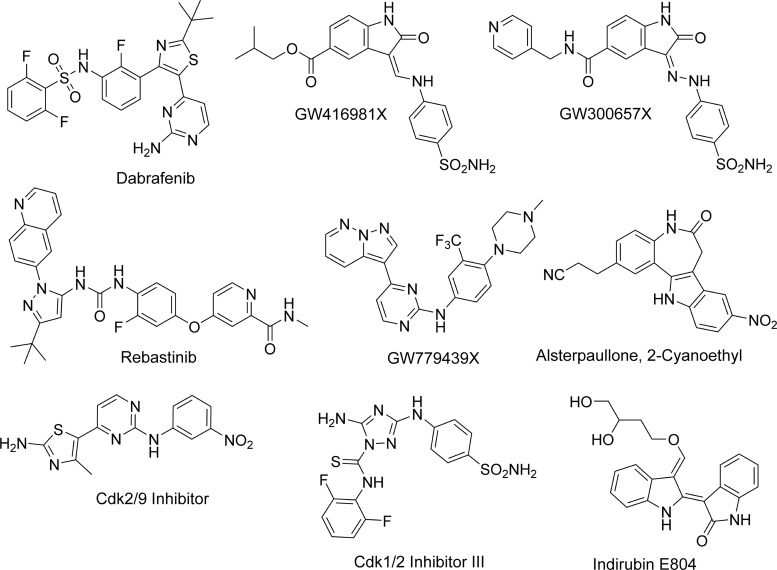
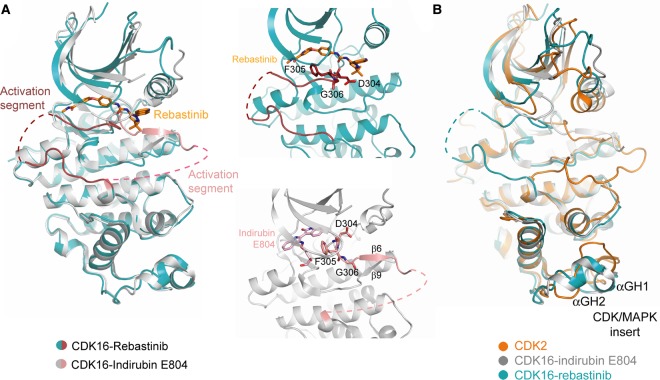
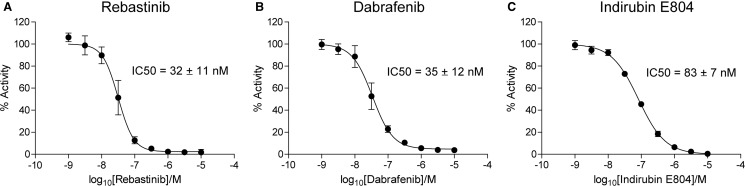
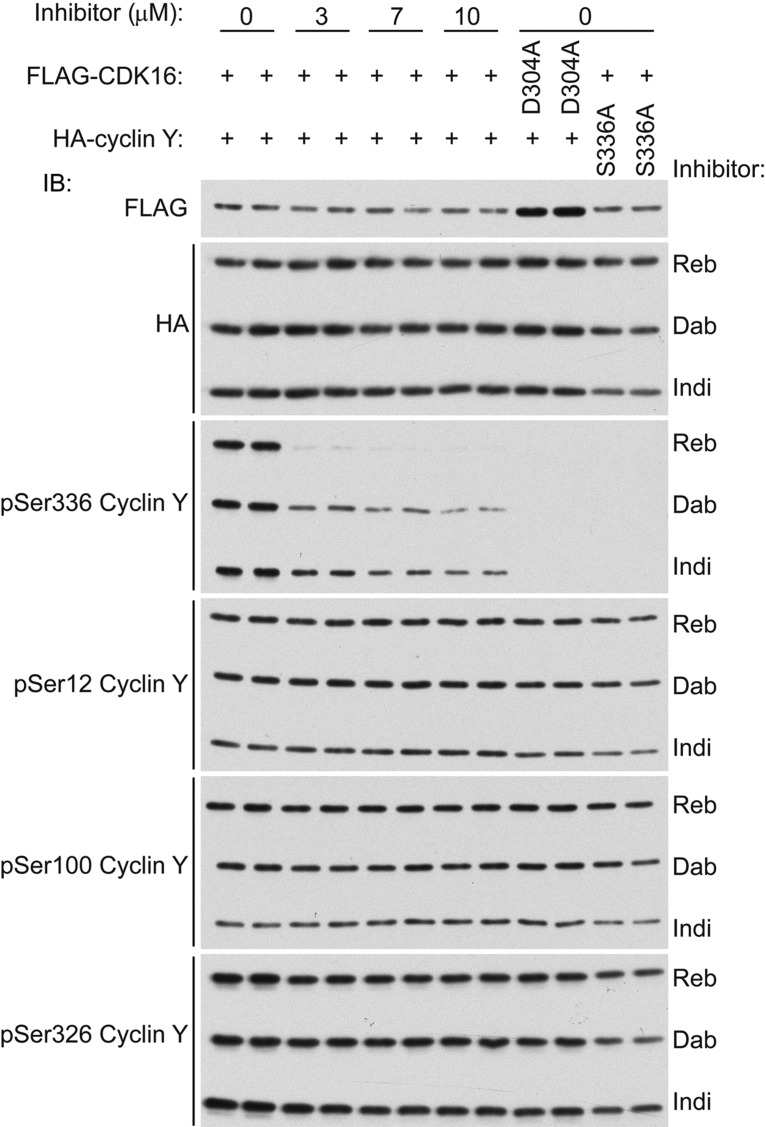
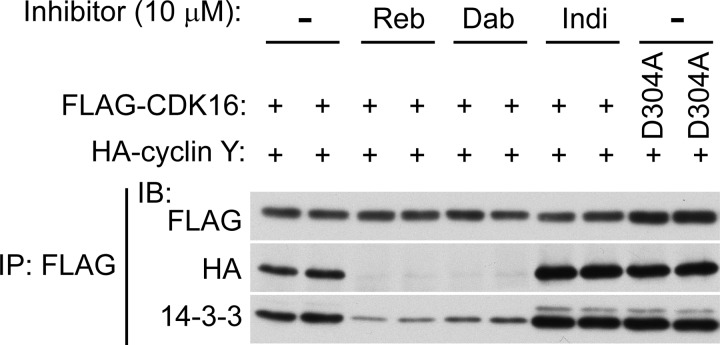
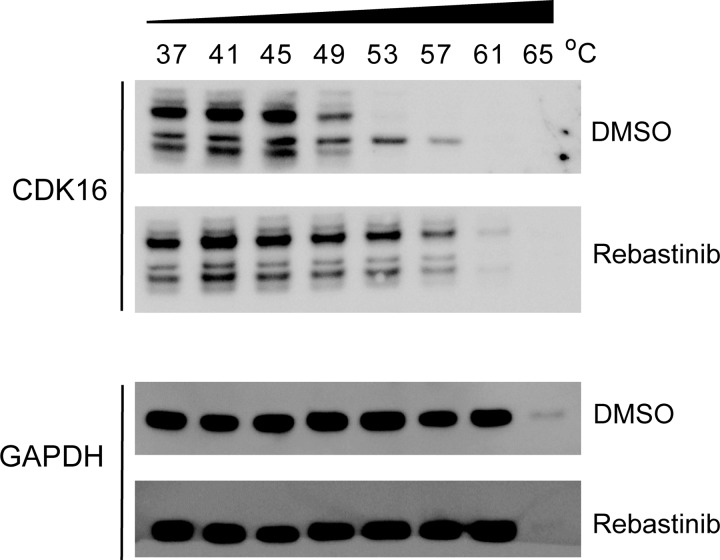
CDK16 (also known as PCTAIRE1 or PCTK1) is an atypical member of the cyclin-dependent kinase (CDK) family that has emerged as a key regulator of neurite outgrowth, vesicle trafficking and cancer cell proliferation. CDK16 is activated through binding to cyclin Y via a phosphorylation-dependent 14-3-3 interaction and has a unique consensus substrate phosphorylation motif compared with conventional CDKs. To elucidate the structure and inhibitor-binding properties of this atypical CDK, we screened the CDK16 kinase domain against different inhibitor libraries and determined the co-structures of identified hits. We discovered that the ATP-binding pocket of CDK16 can accommodate both type I and type II kinase inhibitors. The most potent CDK16 inhibitors revealed by cell-free and cell-based assays were the multitargeted cancer drugs dabrafenib and rebastinib. An inactive DFG-out binding conformation was confirmed by the first crystal structures of CDK16 in separate complexes with the inhibitors indirubin E804 and rebastinib, respectively. The structures revealed considerable conformational plasticity, suggesting that the isolated CDK16 kinase domain was relatively unstable in the absence of a cyclin partner. The unusual structural features and chemical scaffolds identified here hold promise for the development of more selective CDK16 inhibitors and provide opportunity to better characterise the role of CDK16 and its related CDK family members in various physiological and pathological contexts.
细胞周期蛋白依赖性激酶16(也称为PCTAIRE1或PCTK1)是细胞周期蛋白依赖性激酶(CDK)家族的一个非典型成员,已成为神经突生长、囊泡运输和癌细胞增殖的关键调节因子。CDK16通过与细胞周期蛋白Y结合,并经由磷酸化依赖性14-3-3相互作用而被激活,与传统的CDK相比,它具有独特的共有底物磷酸化基序。为了阐明这种非典型CDK的结构和抑制剂结合特性,我们针对不同的抑制剂文库筛选了CDK16激酶结构域,并确定了所鉴定活性化合物的共晶体结构。我们发现,CDK16的ATP结合口袋可以容纳I型和II型激酶抑制剂。无细胞和基于细胞的试验所揭示的最有效的CDK16抑制剂是多靶点抗癌药物达拉非尼和瑞巴替尼。分别与抑制剂靛玉红E804和瑞巴替尼形成的单独复合物中,CDK16的首批晶体结构证实了一种无活性的DFG-out结合构象。这些结构揭示了相当大的构象可塑性,表明在没有细胞周期蛋白伴侣的情况下,分离的CDK16激酶结构域相对不稳定。此处鉴定出的异常结构特征和化学支架为开发更具选择性的CDK16抑制剂带来了希望,并为更好地表征CDK16及其相关CDK家族成员在各种生理和病理情况下的作用提供了机会。