Li Melody M H, Lau Zerlina, Cheung Pamela, Aguilar Eduardo G, Schneider William M, Bozzacco Leonia, Molina Henrik, Buehler Eugen, Takaoka Akinori, Rice Charles M, Felsenfeld Dan P, MacDonald Margaret R
Laboratory of Virology and Infectious Disease, The Rockefeller University, New York, New York, United States of America.
Integrated Screening Core, Experimental Therapeutics Institute, Icahn School of Medicine at Mount Sinai, New York, New York, United States of America.
PLoS Pathog. 2017 Jan 6;13(1):e1006145. doi: 10.1371/journal.ppat.1006145. eCollection 2017 Jan.
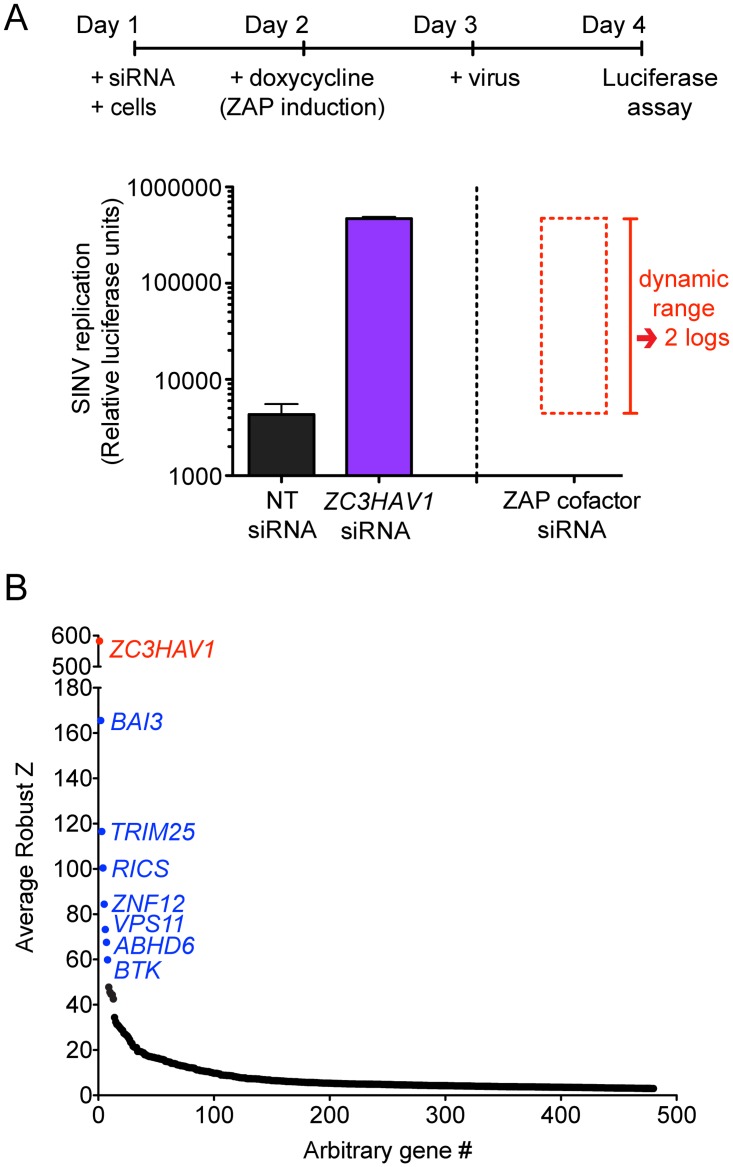
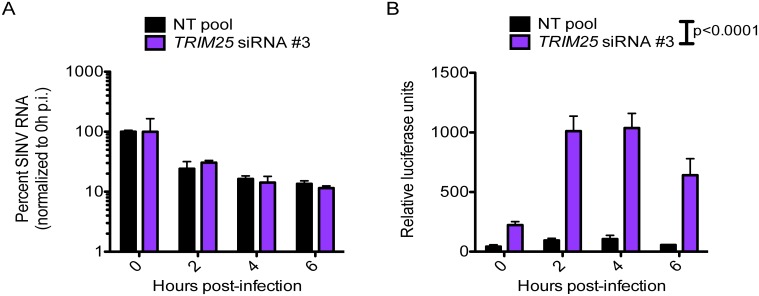
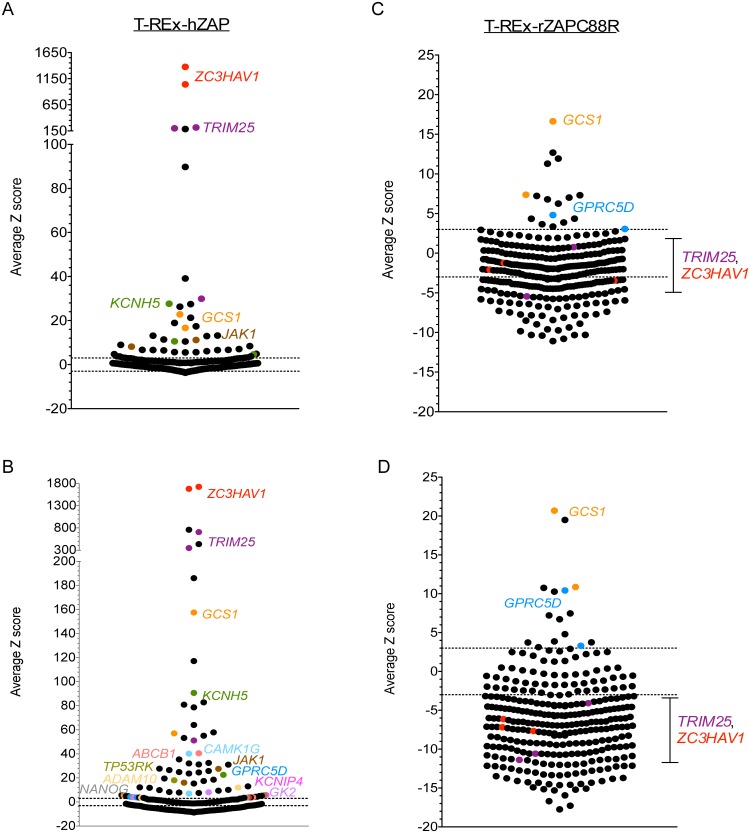
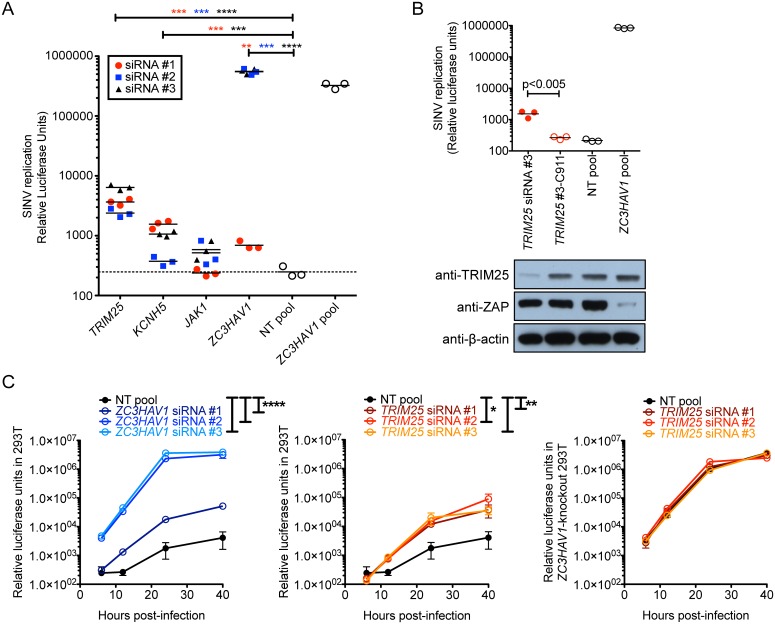
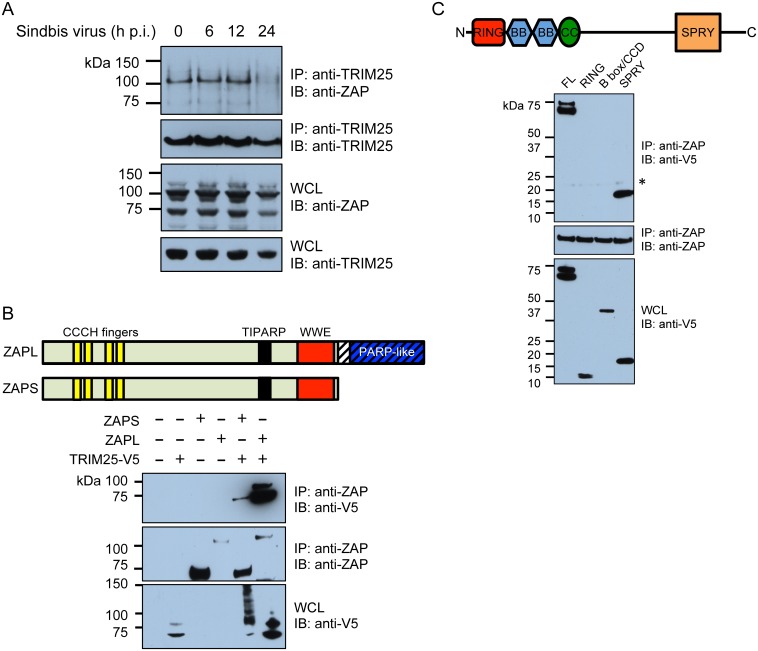
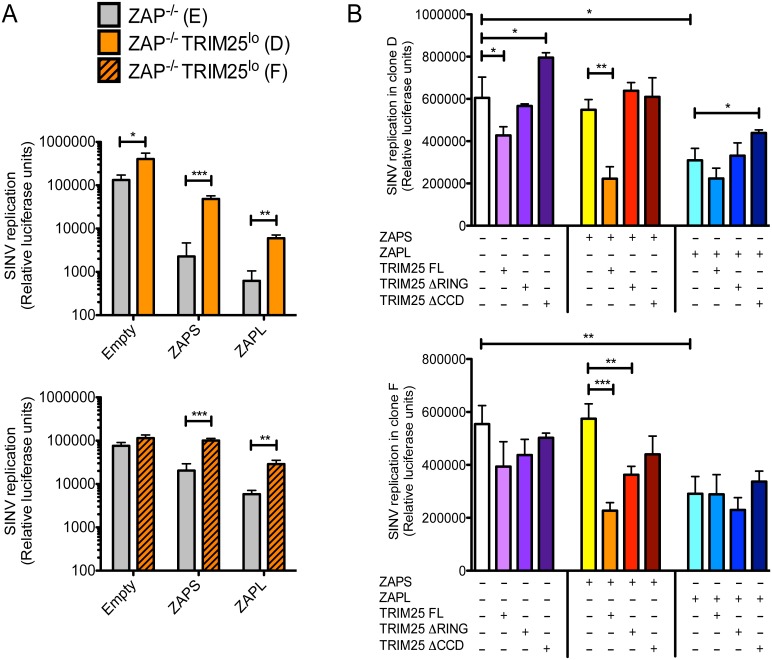
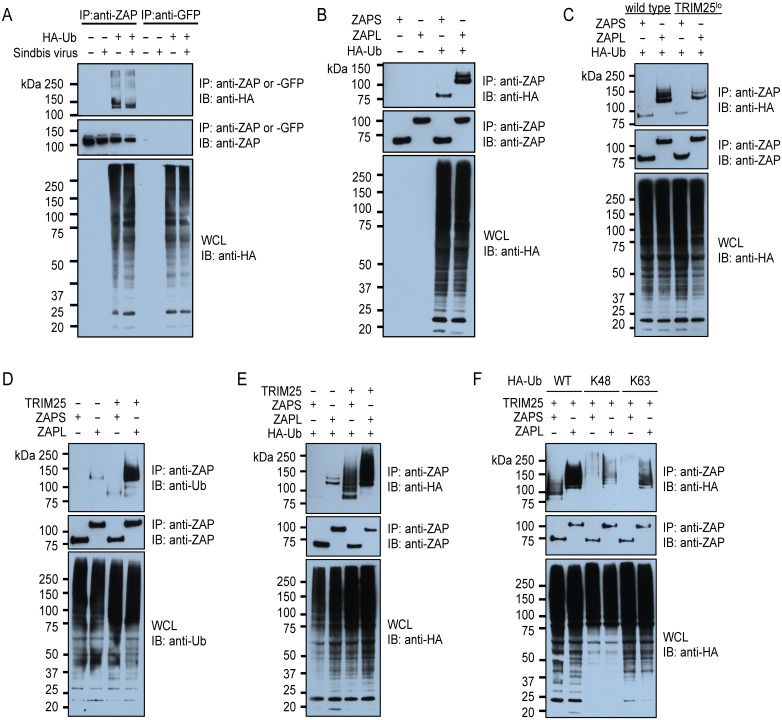
The host factor and interferon (IFN)-stimulated gene (ISG) product, zinc-finger antiviral protein (ZAP), inhibits a number of diverse viruses by usurping and intersecting with multiple cellular pathways. To elucidate its antiviral mechanism, we perform a loss-of-function genome-wide RNAi screen to identify cellular cofactors required for ZAP antiviral activity against the prototype alphavirus, Sindbis virus (SINV). In order to exclude off-target effects, we carry out stringent confirmatory assays to verify the top hits. Important ZAP-liaising partners identified include proteins involved in membrane ion permeability, type I IFN signaling, and post-translational protein modification. The factor contributing most to the antiviral function of ZAP is TRIM25, an E3 ubiquitin and ISG15 ligase. We demonstrate here that TRIM25 interacts with ZAP through the SPRY domain, and TRIM25 mutants lacking the RING or coiled coil domain fail to stimulate ZAP's antiviral activity, suggesting that both TRIM25 ligase activity and its ability to form oligomers are critical for its cofactor function. TRIM25 increases the modification of both the short and long ZAP isoforms by K48- and K63-linked polyubiquitin, although ubiquitination of ZAP does not directly affect its antiviral activity. However, TRIM25 is critical for ZAP's ability to inhibit translation of the incoming SINV genome. Taken together, these data uncover TRIM25 as a bona fide ZAP cofactor that leads to increased ZAP modification enhancing its translational inhibition activity.
宿主因子和干扰素(IFN)刺激基因(ISG)产物锌指抗病毒蛋白(ZAP)通过利用并交叉多种细胞途径来抑制多种不同的病毒。为阐明其抗病毒机制,我们进行了功能缺失的全基因组RNA干扰筛选,以鉴定ZAP针对甲型病毒原型辛德毕斯病毒(SINV)的抗病毒活性所需的细胞辅助因子。为排除脱靶效应,我们进行了严格的验证试验以核实筛选出的最显著结果。鉴定出的重要的与ZAP相互作用的伙伴包括参与膜离子通透性、I型干扰素信号传导和蛋白质翻译后修饰的蛋白质。对ZAP抗病毒功能贡献最大的因子是TRIM25,一种E3泛素和ISG15连接酶。我们在此证明TRIM25通过SPRY结构域与ZAP相互作用,并且缺乏RING或卷曲螺旋结构域的TRIM25突变体无法刺激ZAP的抗病毒活性,这表明TRIM25连接酶活性及其形成寡聚体的能力对其辅助因子功能至关重要。TRIM25增加了K48和K63连接的多聚泛素对ZAP短异构体和长异构体的修饰,尽管ZAP的泛素化并不直接影响其抗病毒活性。然而,TRIM25对于ZAP抑制传入的SINV基因组翻译的能力至关重要。综上所述,这些数据揭示TRIM25是一种真正的ZAP辅助因子,它导致ZAP修饰增加,增强其翻译抑制活性。