Hu Che-Ming Jack, Chien Chu-Yang, Liu Ming-Tsan, Fang Zih-Syun, Chang Sui-Yuan, Juang Rong-Huay, Chang Shih-Chung, Chen Hui-Wen
Institute of Biomedical Sciences, Academia Sinica, Taipei, Taiwan.
Research Center for Nanotechnology and Infectious Diseases, Taipei, Taiwan.
BMC Biotechnol. 2017 Jan 7;17(1):2. doi: 10.1186/s12896-016-0321-6.
Human infection with avian influenza A virus (H7N9) was first reported in China in March 2013. Since then, hundreds of cases have been confirmed showing severe symptoms with a high mortality rate. The virus was transmitted from avian species to humans and has spread to many neighboring areas, raising serious concerns over its pandemic potential. Towards containing the disease, the goal of this study is to prepare a virus-like particle (VLP) that consists of hemagglutinin (HA), neuraminidase (NA) and matrix protein 1 (M1) derived from the human isolate A/Taiwan/S02076/2013(H7N9) for potential vaccine development.
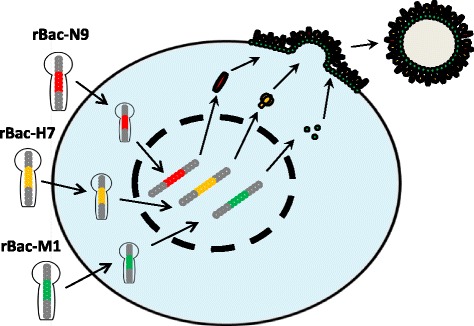
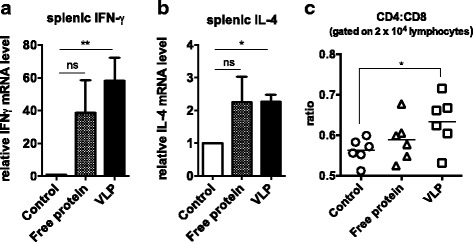
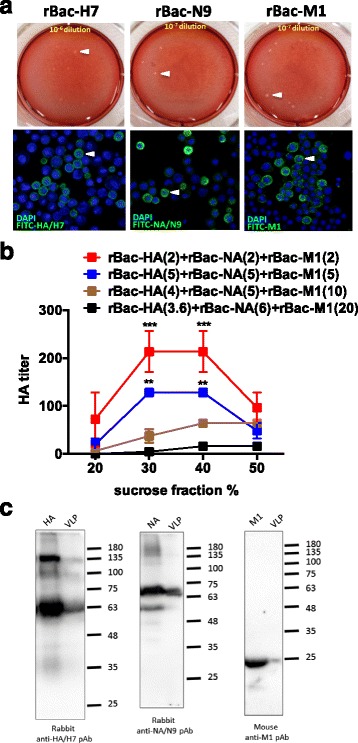
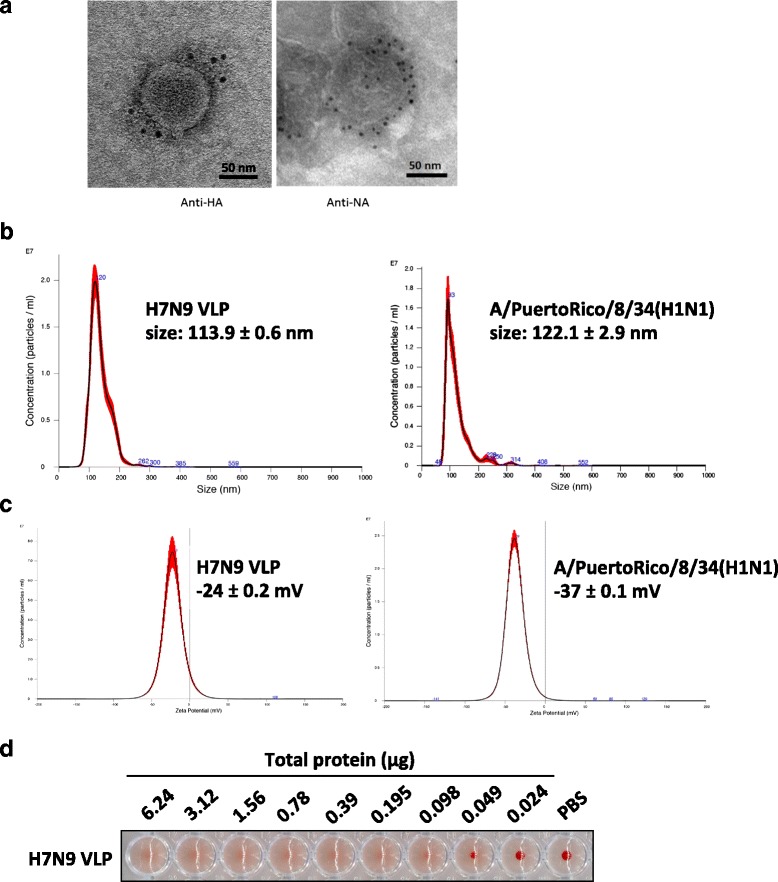
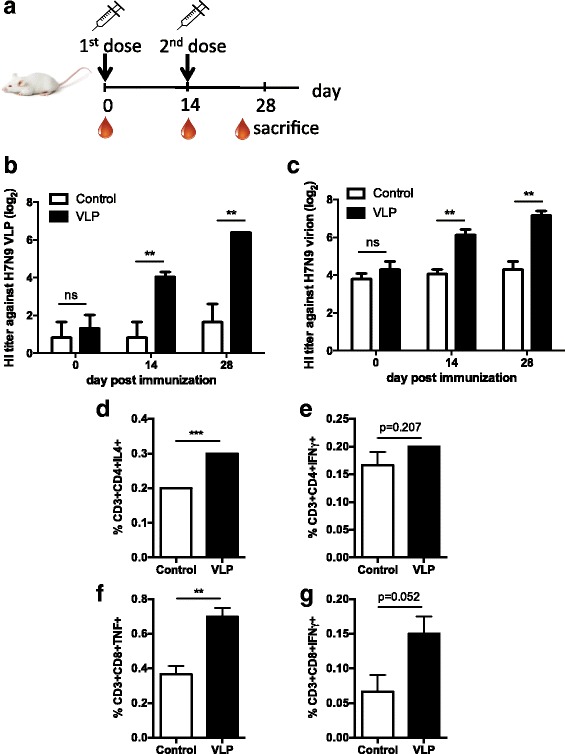
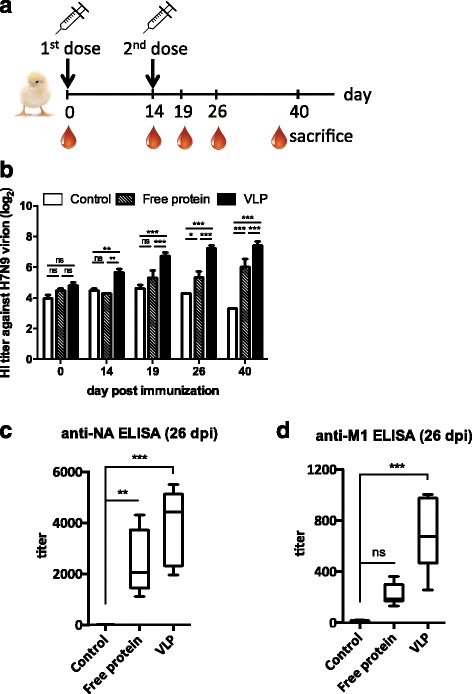
Full length HA, NA, and M1 protein genes were cloned and expressed using a baculoviral expression system, and the VLPs were generated by co-infecting insect cells with three respective recombinant baculoviruses. Nanoparticle tracking analysis and transmission electron microscopy were applied to verify the VLPs' structure and antigenicity, and the multiplicity of infection of the recombinant baculoviruses was adjusted to achieve the highest hemagglutination activity. In animal experiments, BALB/c mice and specific-pathogen-free chickens receiving the VLP immunization showed elevated hemagglutination inhibition serum titer and antibodies against NA and M1 proteins. In addition, examination of cellular immunity showed the VLP-immunized mice and chickens exhibited an increased splenic antigen-specific cytokines production.
The H7N9 VLPs possess desirable immunogenicity in vivo and may serve as a candidate for vaccine development against avian influenza A (H7N9) infection.
2013年3月中国首次报告人感染甲型禽流感病毒(H7N9)。自那时以来,已确诊数百例病例,这些病例表现出严重症状且死亡率很高。该病毒从禽类传播给人类,并已传播到许多邻近地区,引发了对其大流行潜力的严重担忧。为了控制这种疾病,本研究的目标是制备一种病毒样颗粒(VLP),其由源自人分离株A/台湾/S02076/2013(H7N9)的血凝素(HA)、神经氨酸酶(NA)和基质蛋白1(M1)组成,用于潜在的疫苗开发。
使用杆状病毒表达系统克隆并表达全长HA、NA和M1蛋白基因,并通过用三种各自的重组杆状病毒共感染昆虫细胞来产生VLP。应用纳米颗粒跟踪分析和透射电子显微镜来验证VLP的结构和抗原性,并调整重组杆状病毒的感染复数以实现最高的血凝活性。在动物实验中,接受VLP免疫的BALB/c小鼠和无特定病原体鸡显示出血凝抑制血清滴度升高以及针对NA和M1蛋白的抗体。此外,细胞免疫检查显示,接受VLP免疫的小鼠和鸡表现出脾脏抗原特异性细胞因子产生增加。
H7N9 VLP在体内具有理想的免疫原性,可作为抗甲型禽流感(H7N9)感染疫苗开发的候选物。