Institute of Neural and Sensory Physiology, Heinrich Heine University, D-40225 Düsseldorf, Germany.
Department of Gastroenterology, Hepatology and Infectious Diseases, Heinrich-Heine-University, D-40225 Düsseldorf, Germany.
Sci Rep. 2017 Jan 9;7:40190. doi: 10.1038/srep40190.
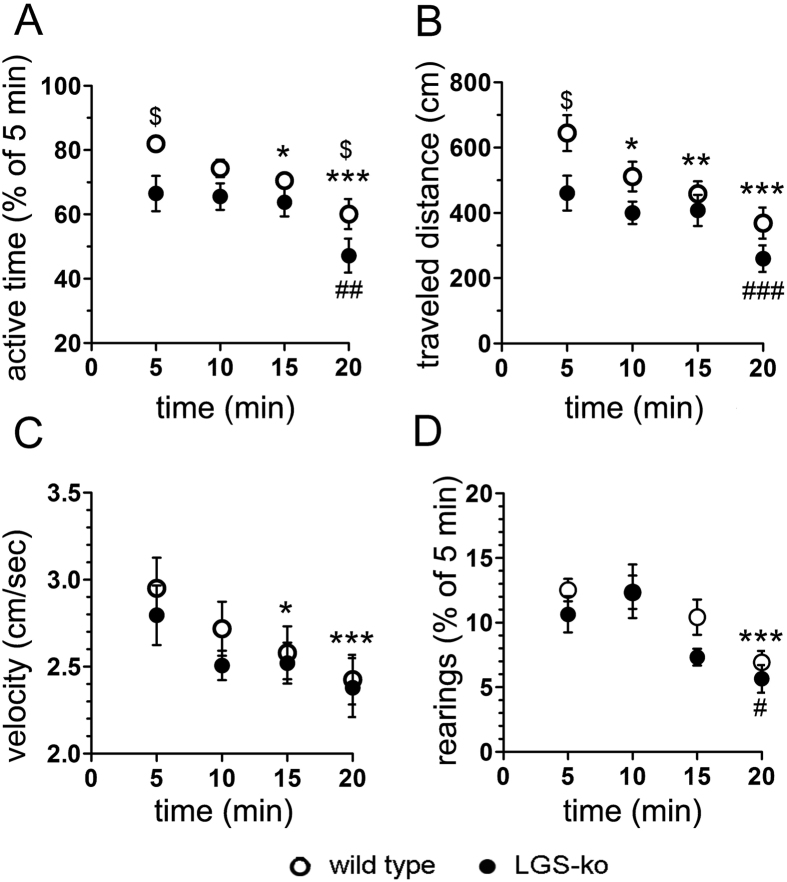
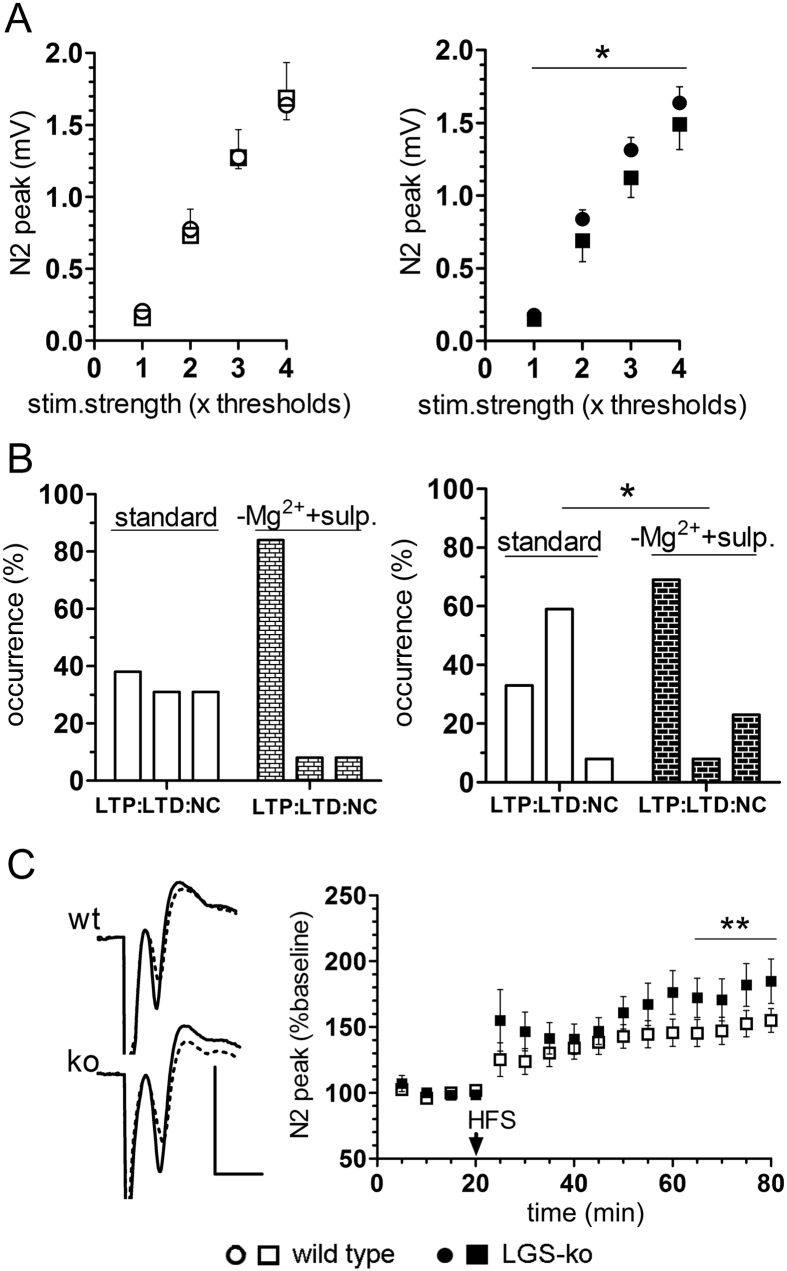
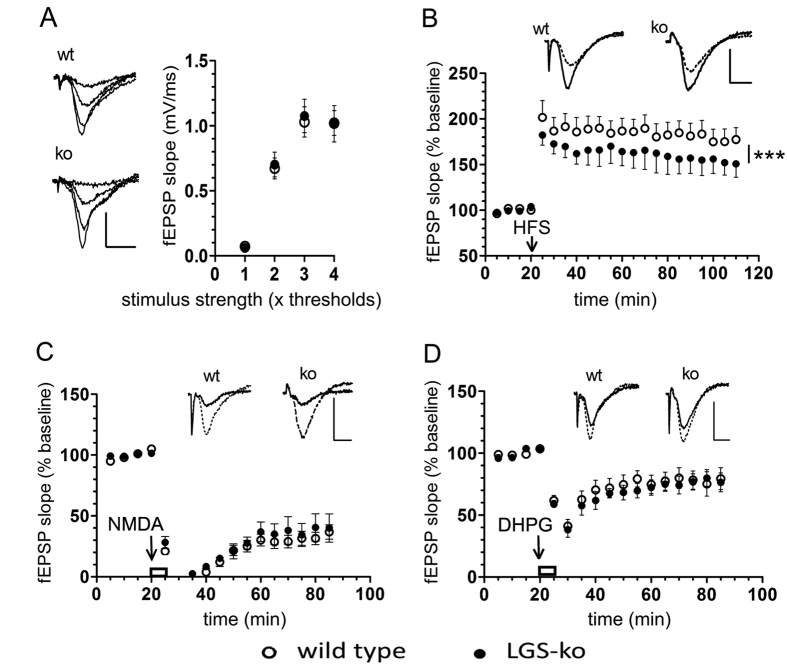
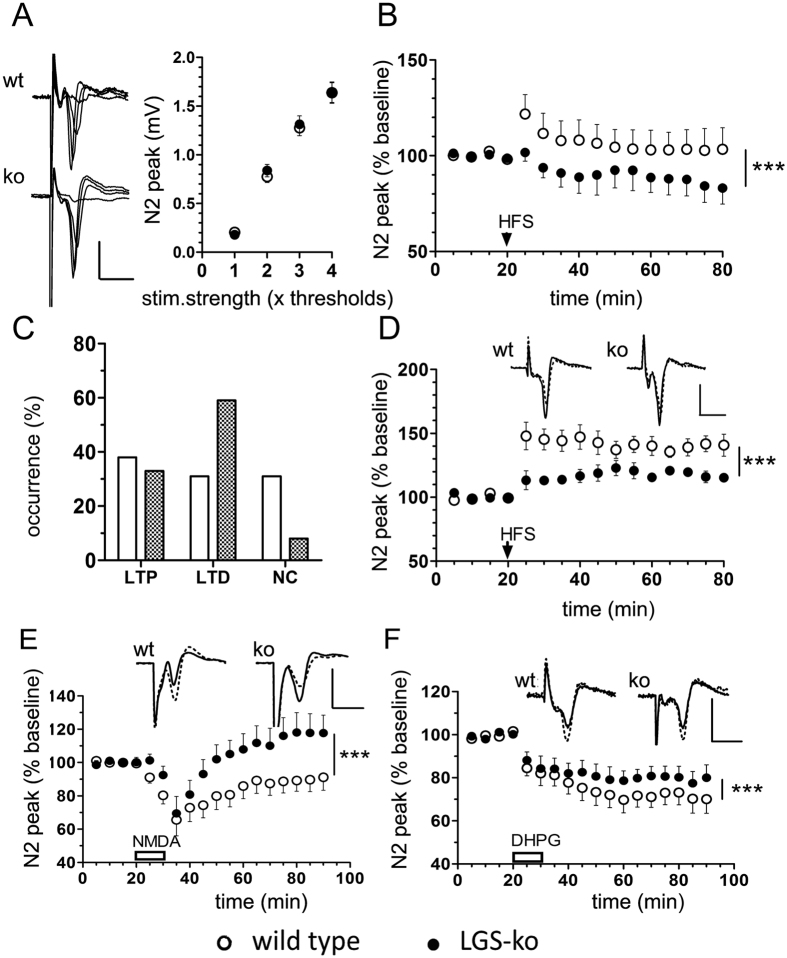
Genetic defects in ammonia metabolism can produce irreversible damage of the developing CNS causing an impairment of cognitive and motor functions. We investigated alterations in behavior, synaptic plasticity and gene expression in the hippocampus and dorsal striatum of transgenic mice with systemic hyperammonemia resulting from conditional knockout of hepatic glutamine synthetase (LGS-ko). These mice showed reduced exploratory activity and delayed habituation to a novel environment. Field potential recordings from LGS-ko brain slices revealed significantly reduced magnitude of electrically-induced long-term potentiation (LTP) in both CA3-CA1 hippocampal and corticostriatal synaptic transmission. Corticostriatal but not hippocampal slices from LGS-ko brains demonstrated also significant alterations in long-lasting effects evoked by pharmacological activation of glutamate receptors. Real-time RT-PCR revealed distinct patterns of dysregulated gene expression in the hippocampus and striatum of LGS-ko mice: LGS-ko hippocampus showed significantly modified expression of mRNAs for mGluR1, GluN2B subunit of NMDAR, and A1 adenosine receptors while altered expression of mRNAs for D1 dopamine receptors, the M1 cholinoreceptor and the acetylcholine-synthetizing enzyme choline-acetyltransferase was observed in LGS-ko striatum. Thus, inborn systemic hyperammonemia resulted in significant deficits in novelty acquisition and disturbed synaptic plasticity in corticostriatal and hippocampal pathways involved in learning and goal-directed behavior.
遗传缺陷导致氨代谢异常,可能对发育中的中枢神经系统造成不可逆转的损害,从而导致认知和运动功能受损。我们研究了肝谷氨酸合成酶(LGS-ko)条件性敲除导致全身高氨血症的转基因小鼠中海马和背侧纹状体中行为、突触可塑性和基因表达的变化。这些小鼠表现出探索活动减少和对新环境的适应延迟。来自 LGS-ko 脑片的场电位记录显示,电诱导的长时程增强(LTP)在 CA3-CA1 海马和皮质纹状体突触传递中均显著减小。来自 LGS-ko 大脑的皮质纹状体但不是海马体切片也显示出谷氨酸受体药理学激活诱发的长时程效应的显著改变。实时 RT-PCR 显示 LGS-ko 小鼠海马和纹状体中存在不同模式的失调基因表达:LGS-ko 海马体中 mGluR1、NMDAR 的 GluN2B 亚基和 A1 腺苷受体的 mRNA 表达显著改变,而 D1 多巴胺受体、M1 胆碱能受体和乙酰胆碱合成酶胆碱乙酰转移酶的 mRNA 表达改变在 LGS-ko 纹状体中观察到。因此,先天性全身高氨血症导致在参与学习和目标导向行为的皮质纹状体和海马通路中出现明显的新奇感获取缺陷和突触可塑性障碍。