Szibor Marten, Dhandapani Praveen K, Dufour Eric, Holmström Kira M, Zhuang Yuan, Salwig Isabelle, Wittig Ilka, Heidler Juliana, Gizatullina Zemfira, Gainutdinov Timur, Fuchs Helmut, Gailus-Durner Valérie, de Angelis Martin Hrabě, Nandania Jatin, Velagapudi Vidya, Wietelmann Astrid, Rustin Pierre, Gellerich Frank N, Jacobs Howard T, Braun Thomas
Institute of Biotechnology, FI-00014 University of Helsinki, Finland.
BioMediTech and Tampere University Hospital, FI-33014 University of Tampere, Finland.
Dis Model Mech. 2017 Feb 1;10(2):163-171. doi: 10.1242/dmm.027839. Epub 2016 Dec 14.
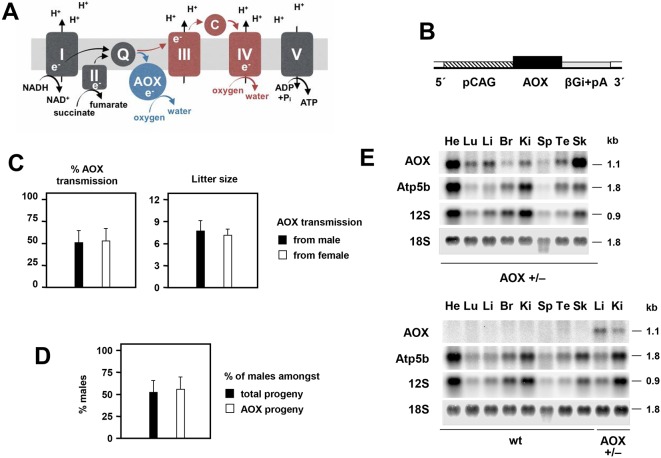
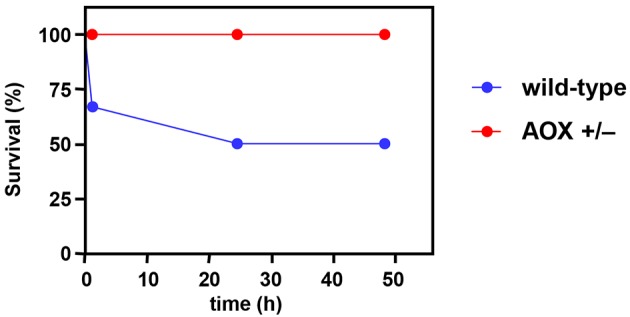
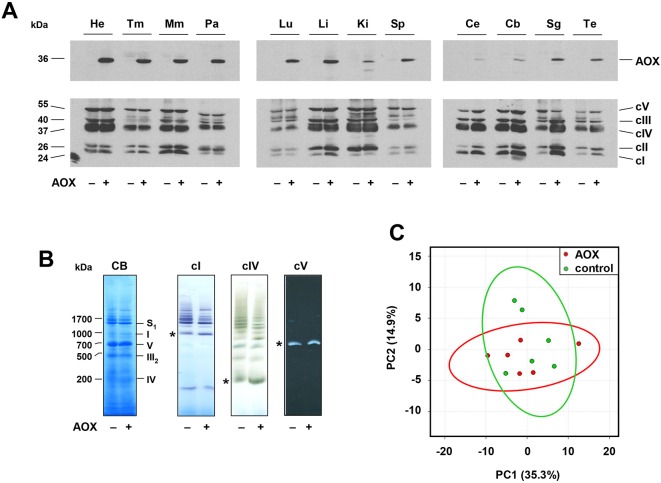
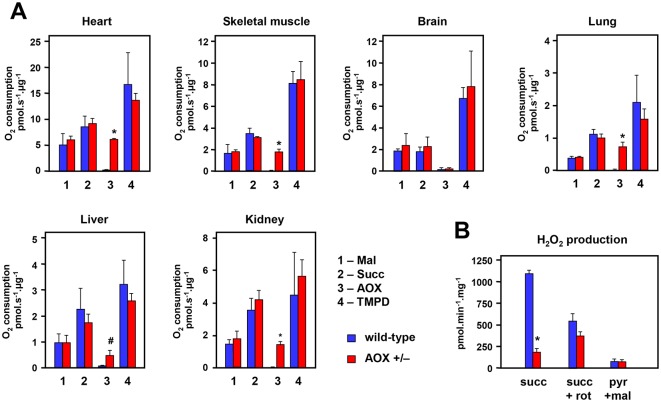
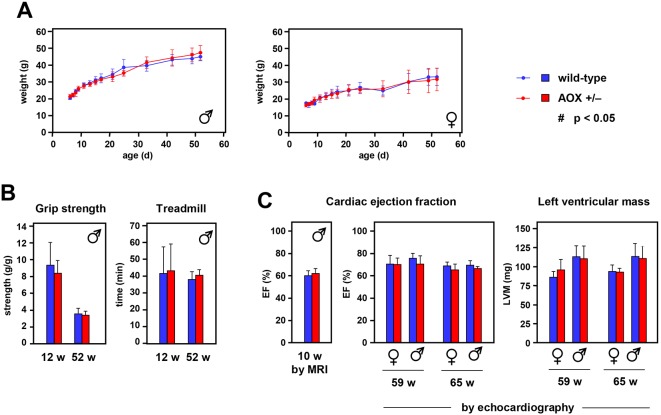
Plants and many lower organisms, but not mammals, express alternative oxidases (AOXs) that branch the mitochondrial respiratory chain, transferring electrons directly from ubiquinol to oxygen without proton pumping. Thus, they maintain electron flow under conditions when the classical respiratory chain is impaired, limiting excess production of oxygen radicals and supporting redox and metabolic homeostasis. AOX from Ciona intestinalis has been used to study and mitigate mitochondrial impairments in mammalian cell lines, Drosophila disease models and, most recently, in the mouse, where multiple lentivector-AOX transgenes conferred substantial expression in specific tissues. Here, we describe a genetically tractable mouse model in which Ciona AOX has been targeted to the Rosa26 locus for ubiquitous expression. The AOX mouse exhibited only subtle phenotypic effects on respiratory complex formation, oxygen consumption or the global metabolome, and showed an essentially normal physiology. AOX conferred robust resistance to inhibitors of the respiratory chain in organello; moreover, animals exposed to a systemically applied LD50 dose of cyanide did not succumb. The AOX mouse is a useful tool to investigate respiratory control mechanisms and to decipher mitochondrial disease aetiology in vivo.
植物和许多低等生物而非哺乳动物表达交替氧化酶(AOXs),这些酶使线粒体呼吸链分支,将电子从泛醇直接转移到氧气,而不进行质子泵转运。因此,在经典呼吸链受损的情况下,它们能维持电子流动,限制氧自由基的过量产生,并支持氧化还原和代谢稳态。来自玻璃海鞘的AOX已被用于研究和减轻哺乳动物细胞系、果蝇疾病模型以及最近在小鼠中的线粒体损伤,在小鼠中多个慢病毒载体 - AOX转基因在特定组织中大量表达。在此,我们描述了一种基因易处理的小鼠模型,其中玻璃海鞘AOX已被靶向到Rosa26位点以实现全身表达。AOX小鼠在呼吸复合体形成、氧消耗或整体代谢组方面仅表现出细微的表型效应,并显示出基本正常的生理状态。AOX赋予了对细胞器中呼吸链抑制剂的强大抗性;此外,暴露于全身应用的半数致死剂量氰化物的动物并未死亡。AOX小鼠是研究呼吸控制机制和体内解读线粒体疾病病因的有用工具。