Chiari Paolo, Forni Cristiana, Guberti Monica, Gazineo Domenica, Ronzoni Sabrina, D'Alessandro Fabio
Dipartimento Scienze Mediche e Chirurgiche, Università di Bologna, Bologna, Italy.
Centro ricerca professioni sanitarie, Istituto Ortopedico Rizzoli, Bologna, Italy.
PLoS One. 2017 Jan 9;12(1):e0169909. doi: 10.1371/journal.pone.0169909. eCollection 2017.
Older adult patients with fragility hip fractures constitute a population at high risk for complications, in particular pressure ulcers. The aim was to evaluate the incidence of pressure ulcers and potential predictive factors.
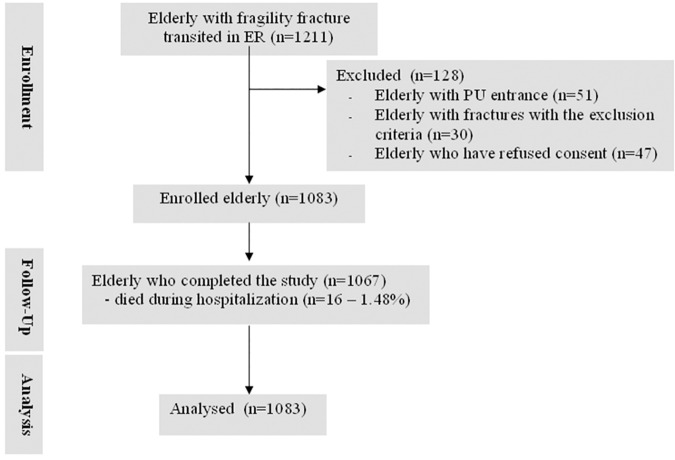
A prospective multicentric prognostic cohort study in orthopedic wards in three Italian public hospitals. Participants were all consecutive patients 65 years of age or older diagnosed with a fragility hip fracture. Outcomes were incidence of pressure ulcers. The exposure variables were grouped into three macro areas in order to facilitate reading: "intrinsic" variables, "extrinsic" variables and variables linked to the organization of patient care. One thousand eighty-three older adult patients with fragility hip fractures were enrolled from October 1st, 2013 to January 31st, 2015, and pressure ulcers developed in 22.7%. At multivariate analysis, the following were found to be risk factors: age> 80 years (odds ratio (OR) 1.03; p = 0.015), the length of time a urinary catheter was used (OR 1.013; p<0.001), the length of time pain was present (OR 1.008; p = 0.008), the absence of side rails on the bed (OR 1.668; p = 0.026) and the use of a foam position valve (OR 1.025; p<0.001). Instead, the protective factors were the presence of a caregiver for at least half a day daily (OR 0.994; p = 0.012) and the number of positionings during the postoperative period (OR 0.897; p = 0.008).
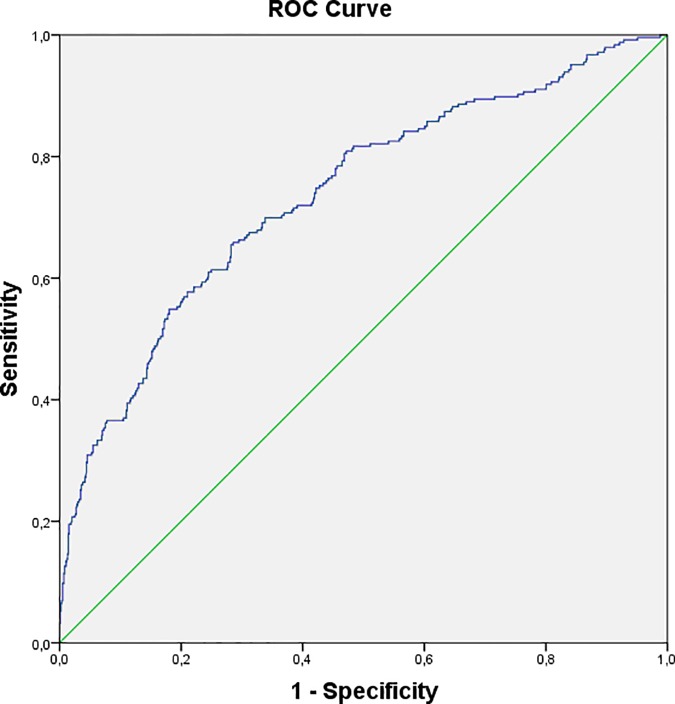
The study allowed the identification of the patients most at risk for developing pressure ulcers, and the construction of a pragmatic predictive model using significant risk or protective factors in order to reduce the number of pressure ulcers.
老年脆性髋部骨折患者是并发症高危人群,尤其是压疮。目的是评估压疮的发生率及潜在预测因素。
在意大利三家公立医院的骨科病房开展一项前瞻性多中心预后队列研究。参与者为所有连续收治的65岁及以上诊断为脆性髋部骨折的患者。结局指标为压疮发生率。为便于解读,将暴露变量分为三个主要领域:“内在”变量、“外在”变量以及与患者护理组织相关的变量。2013年10月1日至2015年1月31日,共纳入1083例老年脆性髋部骨折患者,其中22.7%发生了压疮。多因素分析发现,以下因素为危险因素:年龄>80岁(比值比[OR]1.03;p = 0.015)、使用导尿管的时长(OR 1.013;p<0.001)、疼痛持续时间(OR 1.008;p = 0.008)、床上无床栏(OR 1.668;p = 0.026)以及使用泡沫体位垫(OR 1.025;p<0.001)。相反,保护因素为每天至少有半天时间有照护者在场(OR 0.994;p = 0.012)以及术后翻身次数(OR 0.897;p = 0.008)。
本研究确定了发生压疮风险最高的患者群体,并构建了一个实用的预测模型,利用显著的风险或保护因素来减少压疮的发生数量。