Zamani-Ahmadmahmudi Mohamad, Aghasharif Sina, Ilbeigi Keyhan
Department of Clinical Science, Faculty of Veterinary Medicine, Shahid Bahonar University of Kerman, P.O Box: 76169133, Kerman, Iran.
Department of Clinical Science, Faculty of Veterinary Medicine, Islamic Azad University, Garmsar Branch, Garmsar, Iran.
BMC Vet Res. 2017 Jan 9;13(1):17. doi: 10.1186/s12917-016-0919-x.
Canine B-cell lymphoma is deemed an ideal model of human non-Hodgkin's lymphoma where the lymphomas of both species share similar clinical features and biological behaviors. However there are some differences between tumor features in both species. In the current study, we sought to evaluate the prognostic efficacy of human B-cell lymphoma prognostic gene signatures in canine B-cell lymphoma.
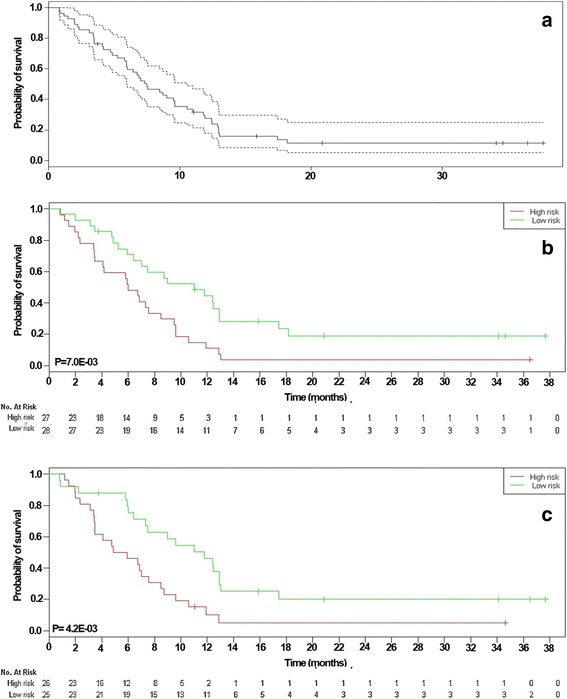
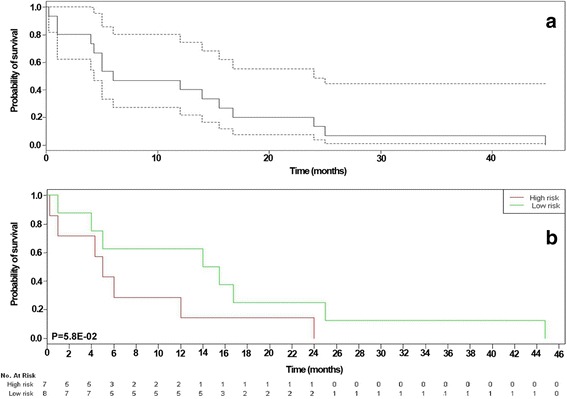
The corresponding probe sets of 36 human B-cell lymphoma prognostic genes were retrieved from 2 canine B-cell lymphoma microarray datasets (GSE43664 and GSE39365) (76 samples), and prognostic probe sets were thereafter detected using the univariate and multivariate Cox proportional-hazard model and the Kaplan-Meier analysis. The two datasets were employed both as training sets and as external validation sets for each other. Results were confirmed using quantitative real-time PCR (qRT-PCR) analysis.
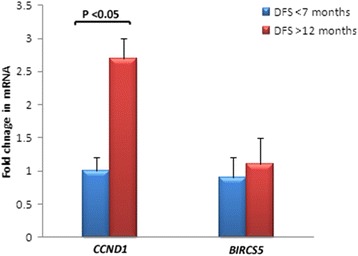
In the univariate analysis, CCND1, CCND2, PAX5, CR2, LMO2, HLA-DQA1, P53, CD38, MYC-N, MYBL1, and BIRCS5 were associated with longer disease-free survival (DFS), while CD44, PLAU, and FN1 were allied to shorter DFS. However, the multivariate Cox proportional-hazard analysis confirmed CCND1 and BIRCS5 as prognostic genes for canine B-cell lymphoma. qRT-PCR used for verification of results indicated that expression level of CCND1 was significantly higher in B-cell lymphoma patients with the long DFS than ones with the short DFS, while expression level of BIRCS5 wasn't significantly different between two groups.
Our results confirmed CCND1 as important gene that can be used as a potential predictor in this tumor type.
犬B细胞淋巴瘤被认为是人类非霍奇金淋巴瘤的理想模型,两种物种的淋巴瘤具有相似的临床特征和生物学行为。然而,两种物种的肿瘤特征存在一些差异。在本研究中,我们试图评估人类B细胞淋巴瘤预后基因特征在犬B细胞淋巴瘤中的预后效果。
从2个犬B细胞淋巴瘤微阵列数据集(GSE43664和GSE39365)(76个样本)中检索36个人类B细胞淋巴瘤预后基因的相应探针集,然后使用单变量和多变量Cox比例风险模型以及Kaplan-Meier分析检测预后探针集。这两个数据集既用作训练集,也用作彼此的外部验证集。使用定量实时PCR(qRT-PCR)分析确认结果。
在单变量分析中,CCND1、CCND2、PAX5、CR2、LMO2、HLA-DQA1、P53、CD38、MYC-N、MYBL1和BIRCS5与较长的无病生存期(DFS)相关,而CD44、PLAU和FN1与较短的DFS相关。然而,多变量Cox比例风险分析确认CCND1和BIRCS5为犬B细胞淋巴瘤的预后基因。用于验证结果的qRT-PCR表明,DFS长的B细胞淋巴瘤患者中CCND1的表达水平明显高于DFS短的患者,而两组之间BIRCS5的表达水平没有显著差异。
我们的结果证实CCND1是可作为这种肿瘤类型潜在预测指标的重要基因。