• 文献检索
  • 文档翻译
  • 深度研究
  • 学术资讯
  • Suppr Zotero 插件Zotero 插件
  • 邀请有礼
  • 套餐&价格
  • 历史记录
应用&插件
Suppr Zotero 插件Zotero 插件浏览器插件Mac 客户端Windows 客户端微信小程序
定价
高级版会员购买积分包购买API积分包
服务
文献检索文档翻译深度研究API 文档MCP 服务
关于我们
关于 Suppr公司介绍联系我们用户协议隐私条款
关注我们

Suppr 超能文献

核心技术专利:CN118964589B侵权必究
粤ICP备2023148730 号-1Suppr @ 2026

文献检索

告别复杂PubMed语法,用中文像聊天一样搜索,搜遍4000万医学文献。AI智能推荐,让科研检索更轻松。

立即免费搜索

文件翻译

保留排版,准确专业,支持PDF/Word/PPT等文件格式,支持 12+语言互译。

免费翻译文档

深度研究

AI帮你快速写综述,25分钟生成高质量综述,智能提取关键信息,辅助科研写作。

立即免费体验

DET1和HY5通过不同机制控制PIF4介导的热感伸长生长。

DET1 and HY5 Control PIF4-Mediated Thermosensory Elongation Growth through Distinct Mechanisms.

作者信息

Gangappa Sreeramaiah N, Kumar S Vinod

机构信息

Cell and Developmental Biology Department, John Innes Centre, Norwich NR4 7UH, UK.

Cell and Developmental Biology Department, John Innes Centre, Norwich NR4 7UH, UK.

出版信息

Cell Rep. 2017 Jan 10;18(2):344-351. doi: 10.1016/j.celrep.2016.12.046.

DOI:10.1016/j.celrep.2016.12.046
PMID:28076780
原文链接:https://pmc.ncbi.nlm.nih.gov/articles/PMC5263232/
Abstract

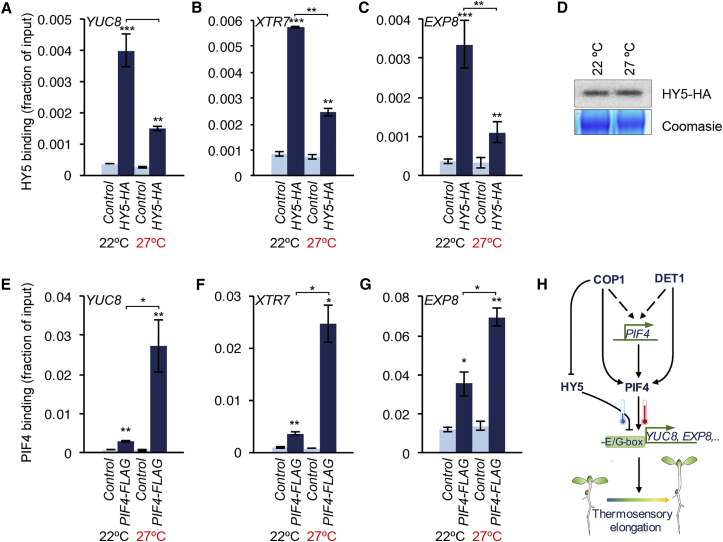
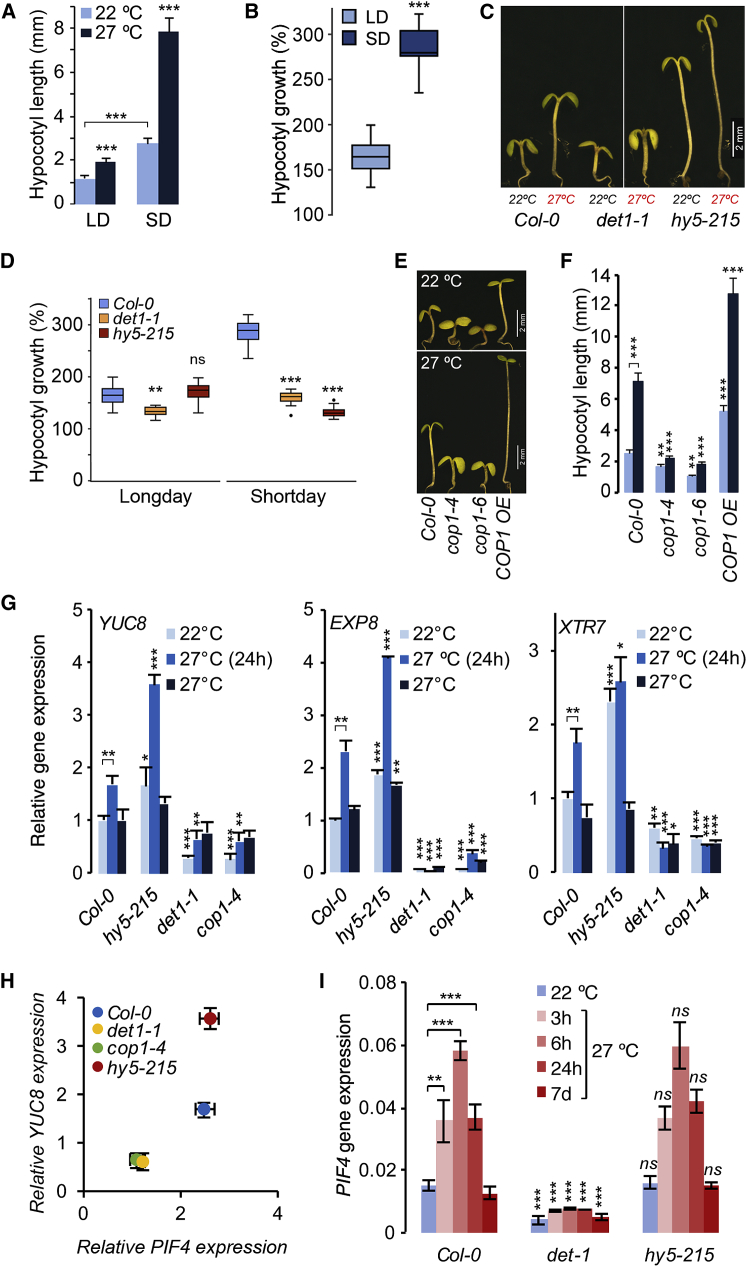
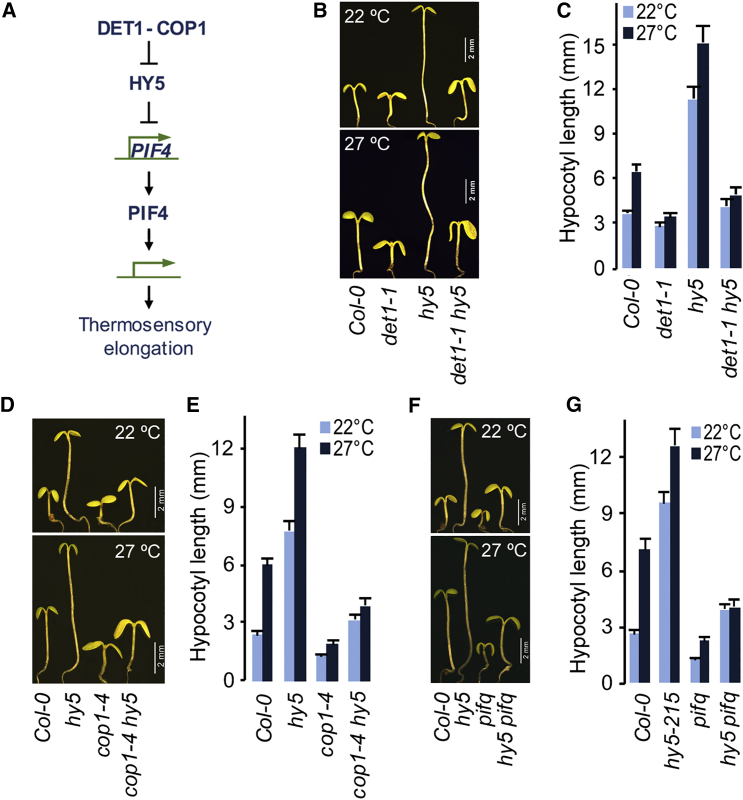
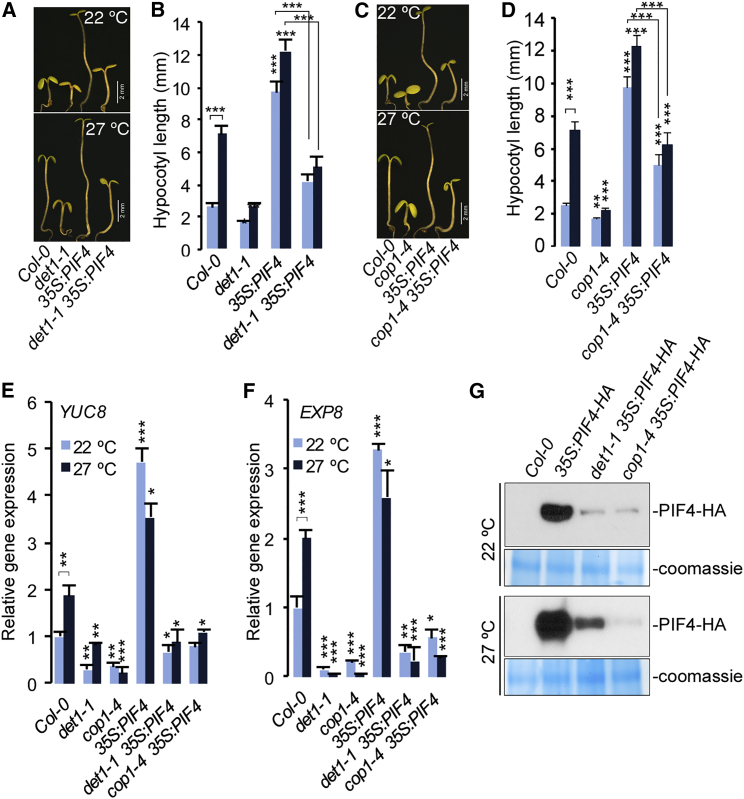
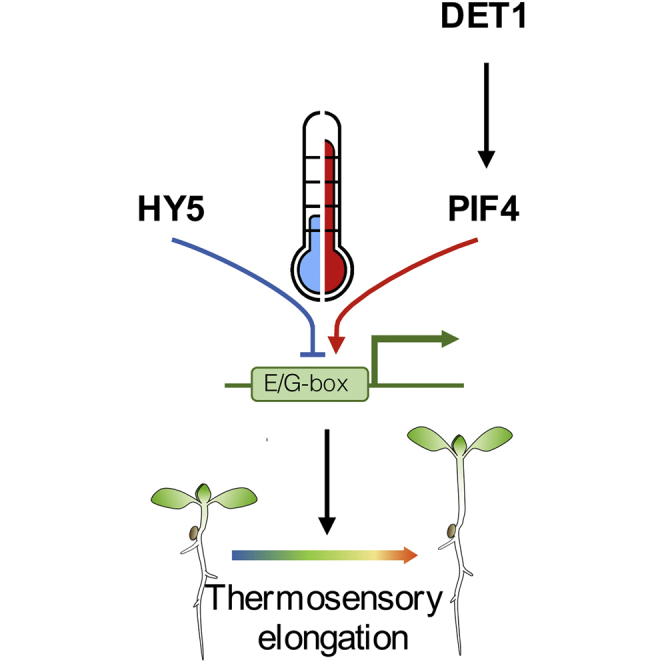
Plant growth and development are defined by environmental cues. The transcription factor PHYTOCHROME INTERACTING FACTOR 4 (PIF4) is the central signaling hub that integrates environmental cues, including light and temperature, to regulate growth and development. The thermosensory mechanisms controlling the PIF4-mediated temperature response, and its integration with other environmental responses, remain poorly understood. DE-ETIOLATED 1 (DET1) and CONSTITUTIVE PHOTOMORPHOGENESIS 1 (COP1), key regulators of light signaling, have been proposed to control thermosensory growth by transcriptional regulation of PIF4, through ELONGATED HYPOCOTYL 5 (HY5). Here, we show that DET1/COP1 and HY5 regulate thermosensory elongation through distinct mechanisms. DET1 and COP1 are essential for promoting PIF4 expression and stabilizing PIF4 protein. Furthermore, HY5 inhibits elongation growth through competitive chromatin binding to PIF4 targets, not through transcriptional regulation of PIF4. Our findings reveal a mechanistic framework in which DET1/COP1 and HY5 regulatory modules act independently to regulate growth through the environmental signal integrator PIF4.

摘要

植物的生长和发育由环境信号决定。转录因子光敏色素相互作用因子4(PIF4)是整合包括光和温度在内的环境信号以调控生长和发育的核心信号枢纽。控制PIF4介导的温度响应的热感测机制,以及它与其他环境响应的整合,仍知之甚少。去黄化1(DET1)和组成型光形态建成1(COP1)是光信号的关键调节因子,有人提出它们通过ELONGATED HYPOCOTYL 5(HY5)对PIF4进行转录调控来控制热感测生长。在这里,我们表明DET1/COP1和HY5通过不同机制调节热感测伸长。DET1和COP1对于促进PIF4表达和稳定PIF4蛋白至关重要。此外,HY5通过与PIF4靶标竞争性结合染色质来抑制伸长生长,而不是通过对PIF4的转录调控。我们的研究结果揭示了一个机制框架,其中DET1/COP1和HY5调节模块通过环境信号整合器PIF4独立发挥作用来调控生长。
https://cdn.ncbi.nlm.nih.gov/pmc/blobs/a6f9/5263232/83e5db2a8319/gr4.jpg
https://cdn.ncbi.nlm.nih.gov/pmc/blobs/a6f9/5263232/16236a3a2083/fx1.jpg
https://cdn.ncbi.nlm.nih.gov/pmc/blobs/a6f9/5263232/a972661e6ed1/gr1.jpg
https://cdn.ncbi.nlm.nih.gov/pmc/blobs/a6f9/5263232/36a474d5fb42/gr2.jpg
https://cdn.ncbi.nlm.nih.gov/pmc/blobs/a6f9/5263232/ca64c347b143/gr3.jpg
https://cdn.ncbi.nlm.nih.gov/pmc/blobs/a6f9/5263232/83e5db2a8319/gr4.jpg
https://cdn.ncbi.nlm.nih.gov/pmc/blobs/a6f9/5263232/16236a3a2083/fx1.jpg
https://cdn.ncbi.nlm.nih.gov/pmc/blobs/a6f9/5263232/a972661e6ed1/gr1.jpg
https://cdn.ncbi.nlm.nih.gov/pmc/blobs/a6f9/5263232/36a474d5fb42/gr2.jpg
https://cdn.ncbi.nlm.nih.gov/pmc/blobs/a6f9/5263232/ca64c347b143/gr3.jpg
https://cdn.ncbi.nlm.nih.gov/pmc/blobs/a6f9/5263232/83e5db2a8319/gr4.jpg

相似文献

1
DET1 and HY5 Control PIF4-Mediated Thermosensory Elongation Growth through Distinct Mechanisms.DET1和HY5通过不同机制控制PIF4介导的热感伸长生长。
Cell Rep. 2017 Jan 10;18(2):344-351. doi: 10.1016/j.celrep.2016.12.046.
2
DET1-mediated COP1 regulation avoids HY5 activity over second-site gene targets to tune plant photomorphogenesis.DET1介导的COP1调控可避免HY5对第二位点基因靶标的活性过高,从而调节植物的光形态建成。
Mol Plant. 2021 Jun 7;14(6):963-982. doi: 10.1016/j.molp.2021.03.009. Epub 2021 Mar 9.
3
The COP1 tryptophan residue in the WD40 domain is essential for light- and temperature-mediated hypocotyl growth and flowering in Arabidopsis.拟南芥中WD40结构域的COP1色氨酸残基对于光和温度介导的下胚轴生长及开花至关重要。
Plant J. 2025 Feb;121(4):e70051. doi: 10.1111/tpj.70051.
4
The DET1-COP1-HY5 pathway constitutes a multipurpose signaling module regulating plant photomorphogenesis and thermomorphogenesis.DET1-COP1-HY5途径构成了一个多功能信号模块,调控植物的光形态建成和热形态建成。
Cell Rep. 2014 Dec 24;9(6):1983-9. doi: 10.1016/j.celrep.2014.11.043. Epub 2014 Dec 18.
5
DET1 and COP1 Modulate the Coordination of Growth and Immunity in Response to Key Seasonal Signals in Arabidopsis.DET1 和 COP1 调节拟南芥对关键季节信号的生长和免疫的协调。
Cell Rep. 2018 Oct 2;25(1):29-37.e3. doi: 10.1016/j.celrep.2018.08.096.
6
SICKLE represses photomorphogenic development of Arabidopsis seedlings via HY5- and PIF4-mediated signaling.SICKLE 通过 HY5 和 PIF4 介导的信号通路抑制拟南芥幼苗的光形态建成发育。
J Integr Plant Biol. 2022 Sep;64(9):1706-1723. doi: 10.1111/jipb.13329. Epub 2022 Aug 18.
7
DET1 modulates ATAF1-repressed thermosensory elongation through ubiquitination in Arabidopsis.在拟南芥中,DET1通过泛素化作用调节ATAF1抑制的热感伸长。
Plant Cell Rep. 2024 Dec 17;44(1):7. doi: 10.1007/s00299-024-03402-9.
8
Ethylene promotes hypocotyl growth and HY5 degradation by enhancing the movement of COP1 to the nucleus in the light.乙烯通过增强 COP1 在光下向核内的运动促进下胚轴的生长和 HY5 的降解。
PLoS Genet. 2013;9(12):e1004025. doi: 10.1371/journal.pgen.1004025. Epub 2013 Dec 12.
9
Degradation of the transcription factors PIF4 and PIF5 under UV-B promotes UVR8-mediated inhibition of hypocotyl growth in Arabidopsis.UV-B 下转录因子 PIF4 和 PIF5 的降解促进拟南芥 UVR8 介导的下胚轴生长抑制。
Plant J. 2020 Feb;101(3):507-517. doi: 10.1111/tpj.14556. Epub 2019 Nov 7.
10
Short Hypocotyl in White Light1 Interacts with Elongated Hypocotyl5 (HY5) and Constitutive Photomorphogenic1 (COP1) and Promotes COP1-Mediated Degradation of HY5 during Arabidopsis Seedling Development.白光下的短胚轴1与伸长胚轴5(HY5)和组成型光形态建成1(COP1)相互作用,并在拟南芥幼苗发育过程中促进COP1介导的HY5降解。
Plant Physiol. 2015 Dec;169(4):2922-34. doi: 10.1104/pp.15.01184. Epub 2015 Oct 16.

引用本文的文献

1
Threshold-dependent negative autoregulation of PIF4 gene expression optimizes growth and fitness in Arabidopsis.PIF4基因表达的阈值依赖性负反馈自动调节优化了拟南芥的生长和适应性。
PLoS Genet. 2025 Aug 11;21(8):e1011758. doi: 10.1371/journal.pgen.1011758. eCollection 2025 Aug.
2
BBX24 and BBX25 antagonize the function of thermosensor ELF3 to promote PIF4-mediated thermomorphogenesis in Arabidopsis.BBX24和BBX25拮抗热感受器ELF3的功能,以促进拟南芥中PIF4介导的热形态建成。
Plant Commun. 2025 Jul 14;6(7):101391. doi: 10.1016/j.xplc.2025.101391. Epub 2025 May 28.
3
Here comes the sun: integration of light, temperature, and auxin during herbaceous plant grafting.

本文引用的文献

1
Molecular and genetic control of plant thermomorphogenesis.植物热形态发生的分子和遗传控制。
Nat Plants. 2016 Jan 6;2:15190. doi: 10.1038/nplants.2015.190.
2
Cryptochrome 1 interacts with PIF4 to regulate high temperature-mediated hypocotyl elongation in response to blue light.隐花色素1与光敏色素相互作用因子4相互作用,以调节高温介导的下胚轴伸长对蓝光的响应。
Proc Natl Acad Sci U S A. 2016 Jan 5;113(1):224-9. doi: 10.1073/pnas.1511437113. Epub 2015 Dec 22.
3
Illuminating Progress in Phytochrome-Mediated Light Signaling Pathways.揭示光敏色素介导的光信号通路的进展。
太阳来了:草本植物嫁接过程中光、温度和生长素的整合
Planta. 2025 May 2;261(6):124. doi: 10.1007/s00425-025-04694-1.
4
The CRY1-COP1-HY5 axis mediates blue-light regulation of Arabidopsis thermotolerance.CRY1-COP1-HY5轴介导蓝光对拟南芥耐热性的调控。
Plant Commun. 2025 Apr 14;6(4):101264. doi: 10.1016/j.xplc.2025.101264. Epub 2025 Jan 29.
5
How Do Arabidopsis Seedlings Sense and React to Increasing Ambient Temperatures?拟南芥幼苗如何感知并响应环境温度的升高?
Plants (Basel). 2025 Jan 16;14(2):248. doi: 10.3390/plants14020248.
6
Identification and characterization of soybean phytochrome-interacting factors and their potential roles in abiotic stress.大豆光敏色素互作因子的鉴定、特性分析及其在非生物胁迫中的潜在作用
BMC Plant Biol. 2024 Dec 30;24(1):1273. doi: 10.1186/s12870-024-05950-4.
7
DET1 modulates ATAF1-repressed thermosensory elongation through ubiquitination in Arabidopsis.在拟南芥中,DET1通过泛素化作用调节ATAF1抑制的热感伸长。
Plant Cell Rep. 2024 Dec 17;44(1):7. doi: 10.1007/s00299-024-03402-9.
8
UV-B increases active phytochrome B to suppress thermomorphogenesis and enhance UV-B stress tolerance at high temperatures.UV-B增加活性光敏色素B以抑制高温下的热形态建成并增强UV-B胁迫耐受性。
Plant Commun. 2025 Jan 13;6(1):101142. doi: 10.1016/j.xplc.2024.101142. Epub 2024 Oct 10.
9
SlCPK27 cross-links SlHY5 and SlPIF4 in brassinosteroid-dependent photo- and thermo-morphogenesis in tomato.SlCPK27 在番茄中依赖于油菜素内酯的光形态发生和热形态发生过程中交联 SlHY5 和 SlPIF4。
Proc Natl Acad Sci U S A. 2024 Sep 3;121(36):e2403040121. doi: 10.1073/pnas.2403040121. Epub 2024 Aug 27.
10
Organ-specific transcriptional regulation by HFR1 and HY5 in response to shade in Arabidopsis.拟南芥中HFR1和HY5响应遮荫的器官特异性转录调控
Front Plant Sci. 2024 Jul 31;15:1430639. doi: 10.3389/fpls.2024.1430639. eCollection 2024.
Trends Plant Sci. 2015 Oct;20(10):641-650. doi: 10.1016/j.tplants.2015.06.010.
4
Genetic interactions between DET1 and intermediate genes in Arabidopsis ABA signalling.拟南芥脱落酸信号传导中DET1与中间基因之间的遗传相互作用。
Plant Sci. 2015 Oct;239:166-79. doi: 10.1016/j.plantsci.2015.07.024. Epub 2015 Jul 31.
5
Arabidopsis DET1 represses photomorphogenesis in part by negatively regulating DELLA protein abundance in darkness.拟南芥 DET1 通过负调控黑暗中 DELLA 蛋白的丰度部分抑制光形态建成。
Mol Plant. 2015 Apr;8(4):622-30. doi: 10.1016/j.molp.2014.12.017. Epub 2014 Dec 31.
6
ELF3-PIF4 interaction regulates plant growth independently of the Evening Complex.ELF3与PIF4的相互作用独立于傍晚复合体调节植物生长。
Curr Biol. 2015 Jan 19;25(2):187-193. doi: 10.1016/j.cub.2014.10.070. Epub 2014 Dec 31.
7
The DET1-COP1-HY5 pathway constitutes a multipurpose signaling module regulating plant photomorphogenesis and thermomorphogenesis.DET1-COP1-HY5途径构成了一个多功能信号模块,调控植物的光形态建成和热形态建成。
Cell Rep. 2014 Dec 24;9(6):1983-9. doi: 10.1016/j.celrep.2014.11.043. Epub 2014 Dec 18.
8
Arabidopsis DE-ETIOLATED1 represses photomorphogenesis by positively regulating phytochrome-interacting factors in the dark.拟南芥去黄化1通过在黑暗中正向调控光敏色素互作因子来抑制光形态建成。
Plant Cell. 2014 Sep;26(9):3630-45. doi: 10.1105/tpc.114.130666. Epub 2014 Sep 23.
9
The HY5-PIF regulatory module coordinates light and temperature control of photosynthetic gene transcription.HY5-PIF调控模块协调光合基因转录的光控和温控。
PLoS Genet. 2014 Jun 12;10(6):e1004416. doi: 10.1371/journal.pgen.1004416. eCollection 2014 Jun.
10
PIFs: systems integrators in plant development.植物发育中的系统整合因子(PIFs)
Plant Cell. 2014 Jan;26(1):56-78. doi: 10.1105/tpc.113.120857. Epub 2014 Jan 30.