Fede C, Albertin G, Petrelli L, Sfriso M M, Biz C, De Caro R, Stecco C
University of Padua, Department of Neuroscience.
Eur J Histochem. 2016 Nov 2;60(4):2710. doi: 10.4081/ejh.2016.2710.
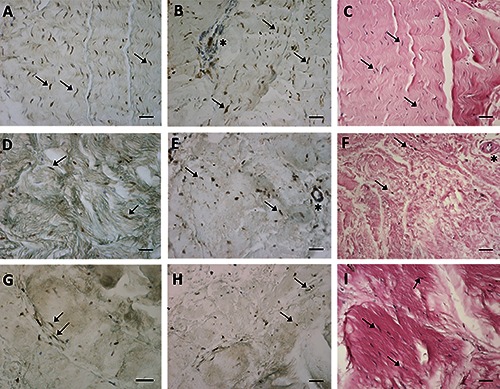
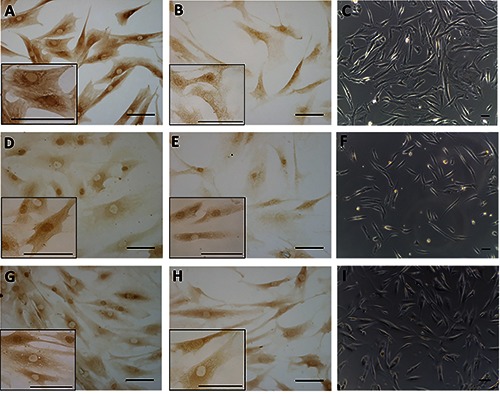
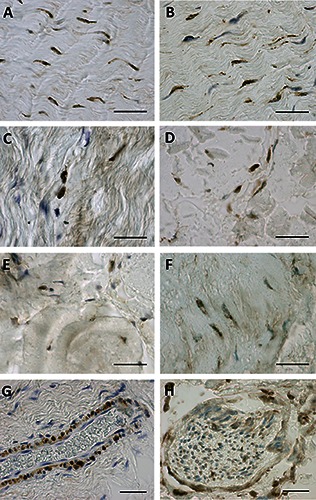
Many epidemiologic, clinical, and experimental findings point to sex differences in myofascial pain in view of the fact that adult women tend to have more myofascial problems with respect to men. It is possible that one of the stimuli to sensitization of fascial nociceptors could come from hormonal factors such as estrogen and relaxin, that are involved in extracellular matrix and collagen remodeling and thus contribute to functions of myofascial tissue. Immunohistochemical and molecular investigations (real-time PCR analysis) of relaxin receptor 1 (RXFP1) and estrogen receptor-alpha (ERα) localization were carried out on sample of human fascia collected from 8 volunteers patients during orthopedic surgery (all females, between 42 and 70 yrs, divided into pre- and post-menopausal groups), and in fibroblasts isolated from deep fascia, to examine both protein and RNA expression levels. We can assume that the two sex hormone receptors analyzed are expressed in all the human fascial districts examined and in fascial fibroblasts culture cells, to a lesser degree in the post-menopausal with respect to the pre-menopausal women. Hormone receptor expression was concentrated in the fibroblasts, and RXFP1 was also evident in blood vessels and nerves. Our results are the first demonstrating that the fibroblasts located within different districts of the muscular fasciae express sex hormone receptors and can help to explain the link between hormonal factors and myofascial pain. It is known, in fact, that estrogen and relaxin play a key role in extracellular matrix remodeling by inhibiting fibrosis and inflammatory activities, both important factors affecting fascial stiffness and sensitization of fascial nociceptors.
鉴于成年女性相较于男性往往有更多的肌筋膜问题,许多流行病学、临床和实验研究结果都表明肌筋膜疼痛存在性别差异。筋膜伤害感受器致敏的刺激因素之一可能来自雌激素和松弛素等激素,这些激素参与细胞外基质和胶原蛋白重塑,从而对肌筋膜组织的功能产生影响。我们对8名志愿者患者(均为女性,年龄在42至70岁之间,分为绝经前和绝经后组)在骨科手术中采集的人体筋膜样本,以及从深筋膜分离出的成纤维细胞进行了松弛素受体1(RXFP1)和雌激素受体α(ERα)定位的免疫组织化学和分子研究(实时PCR分析),以检测蛋白质和RNA表达水平。我们可以假设,所分析的两种性激素受体在所有检测的人体筋膜区域以及筋膜成纤维细胞培养细胞中均有表达,绝经后女性的表达程度低于绝经前女性。激素受体表达集中在成纤维细胞中,RXFP1在血管和神经中也很明显。我们的研究结果首次表明,位于肌筋膜不同区域的成纤维细胞表达性激素受体,这有助于解释激素因素与肌筋膜疼痛之间的联系。事实上,已知雌激素和松弛素通过抑制纤维化和炎症活动在细胞外基质重塑中起关键作用,而纤维化和炎症活动都是影响筋膜僵硬和筋膜伤害感受器致敏的重要因素。