• 文献检索
  • 文档翻译
  • 深度研究
  • 学术资讯
  • Suppr Zotero 插件Zotero 插件
  • 邀请有礼
  • 套餐&价格
  • 历史记录
应用&插件
Suppr Zotero 插件Zotero 插件浏览器插件Mac 客户端Windows 客户端微信小程序
定价
高级版会员购买积分包购买API积分包
服务
文献检索文档翻译深度研究API 文档MCP 服务
关于我们
关于 Suppr公司介绍联系我们用户协议隐私条款
关注我们

Suppr 超能文献

核心技术专利:CN118964589B侵权必究
粤ICP备2023148730 号-1Suppr @ 2026

文献检索

告别复杂PubMed语法,用中文像聊天一样搜索,搜遍4000万医学文献。AI智能推荐,让科研检索更轻松。

立即免费搜索

文件翻译

保留排版,准确专业,支持PDF/Word/PPT等文件格式,支持 12+语言互译。

免费翻译文档

深度研究

AI帮你快速写综述,25分钟生成高质量综述,智能提取关键信息,辅助科研写作。

立即免费体验

冰冻期之前:南极洲西摩岛始新世的耳石显示鳕形目鱼类(硬骨鱼纲)占主导地位。

Before the freeze: otoliths from the Eocene of Seymour Island, Antarctica, reveal dominance of gadiform fishes (Teleostei).

作者信息

Schwarzhans Werner, Mörs Thomas, Engelbrecht Andrea, Reguero Marcelo, Kriwet Jürgen

机构信息

Ahrensburger Weg 103, D-22359 Hamburg, Germany; Natural History Museum of Denmark, Zoological Museum, Universitetsparken 15, DK-2100 Copenhagen, Denmark.

Swedish Museum of Natural History, Department of Palaeobiology, P.O. Box 5007, SE-10405 Stockholm, Sweden.

出版信息

J Syst Palaeontol. 2017;15(2):147-170. doi: 10.1080/14772019.2016.1151958. Epub 2016 Mar 16.

DOI:10.1080/14772019.2016.1151958
PMID:28077930
原文链接:https://pmc.ncbi.nlm.nih.gov/articles/PMC5221741/
Abstract

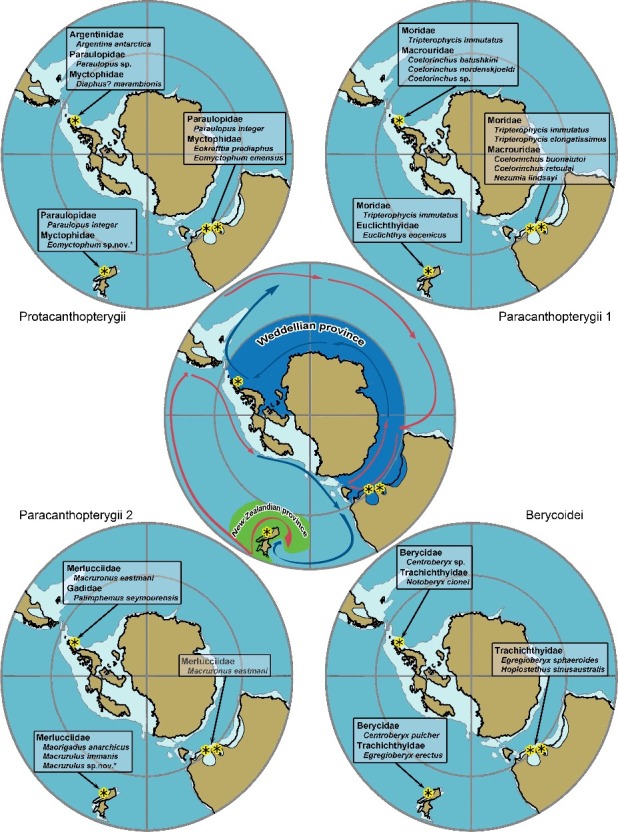
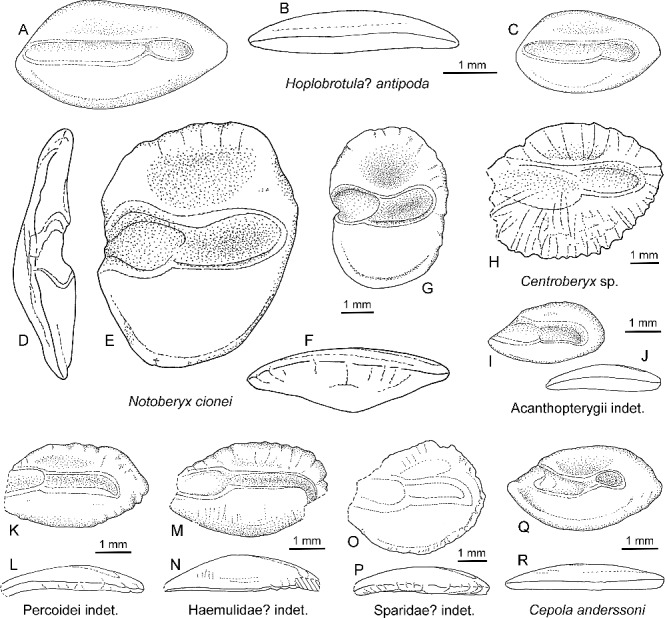
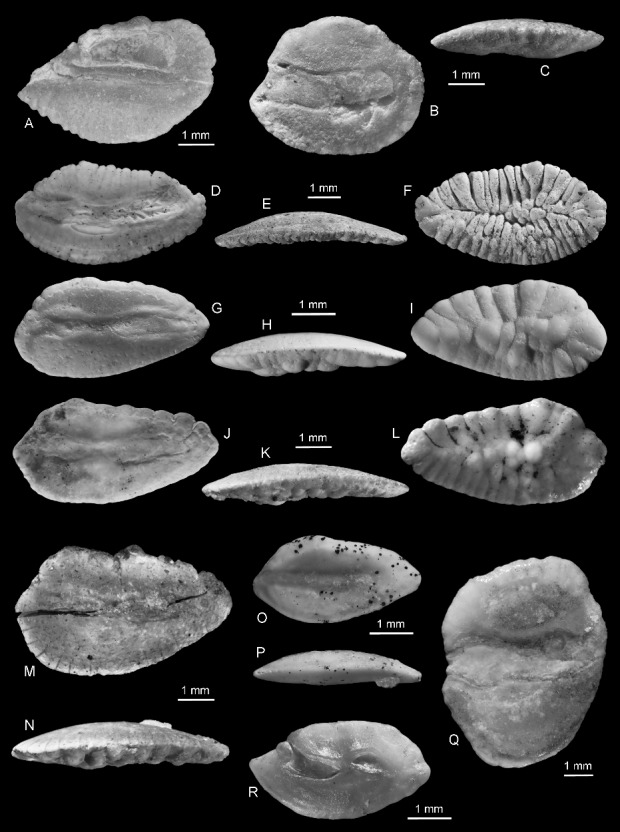
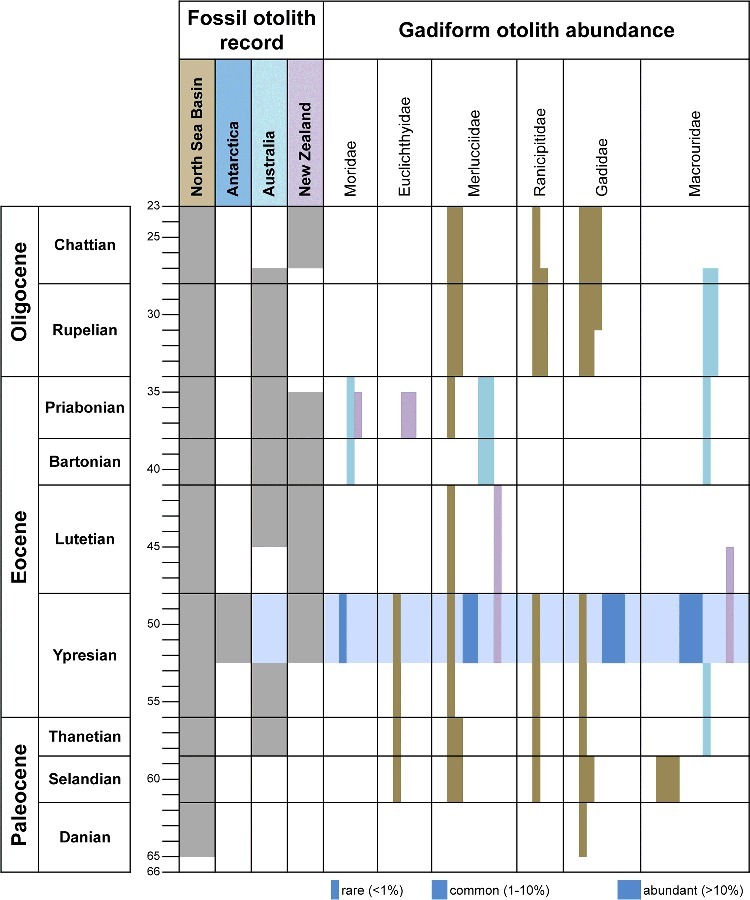
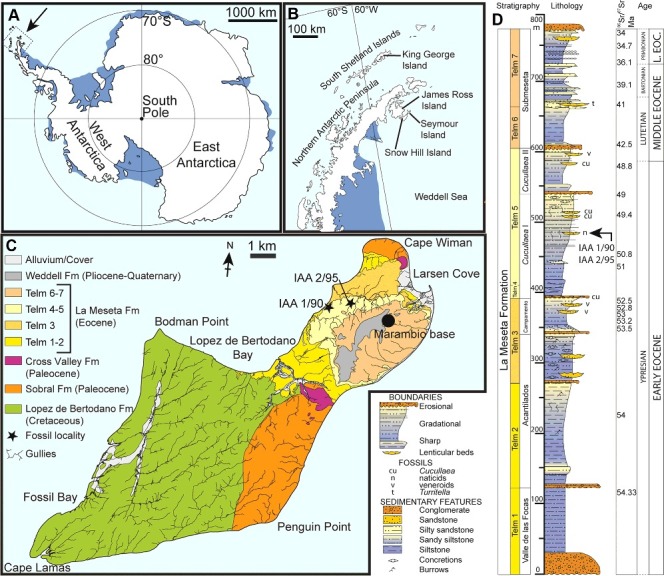
The first record of fossil teleostean otoliths from Antarctica is reported. The fossils were obtained from late Early Eocene shell beds of the La Meseta Formation, Seymour Island that represent the last temperate marine climate phase in Antarctica prior to the onset of cooling and subsequent glaciation during the late Eocene. A total of 17 otolith-based teleost taxa are recognized, with 10 being identifiable to species level containing nine new species and one new genus: sp. nov., sp. nov., sp. nov., sp. nov., sp. nov., sp. nov., sp. nov., gen. et sp. nov. and sp. nov. sp. nov. is also known from the late Eocene of Southern Australia, and Schwarzhans, widespread in the southern oceans during the Eocene, has been recorded from New Zealand, southern Australia, and now Antarctica. The otolith assemblage shows a typical composition of temperate fishes dominated by gadiforms, very similar at genus and family levels to associations known from middle Eocene strata of New Zealand and the late Eocene of southern Australia, but also to the temperate Northern Hemisphere associations from the Paleocene of Denmark. The Seymour Island fauna bridges a gap in the record of global temperate marine teleost faunas during the early Eocene climate maximum. The dominant gadiforms are interpreted as the main temperate faunal component, as in the Paleocene of Denmark. Here they are represented by the families Moridae, Merlucciidae (Macruroninae), Macrouridae and Gadidae. Nowadays Gadidae are a chiefly Northern Hemisphere temperate family. Moridae, Macruroninae and Macrouridae live today on the lower shelf to deep-water or mesopelagically with Macruroninae being restricted to the Southern Ocean. The extant endemic Antarctic gadiform family Muraenolepididae is missing, as are the dominant modern Antarctic fishes of the perciform suborder Notothenioidei. Recently, there has been much debate on isolated jaw bones of teleost fishes found in the La Meseta Formation and whether they would represent gadiforms (Merlucciidae in this case) or some early, primitive notothenioid. Otoliths are known to often complement rather than duplicate skeletal finds. With this in mind, we conclude that our otolith data support the presence of gadiforms in the early Eocene of Antarctica while it does not rule out the presence of notothenioids at the same time. http://zoobank.org/urn:lsid:zoobank.org:pub:A30E5364-0003-4467-B902-43A41AD456CC.

摘要

本文报道了南极洲硬骨鱼耳石的首次化石记录。这些化石采自西摩岛拉梅塞塔组始新世早期晚期的贝壳层,该贝壳层代表了南极洲在始新世晚期变冷及随后冰川作用开始之前的最后一个温带海洋气候阶段。共识别出17个基于耳石的硬骨鱼分类单元,其中10个可鉴定到物种水平,包括9个新物种和1个新属:[具体物种1]新种、[具体物种2]新种、[具体物种3]新种、[具体物种4]新种、[具体物种5]新种、[具体物种6]新种、[具体物种7]新种、[新属及具体物种]新属新种、[具体物种8]新种、[具体物种9]新种。[具体物种1]新种在澳大利亚南部始新世晚期也有发现,而在始新世广泛分布于南大洋的[某种鱼类名称]施瓦茨汉斯鱼,已在新西兰、澳大利亚南部以及现在的南极洲被记录到。耳石组合显示出以鳕形目鱼类为主的典型温带鱼类组成,在属和科的层面上,与新西兰始新世中期地层以及澳大利亚南部始新世晚期已知的组合非常相似,同时也与丹麦古新世的北半球温带组合相似。西摩岛动物群填补了始新世气候最暖期全球温带海洋硬骨鱼动物群记录中的一个空白。占主导地位的鳕形目鱼类被解释为主要的温带动物群组成部分,如同在丹麦古新世一样。在这里,它们由稚鳕科、无须鳕科(长尾鳕亚科)、鼠尾鳕科和鳕科代表。如今鳕科主要是北半球温带的一个科。稚鳕科、长尾鳕亚科和鼠尾鳕科现今生活在陆架下层至深水区域或中层水域,长尾鳕亚科仅限于南大洋。现存的南极特有鳕形目鱼类南极长吻鱼科缺失,鲈形目南极鱼亚目的主要现代南极鱼类也缺失。最近,对于在拉梅塞塔组发现的硬骨鱼孤立颌骨以及它们是否代表鳕形目鱼类(在这种情况下是无须鳕科)或一些早期、原始南极鱼亚目鱼类存在很多争论。耳石通常被认为是对骨骼发现的补充而非重复。考虑到这一点,我们得出结论,我们的耳石数据支持南极洲始新世早期存在鳕形目鱼类,同时并不排除南极鱼亚目鱼类也存在的可能性。http://zoobank.org/urn:lsid:zoobank.org:pub:A30E5364-0003-4467-B902-43A41AD456CC 。
https://cdn.ncbi.nlm.nih.gov/pmc/blobs/2699/5283179/aebd6e1e8646/tjsp_a_1151958_f0008_c.jpg
https://cdn.ncbi.nlm.nih.gov/pmc/blobs/2699/5283179/e3e12042bdee/tjsp_a_1151958_f0001_c.jpg
https://cdn.ncbi.nlm.nih.gov/pmc/blobs/2699/5283179/f4da9384690a/tjsp_a_1151958_f0002_b.jpg
https://cdn.ncbi.nlm.nih.gov/pmc/blobs/2699/5283179/76a6afbed170/tjsp_a_1151958_f0003_b.jpg
https://cdn.ncbi.nlm.nih.gov/pmc/blobs/2699/5283179/b41c525e429c/tjsp_a_1151958_f0004_b.jpg
https://cdn.ncbi.nlm.nih.gov/pmc/blobs/2699/5283179/5e3909aae6b7/tjsp_a_1151958_f0005_b.jpg
https://cdn.ncbi.nlm.nih.gov/pmc/blobs/2699/5283179/a06e5f6b6d55/tjsp_a_1151958_f0006_b.jpg
https://cdn.ncbi.nlm.nih.gov/pmc/blobs/2699/5283179/e011fe1ebc37/tjsp_a_1151958_f0007_c.jpg
https://cdn.ncbi.nlm.nih.gov/pmc/blobs/2699/5283179/aebd6e1e8646/tjsp_a_1151958_f0008_c.jpg
https://cdn.ncbi.nlm.nih.gov/pmc/blobs/2699/5283179/e3e12042bdee/tjsp_a_1151958_f0001_c.jpg
https://cdn.ncbi.nlm.nih.gov/pmc/blobs/2699/5283179/f4da9384690a/tjsp_a_1151958_f0002_b.jpg
https://cdn.ncbi.nlm.nih.gov/pmc/blobs/2699/5283179/76a6afbed170/tjsp_a_1151958_f0003_b.jpg
https://cdn.ncbi.nlm.nih.gov/pmc/blobs/2699/5283179/b41c525e429c/tjsp_a_1151958_f0004_b.jpg
https://cdn.ncbi.nlm.nih.gov/pmc/blobs/2699/5283179/5e3909aae6b7/tjsp_a_1151958_f0005_b.jpg
https://cdn.ncbi.nlm.nih.gov/pmc/blobs/2699/5283179/a06e5f6b6d55/tjsp_a_1151958_f0006_b.jpg
https://cdn.ncbi.nlm.nih.gov/pmc/blobs/2699/5283179/e011fe1ebc37/tjsp_a_1151958_f0007_c.jpg
https://cdn.ncbi.nlm.nih.gov/pmc/blobs/2699/5283179/aebd6e1e8646/tjsp_a_1151958_f0008_c.jpg

相似文献

1
Before the freeze: otoliths from the Eocene of Seymour Island, Antarctica, reveal dominance of gadiform fishes (Teleostei).冰冻期之前:南极洲西摩岛始新世的耳石显示鳕形目鱼类(硬骨鱼纲)占主导地位。
J Syst Palaeontol. 2017;15(2):147-170. doi: 10.1080/14772019.2016.1151958. Epub 2016 Mar 16.
2
A review of early gadiform evolution and diversification: first record of a rattail fish skull (Gadiformes, Macrouridae) from the Eocene of Antarctica, with otoliths preserved in situ.长尾鳕形目早期演化与多样化研究综述:来自南极始新世的鼠尾鱼颅骨(长尾鳕形目,鼠尾鳕科)首次记录,耳石原位保存。
Naturwissenschaften. 2008 Oct;95(10):899-907. doi: 10.1007/s00114-008-0409-5. Epub 2008 Jun 10.
3
Revision of Eocene Antarctic carpet sharks (Elasmobranchii, Orectolobiformes) from Seymour Island, Antarctic Peninsula.南极半岛西摩岛始新世南极毯鲨(板鳃亚纲,须鲨目)的修订
J Syst Palaeontol. 2017;15(12):969-990. doi: 10.1080/14772019.2016.1266048. Epub 2016 Dec 16.
4
Skates and rays (Elasmobranchii, Batomorphii) from the Eocene La Meseta and Submeseta formations, Seymour Island, Antarctica.来自南极洲西摩岛始新世拉梅塞塔组和亚梅塞塔组的鳐鱼和魟(板鳃亚纲,鳐形目)
Hist Biol. 2019;31(8):1028-1044. doi: 10.1080/08912963.2017.1417403. Epub 2018 Jan 4.
5
Eocene squalomorph sharks (Chondrichthyes, Elasmobranchii) from Antarctica.来自南极洲的始新世鲨形目鲨鱼(软骨鱼纲,板鳃亚纲)。
J South Am Earth Sci. 2017 Oct;78:175-189. doi: 10.1016/j.jsames.2017.07.006. Epub 2017 Jul 21.
6
New mammalian and avian records from the late Eocene La Meseta and Submeseta formations of Seymour Island, Antarctica.南极洲西摩岛始新世晚期拉梅塞塔组和亚梅塞塔组的新哺乳动物和鸟类记录。
PeerJ. 2020 Jan 9;8:e8268. doi: 10.7717/peerj.8268. eCollection 2020.
7
New Carcharhiniform Sharks (Chondrichthyes, Elasmobranchii) from the Early to Middle Eocene of Seymour Island, Antarctic Peninsula.来自南极半岛西摩岛始新世早期至中期的新真鲨形目鲨鱼(软骨鱼纲,板鳃亚纲)
J Vertebr Paleontol. 2017;27(6):e1371724. doi: 10.1080/02724634.2017.1371724. Epub 2017 Nov 20.
8
Ultimate Eocene (Priabonian) Chondrichthyans (Holocephali, Elasmobranchii) of Antarctica.南极洲始新世晚期(普里阿邦阶)软骨鱼类(全头亚纲、板鳃亚纲)
J Vertebr Paleontol. 2016;36(4). doi: 10.1080/02724634.2016.1160911. Epub 2016 Apr 12.
9
Hydroids (Cnidaria, Hydrozoa) from Mauritanian Coral Mounds.来自毛里塔尼亚珊瑚丘的水螅虫纲动物(刺胞动物门,水螅虫纲)。
Zootaxa. 2020 Nov 16;4878(3):zootaxa.4878.3.2. doi: 10.11646/zootaxa.4878.3.2.
10
Climate change and trophic response of the Antarctic bottom fauna.气候变化与南极底层动物区系的营养响应。
PLoS One. 2009;4(2):e4385. doi: 10.1371/journal.pone.0004385. Epub 2009 Feb 5.

引用本文的文献

1
Probing the Ecology and Climate of the Eocene Southern Ocean With Sand Tiger Sharks .用沙虎鲨探究始新世南大洋的生态与气候
Paleoceanogr Paleoclimatol. 2020 Dec;35(12):e2020PA003997. doi: 10.1029/2020PA003997. Epub 2020 Dec 8.
2
First fossil frog from Antarctica: implications for Eocene high latitude climate conditions and Gondwanan cosmopolitanism of Australobatrachia.首例来自南极洲的蛙类化石:对始新世高纬度气候条件和冈瓦纳古北区系性的启示。
Sci Rep. 2020 Apr 23;10(1):5051. doi: 10.1038/s41598-020-61973-5.
3
Skates and rays (Elasmobranchii, Batomorphii) from the Eocene La Meseta and Submeseta formations, Seymour Island, Antarctica.

本文引用的文献

1
Pronounced zonal heterogeneity in Eocene southern high-latitude sea surface temperatures.始新世南极高纬海表温度的显著纬向非均一性。
Proc Natl Acad Sci U S A. 2014 May 6;111(18):6582-7. doi: 10.1073/pnas.1321441111. Epub 2014 Apr 21.
2
Impact of Antarctic Circumpolar Current development on late Paleogene ocean structure.南极绕极流发展对晚古近纪海洋结构的影响。
Science. 2011 May 27;332(6033):1076-9. doi: 10.1126/science.1202122.
3
A review of early gadiform evolution and diversification: first record of a rattail fish skull (Gadiformes, Macrouridae) from the Eocene of Antarctica, with otoliths preserved in situ.
来自南极洲西摩岛始新世拉梅塞塔组和亚梅塞塔组的鳐鱼和魟(板鳃亚纲,鳐形目)
Hist Biol. 2019;31(8):1028-1044. doi: 10.1080/08912963.2017.1417403. Epub 2018 Jan 4.
4
Eocene squalomorph sharks (Chondrichthyes, Elasmobranchii) from Antarctica.来自南极洲的始新世鲨形目鲨鱼(软骨鱼纲,板鳃亚纲)。
J South Am Earth Sci. 2017 Oct;78:175-189. doi: 10.1016/j.jsames.2017.07.006. Epub 2017 Jul 21.
5
Revision of Eocene Antarctic carpet sharks (Elasmobranchii, Orectolobiformes) from Seymour Island, Antarctic Peninsula.南极半岛西摩岛始新世南极毯鲨(板鳃亚纲,须鲨目)的修订
J Syst Palaeontol. 2017;15(12):969-990. doi: 10.1080/14772019.2016.1266048. Epub 2016 Dec 16.
6
A new sawshark, , from the Eocene of Antarctica with comments on .一种来自南极洲始新世的新锯鲨,以及关于……的评论 。 (原文中“,”处信息缺失,翻译可能不太完整准确)
Hist Biol. 2017;29(6):841-853. doi: 10.1080/08912963.2016.1252761. Epub 2016 Nov 21.
7
An Eocene orthocone from Antarctica shows convergent evolution of internally shelled cephalopods.来自南极洲的始新世直壳鹦鹉螺显示了内壳头足类动物的趋同进化。
PLoS One. 2017 Mar 1;12(3):e0172169. doi: 10.1371/journal.pone.0172169. eCollection 2017.
长尾鳕形目早期演化与多样化研究综述:来自南极始新世的鼠尾鱼颅骨(长尾鳕形目,鼠尾鳕科)首次记录,耳石原位保存。
Naturwissenschaften. 2008 Oct;95(10):899-907. doi: 10.1007/s00114-008-0409-5. Epub 2008 Jun 10.
4
Development of the circum-antarctic current.环南极海流的形成。
Science. 1974 Oct 11;186(4159):144-7. doi: 10.1126/science.186.4159.144.