Tsai Yu-Hwai, Hill David R, Kumar Namit, Huang Sha, Chin Alana M, Dye Briana R, Nagy Melinda S, Verzi Michael P, Spence Jason R
Division of Gastroenterology, Department of Internal Medicine, University of Michigan Medical School, Ann Arbor, Michigan.
Department of Genetics, Rutgers, The State University of New Jersey, Piscataway, New Jersey.
Cell Mol Gastroenterol Hepatol. 2016 Jun 23;2(5):648-662.e8. doi: 10.1016/j.jcmgh.2016.06.002. eCollection 2016 Sep.
BACKGROUND & AIMS: The Lgr family of transmembrane proteins (Lgr4, 5, 6) act as functional receptors for R-spondin proteins (Rspo 1, 2, 3, 4), and potentiate Wnt signaling in different contexts. Lgr5 is arguably the best characterized of the Lgr family members in a number of adult and embryonic contexts in mice. However, the function of family members in early embryonic development is unclear, and has not been explored during human development or tissue differentiation in detail.
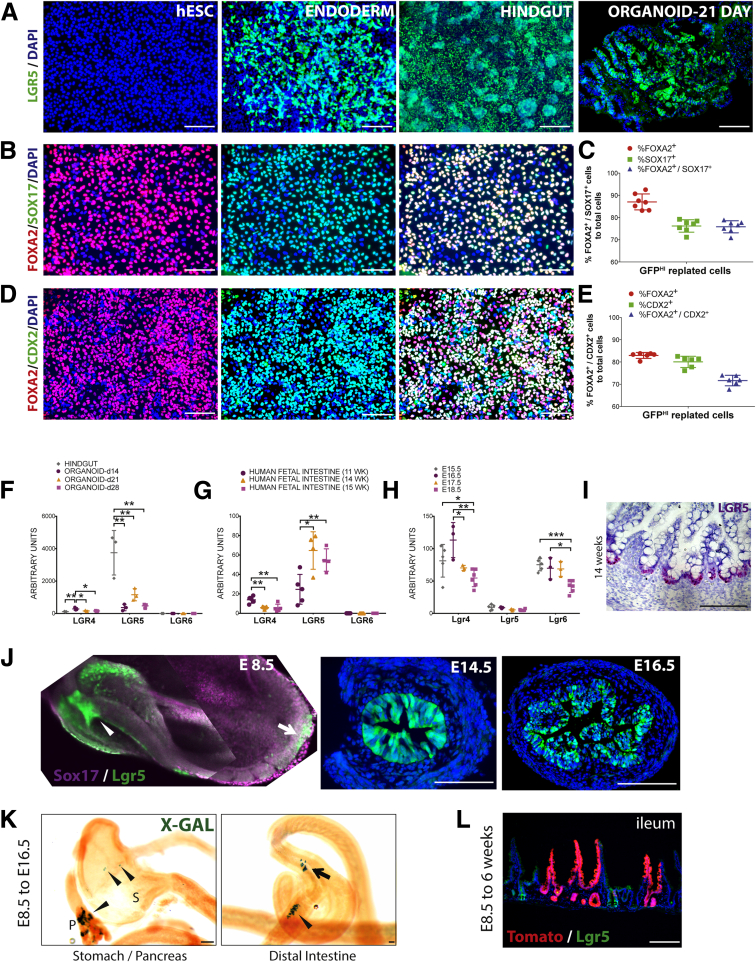
We interrogated the function and expression of LGR family members using human pluripotent stem cell-derived tissues including definitive endoderm, mid/hindgut, and intestinal organoids. We performed embryonic lineage tracing in Lgr5-GFP-IRES-CreERT2 mice.
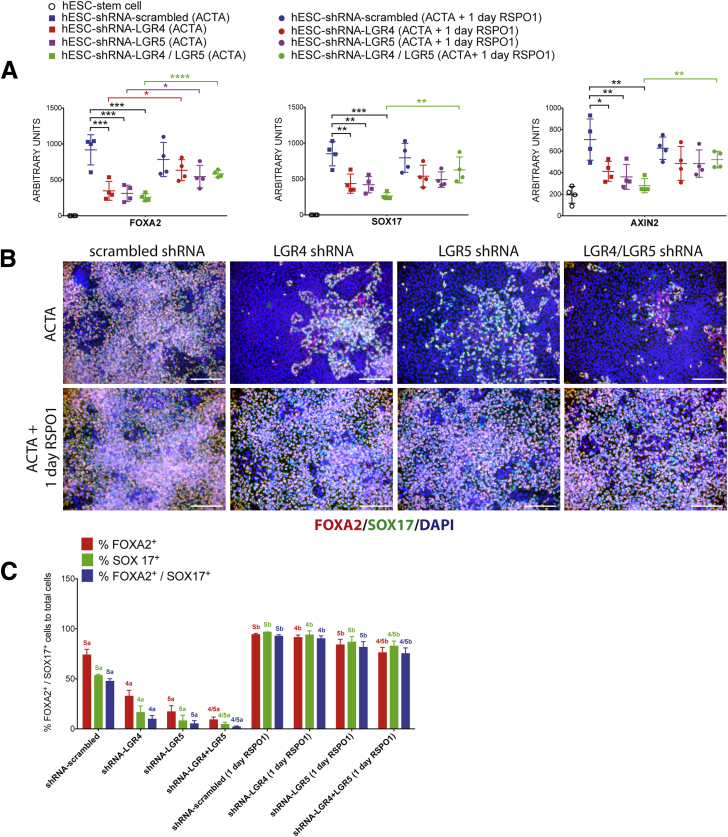
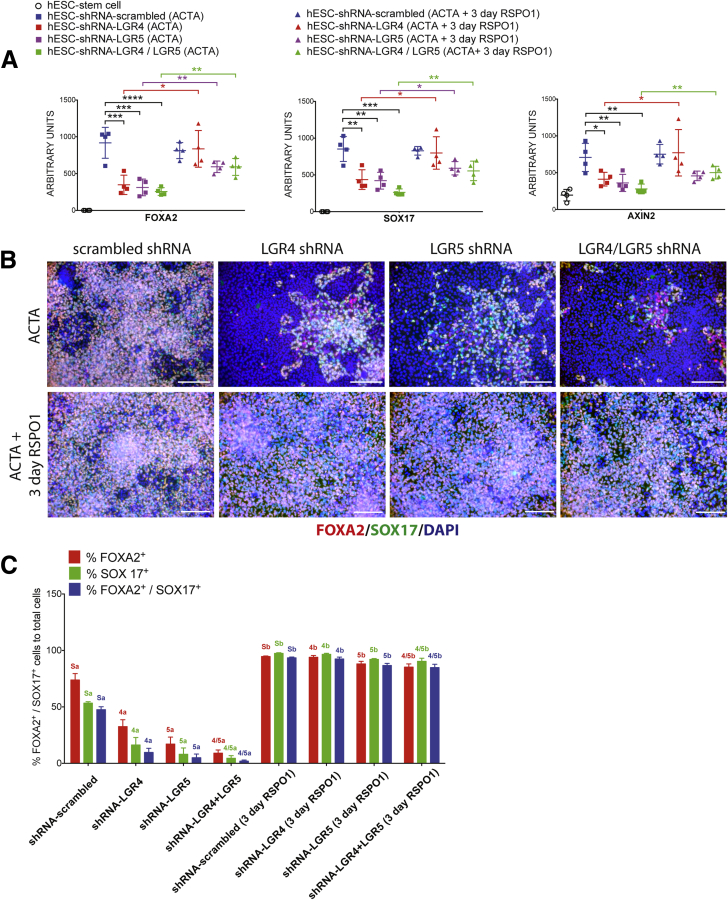
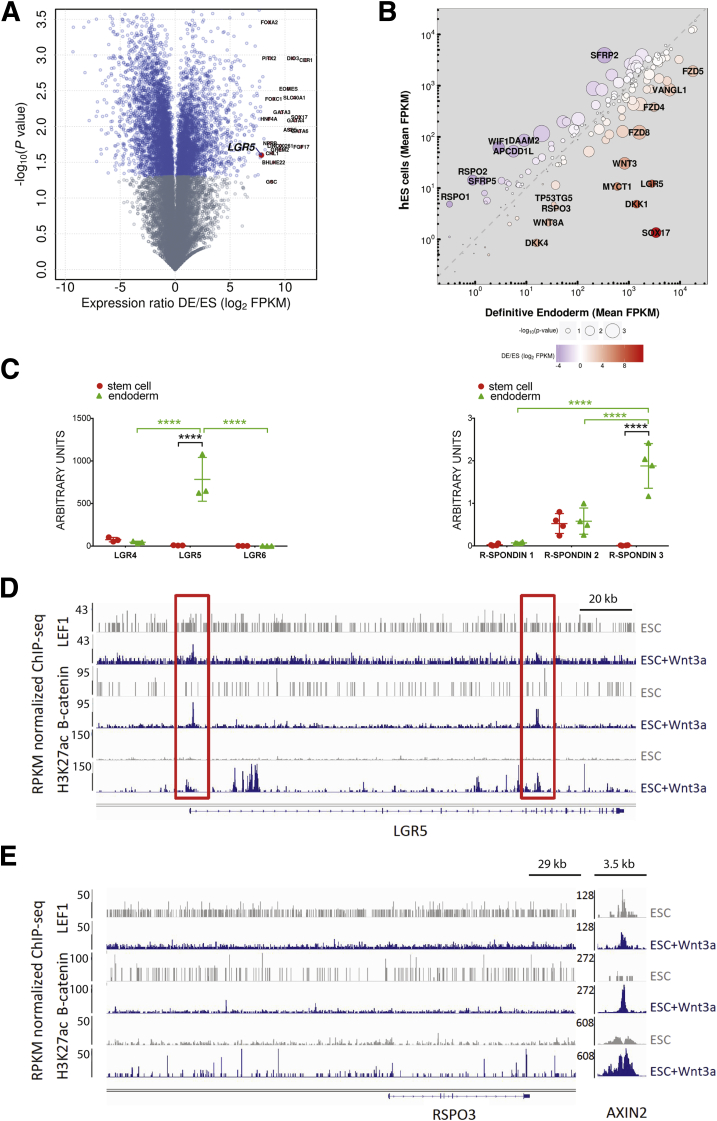
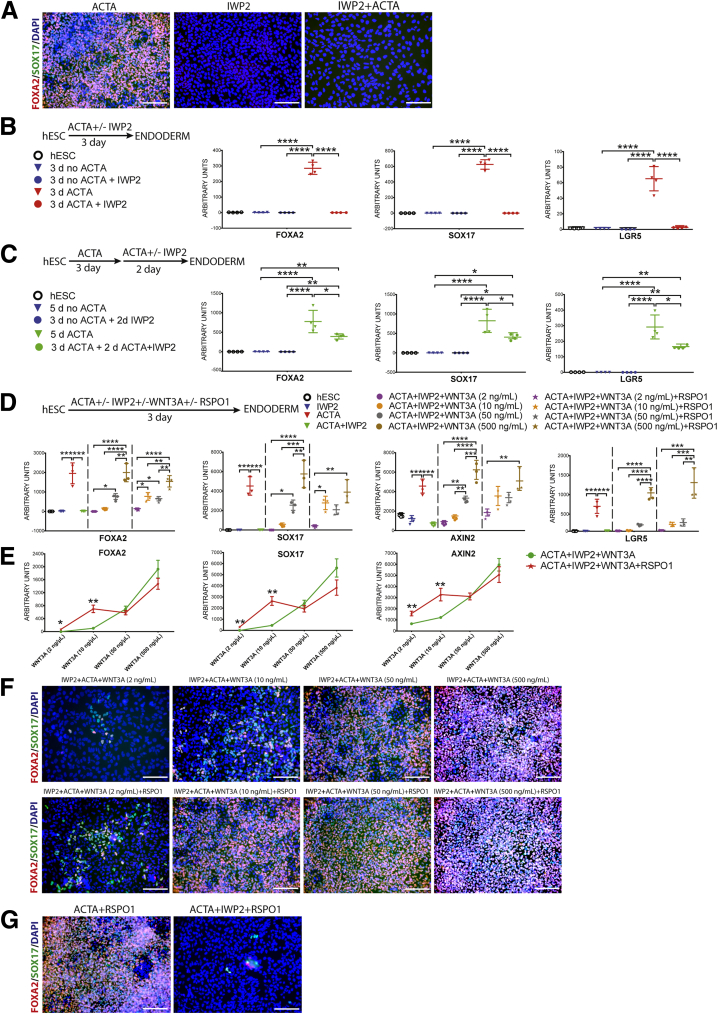
We show that is part of the human definitive endoderm (DE) gene signature, and transcripts are induced robustly when human pluripotent stem cells are differentiated into DE. Our results show that and are functionally required for efficient human endoderm induction. Consistent with data in human DE, we observe reporter (eGFP) activity in the embryonic day 8.5 mouse endoderm, and show the ability to lineage trace these cells into the adult intestine. However, gene expression data also suggest that there are human-mouse species-specific differences at later time points of embryonic development.
Our results show that is induced during DE differentiation, LGR receptors are functionally required for DE induction, and that they function to potentiate WNT signaling during this process.
跨膜蛋白Lgr家族(Lgr4、5、6)作为R-spondin蛋白(Rspo 1、2、3、4)的功能性受体,并在不同情况下增强Wnt信号传导。在小鼠的许多成年和胚胎环境中,Lgr5可以说是Lgr家族成员中特征最明确的。然而,该家族成员在胚胎早期发育中的功能尚不清楚,并且尚未在人类发育或组织分化过程中进行详细研究。
我们使用人类多能干细胞衍生的组织,包括定形内胚层、中/后肠和肠道类器官,来研究LGR家族成员的功能和表达。我们在Lgr5-GFP-IRES-CreERT2小鼠中进行了胚胎谱系追踪。
我们发现LGR是人类定形内胚层(DE)基因特征的一部分,当人类多能干细胞分化为DE时,LGR转录本会被强烈诱导。我们的结果表明,LGR4和LGR6在有效的人类内胚层诱导中具有功能需求。与人类DE中的数据一致,我们在胚胎第8.5天的小鼠内胚层中观察到LGR5报告基因(eGFP)的活性,并显示出将这些细胞进行谱系追踪至成年肠道的能力。然而,基因表达数据也表明,在胚胎发育的后期阶段存在人类和小鼠物种特异性差异。
我们的结果表明,LGR在DE分化过程中被诱导,LGR受体在DE诱导中具有功能需求,并且它们在此过程中起到增强WNT信号传导的作用。