Yan Jiacong, Liu Bo, Shi Yan, Qi Hai
Tsinghua-Peking Center for Life Sciences, Tsinghua University, Beijing 10084, China.
School of Life Sciences, Tsinghua University, Beijing 10084, China.
J Exp Med. 2017 Feb;214(2):319-326. doi: 10.1084/jem.20160629. Epub 2017 Jan 12.
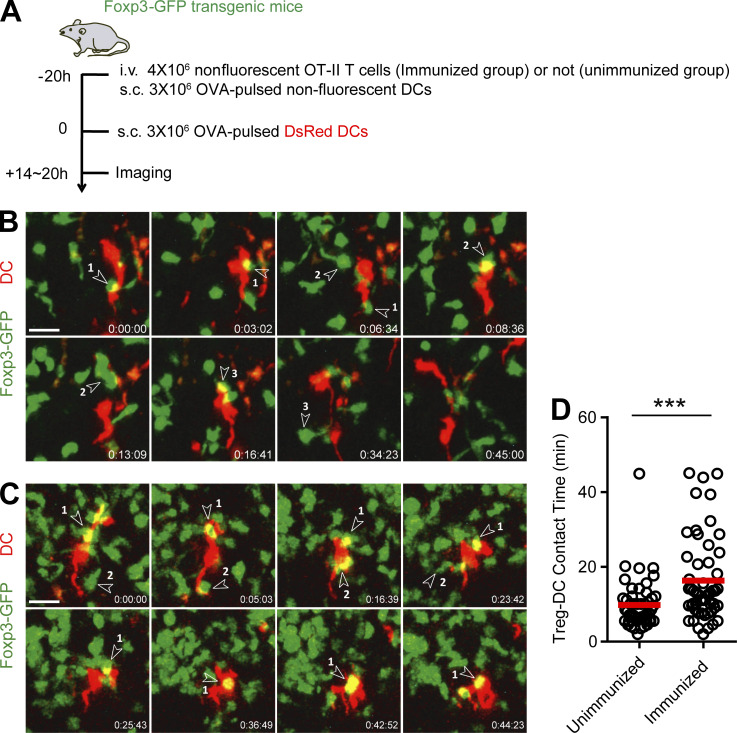
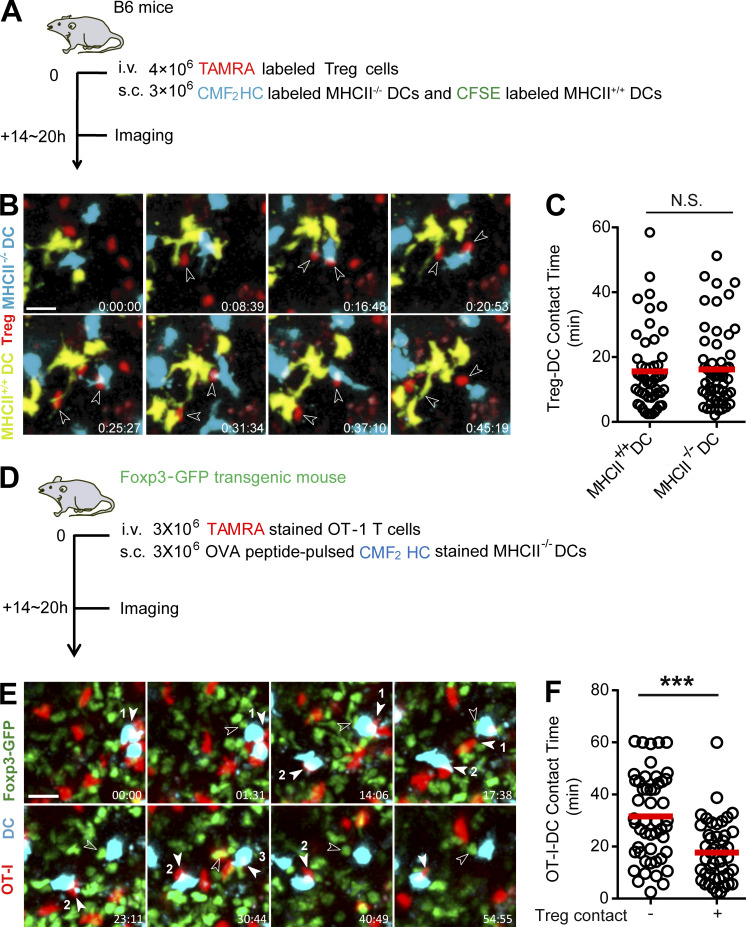
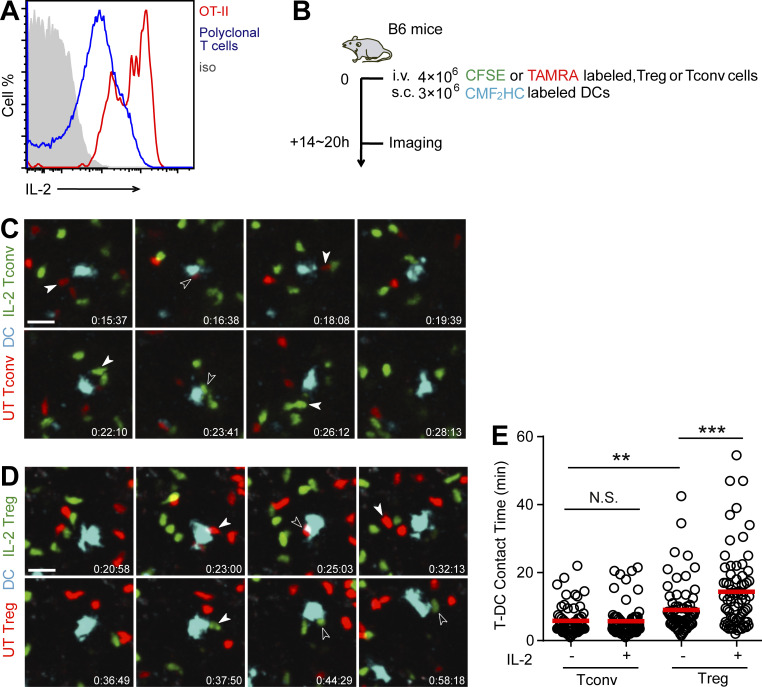
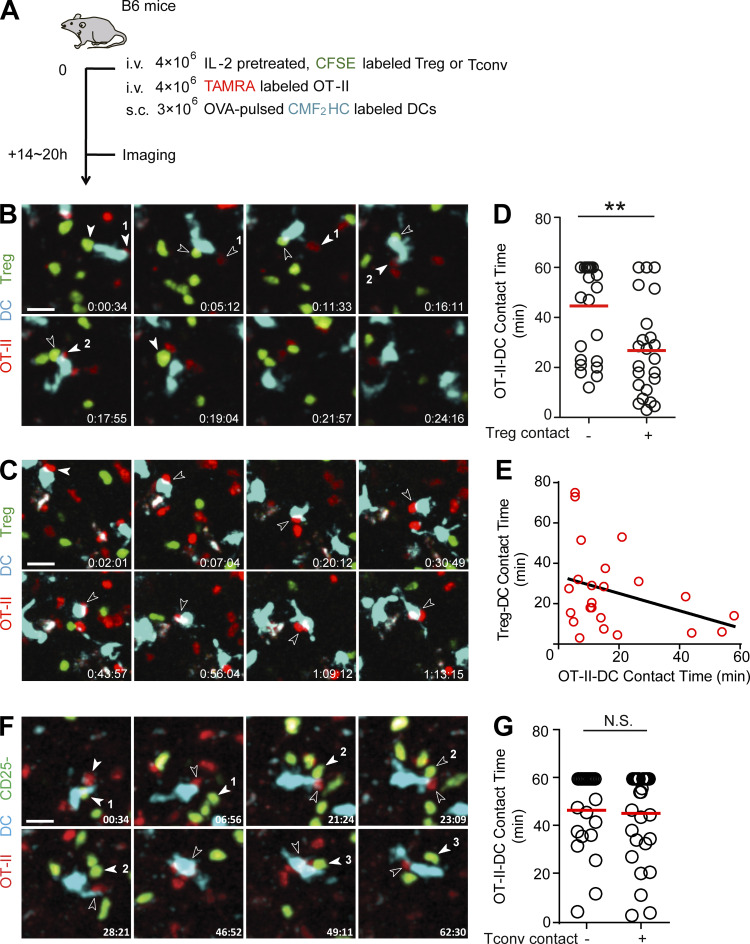
Regulatory T (T reg) cells are essential for peripheral homeostasis and known to target and suppress dendritic cells (DCs). One important mechanism is through prolonged interaction between antigen-specific T reg cells and DCs that down-regulates the co-stimulatory capacity of DCs. However, the dynamics and TCR specificities of such T reg cell-DC interaction and its relevance to the suppressive outcomes for individual DCs have not been clarified. To gain insights into the underlying cellular events in vivo, we analyzed individual T reg cell-DC interaction events in lymph nodes by intravital microscopy. Our results show that, upon exposure to interleukin-2, T reg cells formed prolonged adhesive contact with DCs, independent of antigen or MHC recognition, which significantly suppressed the contemporaneous interaction of the same DCs with antigen-specific conventional T cells and impaired T cell priming. Therefore, T reg cells may function in part as feedback regulators in inflammatory milieu, by suppressing local DCs and interrupting immune activation in a contact-dependent and class II MHC-independent manner.
调节性T(Treg)细胞对于外周稳态至关重要,已知其可靶向并抑制树突状细胞(DC)。一种重要机制是通过抗原特异性Treg细胞与DC之间的长时间相互作用,从而下调DC的共刺激能力。然而,这种Treg细胞与DC相互作用的动力学和TCR特异性及其与单个DC抑制结果的相关性尚未阐明。为了深入了解体内潜在的细胞事件,我们通过活体显微镜分析了淋巴结中单个Treg细胞与DC的相互作用事件。我们的结果表明,在暴露于白细胞介素-2后,Treg细胞与DC形成了长时间的粘附接触,这与抗原或MHC识别无关,显著抑制了同一DC与抗原特异性常规T细胞的同时相互作用,并损害了T细胞启动。因此,Treg细胞可能部分作为炎症环境中的反馈调节因子,通过以接触依赖和II类MHC非依赖的方式抑制局部DC并中断免疫激活来发挥作用。