Cheng Menglin, Bhujwalla Zaver M, Glunde Kristine
Division of Cancer Imaging Research, Russell H. Morgan Department of Radiology and Radiological Science, Johns Hopkins University School of Medicine , Baltimore, MD , USA.
Division of Cancer Imaging Research, Russell H. Morgan Department of Radiology and Radiological Science, Johns Hopkins University School of Medicine, Baltimore, MD, USA; Sidney Kimmel Comprehensive Cancer Center, Johns Hopkins University School of Medicine, Baltimore, MD, USA.
Front Oncol. 2016 Dec 27;6:266. doi: 10.3389/fonc.2016.00266. eCollection 2016.
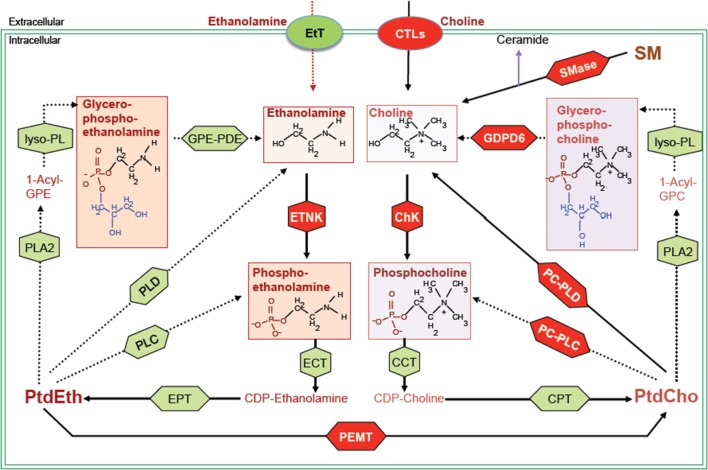
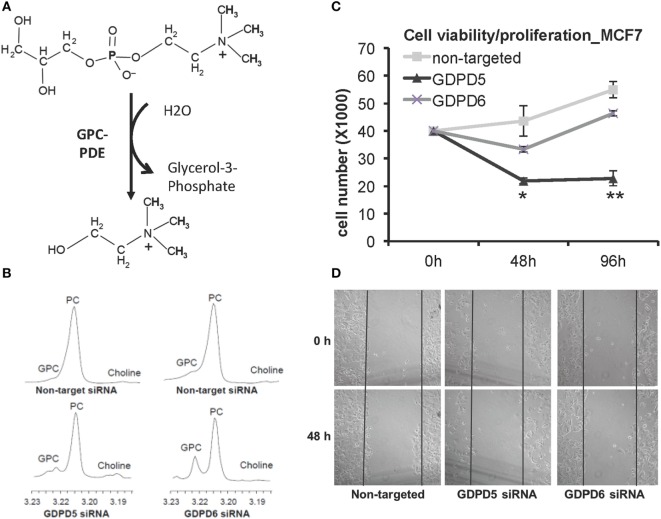
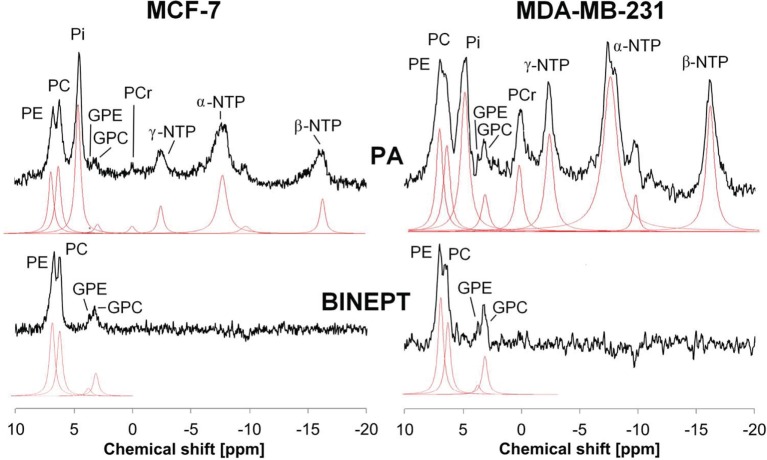
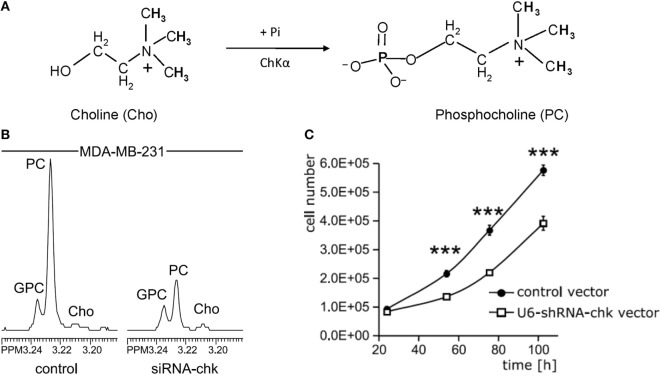
All cancers tested so far display abnormal choline and ethanolamine phospholipid metabolism, which has been detected with numerous magnetic resonance spectroscopy (MRS) approaches in cells, animal models of cancer, as well as the tumors of cancer patients. Since the discovery of this metabolic hallmark of cancer, many studies have been performed to elucidate the molecular origins of deregulated choline metabolism, to identify targets for cancer treatment, and to develop MRS approaches that detect choline and ethanolamine compounds for clinical use in diagnosis and treatment monitoring. Several enzymes in choline, and recently also ethanolamine, phospholipid metabolism have been identified, and their evaluation has shown that they are involved in carcinogenesis and tumor progression. Several already established enzymes as well as a number of emerging enzymes in phospholipid metabolism can be used as treatment targets for anticancer therapy, either alone or in combination with other chemotherapeutic approaches. This review summarizes the current knowledge of established and relatively novel targets in phospholipid metabolism of cancer, covering choline kinase α, phosphatidylcholine-specific phospholipase D1, phosphatidylcholine-specific phospholipase C, sphingomyelinases, choline transporters, glycerophosphodiesterases, phosphatidylethanolamine N-methyltransferase, and ethanolamine kinase. These enzymes are discussed in terms of their roles in oncogenic transformation, tumor progression, and crucial cancer cell properties such as fast proliferation, migration, and invasion. Their potential as treatment targets are evaluated based on the current literature.
迄今为止所检测的所有癌症均显示出胆碱和乙醇胺磷脂代谢异常,这已通过多种磁共振波谱(MRS)方法在细胞、癌症动物模型以及癌症患者的肿瘤中检测到。自发现癌症的这一代谢特征以来,已经开展了许多研究,以阐明胆碱代谢失调的分子起源,确定癌症治疗靶点,并开发用于检测胆碱和乙醇胺化合物的MRS方法,用于临床诊断和治疗监测。胆碱以及最近发现的乙醇胺磷脂代谢中的几种酶已被确定,对它们的评估表明它们参与了致癌作用和肿瘤进展。磷脂代谢中的几种已确定的酶以及一些新出现的酶可单独或与其他化疗方法联合用作抗癌治疗的靶点。本综述总结了目前关于癌症磷脂代谢中已确定和相对新颖靶点的知识,涵盖胆碱激酶α、磷脂酰胆碱特异性磷脂酶D1、磷脂酰胆碱特异性磷脂酶C、鞘磷脂酶、胆碱转运体、甘油磷酸二酯酶、磷脂酰乙醇胺N-甲基转移酶和乙醇胺激酶。本文从这些酶在致癌转化、肿瘤进展以及癌细胞快速增殖、迁移和侵袭等关键特性中的作用方面进行了讨论。基于当前文献对它们作为治疗靶点的潜力进行了评估。