Mustafa Fatin Hamimi, Jones Peter W, McEwan Alistair L
School of Electrical and Information Engineering, Faculty of Engineering, University of Sydney, New South Wales, Australia.
Biomed Eng Online. 2017 Jan 11;16(1):14. doi: 10.1186/s12938-016-0310-y.
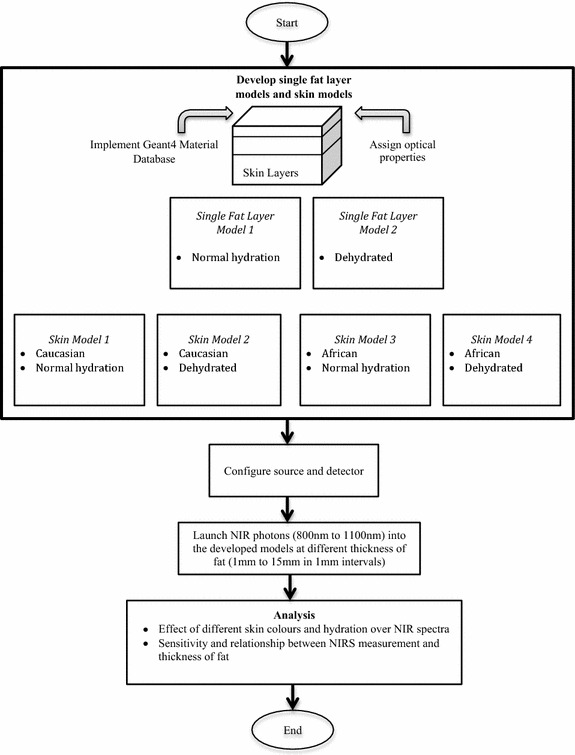
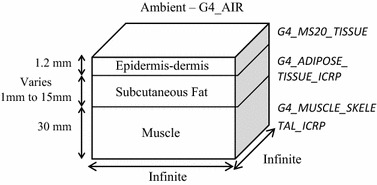
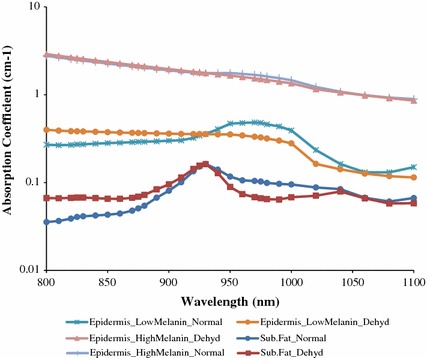
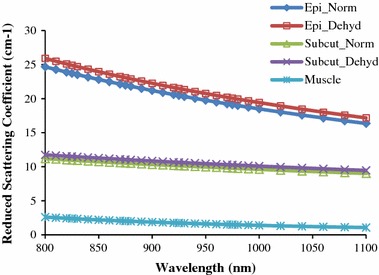
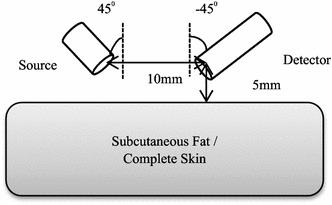
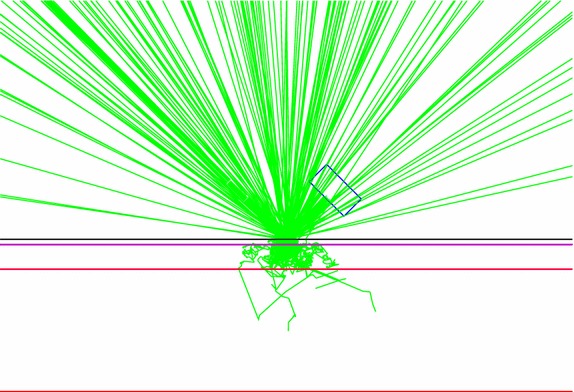
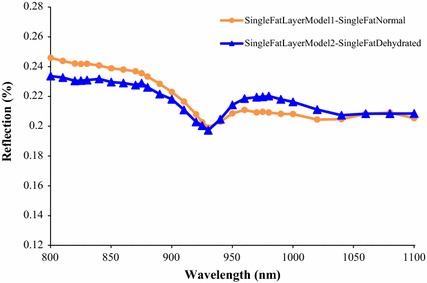
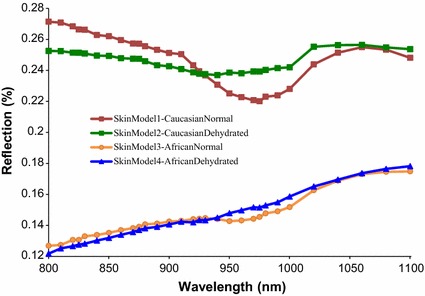
Under-nutrition in neonates is closely linked to low body fat percentage. Undernourished neonates are exposed to immediate mortality as well as unwanted health impacts in their later life including obesity and hypertension. One potential low cost approach for obtaining direct measurements of body fat is near-infrared (NIR) interactance. The aims of this study were to model the effect of varying volume fractions of melanin and water in skin over NIR spectra, and to define sensitivity of NIR reflection on changes of thickness of subcutaneous fat. GAMOS simulations were used to develop two single fat layer models and four complete skin models over a range of skin colour (only for four skin models) and hydration within a spectrum of 800-1100 nm. The thickness of the subcutaneous fat was set from 1 to 15 mm in 1 mm intervals in each model.
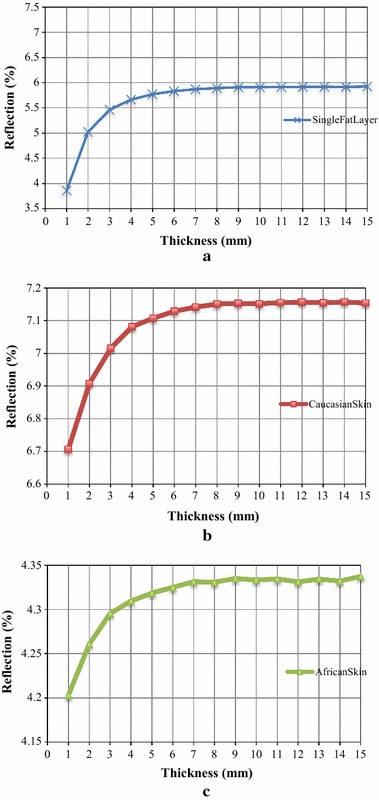
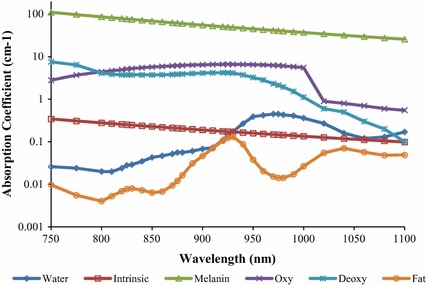
Varying volume fractions of water in skin resulted minimal changes of NIR intensity at ranges of wavelengths from 890 to 940 nm and from 1010 to 1100 nm. Variation of the melanin volume in skin meanwhile was found to strongly influence the NIR intensity and sensitivity. The NIR sensitivities and NIR intensity over thickness of fat decreased from the Caucasian skin to African skin throughout the range of wavelengths. For the relationship between the NIR reflection and the thickness of subcutaneous fat, logarithmic relationship was obtained.
The minimal changes of NIR intensity values at wavelengths within the ranges from 890 to 940 nm and from 1010 to 1100 nm to variation of volume fractions of water suggests that wavelengths within those two ranges are considered for use in measurement of body fat to solve the variation of hydration in neonates. The stronger influence of skin colour on NIR shows that the melanin effect needs to be corrected by an independent measurement or by a modeling approach. The logarithmic response obtained with higher sensitivity at the lower range of thickness of fat suggests that implementation of NIRS may be suited for detecting under-nutrition and monitoring nutritional interventions for malnutrition in neonates in resource-constrained communities.
新生儿营养不良与低体脂百分比密切相关。营养不良的新生儿面临直接死亡风险,以及日后包括肥胖和高血压在内的不良健康影响。一种获取体脂直接测量值的潜在低成本方法是近红外(NIR)相互作用。本研究的目的是模拟皮肤中黑色素和水的不同体积分数对近红外光谱的影响,并确定近红外反射对皮下脂肪厚度变化的敏感性。使用GAMOS模拟在800 - 1100 nm光谱范围内,针对一系列肤色(仅适用于四个皮肤模型)和水合作用,开发了两个单脂肪层模型和四个完整皮肤模型。每个模型中皮下脂肪厚度设定为从1到15毫米,间隔为1毫米。
皮肤中水的不同体积分数在890至940 nm波长范围以及1010至1100 nm波长范围内导致近红外强度的变化最小。同时发现皮肤中黑色素体积的变化对近红外强度和敏感性有强烈影响。在整个波长范围内,从白种人皮肤到非洲人皮肤,近红外敏感性和近红外强度随脂肪厚度的增加而降低。对于近红外反射与皮下脂肪厚度之间的关系,得到了对数关系。
在890至940 nm波长范围以及1010至1100 nm波长范围内,近红外强度值对水体积分数变化的最小变化表明,可考虑使用这两个范围内的波长来测量体脂,以解决新生儿水合作用的变化。肤色对近红外的更强影响表明,黑色素效应需要通过独立测量或建模方法进行校正。在较低脂肪厚度范围内获得的具有较高敏感性的对数响应表明,近红外光谱法的应用可能适用于在资源有限的社区中检测新生儿营养不良以及监测营养不良的营养干预措施。