Esnault Stephane, Torr Elizabeth E, Bernau Ksenija, Johansson Mats W, Kelly Elizabeth A, Sandbo Nathan, Jarjour Nizar N
Department of Medicine, Division of Allergy, Pulmonary and Critical Care Medicine, the University of Wisconsin-Madison School of Medicine and Public Health, Madison, Wisconsin, United States of America.
Department of Biomolecular Chemistry, the University of Wisconsin-Madison School of Medicine and Public Health, Madison, Wisconsin, United States of America.
PLoS One. 2017 Jan 17;12(1):e0170207. doi: 10.1371/journal.pone.0170207. eCollection 2017.
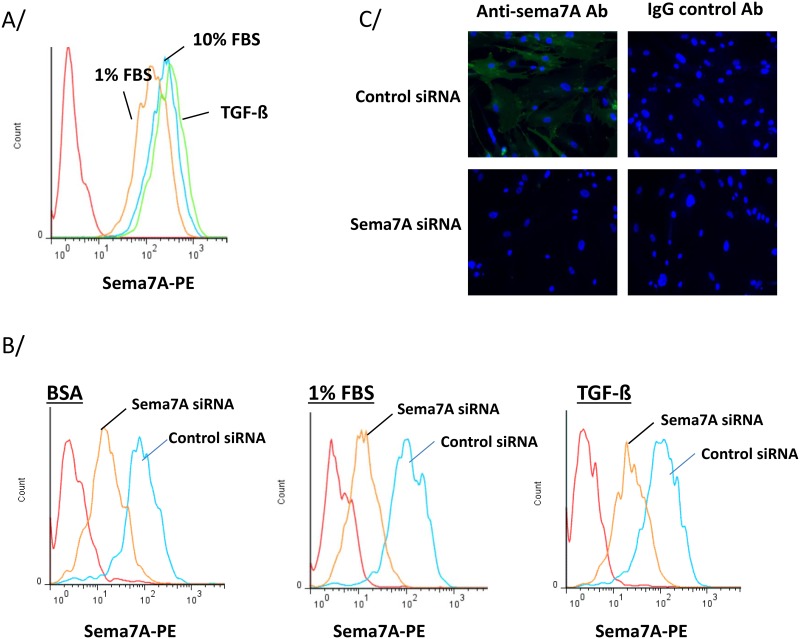
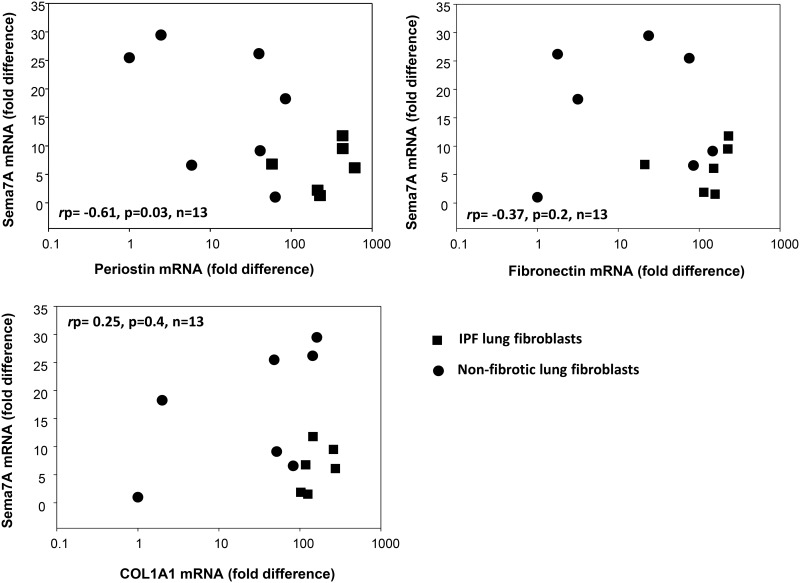
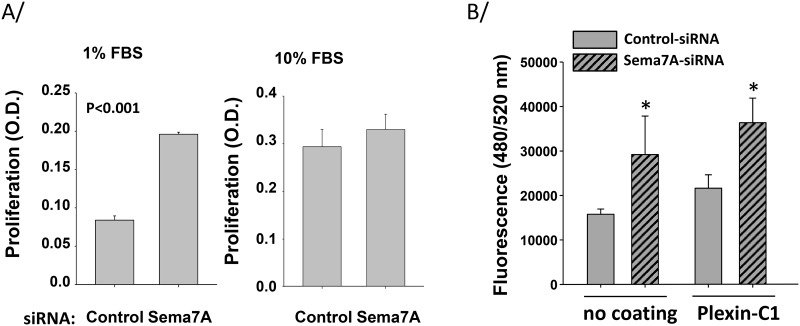
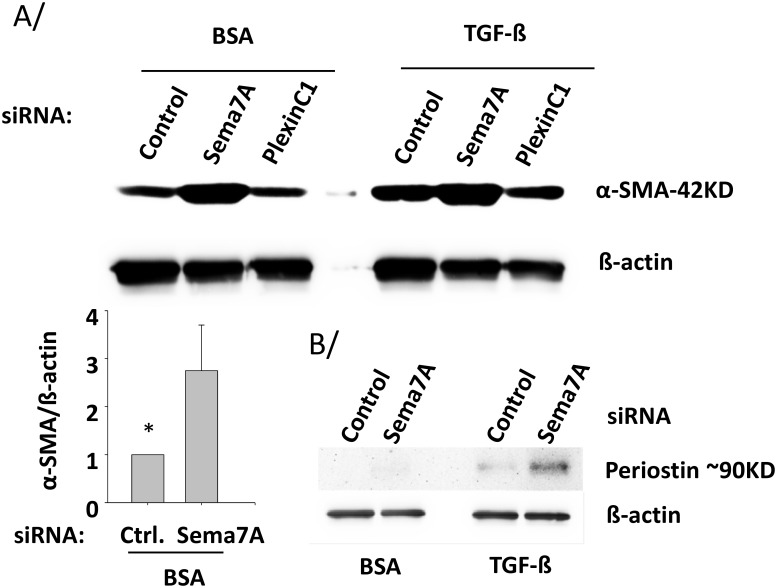
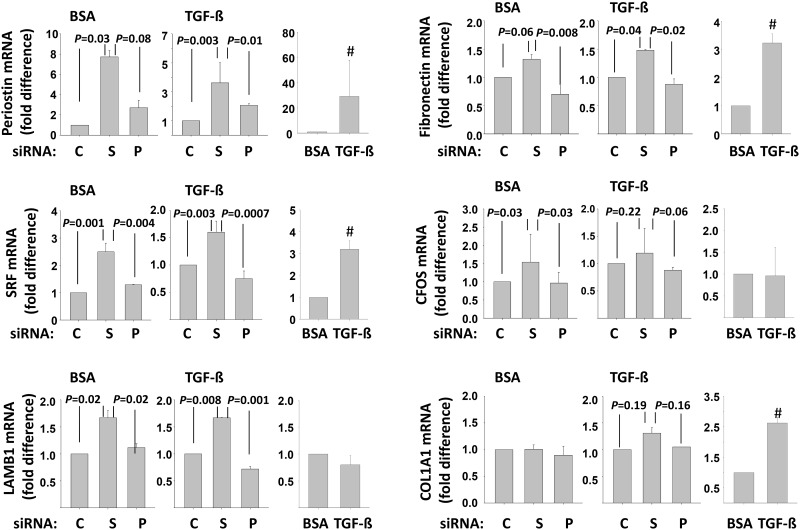
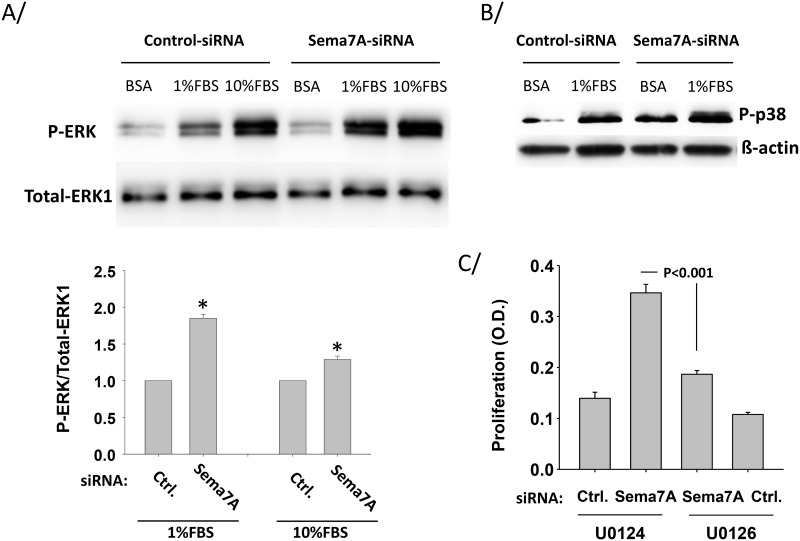
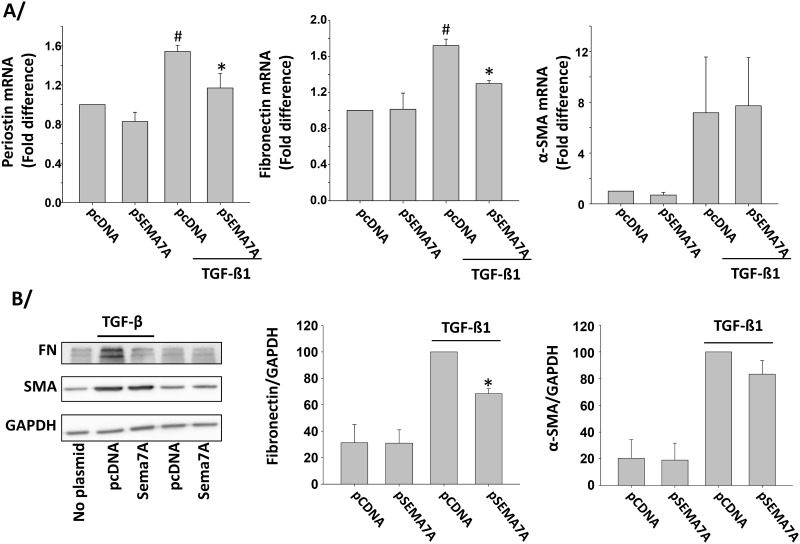
Semaphorin-7A is a glycosylphosphatidylinositol-anchored protein, initially characterized as an axon guidance protein. Semaphorin-7A also contributes to immune cell regulation and may be an essential pro-fibrotic factor when expressed by non-fibroblast cell types (exogenous). In mouse models, semaphorin-7A was shown to be important for TGF-ß1-induced pulmonary fibrosis characterized by myofibroblast accumulation and extracellular matrix deposition, but the cell-specific role of semaphorin-7A was not examined in fibroblasts. The purpose of this study is to determine semaphorin-7A expression by fibroblasts and to investigate the function of endogenously expressed semaphorin-7A in primary human lung fibroblasts (HLF). Herein, we show that non-fibrotic HLF expressed high levels of cell surface semaphorin-7A with little dependence on the percentage of serum or recombinant TGF-ß1. Semaphorin-7A siRNA strongly decreased semaphorin-7A mRNA expression and reduced cell surface semaphorin-7A. Reduction of semaphorin-7A induced increased proliferation and migration of non-fibrotic HLF. Also, independent of the presence of TGF-ß1, the decline of semaphorin-7A by siRNA was associated with increased α-smooth muscle actin production and gene expression of periostin, fibronectin, laminin, and serum response factor (SRF), indicating differentiation into a myofibroblast. Conversely, overexpression of semaphorin-7A in the NIH3T3 fibroblast cell line reduced the production of pro-fibrotic markers. The inverse association between semaphorin-7A and pro-fibrotic fibroblast markers was further analyzed using HLF from idiopathic pulmonary fibrosis (IPF) (n = 6) and non-fibrotic (n = 7) lungs. Using these 13 fibroblast lines, we observed that semaphorin-7A and periostin expression were inversely correlated. In conclusion, our study indicates that endogenous semaphorin-7A in HLF plays a role in maintaining fibroblast homeostasis by preventing up-regulation of pro-fibrotic genes. Therefore, endogenous and exogenous semaphorin-7A may have opposite effects on the fibroblast phenotype.
信号素-7A是一种糖基磷脂酰肌醇锚定蛋白,最初被表征为一种轴突导向蛋白。信号素-7A也参与免疫细胞调节,当由非成纤维细胞类型(外源性)表达时,可能是一种重要的促纤维化因子。在小鼠模型中,信号素-7A被证明对转化生长因子-β1诱导的以肌成纤维细胞积累和细胞外基质沉积为特征的肺纤维化很重要,但信号素-7A在成纤维细胞中的细胞特异性作用尚未得到研究。本研究的目的是确定成纤维细胞中信号素-7A的表达,并研究内源性表达的信号素-7A在原代人肺成纤维细胞(HLF)中的功能。在此,我们表明非纤维化的HLF表达高水平的细胞表面信号素-7A,对血清或重组转化生长因子-β1的百分比依赖性很小。信号素-7A小干扰RNA强烈降低信号素-7A mRNA表达并减少细胞表面信号素-7A。信号素-7A的减少诱导非纤维化HLF的增殖和迁移增加。此外,独立于转化生长因子-β1的存在,小干扰RNA导致的信号素-7A下降与α-平滑肌肌动蛋白产生增加以及骨膜蛋白、纤连蛋白、层粘连蛋白和血清反应因子(SRF)的基因表达增加相关,表明分化为肌成纤维细胞。相反,在NIH3T3成纤维细胞系中过表达信号素-7A可减少促纤维化标志物的产生。使用来自特发性肺纤维化(IPF)(n = 6)和非纤维化(n = 7)肺的HLF进一步分析信号素-7A与促纤维化成纤维细胞标志物之间的负相关关系。使用这13个成纤维细胞系,我们观察到信号素-7A和骨膜蛋白的表达呈负相关。总之,我们的研究表明HLF中的内源性信号素-7A通过防止促纤维化基因的上调在维持成纤维细胞稳态中发挥作用。因此,内源性和外源性信号素-7A可能对成纤维细胞表型具有相反的作用。