Nakamura Yukio, Hoppler Stefan
Institute of Medical Sciences, Foresterhill Health Campus, University of Aberdeen, Aberdeen, AB25 2ZD, United Kingdom.
Genesis. 2017 Jan;55(1-2). doi: 10.1002/dvg.22991.
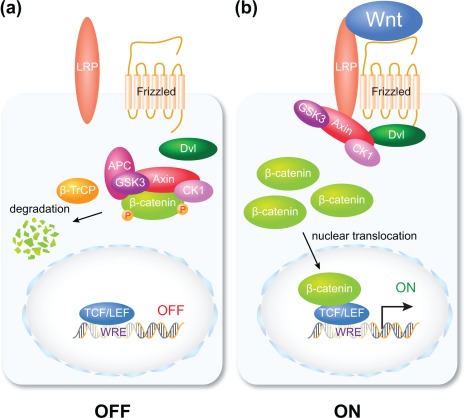
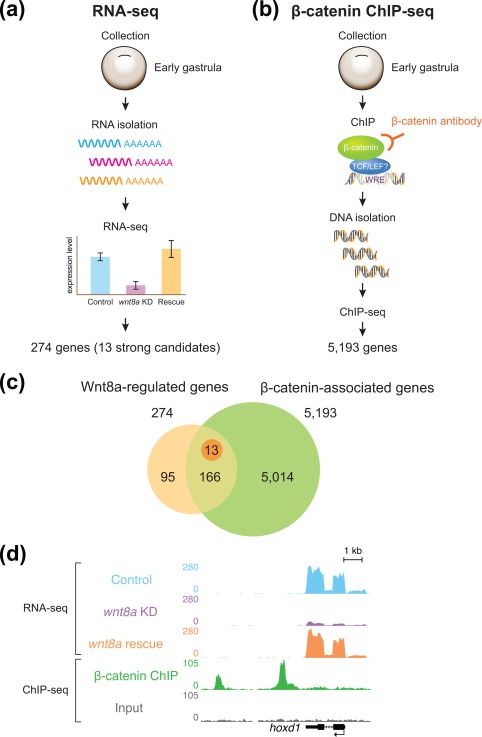
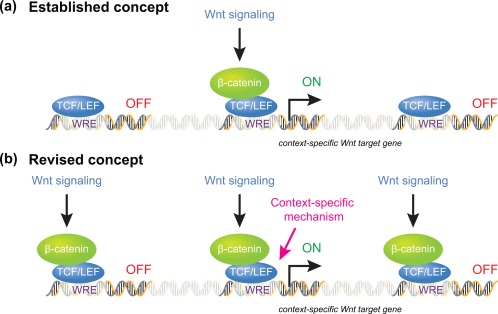
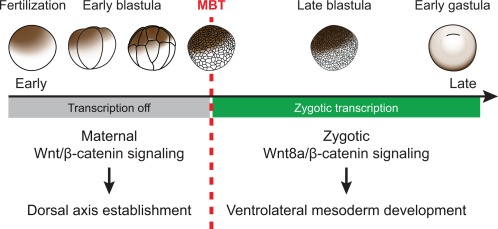
Wnt/β-catenin signaling is an important cell-to-cell signaling mechanism that controls gene expression during embryonic development and is critically implicated in human diseases. Developmental, cellular, and transcriptional responses to Wnt signaling are remarkably context-specific in different biological processes. While nuclear localization of β-catenin is the key to activation of the Wnt/β-catenin pathway and target gene expression, the molecular mechanisms of how the same Wnt/β-catenin signaling pathway induces specific responses remain undetermined. Recent advances in high-throughput sequencing technologies and the availability of genome information for Xenopus tropicalis have enabled us to uncover a genome-wide view of Wnt/β-catenin signaling in early vertebrate embryos, which challenges previous concepts about molecular mechanisms of Wnt target gene regulation. In this review, we summarize our experimental approaches, introduce the technologies we employed and focus on recent findings about Wnt target gene regulation from Xenopus research. We will also discuss potential functions of widespread β-catenin binding in the genome that we discovered in this species.
Wnt/β-连环蛋白信号传导是一种重要的细胞间信号传导机制,在胚胎发育过程中控制基因表达,并且与人类疾病密切相关。在不同的生物学过程中,对Wnt信号传导的发育、细胞和转录反应具有显著的背景特异性。虽然β-连环蛋白的核定位是激活Wnt/β-连环蛋白途径和靶基因表达的关键,但相同的Wnt/β-连环蛋白信号传导途径如何诱导特定反应的分子机制仍未确定。高通量测序技术的最新进展以及热带爪蟾基因组信息的可得性,使我们能够揭示早期脊椎动物胚胎中Wnt/β-连环蛋白信号传导的全基因组视图,这对先前关于Wnt靶基因调控分子机制的概念提出了挑战。在这篇综述中,我们总结了我们的实验方法,介绍了我们使用的技术,并重点关注来自爪蟾研究的关于Wnt靶基因调控的最新发现。我们还将讨论我们在该物种中发现的基因组中广泛存在的β-连环蛋白结合的潜在功能。