Hirayasu Yoshio, Sato Shin-Ichi, Shuto Norifumi, Nakano Miwa, Higuchi Teruhiko
Department of Psychiatry, Yokohama City University Graduate School of Medicine, Yokohama, Japan.
Chugai Pharmaceutical Co., Ltd., Tokyo, Japan.
Psychiatry Investig. 2017 Jan;14(1):63-73. doi: 10.4306/pi.2017.14.1.63. Epub 2016 Dec 29.
The aim of the present study was to perform a subgroup analysis of data from a phase II global, multi-center, randomized, double-blind, placebo-controlled study to evaluate the efficacy and safety of bitopertin, a glycine reuptake inhibitor that activates N-methyl-D-aspartate receptors by increasing the concentration of glycine in the synaptic cleft, in Japanese and non-Japanese patients with schizophrenia and predominant negative symptoms.
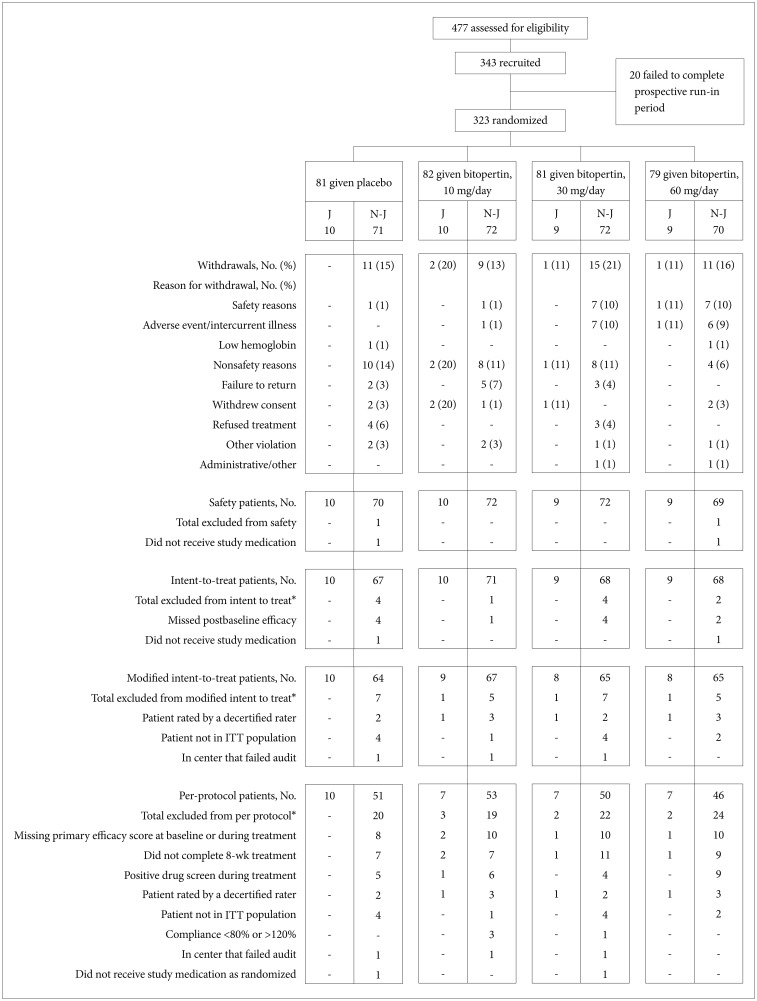
Patients with schizophrenia and predominant negative symptoms on one or two antipsychotic drugs, including atypical antipsychotic drugs (olanzapine, risperidone, quetiapine, aripiprazole, and paliperidone) as the primary treatment, received bitopertin (10, 30, or 60 mg/day) or placebo once daily for 8 weeks as an add-on treatment. Efficacy was assessed using the Positive and Negative Syndrome Scale (PANSS) negative symptom factor score (NSFS).
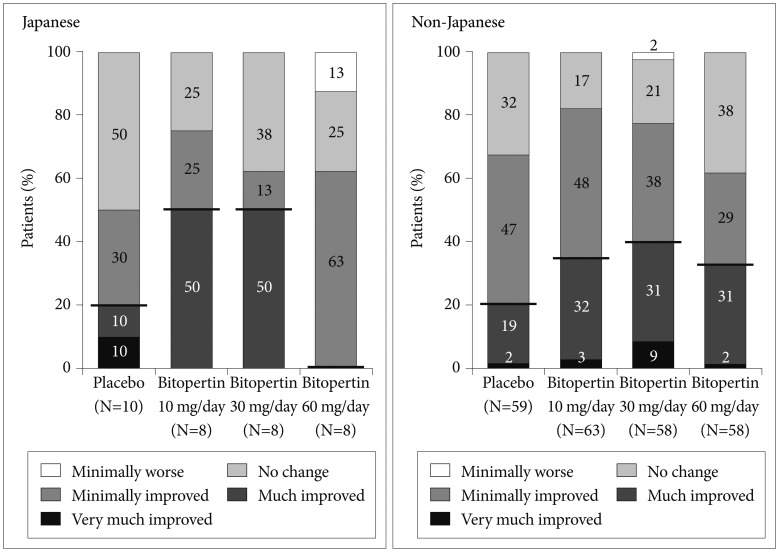
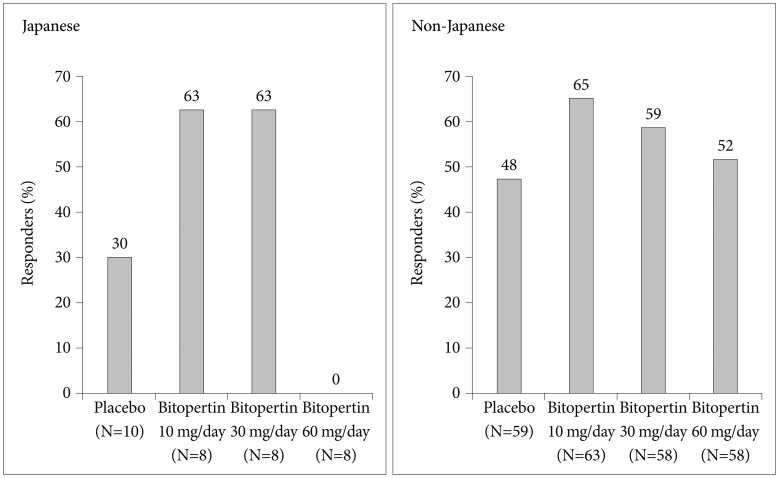
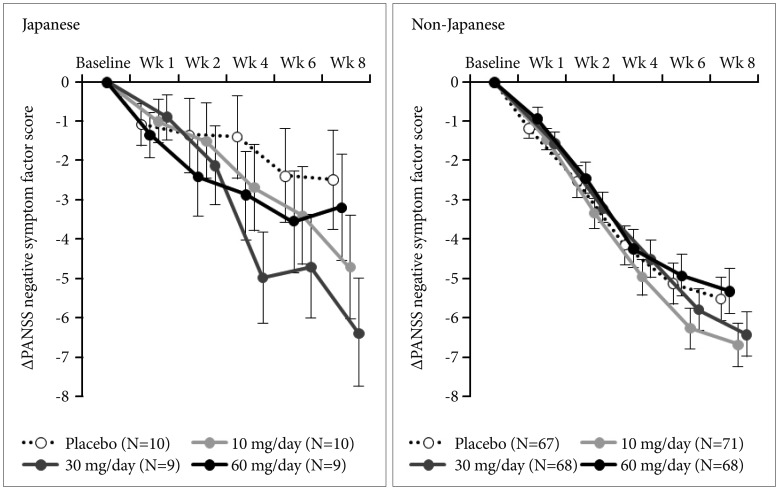
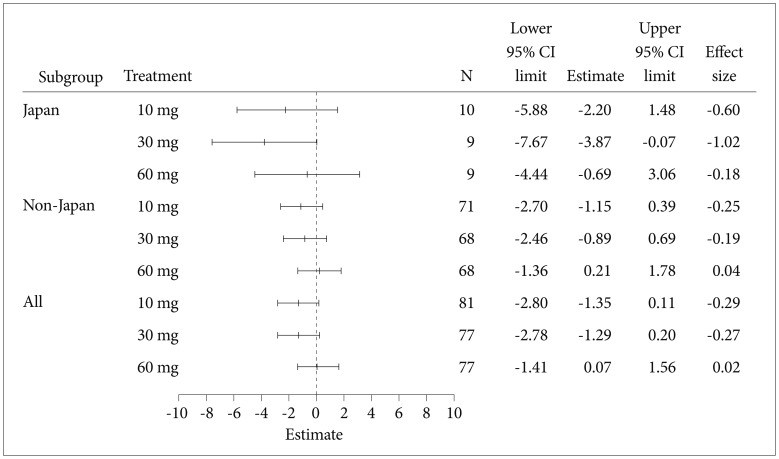
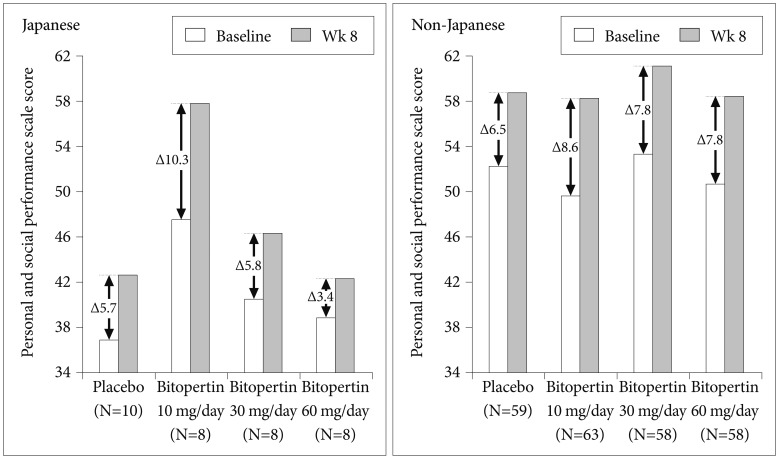
The efficacy of bitopertin (10 mg and 30 mg) was similar between Japanese and non-Japanese patients. In the bitopertin 60-mg group, no difference from the placebo group was observed in Japanese or non-Japanese patients. The response to placebo was lower in Japanese patients, and there was a trend towards a greater difference in the change in PANSS NSFS between the placebo group and the 10-mg and 30-mg groups among Japanese patients. The safety profile of bitopertin was favorable in Japanese and non-Japanese patients.
According to this subgroup analysis from a global phase II study of bitopertin, there was no difference in terms of efficacy and safety between Japanese and non-Japanese patients.
本研究旨在对一项II期全球多中心随机双盲安慰剂对照研究的数据进行亚组分析,以评估甘氨酸再摄取抑制剂比特肽的疗效和安全性。比特肽可通过增加突触间隙中甘氨酸的浓度来激活N-甲基-D-天冬氨酸受体,用于治疗有明显阴性症状的日本和非日本精神分裂症患者。
以一种或两种抗精神病药物(包括非典型抗精神病药物奥氮平、利培酮、喹硫平、阿立哌唑和帕利哌酮)作为主要治疗药物,有明显阴性症状的精神分裂症患者接受为期8周的附加治疗,每日一次服用比特肽(10、30或60毫克/天)或安慰剂。使用阳性和阴性症状量表(PANSS)阴性症状因子评分(NSFS)评估疗效。
日本患者和非日本患者中,比特肽(10毫克和30毫克)的疗效相似。在比特肽60毫克组中,日本和非日本患者与安慰剂组之间均未观察到差异。日本患者对安慰剂的反应较低,并且在安慰剂组与10毫克和30毫克组之间,日本患者的PANSS NSFS变化差异有增大趋势。比特肽在日本和非日本患者中的安全性良好。
根据这项关于比特肽的全球II期研究的亚组分析,日本患者和非日本患者在疗效和安全性方面没有差异。