Calara Paul S, Althin Rikard, Carlsson Katarina Steen, Schmitt-Egenolf Marcus
The Swedish Institute for Health Economics (IHE), Lund, Sweden.
Department of Clinical Sciences, Malmö, Lund University, Lund, Sweden.
BioDrugs. 2017 Feb;31(1):75-82. doi: 10.1007/s40259-016-0209-y.
Observational studies suggest an inequitable prescription of biologics in psoriasis care, which may be attributed to geographical differences in treatment access. Sweden regularly ranks high in international comparisons of equitable healthcare, and is, in connection with established national registries, an ideal country to investigate potential inequitable access.
The aim was to determine whether the opportunity for patients to receive biologics depends on where they receive care.
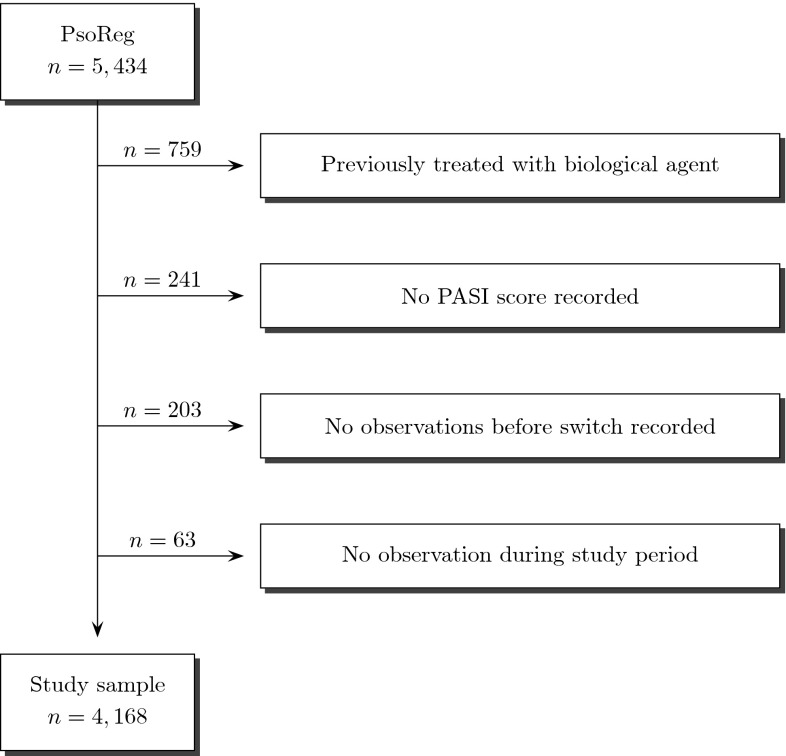
Biologic-naïve patients enrolled in the Swedish National Register for Systemic Treatment of Psoriasis (PsoReg) from 2008 to 2015 (n = 4168) were included. The association between the likelihood of initiating a biologic and the region where patients received care was analyzed. The strength of the association was adjusted for patient and clinical characteristics, as well as disease severity using logistic regression analysis. The proportion of patients that switched to a biologic (switch rate) and the probability of switch to a biologic was calculated in 2-year periods.
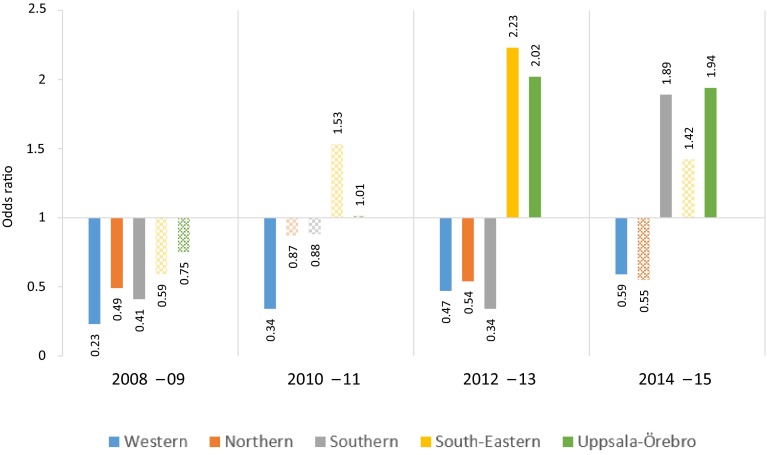
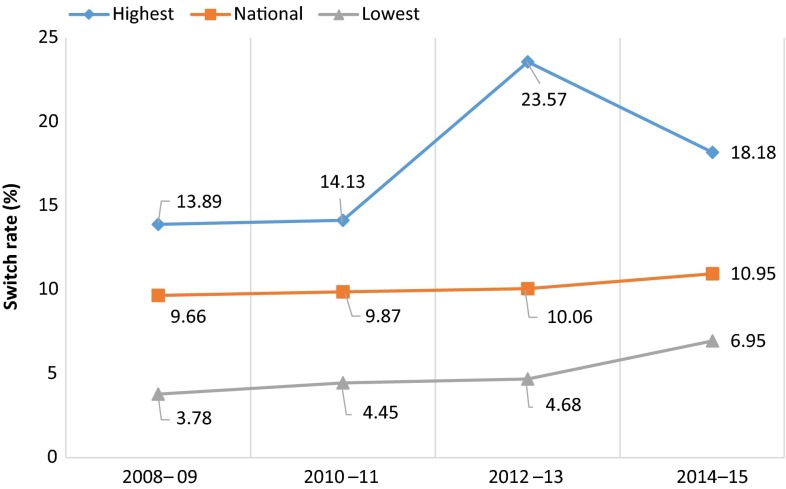
The national switch rate increased marginally over time from 9.7 to 11.0%, though the uptake varied across regions. Adjusted odds ratios for at least one region were significantly different from the reference region in every 2-year period. During the latest period (2014-2015), the average patient in the lowest prescribing region was nearly 2.5 times less likely to switch as a similar patient in the highest prescribing region.
Geographical differences in biologics prescription persist after adjusting for patient characteristics and disease severity. The Swedish example calls for further improvements in delivering equitable psoriasis care.
观察性研究表明,银屑病治疗中生物制剂的处方存在不公平现象,这可能归因于治疗可及性的地域差异。在公平医疗的国际比较中,瑞典通常排名靠前,并且结合已建立的国家登记系统,瑞典是调查潜在不公平可及性的理想国家。
旨在确定患者接受生物制剂治疗的机会是否取决于其接受治疗的地点。
纳入2008年至2015年在瑞典全国银屑病系统治疗登记处(PsoReg)登记的初治生物制剂患者(n = 4168)。分析开始使用生物制剂的可能性与患者接受治疗的地区之间的关联。使用逻辑回归分析对关联强度进行调整,以考虑患者和临床特征以及疾病严重程度。计算2年期间改用生物制剂的患者比例(转换率)和改用生物制剂的概率。
随着时间的推移,全国转换率略有上升,从9.7%升至11.0%,尽管各地区的使用率有所不同。在每2年期间,至少一个地区的调整优势比与参考地区显著不同。在最近一个时期(2014 - 2015年),处方率最低地区的普通患者改用生物制剂的可能性比处方率最高地区的类似患者低近2.5倍。
在调整患者特征和疾病严重程度后,生物制剂处方的地域差异依然存在。瑞典的例子表明,在提供公平的银屑病治疗方面需要进一步改进。