Institut für Theoretische Physik, TU Wien, Wiedner Hauptstraße 8-10, A-1040 Wien, Austria.
Institut für Theoretische Physik and Center for Computational Materials Science (CMS), TU Wien, Wiedner Hauptstraße 8-10, A-1040 Wien, Austria.
Nanoscale. 2017 Feb 2;9(5):1956-1963. doi: 10.1039/c6nr07987c.
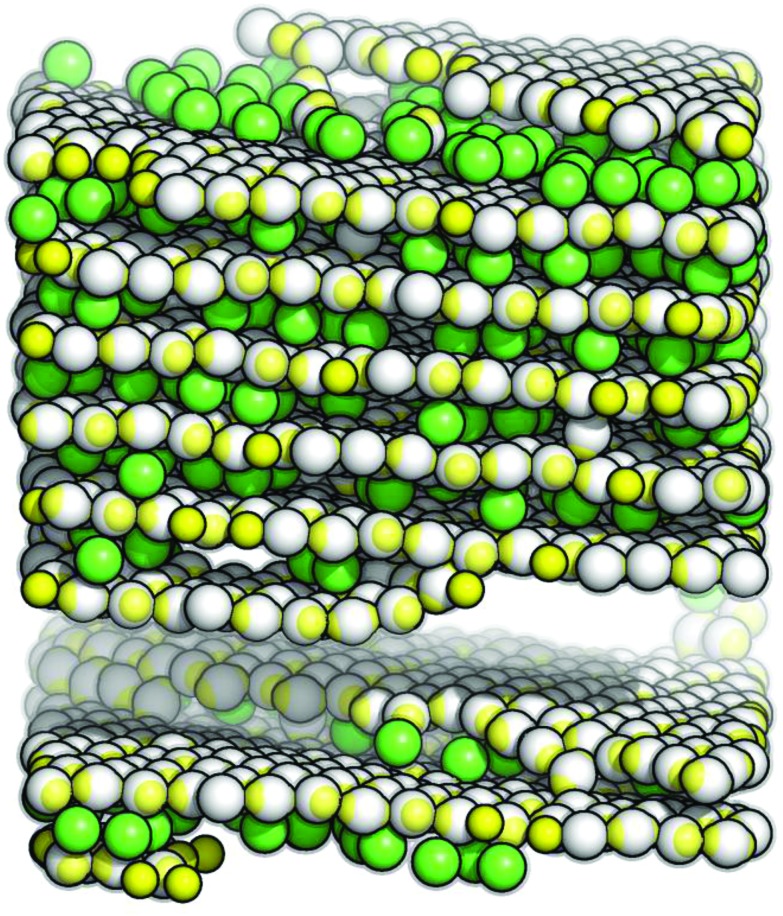
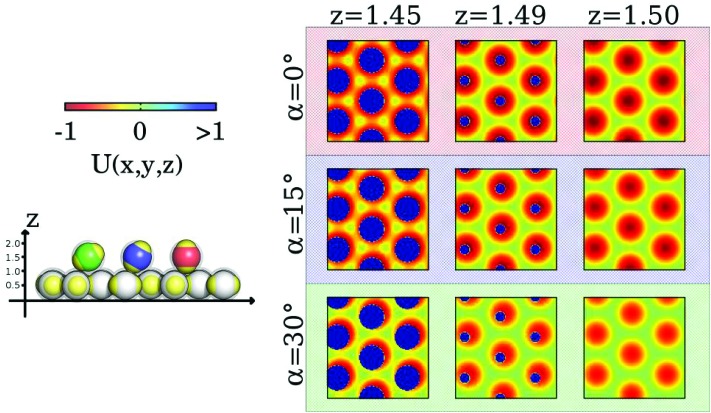
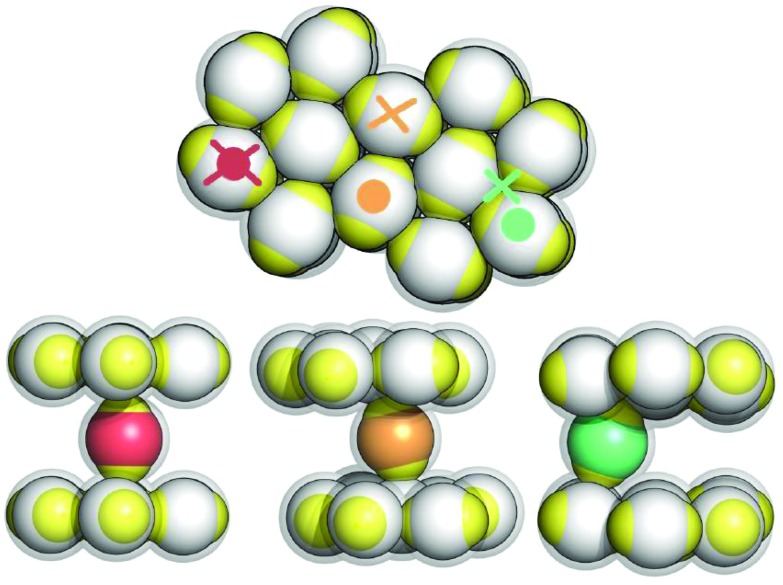
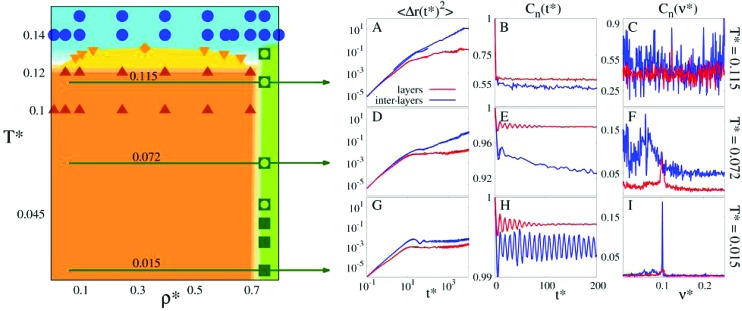
Materials with well-defined architectures are heavily sought after in view of their diverse technological applications. Among the desired target architectures, lamellar phases stand out for their exceptional mechanical and optical features. Here we show that charged colloids, decorated on their poles with two oppositely charged regions possess the unusual ability to spontaneously assemble in different morphologies of (semi-)ordered, layered particle arrangements which maintain their structural stability over a surprisingly large temperature range. This remarkable capacity is related to a characteristic bonding mechanism: stable intra-layer bonds guarantee the formation of planar aggregates, while strong inter-layer bonds favor the stacking of the emerging planar assemblies. These two types of bonds together are responsible for the self-healing processes occurring during the spontaneous assembly. The resulting phases are characterized by parallel, densely packed, particle layers connected by a relatively small number of intra-layer particles. We investigate the properties of the (semi-)ordered phases in terms of static and dynamic correlation functions, focusing in particular on a novel hybrid crystal-liquid phase that prevails at intermediate temperatures where the inter-layer particles form a mobile, fluid phase.
具有明确结构的材料因其多样化的技术应用而备受追捧。在所需的目标结构中,层状相因其出色的机械和光学特性而脱颖而出。在这里,我们展示了带有两个相反电荷区域的带电胶体在其两极上进行修饰后,具有自发组装成具有不同形态的(半)有序层状颗粒排列的非凡能力,并且在令人惊讶的大温度范围内保持其结构稳定性。这种非凡的能力与一种独特的键合机制有关:稳定的层内键保证了平面聚集体的形成,而强的层间键有利于新兴平面组装体的堆叠。这两种类型的键共同负责自发组装过程中发生的自修复过程。所得的相具有平行的、密集堆积的颗粒层,通过相对较少的层内颗粒连接。我们根据静态和动态相关函数研究了(半)有序相的性质,特别关注一种新颖的混合晶体-液相,该相在中间温度下占主导地位,其中层间颗粒形成可移动的流体相。