Yeom Soo-Jin, Han Gui Hwan, Kim Moonjung, Kwon Kil Koang, Fu Yaoyao, Kim Haseong, Lee Hyewon, Lee Dae-Hee, Jung Heungchae, Lee Seung-Goo
Synthetic Biology & Bioengineering Research Center, KRIBB, Yuseong-gu, Daejeon, Korea.
Department of Chemical Engineering and Applied Chemistry, Chungnam National University, Daejeon, Korea.
PLoS One. 2017 Jan 18;12(1):e0170398. doi: 10.1371/journal.pone.0170398. eCollection 2017.
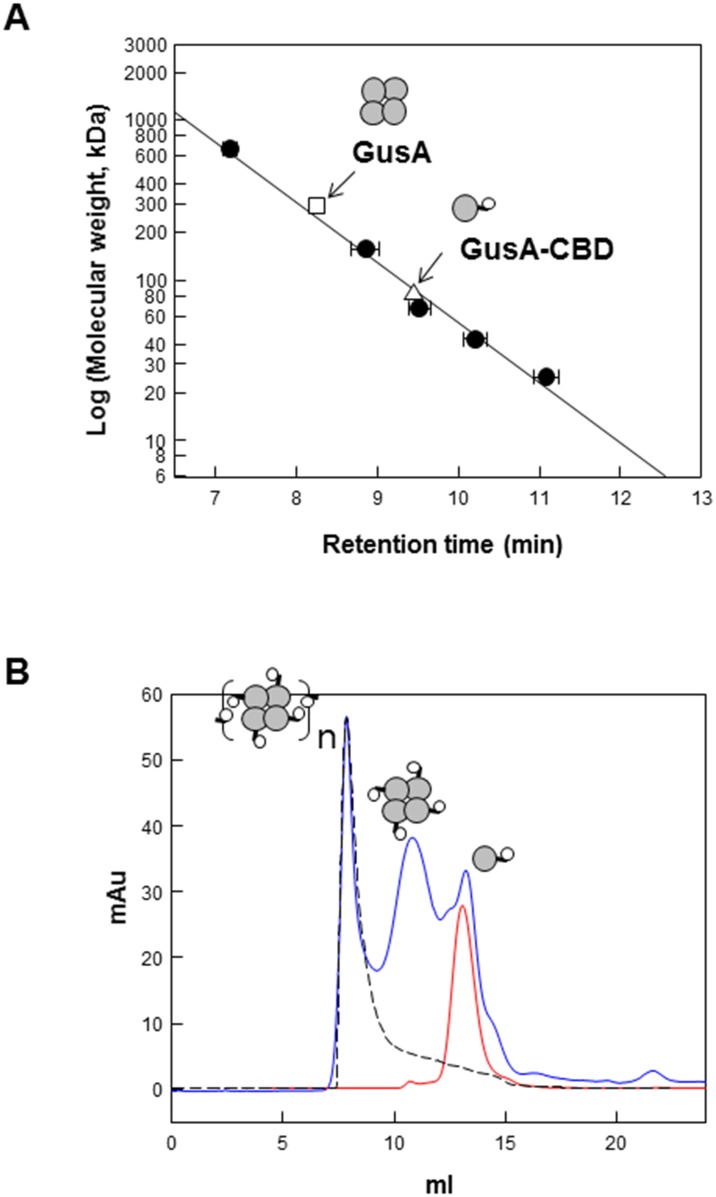
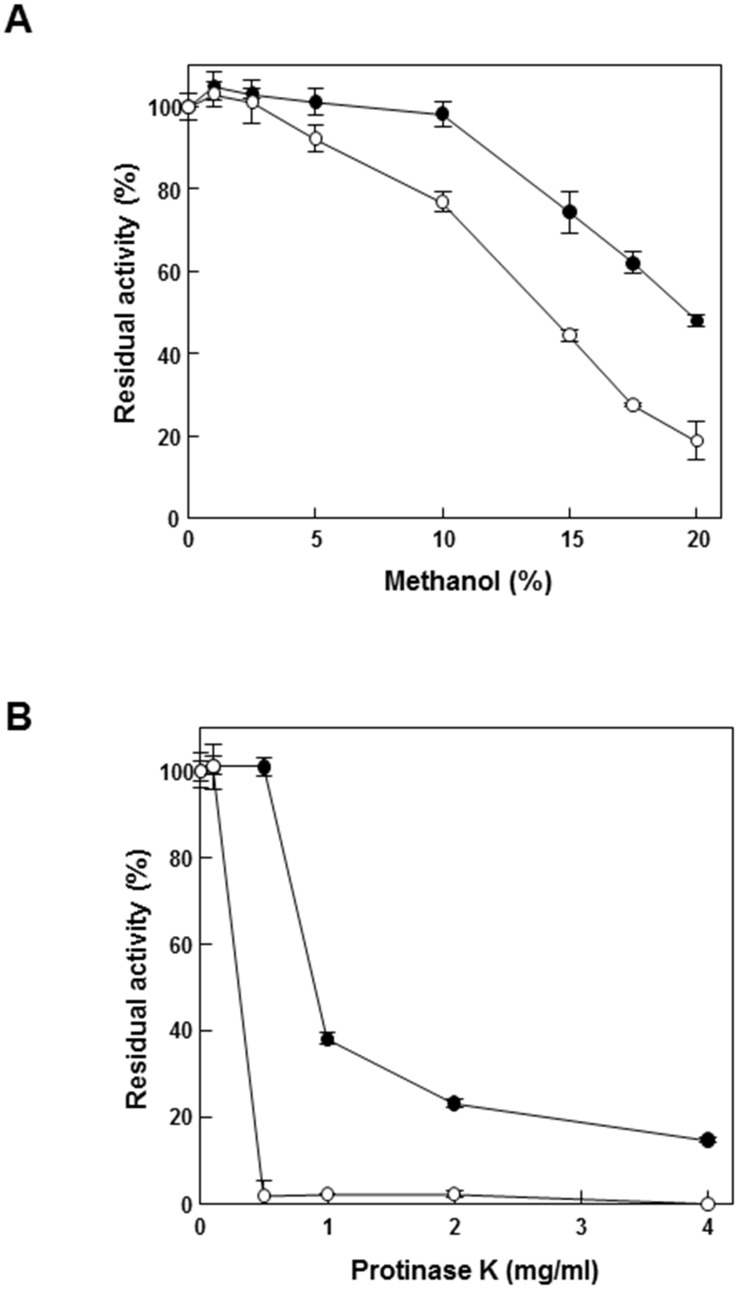
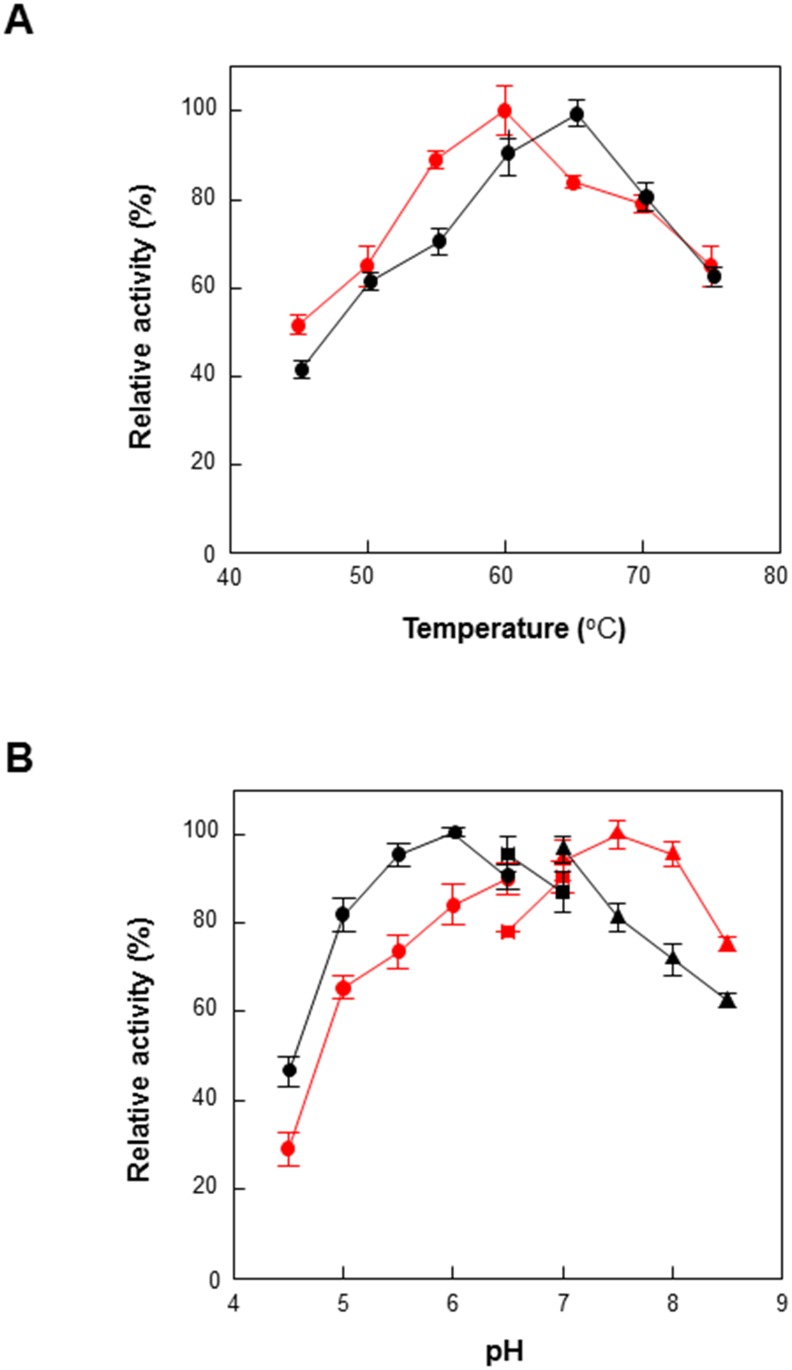
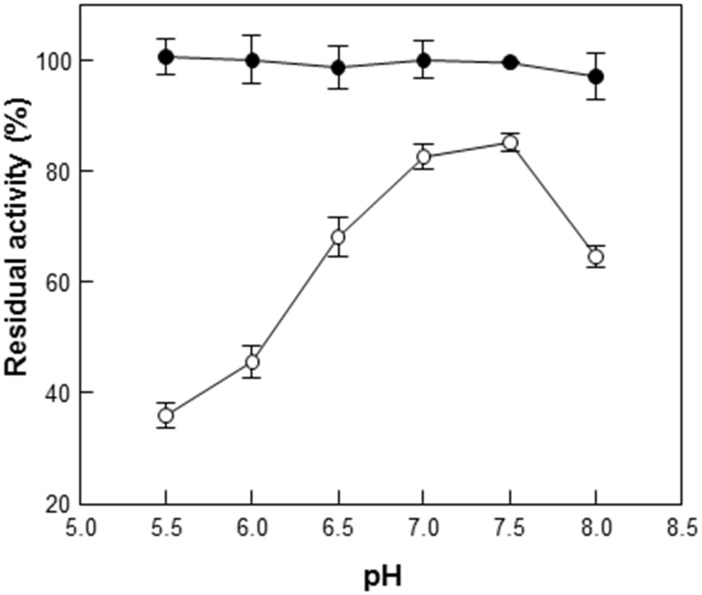
Cellulose-binding domains (CBDs) are protein domains with cellulose-binding activity, and some act as leaders in the localization of cellulosomal scaffoldin proteins to the hydrophobic surface of crystalline cellulose. In this study, we found that a CBD fusion enhanced and improved soluble β-glucuronidase (GusA) enzyme properties through the formation of an artificially oligomeric state. First, a soluble CBD fused to the C-terminus of GusA (GusA-CBD) was obtained and characterized. Interestingly, the soluble GusA-CBD showed maximum activity at higher temperatures (65°C) and more acidic pH values (pH 6.0) than free GusA did (60°C and pH 7.5). Moreover, the GusA-CBD enzyme showed higher thermal and pH stabilities than the free GusA enzyme did. Additionally, GusA-CBD showed higher enzymatic activity in the presence of methanol than free GusA did. Evaluation of the protease accessibility of both enzymes revealed that GusA-CBD retained 100% of its activity after 1 h incubation in 0.5 mg/ml protease K, while free GusA completely lost its activity. Simple fusion of CBD as a single domain may be useful for tunable enzyme states to improve enzyme stability in industrial applications.
纤维素结合结构域(CBDs)是具有纤维素结合活性的蛋白质结构域,其中一些在将纤维小体支架蛋白定位到结晶纤维素疏水表面的过程中起引导作用。在本研究中,我们发现CBD融合通过形成人工寡聚状态增强并改善了可溶性β-葡萄糖醛酸酶(GusA)的酶性质。首先,获得了与GusA的C末端融合的可溶性CBD(GusA-CBD)并对其进行了表征。有趣的是,可溶性GusA-CBD在比游离GusA更高的温度(65°C)和更酸性的pH值(pH 6.0)下表现出最大活性(游离GusA分别为60°C和pH 7.5)。此外,GusA-CBD酶比游离GusA酶表现出更高的热稳定性和pH稳定性。另外,在甲醇存在下,GusA-CBD比游离GusA表现出更高的酶活性。对两种酶的蛋白酶可及性评估表明,GusA-CBD在0.5 mg/ml蛋白酶K中孵育1小时后保留了100%的活性,而游离GusA完全丧失了活性。将CBD作为单个结构域进行简单融合可能有助于在工业应用中调节酶的状态以提高酶的稳定性。