Balaban Seher, Shearer Robert F, Lee Lisa S, van Geldermalsen Michelle, Schreuder Mark, Shtein Harrison C, Cairns Rose, Thomas Kristen C, Fazakerley Daniel J, Grewal Thomas, Holst Jeff, Saunders Darren N, Hoy Andrew J
Discipline of Physiology, School of Medical Sciences & Bosch Institute, The Hub (D17), Charles Perkins Centre, The University of Sydney, Camperdown, NSW 2006 Australia.
Kinghorn Cancer Centre, Garvan Institute of Medical Research, Darlinghurst, NSW 2010 Australia.
Cancer Metab. 2017 Jan 13;5:1. doi: 10.1186/s40170-016-0163-7. eCollection 2017.
Obesity is associated with increased recurrence and reduced survival of breast cancer. Adipocytes constitute a significant component of breast tissue, yet their role in provisioning metabolic substrates to support breast cancer progression is poorly understood.
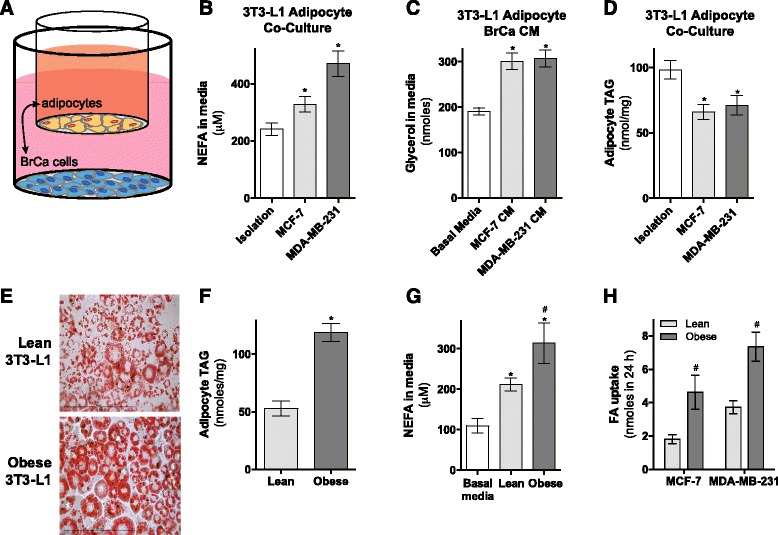
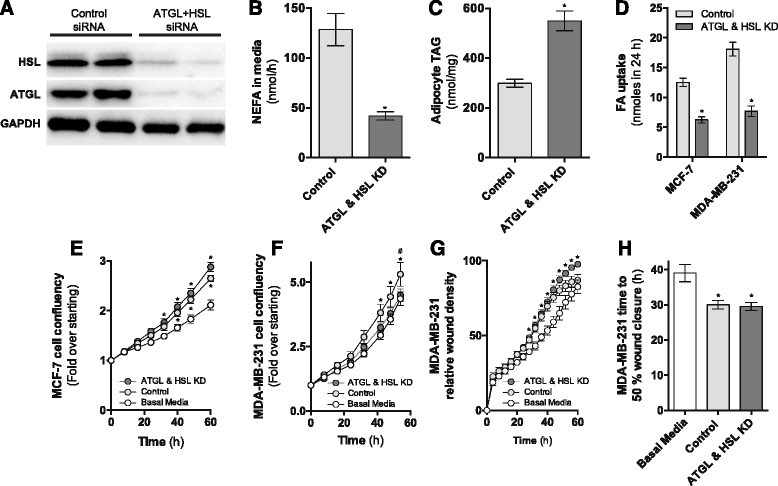
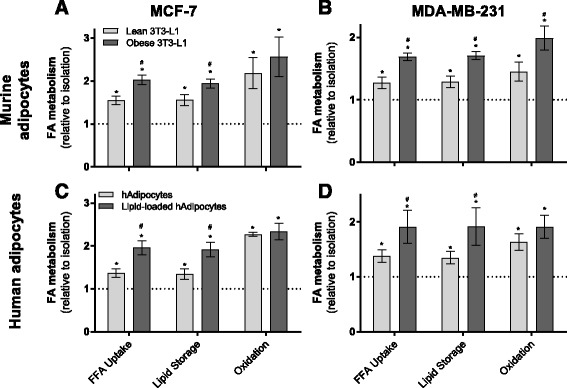
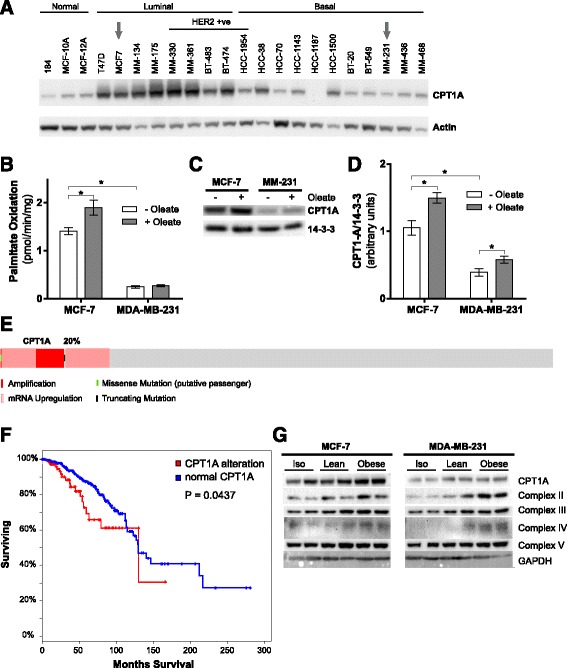
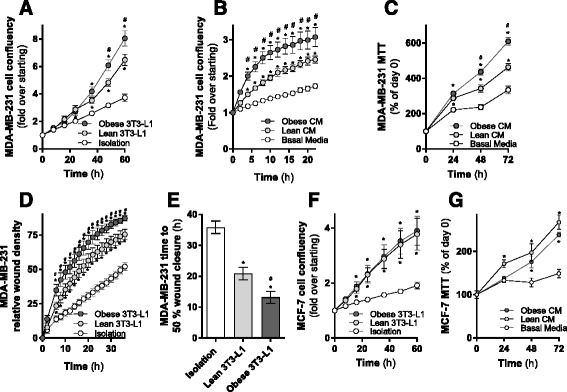
Here, we show that co-culture of breast cancer cells with adipocytes revealed cancer cell-stimulated depletion of adipocyte triacylglycerol. Adipocyte-derived free fatty acids were transferred to breast cancer cells, driving fatty acid metabolism via increased CPT1A and electron transport chain complex protein levels, resulting in increased proliferation and migration. Notably, fatty acid transfer to breast cancer cells was enhanced from "obese" adipocytes, concomitant with increased stimulation of cancer cell proliferation and migration. This adipocyte-stimulated breast cancer cell proliferation was dependent on lipolytic processes since HSL/ATGL knockdown attenuated cancer cell responses.
These findings highlight a novel and potentially important role for adipocyte lipolysis in the provision of metabolic substrates to breast cancer cells, thereby supporting cancer progression.
肥胖与乳腺癌复发增加及生存率降低相关。脂肪细胞是乳腺组织的重要组成部分,但其在提供代谢底物以支持乳腺癌进展中的作用尚不清楚。
在此,我们表明乳腺癌细胞与脂肪细胞共培养显示癌细胞刺激脂肪细胞三酰甘油消耗。脂肪细胞衍生的游离脂肪酸转移至乳腺癌细胞,通过增加CPT1A和电子传递链复合蛋白水平驱动脂肪酸代谢,导致增殖和迁移增加。值得注意的是,从“肥胖”脂肪细胞向乳腺癌细胞的脂肪酸转移增强,同时对癌细胞增殖和迁移的刺激增加。这种脂肪细胞刺激的乳腺癌细胞增殖依赖于脂解过程,因为HSL/ATGL敲低减弱了癌细胞反应。
这些发现突出了脂肪细胞脂解在为乳腺癌细胞提供代谢底物从而支持癌症进展方面的新的且潜在重要的作用。