Park Hye Min, Park Kab-Tae, Park Edmond Changkyun, Kim Seung Ii, Choi Myung Sook, Liu Kwang-Hyeon, Lee Choong Hwan
Department of Bioscience and Biotechnology, Konkuk University, 120 Neungdong-ro, Gwangjin-gu, Seoul 05029, Korea.
BK21 Plus KNU Multi-Omics Based Creative Drug Research Team, College of Pharmacy and Research Institute of Pharmaceutical Sciences, Kyungpook National University, Daegu 41566, Korea.
Nutrients. 2017 Jan 17;9(1):71. doi: 10.3390/nu9010071.
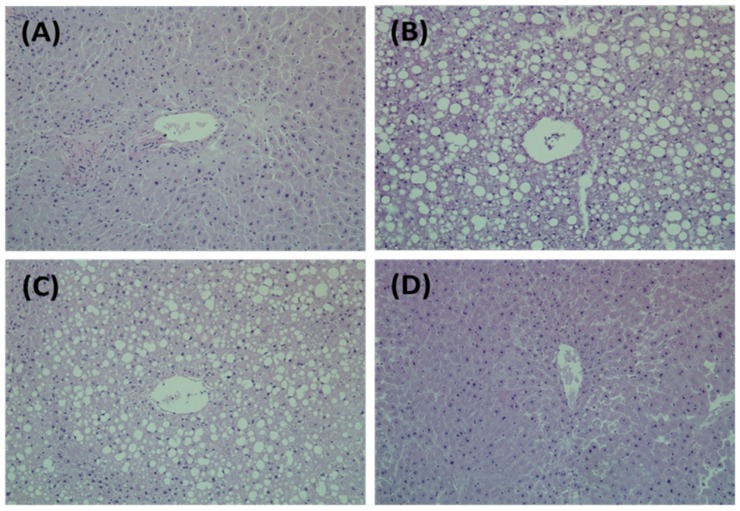
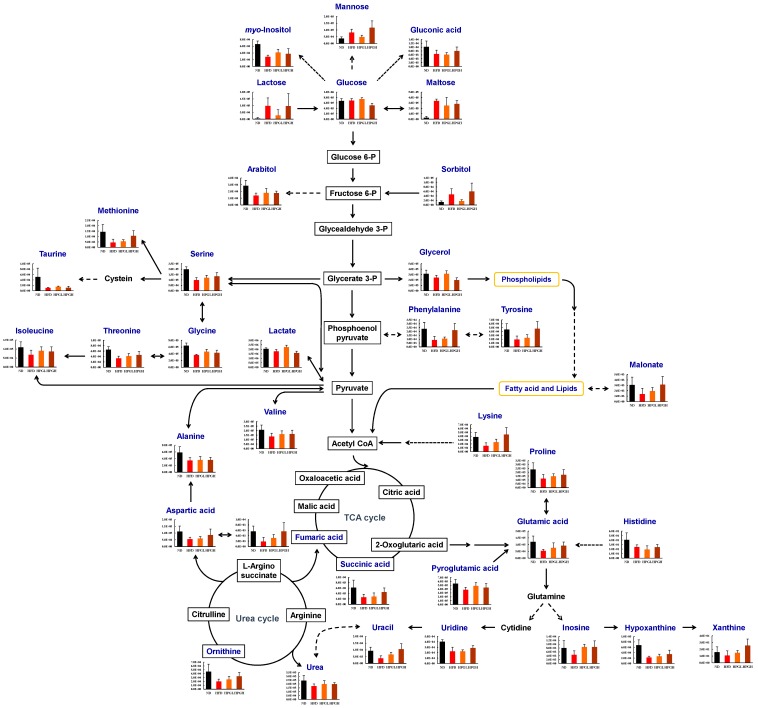
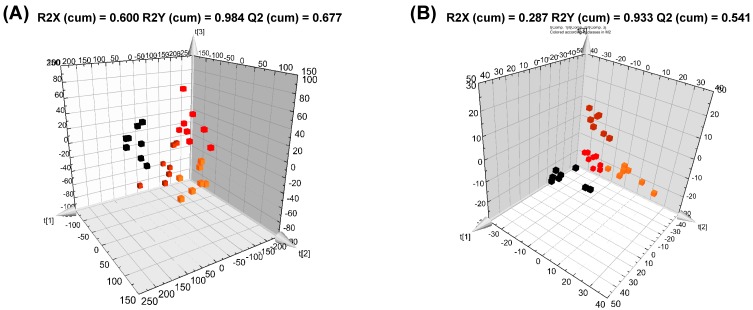
We aimed to identify metabolites involved in the anti-obesity effects of (PG) in high-fat diet (HFD)-fed mice using mass spectrometry (MS)-based metabolomic techniques. C57BL/6J mice were divided into four groups: normal diet (ND)-fed mice, HFD-fed mice, HFD with 1% PG extract-fed mice (HPGL), and HFD with 5% PG extract-fed mice (HPGH). After 8 weeks, the HFD group gained more weight than the ND group, while dietary 5% PG extract attenuated this change. The partial least squares discriminant analysis (PLS-DA) score plots showed a clear distinction between experimental groups in serum and liver markers. We also identified 10 and 32 metabolites in the serum and liver, respectively, as potential biomarkers that could explain the effect of high-dose PG added to HFD-fed mice, which were strongly involved in amino acid metabolism (glycine, serine, threonine, methionine, glutamate, phenylalanine, ornithine, lysine, and tyrosine), TCA cycle (fumarate and succinate), lipid metabolism (linoleic and oleic acid methyl esters, oleamide, and cholesterol), purine/pyrimidine metabolism (uracil and hypoxanthine), carbohydrate metabolism (maltose), and glycerophospholipid metabolism (phosphatidylcholines, phosphatidylethanolamines, lysophosphatidylcholines, and lysophosphatidylethanolamines). We suggest that further studies on these metabolites could help us gain a better understanding of both HFD-induced obesity and the effects of PG.
我们旨在利用基于质谱(MS)的代谢组学技术,鉴定绿茶提取物(PG)对高脂饮食(HFD)喂养小鼠的抗肥胖作用中涉及的代谢物。C57BL/6J小鼠分为四组:正常饮食(ND)喂养小鼠、HFD喂养小鼠、含1%PG提取物的HFD喂养小鼠(HPGL)和含5%PG提取物的HFD喂养小鼠(HPGH)。8周后,HFD组比ND组体重增加更多,而饮食中5%的PG提取物减弱了这种变化。偏最小二乘判别分析(PLS-DA)得分图显示实验组在血清和肝脏标志物方面有明显区别。我们还分别在血清和肝脏中鉴定出10种和32种代谢物作为潜在生物标志物,这些标志物可以解释添加到HFD喂养小鼠中的高剂量PG的作用,它们强烈参与氨基酸代谢(甘氨酸、丝氨酸、苏氨酸、蛋氨酸、谷氨酸、苯丙氨酸、鸟氨酸、赖氨酸和酪氨酸)、三羧酸循环(富马酸和琥珀酸)、脂质代谢(亚油酸和油酸甲酯、油酰胺和胆固醇)、嘌呤/嘧啶代谢(尿嘧啶和次黄嘌呤)、碳水化合物代谢(麦芽糖)和甘油磷脂代谢(磷脂酰胆碱、磷脂酰乙醇胺、溶血磷脂酰胆碱和溶血磷脂酰乙醇胺)。我们建议对这些代谢物进行进一步研究,这可能有助于我们更好地理解HFD诱导的肥胖以及PG的作用。