Cao Weihuan, Edery Isaac
Rutgers University, Center for Advanced Biotechnology and Medicine, Piscataway, NJ, 08854, USA.
Department of Molecular Biology and Biochemistry, Rutgers University, Center for Advanced Biotechnology and Medicine, 679 Hoes Lane, Piscataway, NJ, 08854, USA.
BMC Evol Biol. 2017 Jan 23;17(1):32. doi: 10.1186/s12862-017-0880-8.
Many diurnal animals exhibit a mid-day 'siesta', generally thought to be an adaptive response aimed at minimizing exposure to heat on warm days, suggesting that in regions with cooler climates mid-day siestas might be a less prominent feature of animal behavior. Drosophila melanogaster exhibits thermal plasticity in its mid-day siesta that is partly governed by the thermosensitive splicing of the 3'-terminal intron (termed dmpi8) from the key circadian clock gene period (per). For example, decreases in temperature lead to progressively more efficient splicing, which increasingly favors activity over sleep during the mid-day. In this study we sought to determine if the adaptation of D. melanogaster from its ancestral range in the lowlands of tropical Africa to the cooler temperatures found at high altitudes involved changes in mid-day sleep behavior and/or dmpi8 splicing efficiency.
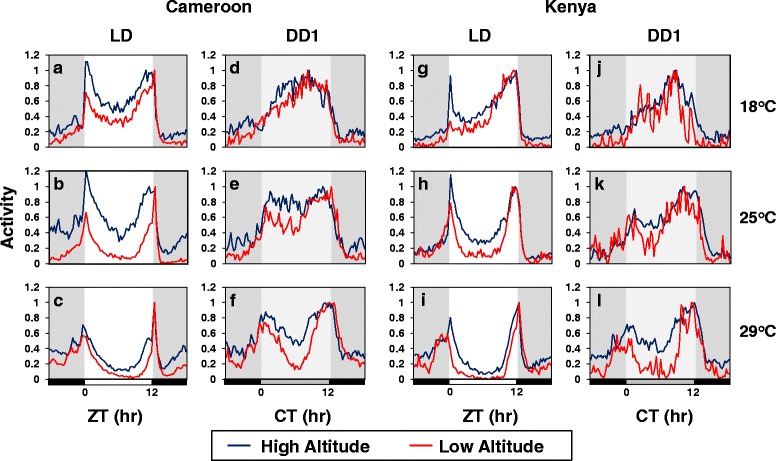
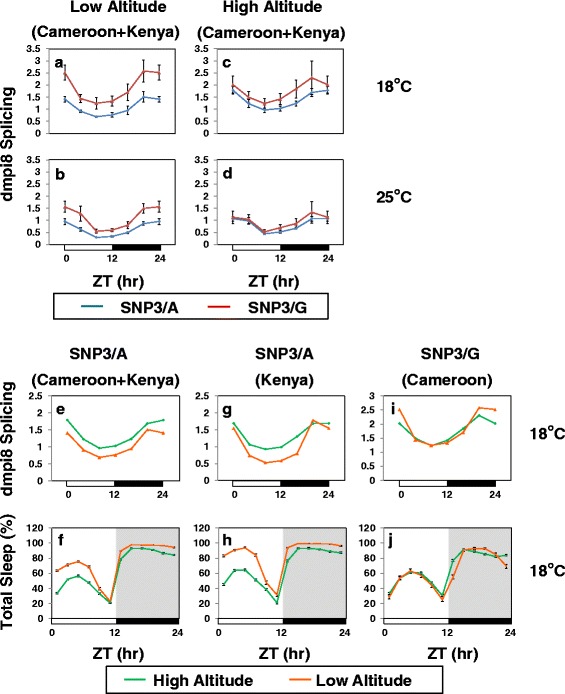
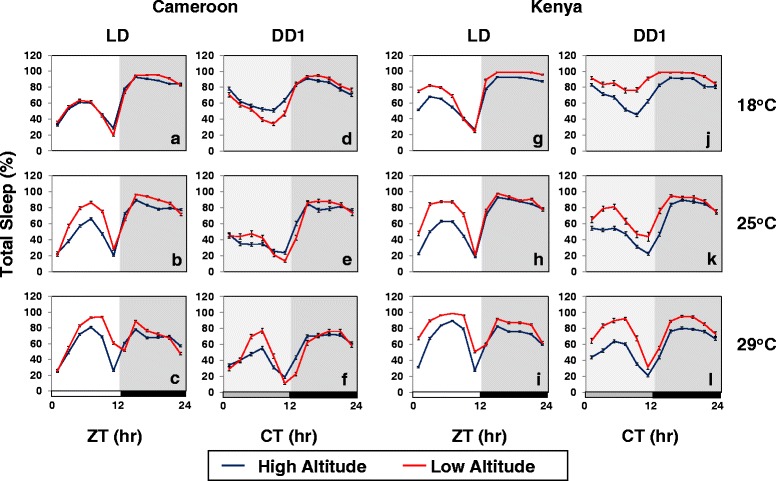
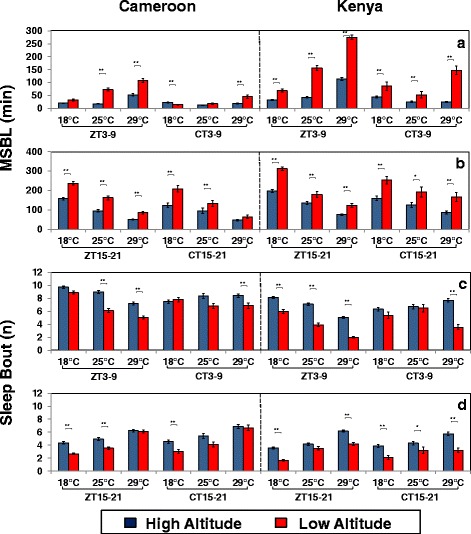
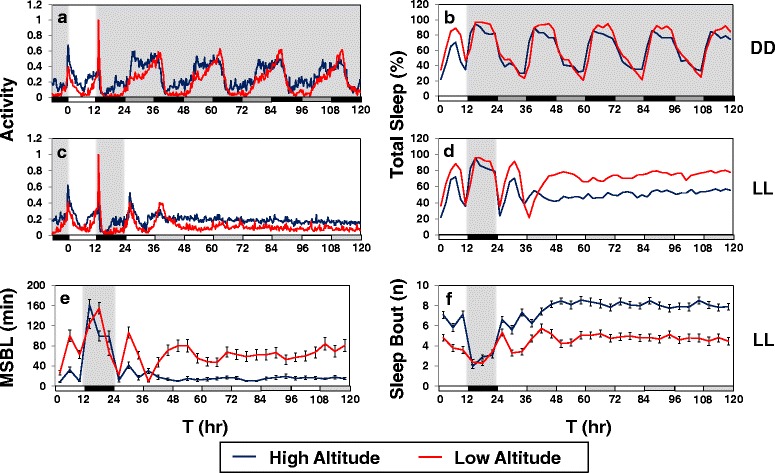
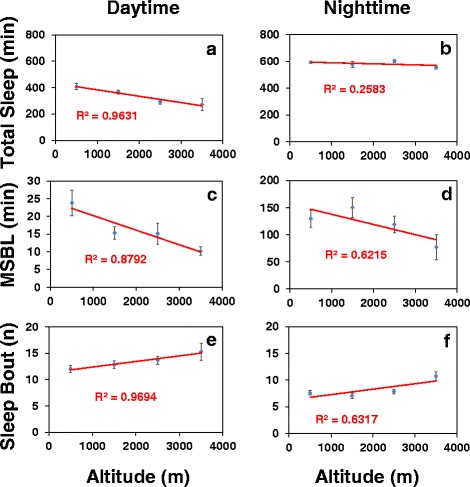
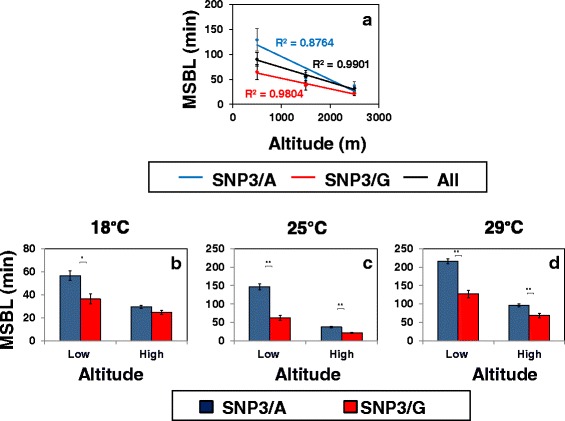
Using natural populations of Drosophila melanogaster from different altitudes in tropical Africa we show that flies from high elevations have a reduced mid-day siesta and less consolidated sleep. We identified a single nucleotide polymorphism (SNP) in the per 3' untranslated region that has strong effects on dmpi8 splicing and mid-day sleep levels in both low and high altitude flies. Intriguingly, high altitude flies with a particular variant of this SNP exhibit increased dmpi8 splicing efficiency compared to their low altitude counterparts, consistent with reduced mid-day siesta. Thus, a boost in dmpi8 splicing efficiency appears to have played a prominent but not universal role in how African flies adapted to the cooler temperatures at high altitude.
Our findings point towards mid-day sleep behavior as a key evolutionary target in the thermal adaptation of animals, and provide a genetic framework for investigating daytime sleep in diurnal animals which appears to be driven by mechanisms distinct from those underlying nighttime sleep.
许多昼行性动物会在中午进行“午睡”,一般认为这是一种适应性反应,旨在减少在温暖日子里暴露于高温环境,这表明在气候较凉爽的地区,中午午睡可能不是动物行为的一个突出特征。黑腹果蝇在中午午睡方面表现出热可塑性,这部分受关键生物钟基因周期基因(per)3'端内含子(称为dmpi8)的热敏剪接调控。例如,温度降低会导致剪接效率逐渐提高,这使得中午时段活动比睡眠更受青睐。在本研究中,我们试图确定黑腹果蝇从其在热带非洲低地的祖先分布范围适应高海拔地区较低温度的过程中,中午睡眠行为和/或dmpi8剪接效率是否发生了变化。
利用来自热带非洲不同海拔的黑腹果蝇自然种群,我们发现高海拔地区的果蝇中午午睡时间缩短,睡眠巩固性降低。我们在per基因的3'非翻译区鉴定出一个单核苷酸多态性(SNP),它对低海拔和高海拔果蝇的dmpi8剪接及中午睡眠水平都有强烈影响。有趣的是,具有该SNP特定变体的高海拔果蝇与低海拔果蝇相比,dmpi8剪接效率增加,这与中午午睡时间缩短一致。因此,dmpi8剪接效率的提高似乎在非洲果蝇适应高海拔较低温度的过程中发挥了重要但并非普遍的作用。
我们的研究结果表明中午睡眠行为是动物热适应的关键进化目标,并为研究昼行性动物的白天睡眠提供了一个遗传框架,白天睡眠似乎受与夜间睡眠不同的机制驱动。