He Tao, Qiu Tianming, Wang Xiaodong, Gui Hongxing, Wang Xilong, Hu Qikuan, Xia Hechun, Qi Gaoyang, Wu Jinsong, Ma Hui
Clinical Medicine College, Ningxia Medical University; Department of Neurosurgery, General Hospital of Ningxia Medical University; Ningxia Key Laboratory of Cerebrocranial Diseases, The National Key Laboratory Incubation Base, Yinchuan.
Department of Neurosurgery, Huashan Hospital, Shanghai Medical College, Fudan University, Shanghai.
Onco Targets Ther. 2017 Jan 4;10:195-203. doi: 10.2147/OTT.S118834. eCollection 2017.
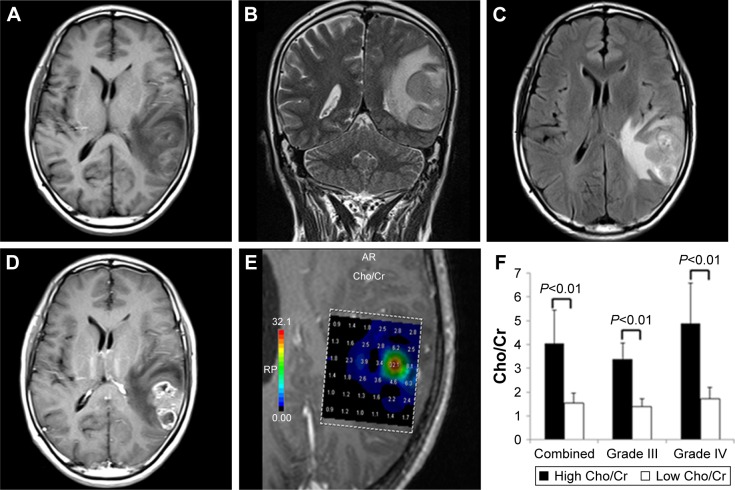
This study investigated the correlation between choline/creatine (Cho/Cr) ratios determined by multivoxel proton magnetic resonance spectroscopy (H-MRS) and the distribution of cancer stem-like cells (CSLCs) in high-grade gliomas.
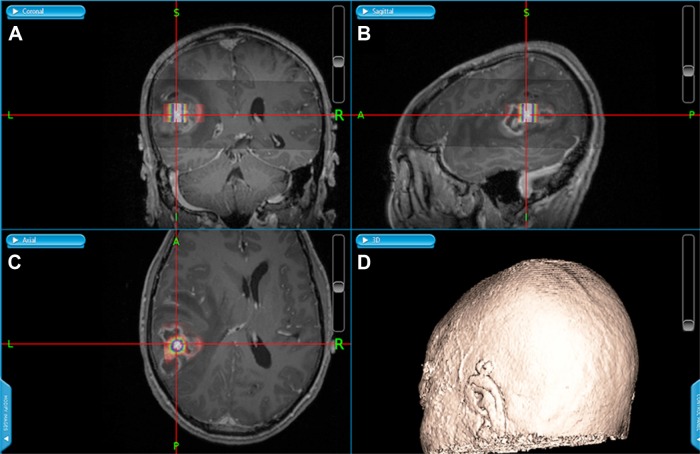
Sixteen patients with high-grade gliomas were recruited and underwent H-MRS examination before surgery to identify distinct tumor regions with variable Cho/Cr ratios. Using intraoperative neuronavigation, tumor tissues were accurately sampled from regions with high and low Cho/Cr ratios within each tumor. The distribution of CSLCs in samples from glioma tissue regions with different Cho/Cr ratios was quantified by neurosphere culture, immunohistochemistry, and Western blot.
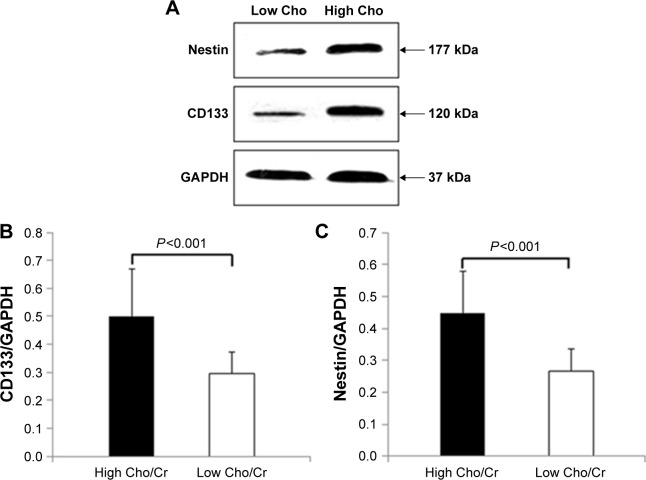
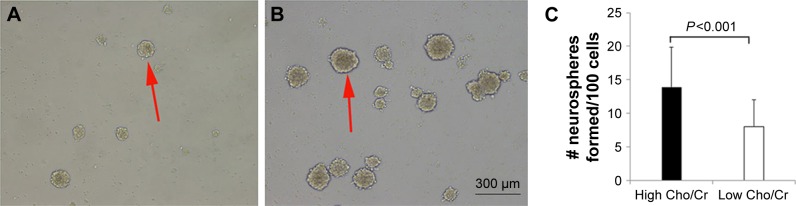
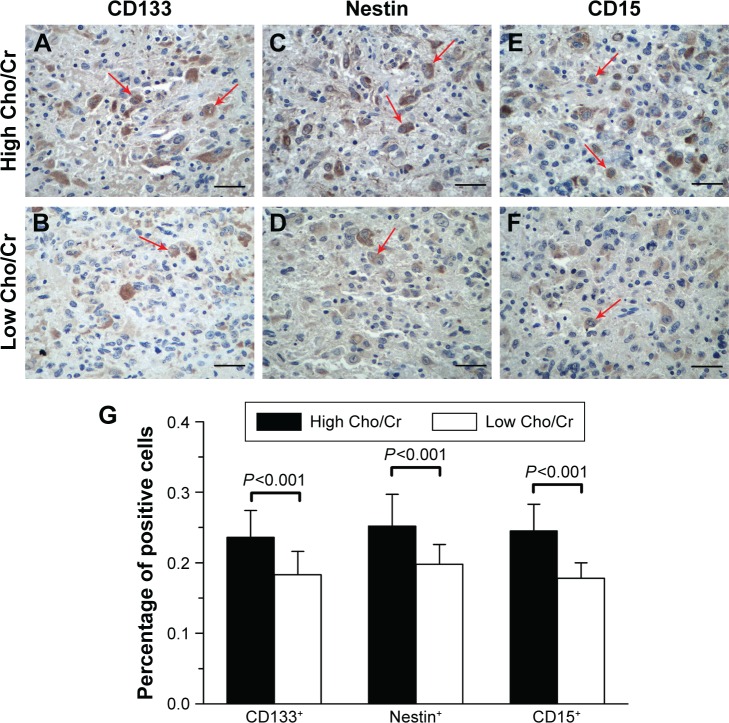
The mean neurosphere formation rate in tissues with high Cho/Cr ratios was significantly increased compared with that in low Cho/Cr ratio tissues (13.94±5.94 per 100 cells vs 8.04±3.99 per 100 cells, <0.001). Immunohistochemistry indicated that tissues with high Cho/Cr ratios had elevated expression of CD133, nestin, and CD15, relative to low Cho/Cr ratio tissue samples (23.6%±3.8% vs 18.3%±3.3%, 25.2%±4.5% vs 19.8%±2.8%, 24.5%±3.8% vs 17.8%±2.2%, respectively; all <0.001). Western blot demonstrated that relative CD133 and nestin protein expression in high Cho/Cr ratio regions was significantly higher than that in low Cho/Cr ratio tissue samples (0.50±0.17 vs 0.30±0.08, 0.45±0.13 vs 0.27±0.07, respectively; both <0.001). The protein expression levels of CD133 and nestin were highly correlated with Cho/Cr ratios (=0.897 and =0.861, respectively).
Cho/Cr ratios correlate with the distribution of CSLCs in high-grade gliomas, and this may assist in identifying foci enriched with CSLCs and thus improve the management of high-grade gliomas.
本研究调查了多体素质子磁共振波谱(H-MRS)测定的胆碱/肌酸(Cho/Cr)比值与高级别胶质瘤中癌症干细胞样细胞(CSLCs)分布之间的相关性。
招募了16例高级别胶质瘤患者,术前进行H-MRS检查,以确定具有不同Cho/Cr比值的不同肿瘤区域。使用术中神经导航,从每个肿瘤内Cho/Cr比值高和低的区域准确采集肿瘤组织。通过神经球培养、免疫组织化学和蛋白质印迹法对来自不同Cho/Cr比值的胶质瘤组织区域样本中的CSLCs分布进行定量分析。
与Cho/Cr比值低的组织相比,Cho/Cr比值高的组织中神经球形成率显著增加(每100个细胞中分别为13.94±5.94个和8.04±3.99个,<0.001)。免疫组织化学表明,与Cho/Cr比值低的组织样本相比,Cho/Cr比值高的组织中CD133、巢蛋白和CD15的表达升高(分别为23.6%±3.8%对18.3%±3.3%、25.2%±4.5%对19.8%±2.8%、24.5%±3.8%对17.8%±2.2%;均<0.001)。蛋白质印迹法表明,Cho/Cr比值高的区域中CD133和巢蛋白的相对蛋白表达显著高于Cho/Cr比值低的组织样本(分别为0.50±0.17对0.30±0.08、0.45±0.13对0.27±0.07;均<0.001)。CD133和巢蛋白的蛋白表达水平与Cho/Cr比值高度相关(分别为=0.897和=0.861)。
Cho/Cr比值与高级别胶质瘤中CSLCs的分布相关,这可能有助于识别富含CSLCs的病灶,从而改善高级别胶质瘤的治疗。