Kalmet P H S, Sanduleanu S, V Horn Y Y, Poeze M, Brink P R G
Department of Traumasurgery, Maastricht University Medical Centre, Maastricht.
Department of Amputation/Traumatology and Orthopedic Surgery, Adelante Rehabilitation Centre, Hoensbroek.
J Orthop Case Rep. 2016 Jul-Aug;6(3):73-74. doi: 10.13107/jocr.2250-0685.516.
Non-or partial weight bearing is frequently the standard treatment after peri-articular lower extremity fractures. Displaced talar neck fractures are severe injuries compromising vascularity of the corpus and consequently are at risk for non-union and avascular necrosis, the main reason to restrict weight bearing for up to three months according to most literature.
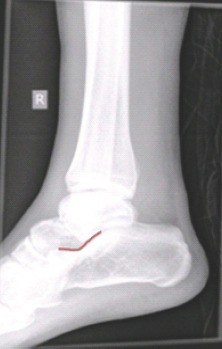
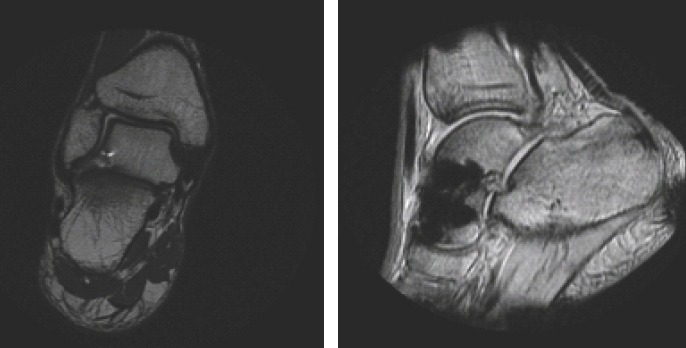
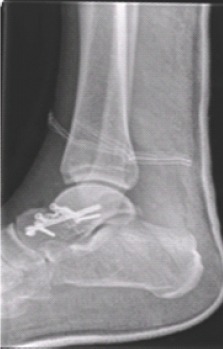
We report a case of a 31-year old male with a high impact car accident. His pelvic ring and Hawkins II talar fracture were treated by open reduction and internal fixation. Rehabilitation was based on permissive weight bearing following wound healing. His fractures healed uneventfully and he was able to run freely, without any discomfort within 8 weeks. Radiological evaluation of the talus showed complete bone healing without signs of avascular necrosis. At one year follow-up, the patient is free of the symptoms.
We might consider changing the restricted or non-weight bearing protocol in surgically treated talar neck fractures at our centre and allow early weight bearing, based on body awareness and the creation of a safe environment during the rehabilitation phase.
非负重或部分负重通常是下肢关节周围骨折后的标准治疗方法。距骨颈移位骨折是严重损伤,会损害距骨体的血供,因此有骨不连和缺血性坏死的风险,根据大多数文献,这是限制负重长达三个月的主要原因。
我们报告一例31岁男性因严重车祸受伤的病例。其骨盆环骨折和Hawkins II型距骨骨折采用切开复位内固定治疗。康复基于伤口愈合后允许负重。其骨折顺利愈合,8周内他能够自由奔跑,无任何不适。距骨的影像学评估显示完全骨愈合,无缺血性坏死迹象。在一年的随访中,患者无症状。
基于康复阶段的身体感知和创造安全环境,我们中心可能会考虑改变手术治疗距骨颈骨折时限制负重或非负重的方案,允许早期负重。