Hobbie John E, Shaver Gaius R, Rastetter Edward B, Cherry Jessica E, Goetz Scott J, Guay Kevin C, Gould William A, Kling George W
Ecosystems Center, Marine Biological Laboratory, Woods Hole, MA, 02543, USA.
International Arctic Research Center, University of Alaska, Fairbanks, AK, 99775, USA.
Ambio. 2017 Feb;46(Suppl 1):160-173. doi: 10.1007/s13280-016-0870-x.
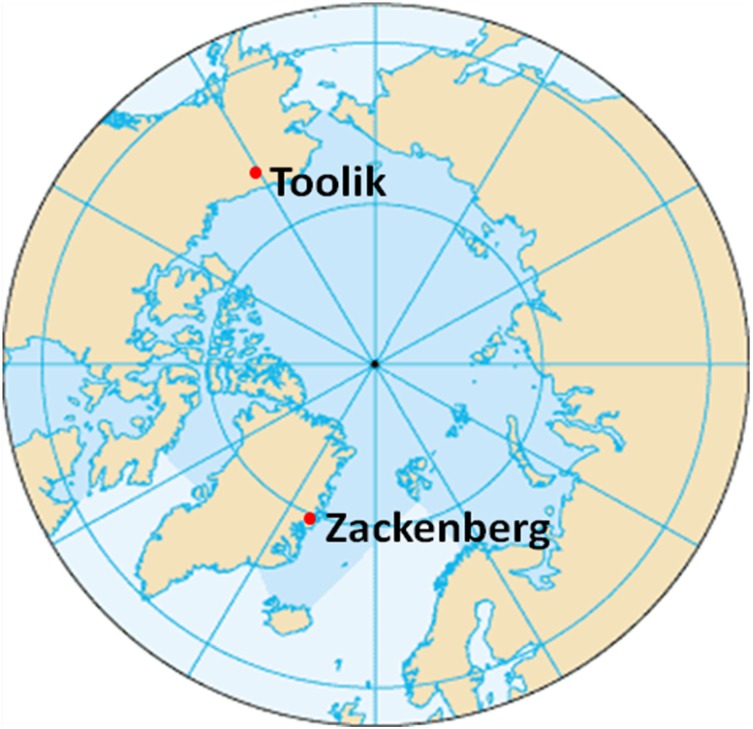
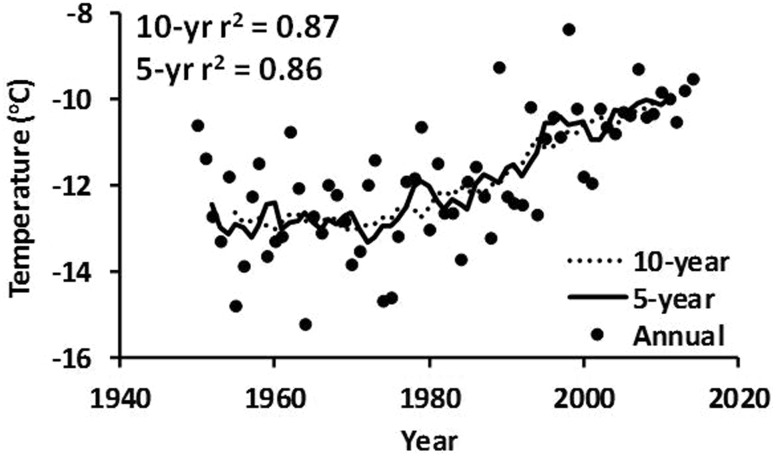
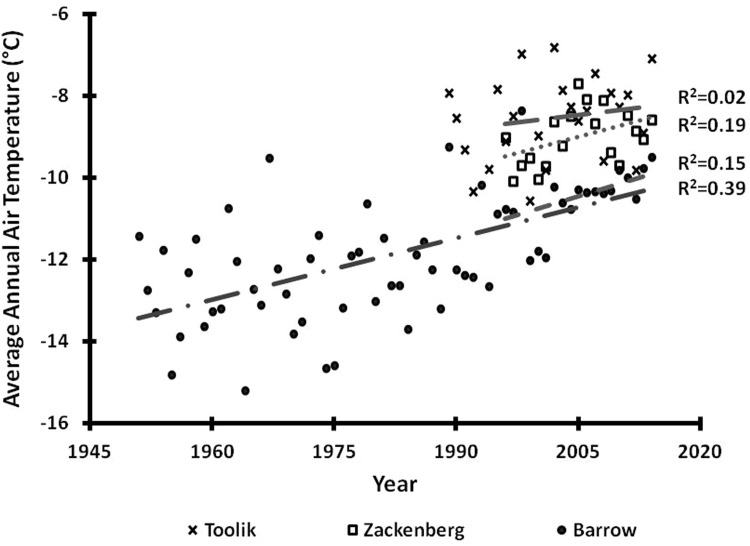
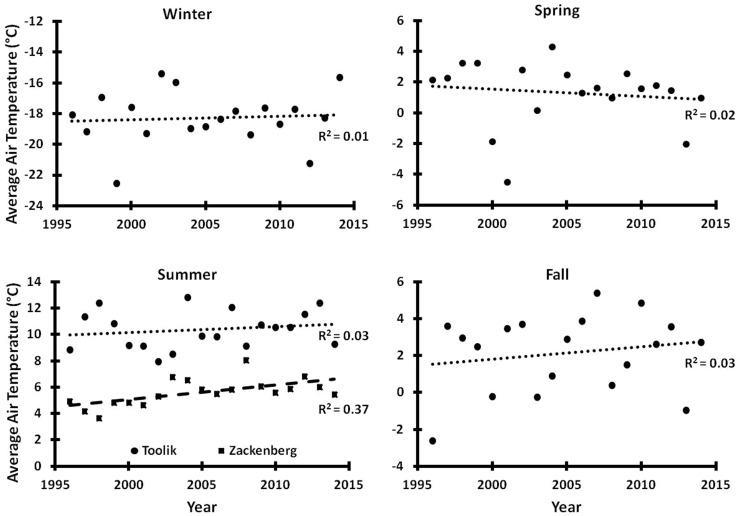
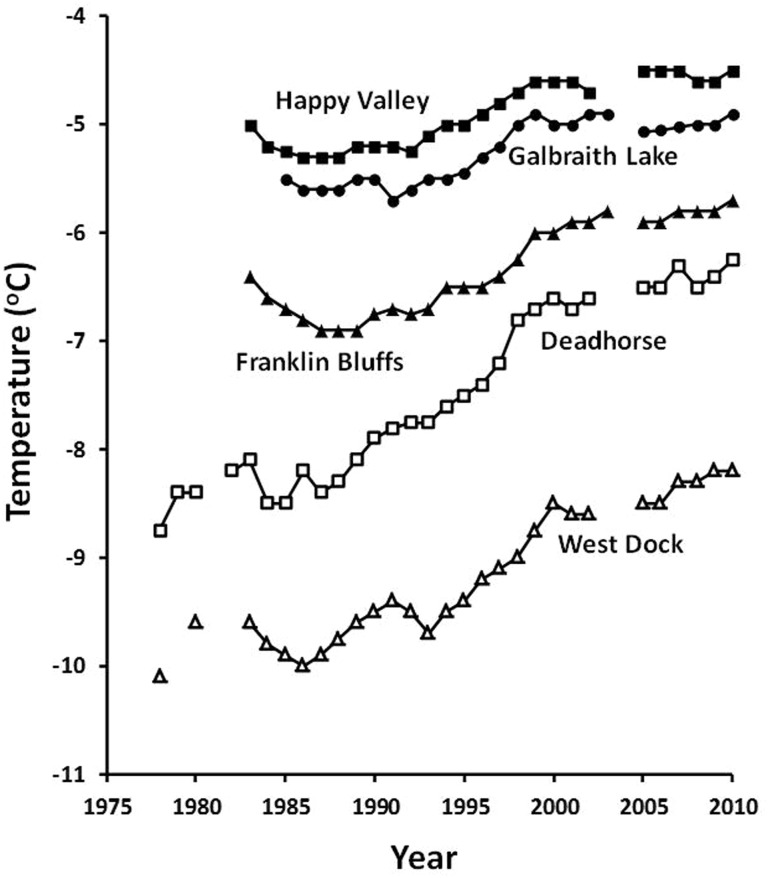
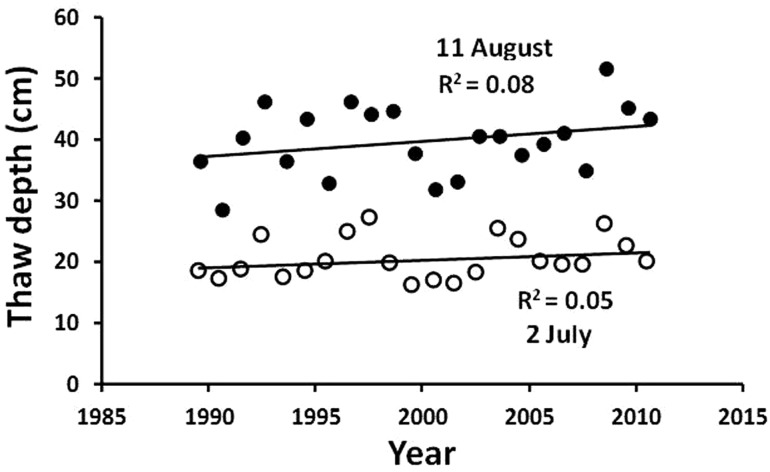
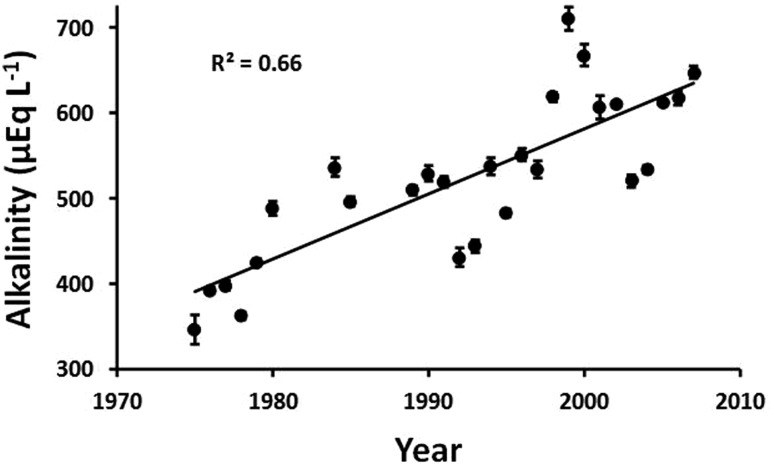
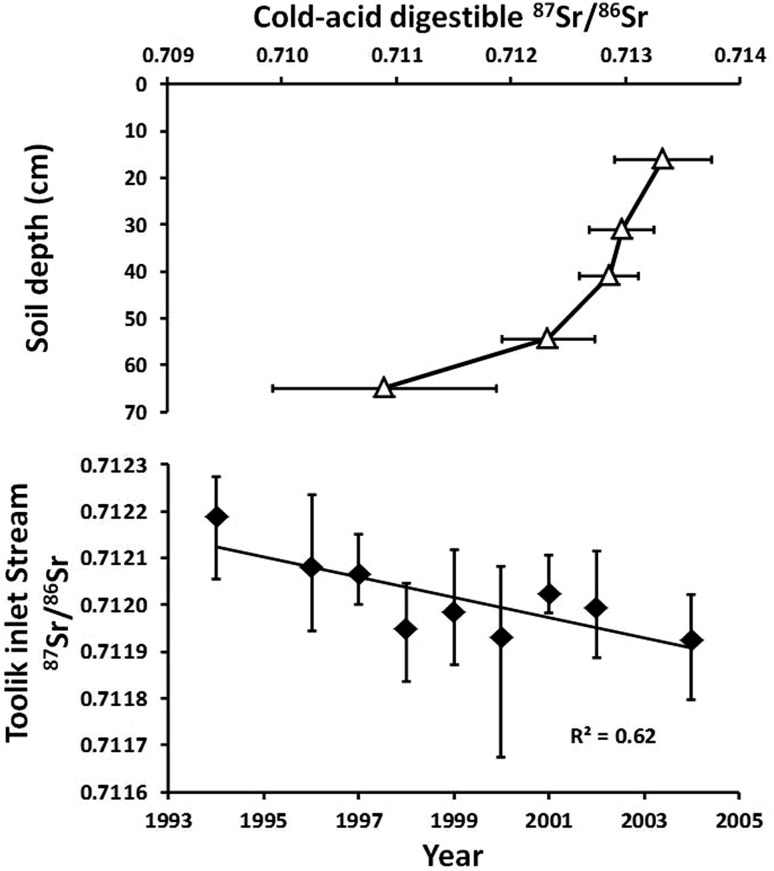
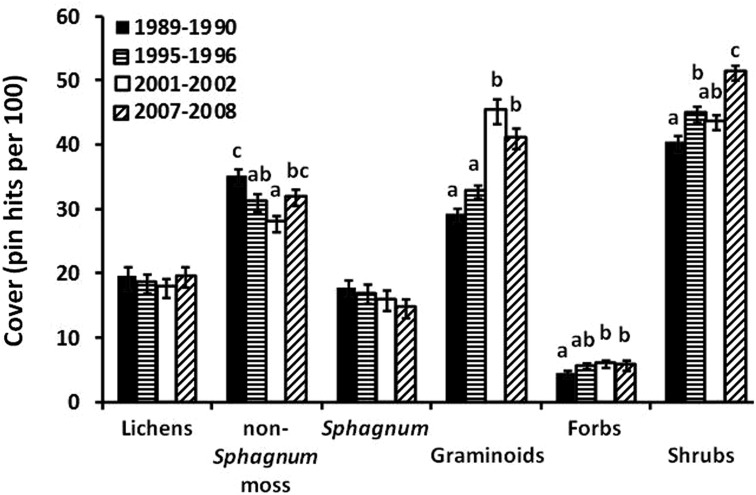
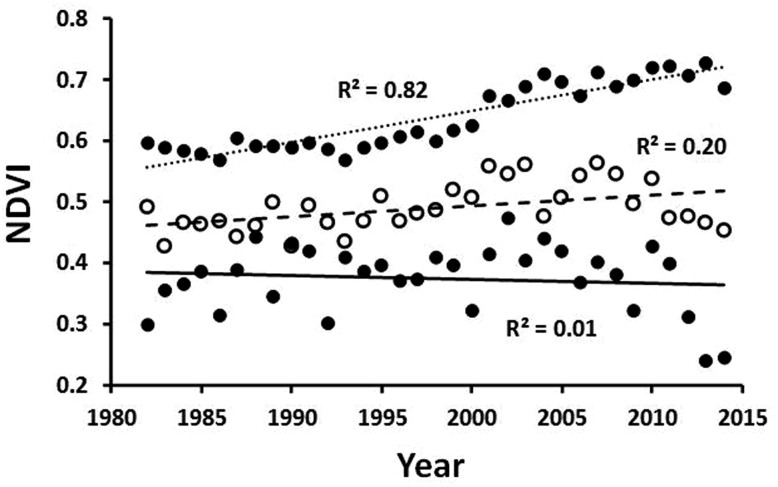
Long-term measurements of ecological effects of warming are often not statistically significant because of annual variability or signal noise. These are reduced in indicators that filter or reduce the noise around the signal and allow effects of climate warming to emerge. In this way, certain indicators act as medium pass filters integrating the signal over years-to-decades. In the Alaskan Arctic, the 25-year record of warming of air temperature revealed no significant trend, yet environmental and ecological changes prove that warming is affecting the ecosystem. The useful indicators are deep permafrost temperatures, vegetation and shrub biomass, satellite measures of canopy reflectance (NDVI), and chemical measures of soil weathering. In contrast, the 18-year record in the Greenland Arctic revealed an extremely high summer air-warming of 1.3 °C/decade; the cover of some plant species increased while the cover of others decreased. Useful indicators of change are NDVI and the active layer thickness.
由于年度变异性或信号噪声,对变暖的生态影响进行长期测量往往在统计上不显著。在那些能够过滤或减少信号周围噪声并使气候变暖影响显现出来的指标中,这些影响就会减弱。通过这种方式,某些指标起到了中值滤波器的作用,将信号在数年至数十年的时间内进行整合。在阿拉斯加北极地区,25年的气温变暖记录显示没有显著趋势,但环境和生态变化证明变暖正在影响生态系统。有用的指标包括深层永久冻土温度、植被和灌木生物量、冠层反射率的卫星测量值(归一化植被指数)以及土壤风化的化学测量值。相比之下,格陵兰北极地区18年的记录显示夏季气温极高,变暖速度为每十年1.3摄氏度;一些植物物种的覆盖面积增加,而另一些则减少。变化的有用指标是归一化植被指数和活动层厚度。