Cantone Irene, Dharmalingam Gopuraja, Chan Yi-Wah, Kohler Anne-Celine, Lenhard Boris, Merkenschlager Matthias, Fisher Amanda G
Lymphocyte Development Group, MRC London Institute of Medical Sciences, Hammersmith Campus, Imperial College London, Du Cane Road, London, W12 0NN, UK.
Bioinformatics and Computing facility, MRC London Institute of Medical Sciences, Imperial College, London, UK.
Genome Biol. 2017 Jan 25;18(1):2. doi: 10.1186/s13059-016-1136-4.
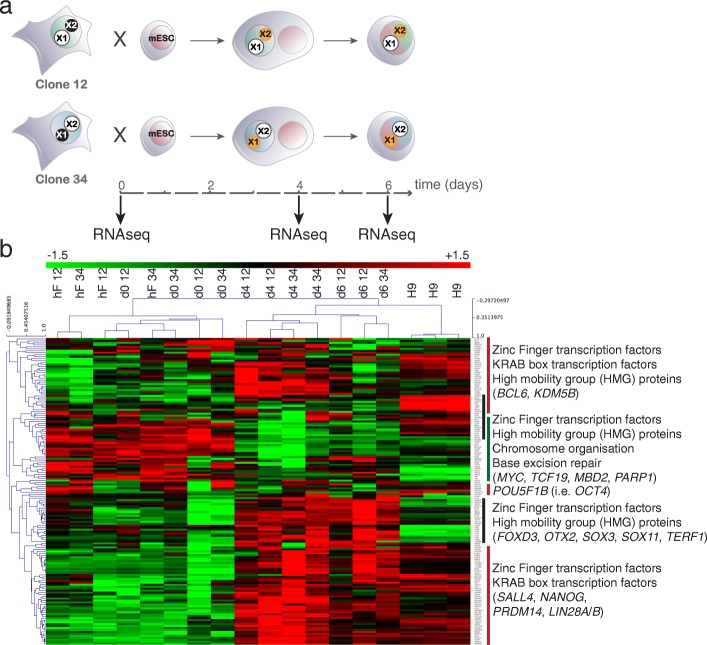
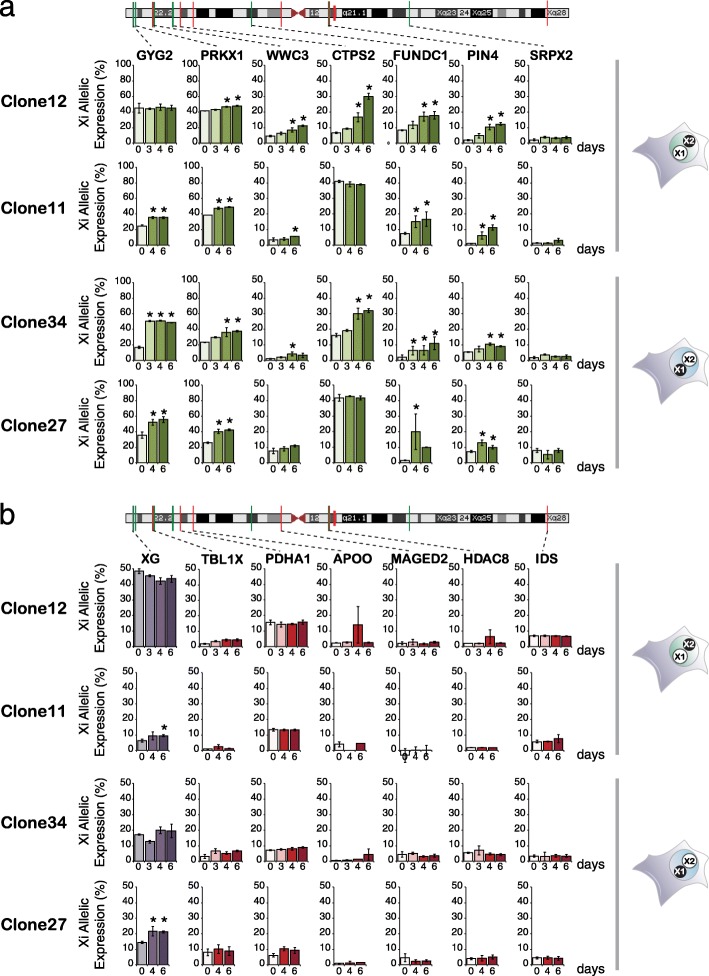
Inactivation of one X chromosome is established early in female mammalian development and can be reversed in vivo and in vitro when pluripotency factors are re-expressed. The extent of reactivation along the inactive X chromosome (Xi) and the determinants of locus susceptibility are, however, poorly understood. Here we use cell fusion-mediated pluripotent reprograming to study human Xi reactivation and allele-specific single nucleotide polymorphisms (SNPs) to identify reactivated loci.
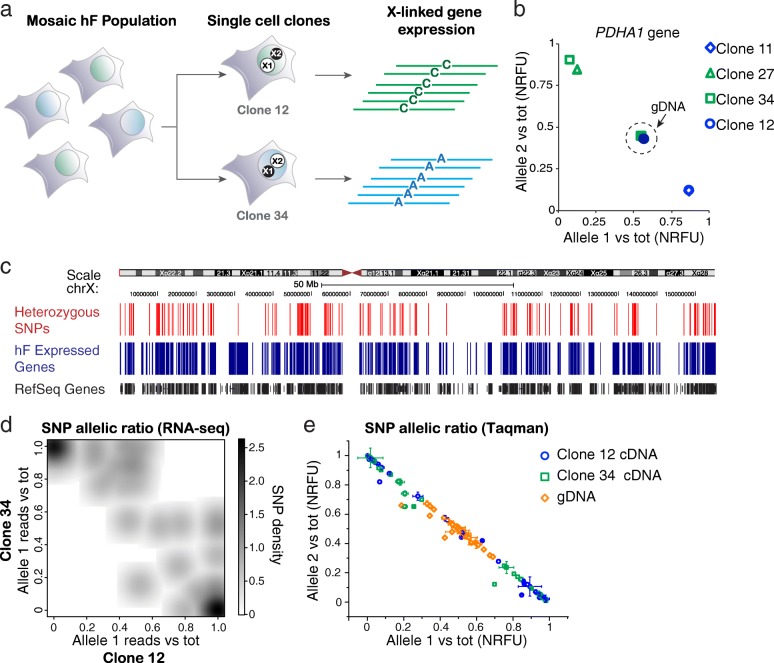
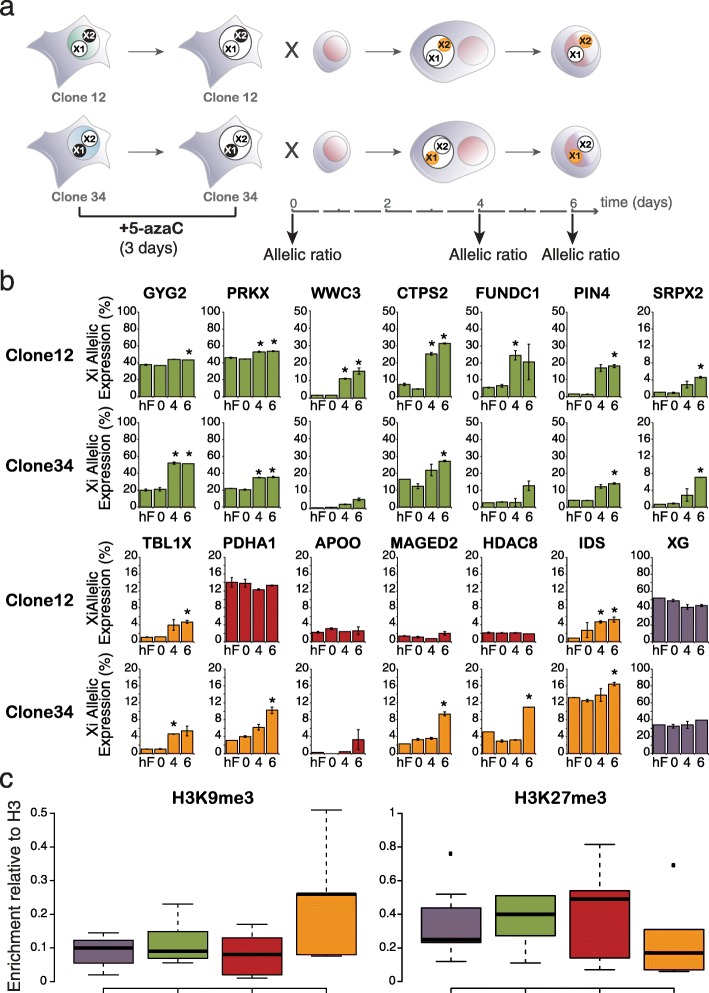
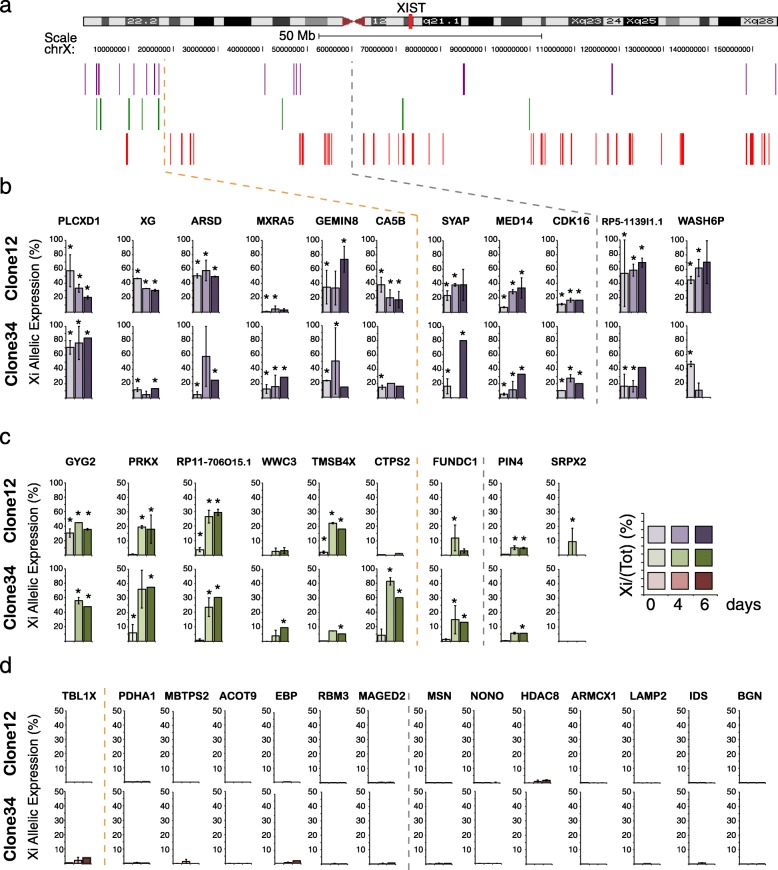
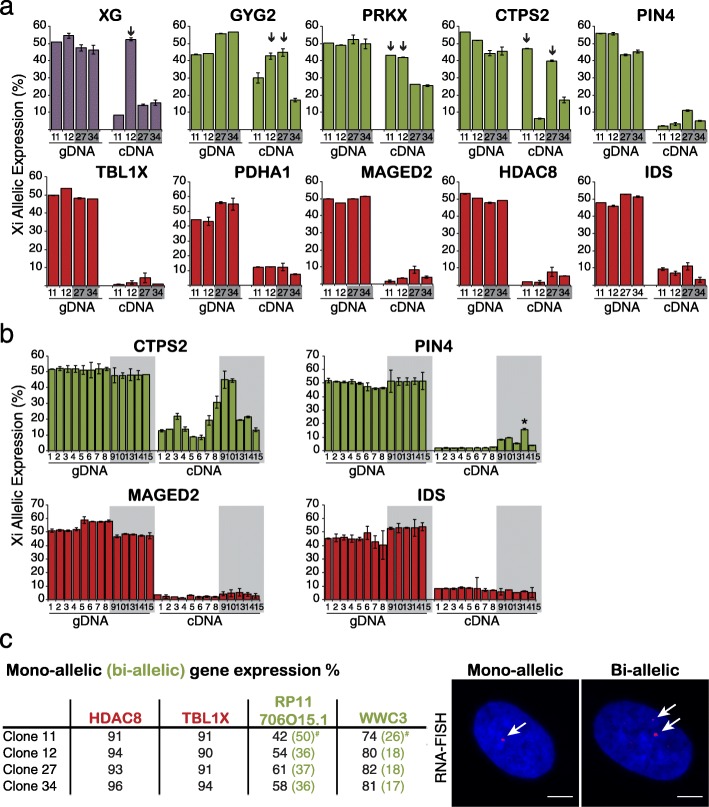
We show that a subset of human Xi genes is rapidly reactivated upon re-expression of the pluripotency network. These genes lie within the most evolutionary recent segments of the human X chromosome that are depleted of LINE1 and enriched for SINE elements, predicted to impair XIST spreading. Interestingly, this cadre of genes displays stochastic Xi expression in human fibroblasts ahead of reprograming. This stochastic variability is evident between clones, by RNA-sequencing, and at the single-cell level, by RNA-FISH, and is not attributable to differences in repressive histone H3K9me3 or H3K27me3 levels. Treatment with the DNA demethylating agent 5-deoxy-azacytidine does not increase Xi expression ahead of reprograming, but instead reveals a second cadre of genes that only become susceptible to reactivation upon induction of pluripotency.
Collectively, these data not only underscore the multiple pathways that contribute to maintaining silencing along the human Xi chromosome but also suggest that transcriptional stochasticity among human cells could be useful for predicting and engineering epigenetic strategies to achieve locus-specific or domain-specific human Xi gene reactivation.