Wagaba Henry, Beyene Getu, Aleu Jude, Odipio John, Okao-Okuja Geoffrey, Chauhan Raj Deepika, Munga Theresia, Obiero Hannington, Halsey Mark E, Ilyas Muhammad, Raymond Peter, Bua Anton, Taylor Nigel J, Miano Douglas, Alicai Titus
National Crops Resources Research Institute Kampala, Uganda.
Donald Danforth Plant Science Center St. Louis, MO, USA.
Front Plant Sci. 2017 Jan 12;7:2060. doi: 10.3389/fpls.2016.02060. eCollection 2016.
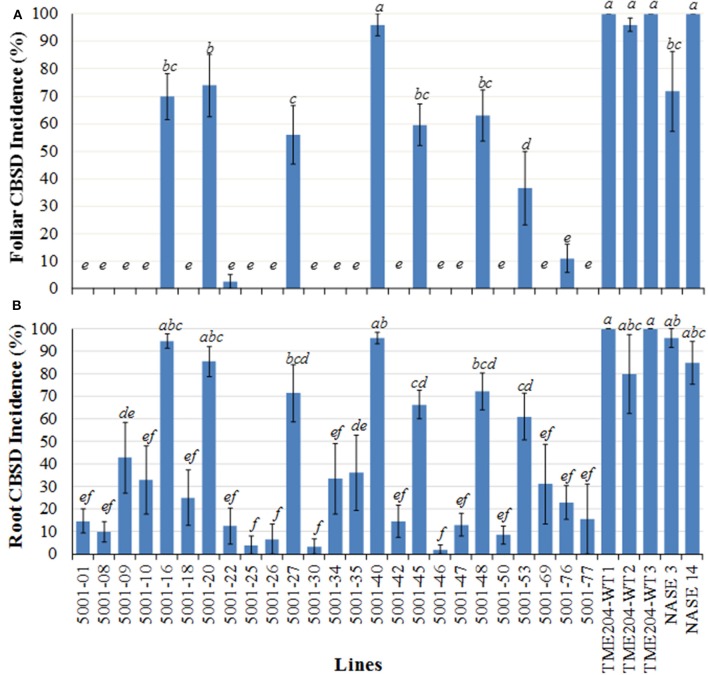
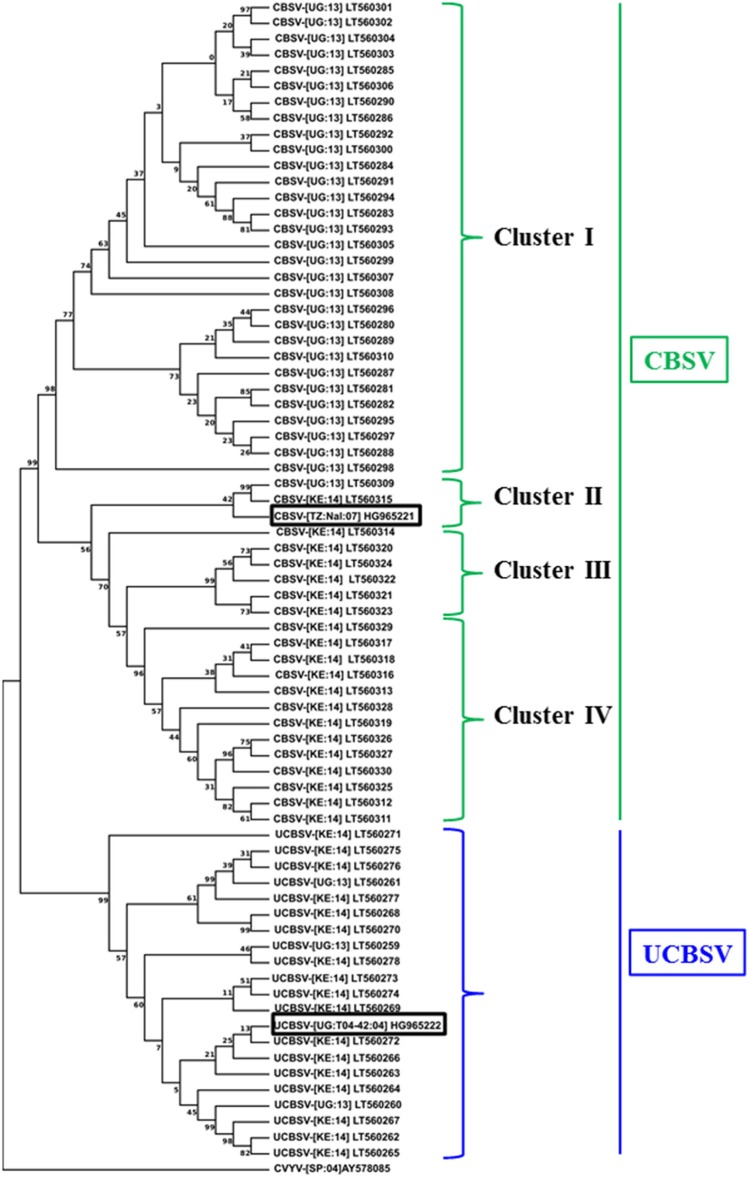
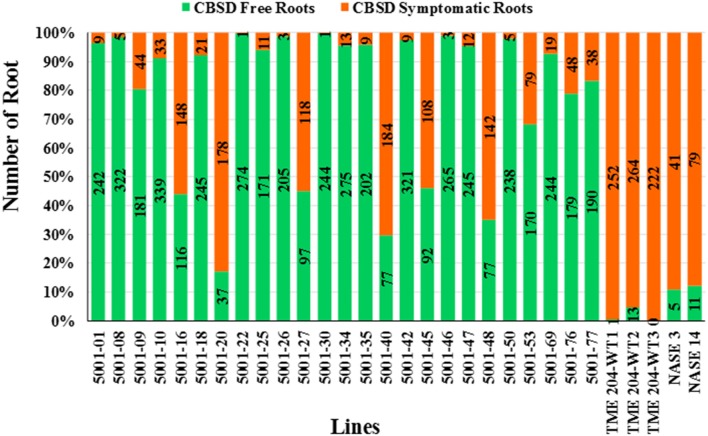
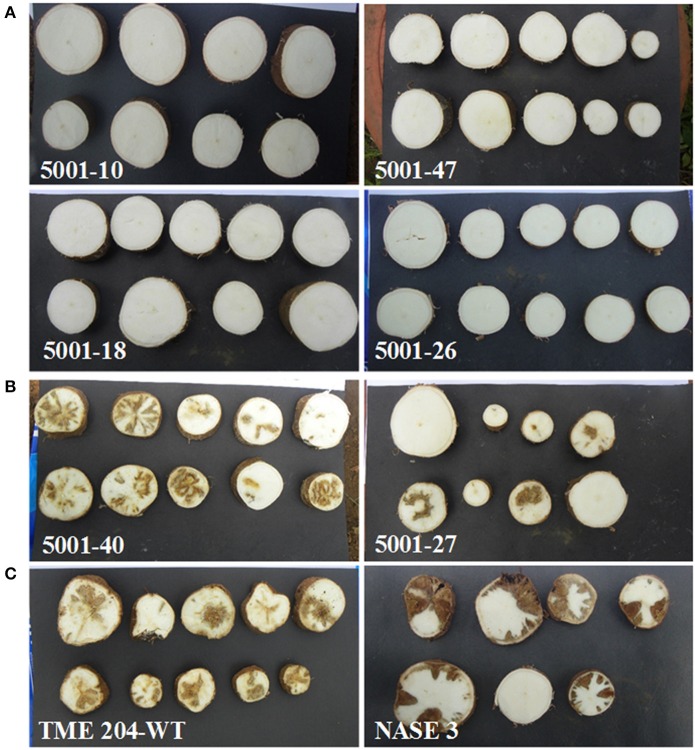
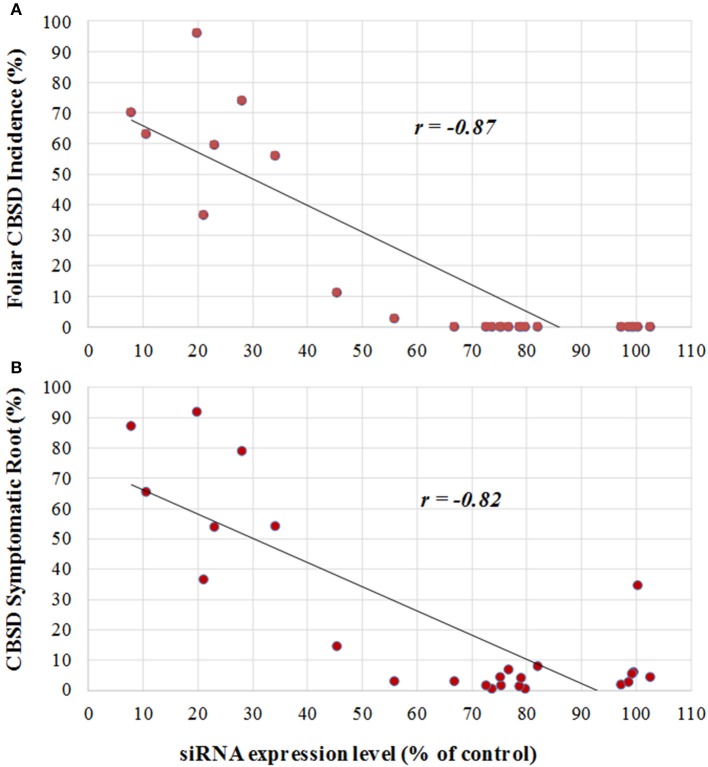
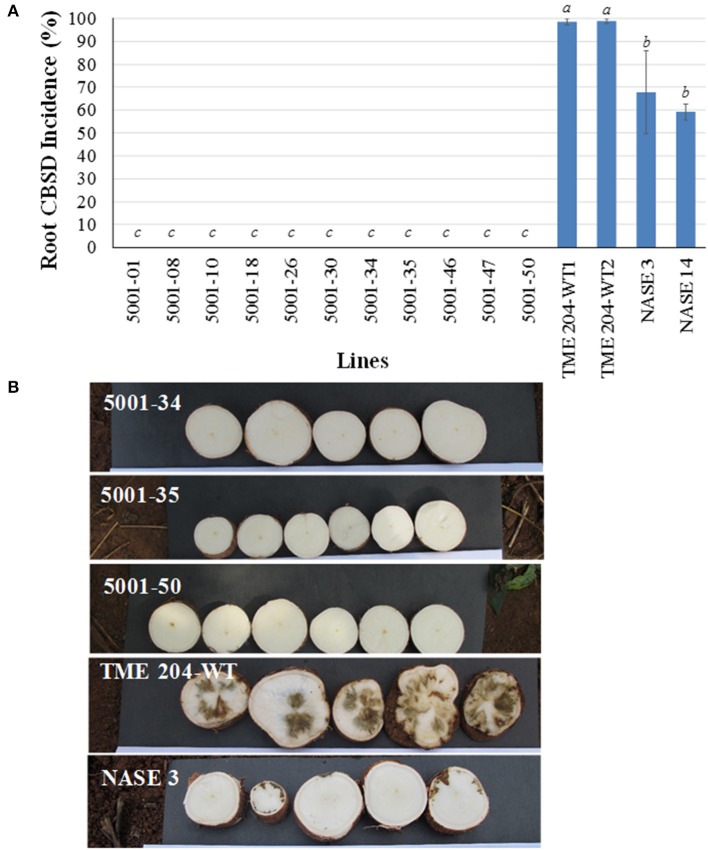
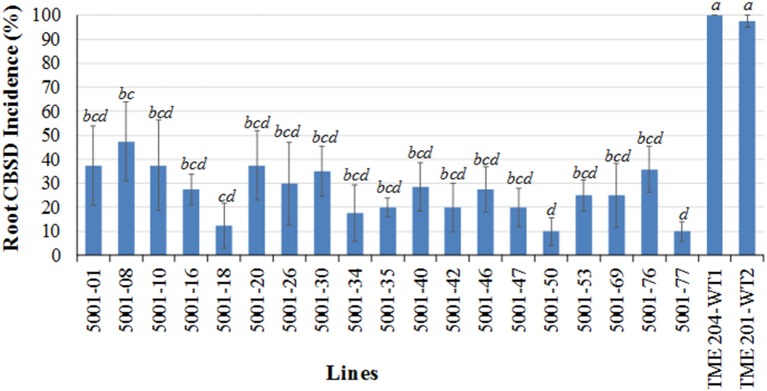
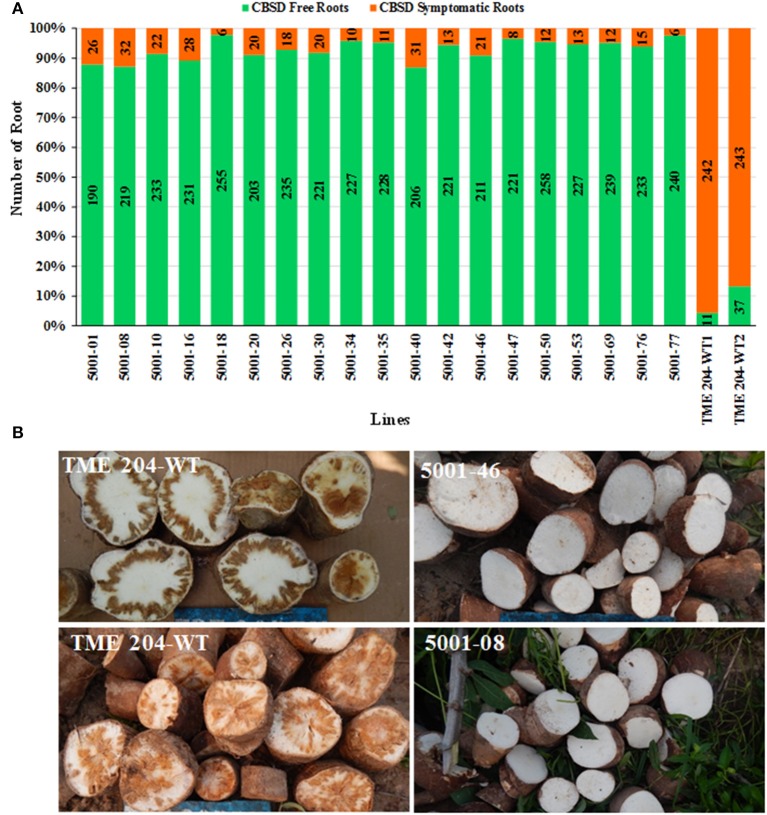
Cassava brown streak disease (CBSD) presents a serious threat to cassava production in East and Central Africa. Currently, no cultivars with high levels of resistance to CBSD are available to farmers. Transgenic RNAi technology was employed to combat CBSD by fusing coat protein (CP) sequences from (UCBSV) and (CBSV) to create an inverted repeat construct (p5001) driven by the constitutive promoter. Twenty-five plant lines of cultivar TME 204 expressing varying levels of small interfering RNAs (siRNAs) were established in confined field trials (CFTs) in Uganda and Kenya. Within an initial CFT at Namulonge, Uganda, non-transgenic TME 204 plants developed foliar and storage root CBSD incidences at 96-100% by 12 months after planting. In contrast, 16 of the 25 p5001 transgenic lines showed no foliar symptoms and had less than 8% of their storage roots symptomatic for CBSD. A direct positive correlation was seen between levels of resistance to CBSD and expression of transgenic CP-derived siRNAs. A subsequent CFT was established at Namulonge using stem cuttings from the initial trial. All transgenic lines established remained asymptomatic for CBSD, while 98% of the non-transgenic TME 204 stake-derived plants developed storage roots symptomatic for CBSD. Similarly, very high levels of resistance to CBSD were demonstrated by TME 204 p5001 RNAi lines grown within a CFT over a full cropping cycle at Mtwapa, coastal Kenya. Sequence analysis of CBSD causal viruses present at the trial sites showed that the transgenic lines were exposed to both CBSV and UCBSV, and that the sequenced isolates shared >90% CP identity with transgenic CP sequences expressed by the p5001 inverted repeat expression cassette. These results demonstrate very high levels of field resistance to CBSD conferred by the p5001 RNAi construct at diverse agro-ecological locations, and across the vegetative cropping cycle.
木薯褐色条纹病(CBSD)对东非和中非的木薯生产构成严重威胁。目前,农民无法获得对CBSD具有高度抗性的品种。采用转基因RNA干扰技术来对抗CBSD,将来自乌干达木薯褐色条纹病毒(UCBSV)和木薯褐色条纹病毒(CBSV)的外壳蛋白(CP)序列融合,构建由组成型启动子驱动的反向重复构建体(p5001)。在乌干达和肯尼亚的封闭田间试验(CFT)中建立了25个表达不同水平小干扰RNA(siRNA)的TME 204品种的株系。在乌干达纳穆隆格的初始CFT中,种植后12个月时,非转基因TME 204植株的叶片和贮藏根CBSD发病率达到96 - 100%。相比之下,25个p5001转基因株系中有16个没有叶片症状,其贮藏根出现CBSD症状的比例不到8%。对CBSD的抗性水平与转基因CP衍生的siRNA的表达之间存在直接正相关。随后在纳穆隆格利用初始试验的茎切段建立了一个CFT。所有建立的转基因株系对CBSD仍无症状,而98%的非转基因TME 204砧木衍生植株的贮藏根出现了CBSD症状。同样,在肯尼亚沿海的姆特瓦帕进行的一个完整种植周期的CFT中,TME 204 p5001 RNA干扰株系对CBSD表现出非常高的抗性水平。试验地点存在的CBSD致病病毒的序列分析表明,转基因株系同时接触了CBSV和UCBSV,并且测序的分离株与p5001反向重复表达盒表达的转基因CP序列具有>90%的CP同一性。这些结果表明,p5001 RNA干扰构建体在不同的农业生态地点以及整个营养种植周期中都赋予了对CBSD非常高的田间抗性。