Yue Rongchuan, Fu Wenbin, Liao Xiang, Lan Cong, Liao Qiao, Li Liangpeng, Yang Dezhong, Xia Xuewei, Chen Xiongwen, Zeng Chunyu, Wang Wei Eric
Department of Cardiology, Daping Hospital, Chongqing institute of Cardiology, Third Military Medical University, 10 Changjiangzhilu Road, , Yuzhong District, Chongqing, 400042, China.
Department of Cardiology, Chuanbei Medical College, Sichuan, 637007, China.
Stem Cell Res Ther. 2017 Jan 28;8(1):17. doi: 10.1186/s13287-017-0476-7.
Transplantation of cardiosphere-derived cells (CDCs) has been shown to exert a therapeutic effect in patients with myocardial infarction (MI). However, poor survival of transplanted CDCs limits their beneficial effect. Metformin (MET) activates AMP-activated protein kinase (AMPK) which is associated with cell survival. The aim of this study is to determine whether MET improves CDC survival in the transplantation microenvironment and enhances the therapeutic effect of CDC transplantation against MI.
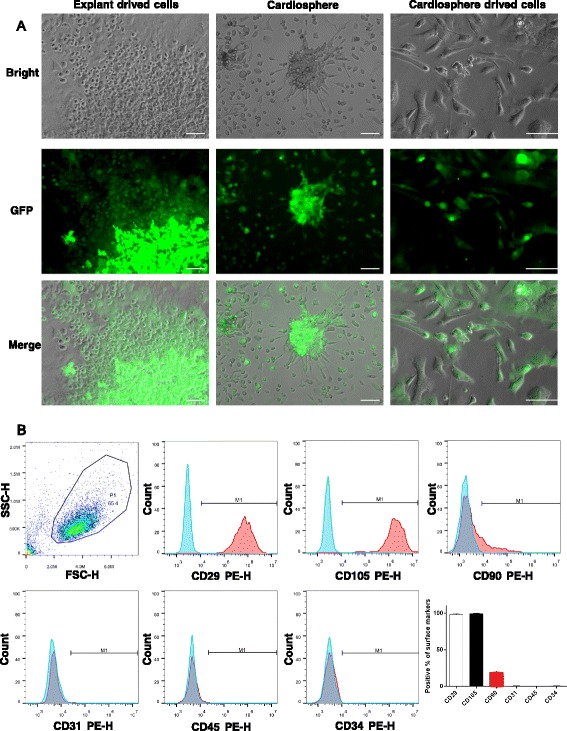
CDCs were isolated and expanded from transgenic β-actin-GFP mice. CDCs were pretreated with MET and intramyocardially injected into wild-type C57 mouse heart with MI injury. The survival of CDCs was quantified, and the infarct size and cardiac function of treated hearts were evaluated.
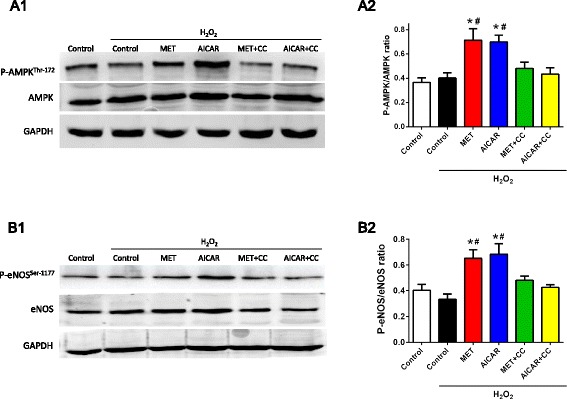
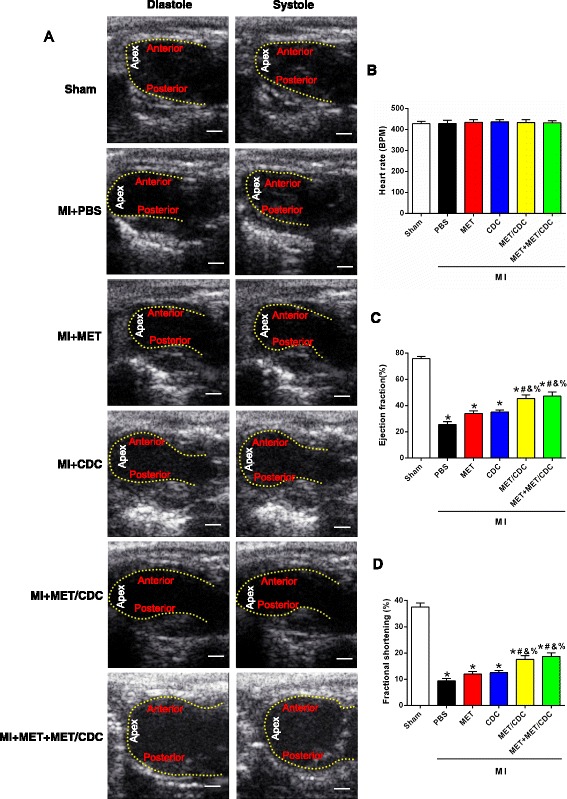
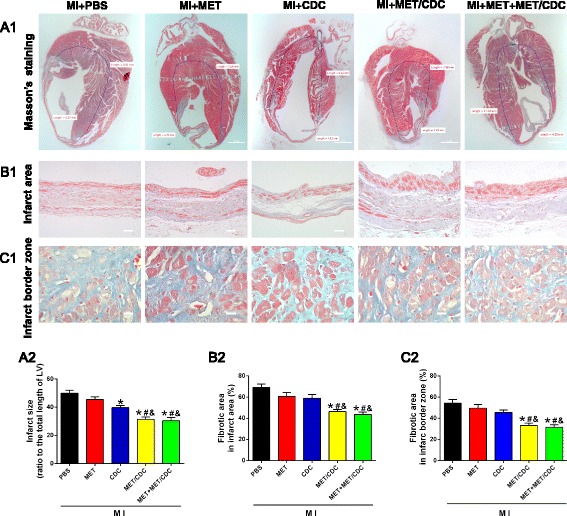
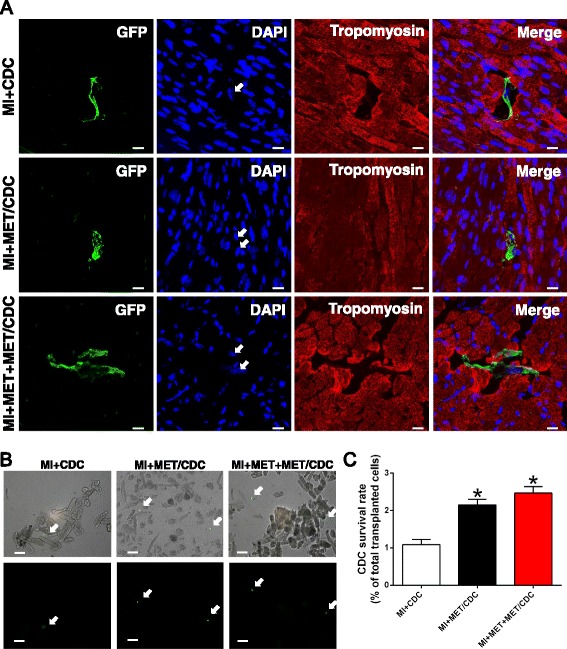
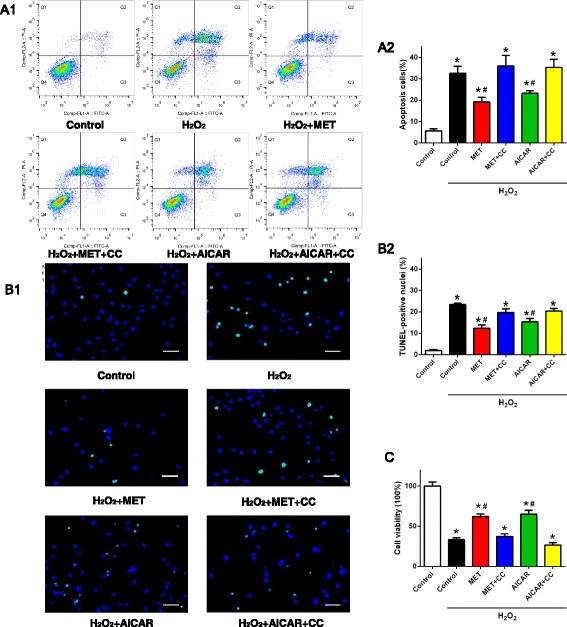
CDC transplantation modestly reduced infarct size and improved cardiac function in the post-MI heart, which was further improved by MET treatment. MET pretreatment significantly increased the survival of CDCs transplanted into the myocardium. MET also reduced CDC apoptosis induced by oxidative stress in vitro. The anti-apoptotic effect of MET was blocked by the AMPK inhibitor compound C. MET increased AMPK phosphorylation and upregulated endothelial nitric oxide synthase (eNOS) in CDCs under oxidative stress, which might be associated with the anti-apoptotic effect of MET.
MET improves the survival of transplanted CDCs in the myocardium, thereby enhancing their therapeutic effect against MI injury. The pro-survival function of MET on CDCs might be associated with an AMPK-eNOS-dependent mechanism.
已证明心肌球衍生细胞(CDC)移植对心肌梗死(MI)患者具有治疗作用。然而,移植的CDC存活率低限制了它们的有益效果。二甲双胍(MET)激活与细胞存活相关的AMP激活蛋白激酶(AMPK)。本研究的目的是确定MET是否能改善移植微环境中CDC的存活,并增强CDC移植对MI的治疗效果。
从转基因β-肌动蛋白-GFP小鼠中分离并扩增CDC。将CDC用MET预处理后,心肌内注射到有MI损伤的野生型C57小鼠心脏中。对CDC的存活进行定量,并评估治疗后心脏的梗死面积和心功能。
CDC移植适度减小了MI后心脏的梗死面积并改善了心功能,MET治疗进一步改善了这些指标。MET预处理显著提高了移植到心肌中的CDC的存活率。MET还减少了体外氧化应激诱导的CDC凋亡。MET的抗凋亡作用被AMPK抑制剂化合物C阻断。在氧化应激下,MET增加了CDC中AMPK的磷酸化并上调了内皮型一氧化氮合酶(eNOS),这可能与MET的抗凋亡作用有关。
MET提高了移植到心肌中的CDC的存活率,从而增强了它们对MI损伤的治疗效果。MET对CDC的促存活功能可能与AMPK-eNOS依赖性机制有关。