Key Laboratory of Study and Discovery of Small Targeted Molecules of Hunan Province, Key Laboratory of Protein Chemistry and Developmental Biology of Fish of Ministry of Education, Department of Pharmacy, School of Medicine, Hunan Normal University, Changsha, Hunan, China.
Institute for Developmental and Regenerative Cardiovascular Medicine, Xinhua Hospital, School of Medicine, Shanghai Jiao Tong University, Shanghai, China.
J Cell Mol Med. 2022 Oct;26(19):4886-4903. doi: 10.1111/jcmm.17519. Epub 2022 Sep 2.
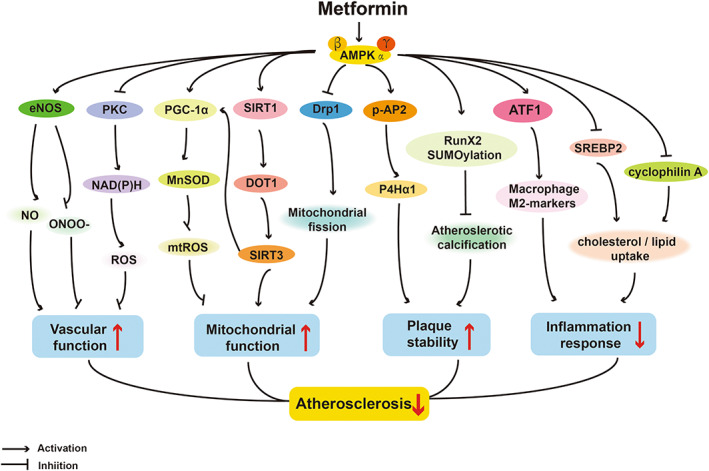
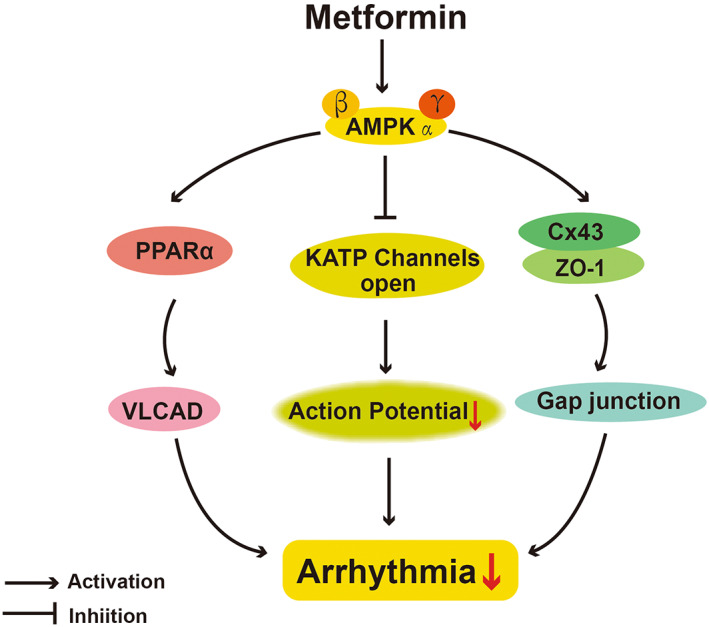
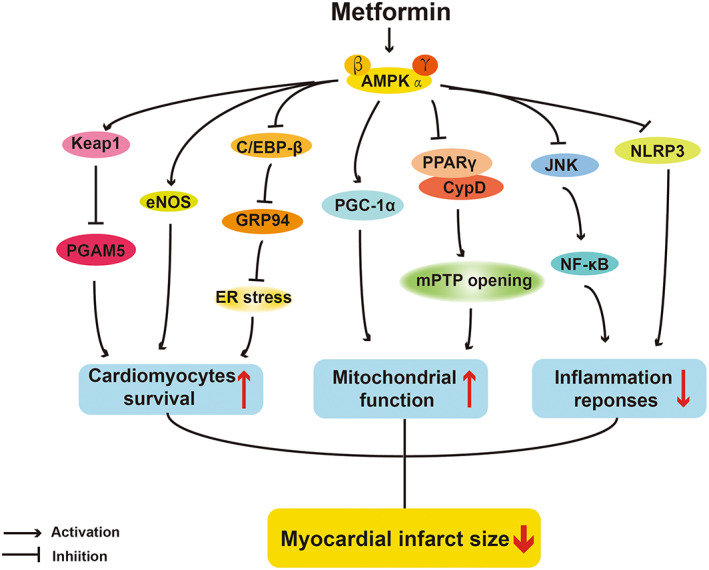
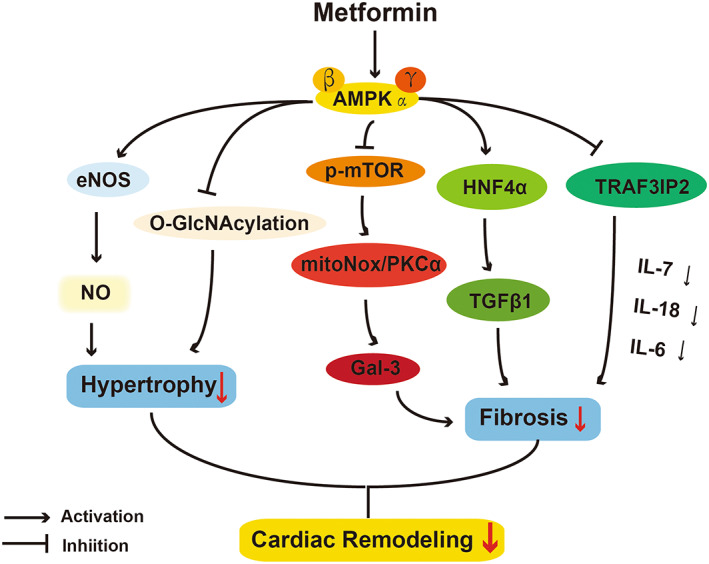
Metformin, a well-known AMPK agonist, has been widely used as the first-line drug for treating type 2 diabetes. There had been a significant concern regarding the use of metformin in people with cardiovascular diseases (CVDs) due to its potential lactic acidosis side effect. Currently growing clinical and preclinical evidence indicates that metformin can lower the incidence of cardiovascular events in diabetic patients or even non-diabetic patients beyond its hypoglycaemic effects. The underlying mechanisms of cardiovascular benefits of metformin largely involve the cellular energy sensor, AMPK, of which activation corrects endothelial dysfunction, reduces oxidative stress and improves inflammatory response. In this minireview, we summarized the clinical evidence of metformin benefits in several widely studied cardiovascular diseases, such as atherosclerosis, ischaemic/reperfusion injury and arrhythmia, both in patients with or without diabetes. Meanwhile, we highlighted the potential AMPK-dependent mechanisms in in vitro and/or in vivo models.
二甲双胍是一种众所周知的 AMPK 激动剂,已被广泛用作治疗 2 型糖尿病的一线药物。由于其潜在的乳酸酸中毒副作用,人们一直非常关注在心血管疾病 (CVD) 患者中使用二甲双胍的问题。目前越来越多的临床和临床前证据表明,二甲双胍除了具有降血糖作用外,还可以降低糖尿病患者甚至非糖尿病患者的心血管事件发生率。二甲双胍发挥心血管益处的潜在机制主要涉及细胞能量传感器 AMPK,其激活可纠正内皮功能障碍、减少氧化应激并改善炎症反应。在这篇简评中,我们总结了二甲双胍在几种广泛研究的心血管疾病中的临床获益,例如动脉粥样硬化、缺血/再灌注损伤和心律失常,无论患者是否患有糖尿病。同时,我们强调了在体外和/或体内模型中潜在的 AMPK 依赖性机制。