Zeng Ling, Beggs Reena R, Cooper Tiffiny S, Weaver Alice N, Yang Eddy S
Department of Radiation Oncology, University of Alabama at Birmingham School of Medicine, Birmingham, Alabama.
Department of Pharmacology and Toxiology, University of Alabama at Birmingham School of Medicine, Birmingham, Alabama.
Mol Cancer Ther. 2017 Apr;16(4):591-600. doi: 10.1158/1535-7163.MCT-16-0352. Epub 2017 Jan 30.
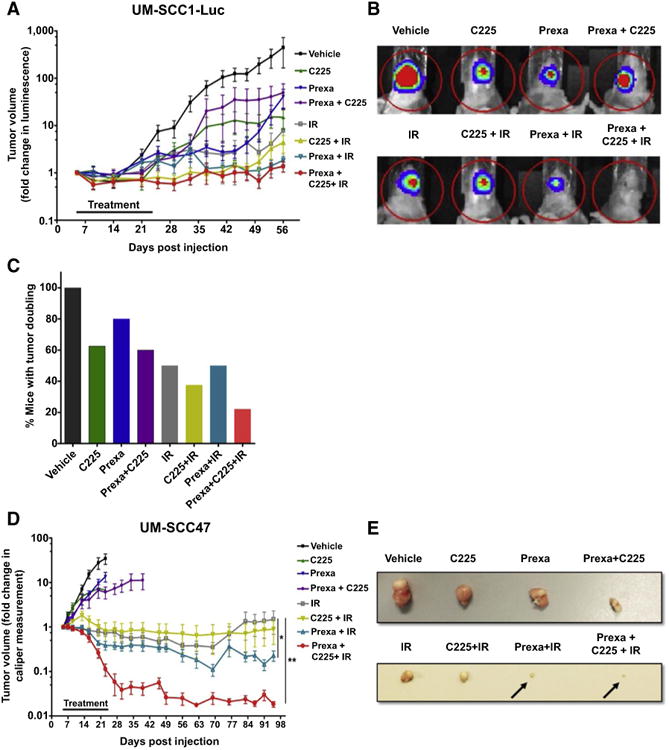
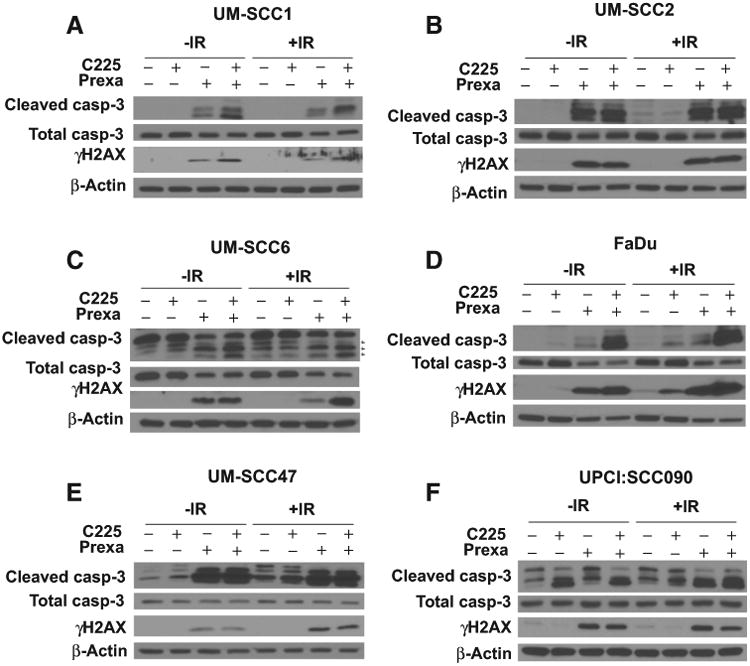
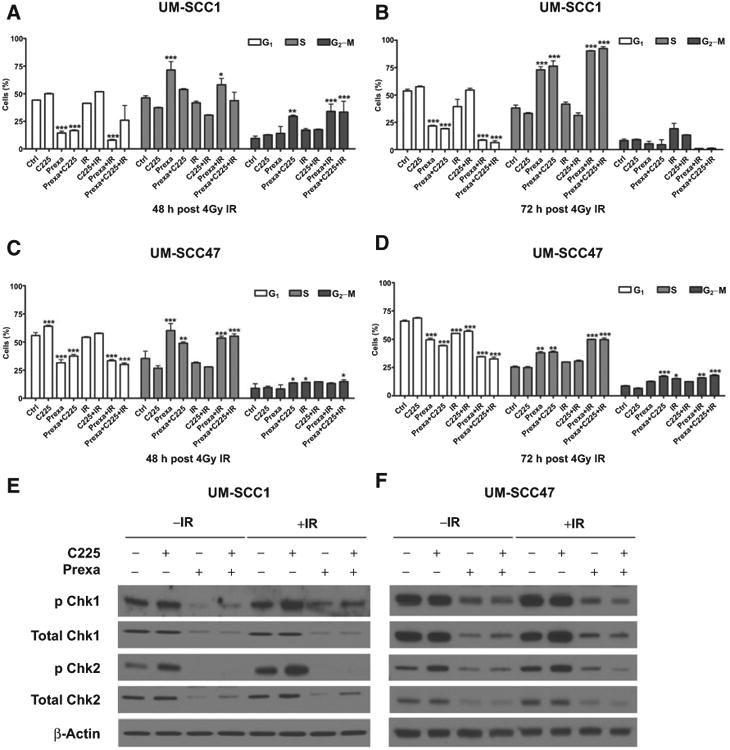
EGFR inhibition and radiotherapy are potent inducers of DNA damage. Checkpoint kinases 1 and 2 (Chk1/2) are critical regulators of the DNA-damage response, controlling cell-cycle checkpoints that may permit recovery from therapy-associated genomic stress. We hypothesized that Chk1/2 inhibition (CHKi) with prexasertib may enhance cytotoxicity from EGFR inhibition plus radiotherapy in head and neck squamous cell carcinoma (HNSCC). In this study, we found that the addition of CHKi to the EGFR inhibitor cetuximab with and without radiotherapy significantly decreased cell proliferation and survival fraction in human papillomavirus virus (HPV)-positive and HPV-negative HNSCC cell lines. Reduced proliferation was accompanied by decreased checkpoint activation, induced S-phase accumulation, persistent DNA damage, and increased caspase cleavage and apoptosis. Importantly, a significant tumor growth delay was observed in both HPV-positive and HPV-negative cell line xenografts receiving triple combination therapy with CHKi, cetuximab, and radiotherapy without a concomitant increase in toxicity as assessed by mouse body weight. Taken together, the combination of CHKi with cetuximab plus irradiation displayed significant antitumor effects in HNSCCs both and , suggesting that this combination therapy may increase clinical benefit. A clinical trial to test this treatment for patients with head and neck cancer is currently ongoing (NCT02555644). .
表皮生长因子受体(EGFR)抑制和放射治疗是强力的DNA损伤诱导剂。关卡激酶1和2(Chk1/2)是DNA损伤反应的关键调节因子,控制着可能使细胞从治疗相关的基因组应激中恢复的细胞周期关卡。我们推测,使用prexasertib抑制Chk1/2(CHKi)可能会增强头颈部鳞状细胞癌(HNSCC)中EGFR抑制联合放射治疗的细胞毒性。在本研究中,我们发现,在有或无放射治疗的情况下,将CHKi添加到EGFR抑制剂西妥昔单抗中,可显著降低人乳头瘤病毒(HPV)阳性和HPV阴性HNSCC细胞系中的细胞增殖和存活分数。增殖减少伴随着关卡激活降低、诱导S期积累、持续性DNA损伤以及半胱天冬酶切割增加和细胞凋亡。重要的是,在接受CHKi、西妥昔单抗和放射治疗三联组合疗法的HPV阳性和HPV阴性细胞系异种移植瘤中均观察到显著的肿瘤生长延迟,且根据小鼠体重评估,毒性并未随之增加。综上所述,CHKi与西妥昔单抗加放疗联合使用在HNSCC中均显示出显著的抗肿瘤作用,表明这种联合疗法可能会增加临床获益。目前正在进行一项针对头颈癌患者测试这种治疗方法的临床试验(NCT02555644)。