State Key Laboratory of Medical Genomics; Shanghai Institute of Hematology; Shanghai Rui Jin Hospital; Shanghai Jiao Tong University School of Medicine; 197 Rui Jin Er Road, Shanghai, China.
State Key Laboratory of Medical Genomics; Shanghai Institute of Hematology; Shanghai Rui Jin Hospital; Shanghai Jiao Tong University School of Medicine; 197 Rui Jin Er Road, Shanghai, China; Pôle de Recherches Sino-Français en Science du Vivant et Génomique; Laboratory of Molecular Pathology; Shanghai, China.
EBioMedicine. 2017 Feb;16:106-114. doi: 10.1016/j.ebiom.2017.01.027. Epub 2017 Jan 21.
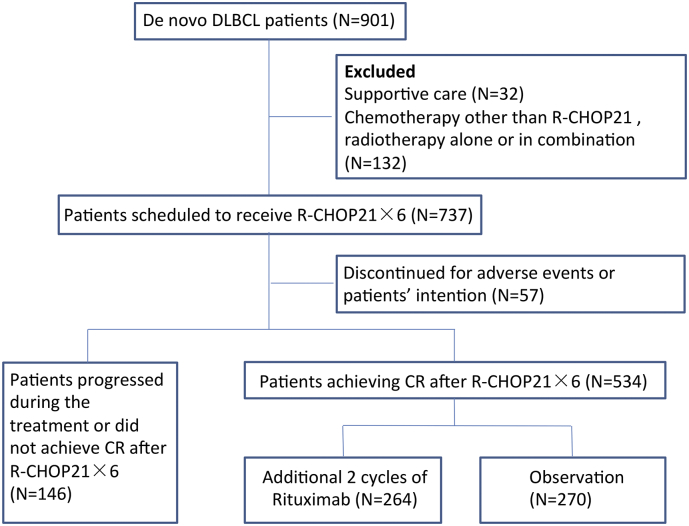
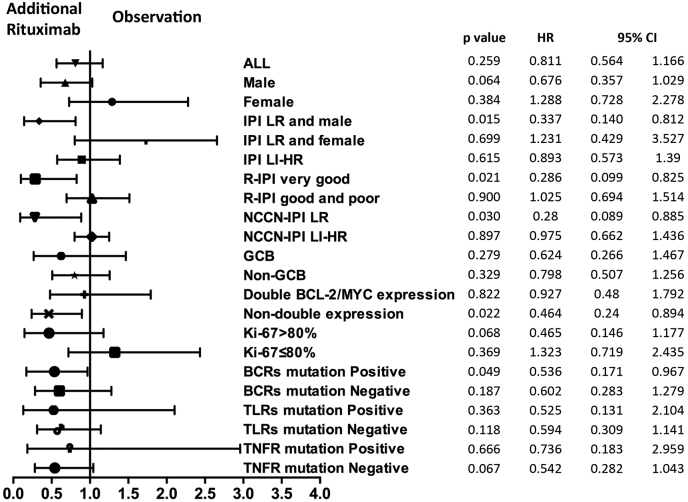
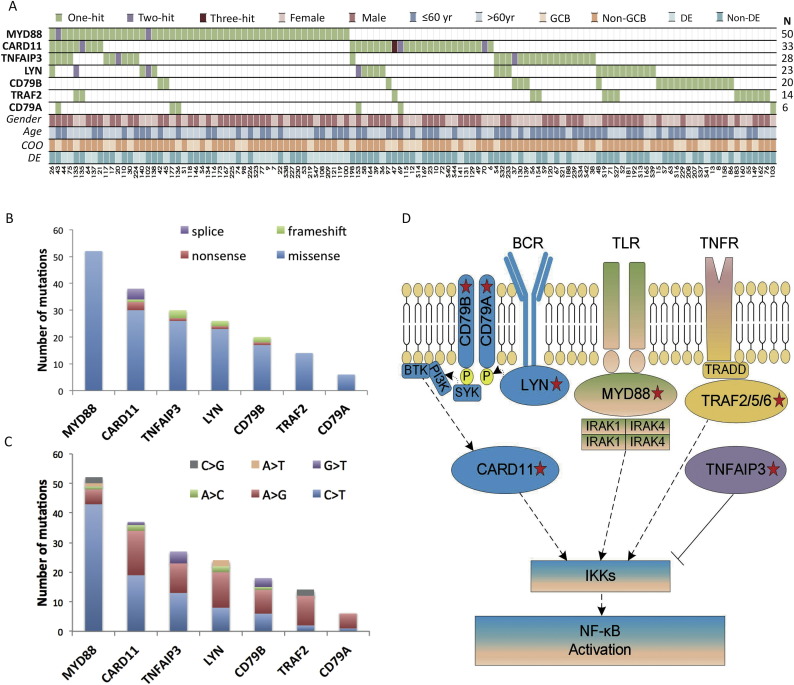
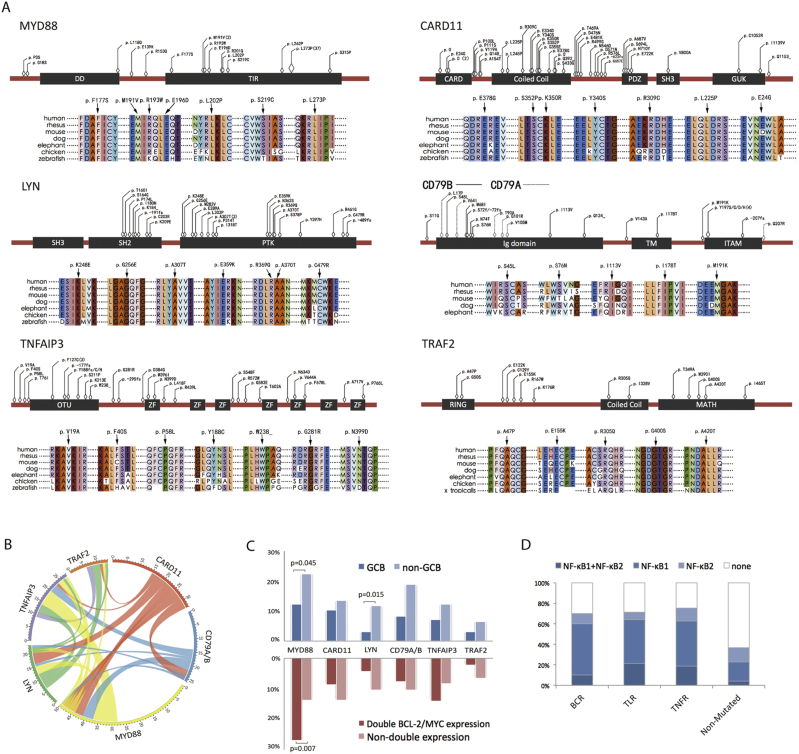
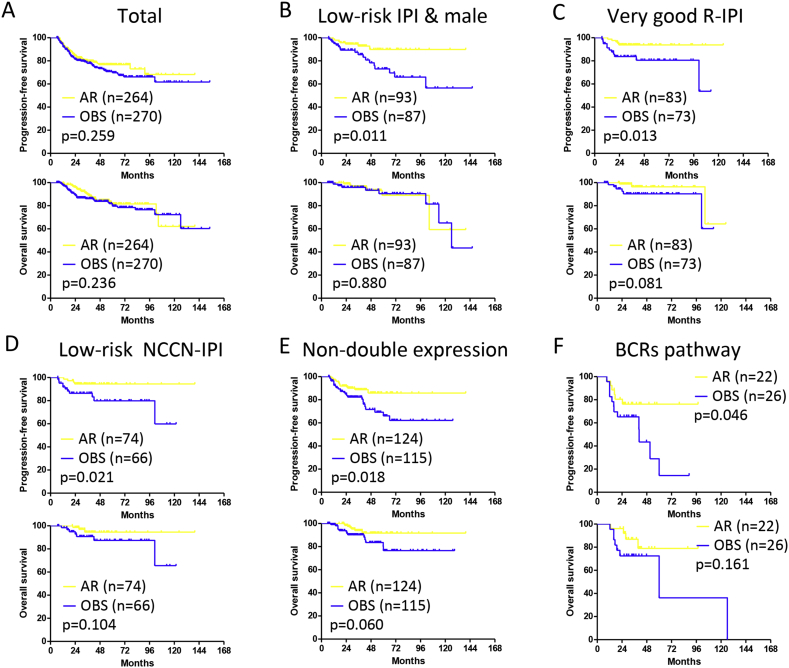
Diffuse large B-cell lymphoma (DLBCL) is a heterogeneous subtype of non-Hodgkin lymphoma. In addition to clinical and immunophenotypic characteristics, recurrent gene mutations have recently been identified in patients with DLBCL using next-generation sequencing technologies. The aim of this study is to investigate the clinical relevance of B-cell function gene mutations in DLBCL. Clinical analysis was performed on 680 Chinese DLBCL patients (146 non-CR and 534 CR cases) treated with six cycles of 21-day R-CHOP (Rituximab, cyclophosphamide, doxorubicin, vincristine, and prednisone), alone or followed by two additional doses of rituximab consolidation on patients' own intention. Somatic mutations of B-cell function genes were further screened on 275 (71 non-CR and 204 CR) cases with available tumor samples by targeted sequencing, including genes involved in B-cell receptors (BCRs) pathway (CARD11, LYN, CD79A, and CD79B), Toll-like receptors (TLRs) pathway (MYD88), and tumor necrotic factor receptor (TNFR) pathway (TRAF2 and TNFAIP3). B-cell function gene mutations occurred in 44.0% (121/275) of DLBCL patients. The TLRs and TNFR related gene mutations were more frequently observed in non-CR patients (p=0.019 and p=0.032, respectively). BCRs related gene mutations, as well as revised IPI (R-IPI) and double BCL-2/MYC expression, were independently related to short progression-free survival in DLBCL after CR. The adverse prognostic effect of BCRs related gene mutations could be overcome by two additional doses of rituximab consolidation. These results highlight the molecular heterogeneity of DLBCL and identify a significant role of B-cell function gene mutations on lymphoma progression and response to rituximab in DLBCL.
弥漫性大 B 细胞淋巴瘤(DLBCL)是一种非霍奇金淋巴瘤的异质性亚型。除了临床和免疫表型特征外,最近使用下一代测序技术在 DLBCL 患者中发现了复发性基因突变。本研究旨在探讨 DLBCL 中 B 细胞功能基因突变的临床相关性。对 680 例接受 6 个周期 21 天 R-CHOP(利妥昔单抗、环磷酰胺、多柔比星、长春新碱和泼尼松)治疗的中国 DLBCL 患者(146 例非完全缓解和 534 例完全缓解病例)进行临床分析,单独或根据患者意愿在完全缓解后再追加两剂利妥昔单抗巩固治疗。对 275 例有肿瘤样本的病例(71 例非完全缓解和 204 例完全缓解)通过靶向测序进一步筛选 B 细胞功能基因的体细胞突变,包括 B 细胞受体(BCR)途径(CARD11、LYN、CD79A 和 CD79B)、Toll 样受体(TLR)途径(MYD88)和肿瘤坏死因子受体(TNFR)途径(TRAF2 和 TNFAIP3)的基因。在 44.0%(275 例中的 121 例)的 DLBCL 患者中发生了 B 细胞功能基因突变。TLR 和 TNFR 相关基因突变在非完全缓解患者中更为常见(p=0.019 和 p=0.032)。BCR 相关基因突变、修订后的国际预后指数(R-IPI)和双 BCL-2/MYC 表达在完全缓解后与 DLBCL 的无进展生存时间短独立相关。通过追加两剂利妥昔单抗巩固治疗,可克服 BCR 相关基因突变的不良预后作用。这些结果突出了 DLBCL 的分子异质性,并确定了 B 细胞功能基因突变在淋巴瘤进展和对利妥昔单抗反应中的重要作用。