Badgandi Hemant B, Hwang Sun-Hee, Shimada Issei S, Loriot Evan, Mukhopadhyay Saikat
Department of Cell Biology, University of Texas Southwestern Medical Center, Dallas, TX 75390
Department of Cell Biology, University of Texas Southwestern Medical Center, Dallas, TX 75390.
J Cell Biol. 2017 Mar 6;216(3):743-760. doi: 10.1083/jcb.201607095. Epub 2017 Feb 2.
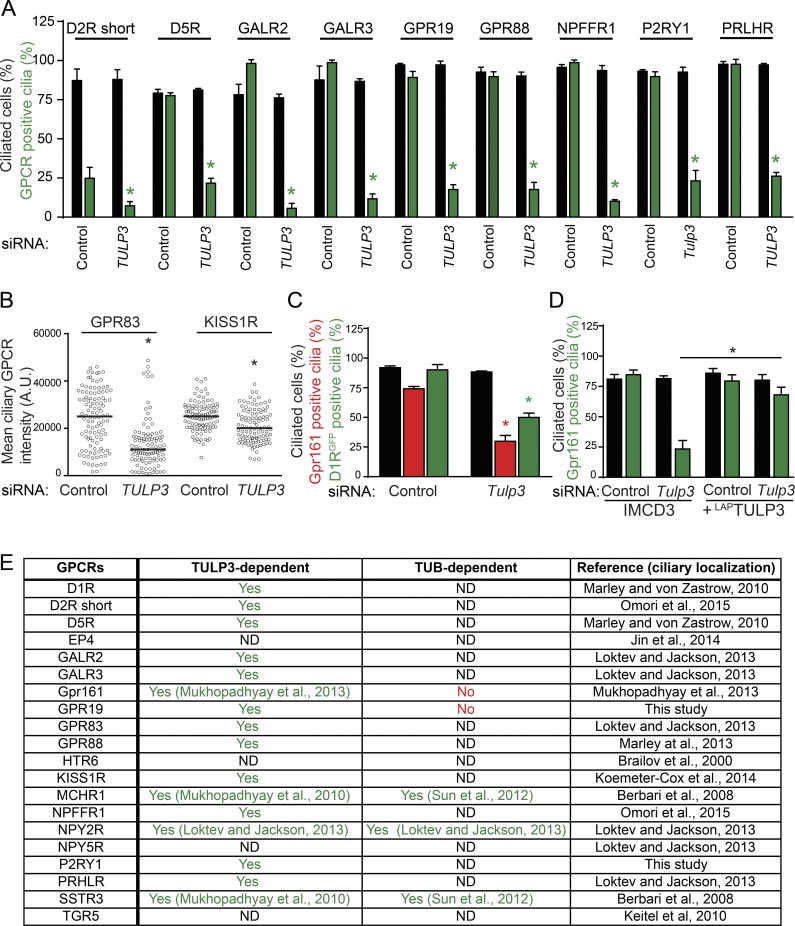
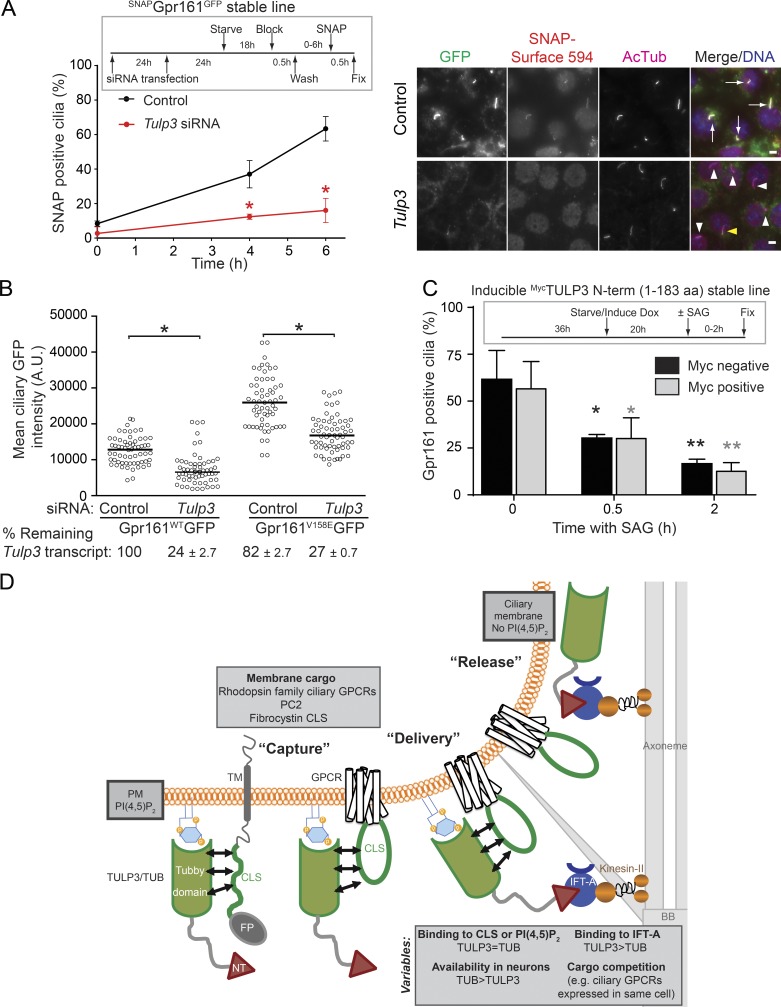
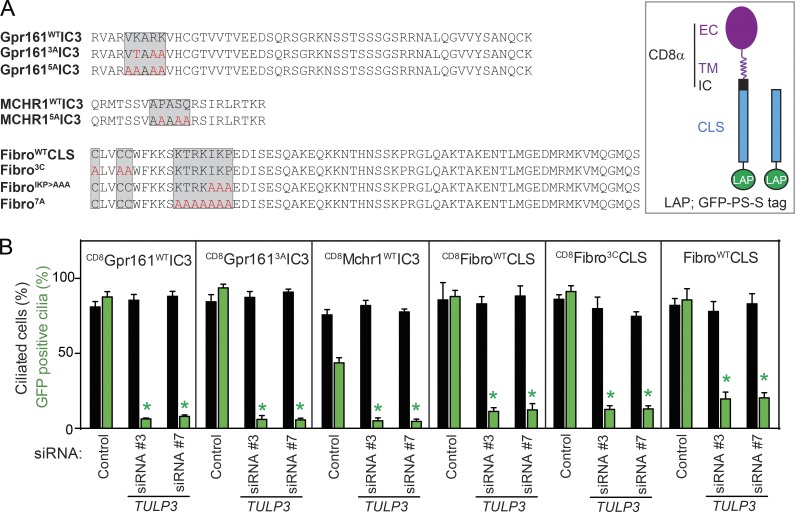
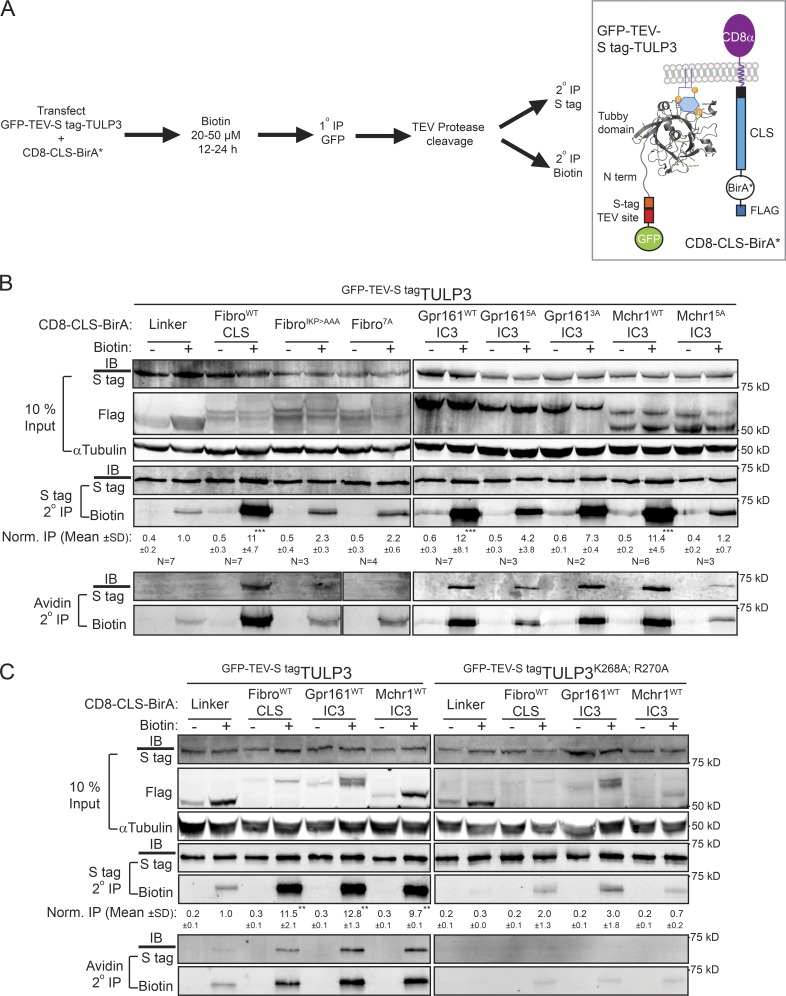
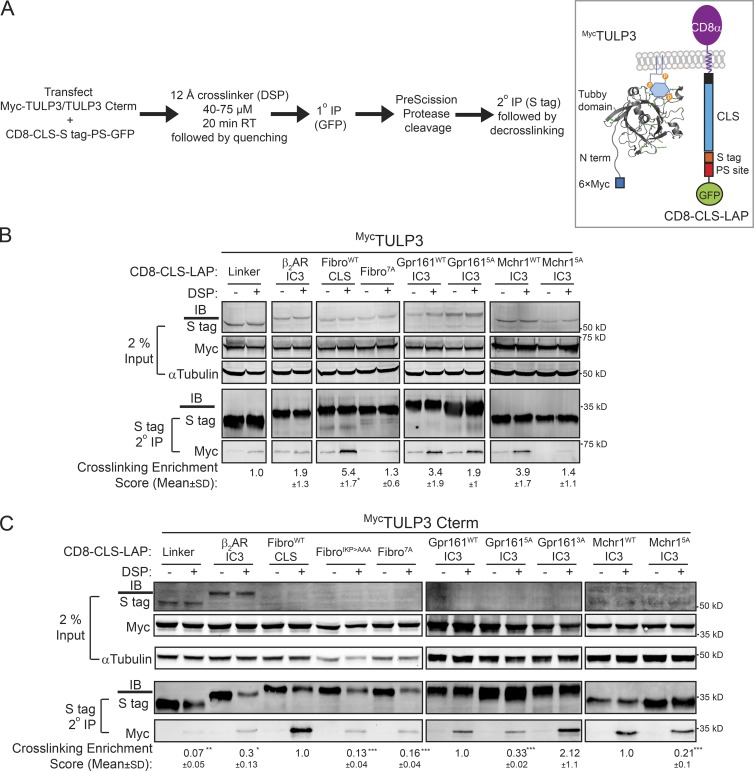
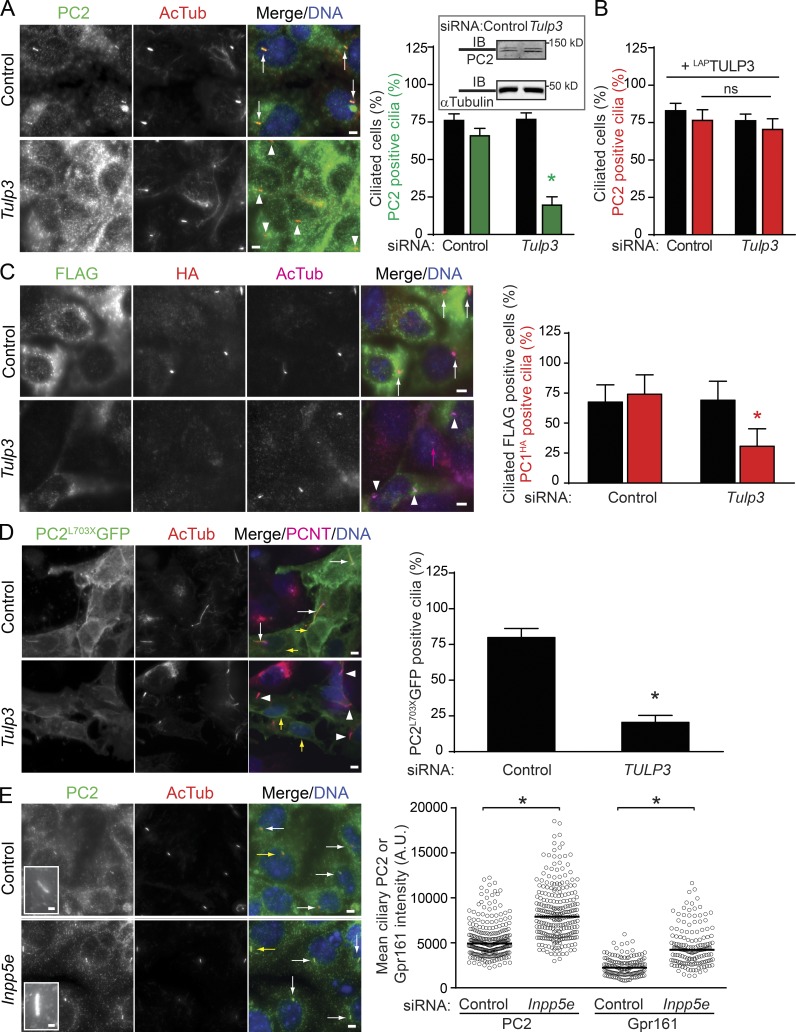
The primary cilium is a paradigmatic organelle for studying compartmentalized signaling; however, unlike soluble protein trafficking, processes targeting integral membrane proteins to cilia are poorly understood. In this study, we determine that the tubby family protein TULP3 functions as a general adapter for ciliary trafficking of structurally diverse integral membrane cargo, including multiple reported and novel rhodopsin family G protein-coupled receptors (GPCRs) and the polycystic kidney disease-causing polycystin 1/2 complex. The founding tubby family member TUB also localizes to cilia similar to TULP3 and determines trafficking of a subset of these GPCRs to neuronal cilia. Using minimal ciliary localization sequences from GPCRs and fibrocystin (also implicated in polycystic kidney disease), we demonstrate these motifs to be sufficient and TULP3 dependent for ciliary trafficking. We propose a three-step model for TULP3/TUB-mediated ciliary trafficking, including the capture of diverse membrane cargo by the tubby domain in a phosphoinositide 4,5-bisphosphate (PI(4,5)P)-dependent manner, ciliary delivery by intraflagellar transport complex A binding to the TULP3/TUB N terminus, and subsequent release into PI(4,5)P-deficient ciliary membrane.
初级纤毛是研究区室化信号传导的典型细胞器;然而,与可溶性蛋白运输不同,将整合膜蛋白靶向纤毛的过程仍知之甚少。在本研究中,我们确定类Tubby家族蛋白TULP3作为一种通用衔接蛋白,参与多种结构各异的整合膜货物向纤毛的运输,包括多个已报道的和新发现的视紫红质家族G蛋白偶联受体(GPCR)以及导致多囊肾病的多囊蛋白1/2复合物。Tubby家族的首个成员TUB也与TULP3类似定位于纤毛,并决定这些GPCR中的一部分向神经元纤毛的运输。利用来自GPCR和纤维囊泡蛋白(也与多囊肾病有关)的最小纤毛定位序列,我们证明这些基序足以介导且依赖于TULP3进行纤毛运输。我们提出了一个由TULP3/TUB介导的纤毛运输的三步模型,包括Tubby结构域以依赖于磷脂酰肌醇-4,5-二磷酸(PI(4,5)P)的方式捕获多种膜货物,通过鞭毛内运输复合物A与TULP3/TUB N端结合进行纤毛递送,以及随后释放到缺乏PI(4,5)P的纤毛膜中。