Zumwalt Timothy J, Wodarz Dominik, Komarova Natalia L, Toden Shusuke, Turner Jacob, Cardenas Jacob, Burn John, Chan Andrew T, Boland C Richard, Goel Ajay
Center for Gastrointestinal Research; Center for Translational Genomics and Oncology, Baylor Scott and White Research Institute and Sammons Cancer Center, Baylor University Medical Center, Dallas, Texas.
Department of Mathematics and Department of Ecology and Evolutionary Biology, University of California, Irvine, California.
Cancer Prev Res (Phila). 2017 Mar;10(3):208-218. doi: 10.1158/1940-6207.CAPR-16-0175. Epub 2017 Feb 2.
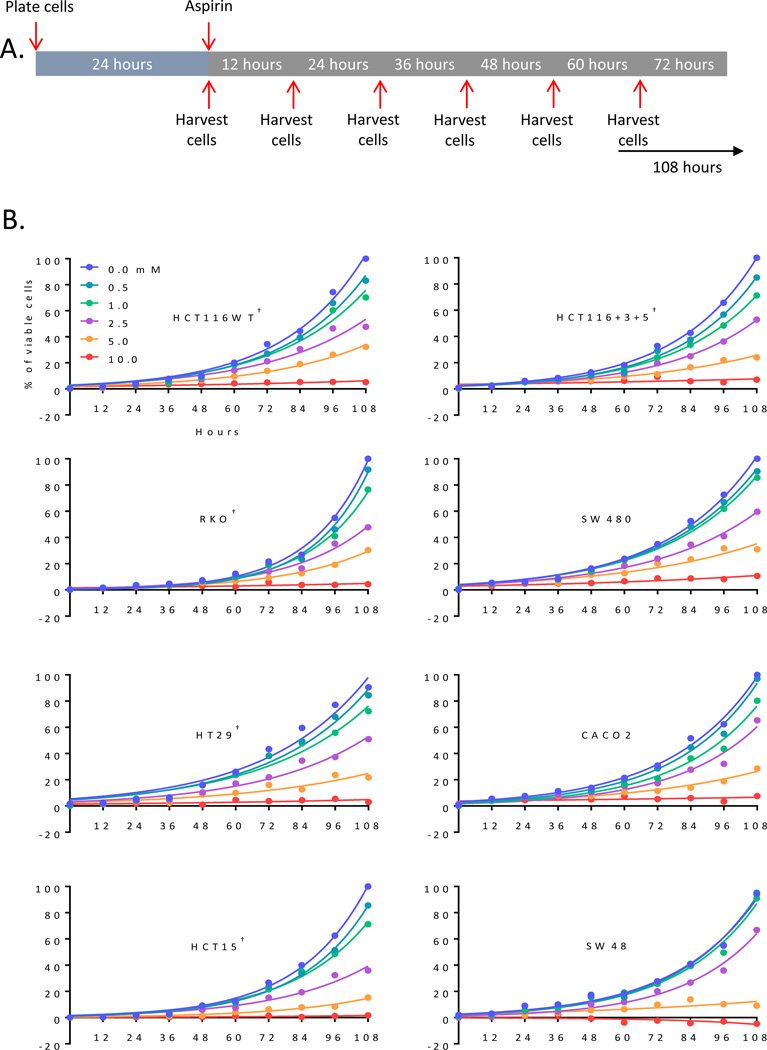
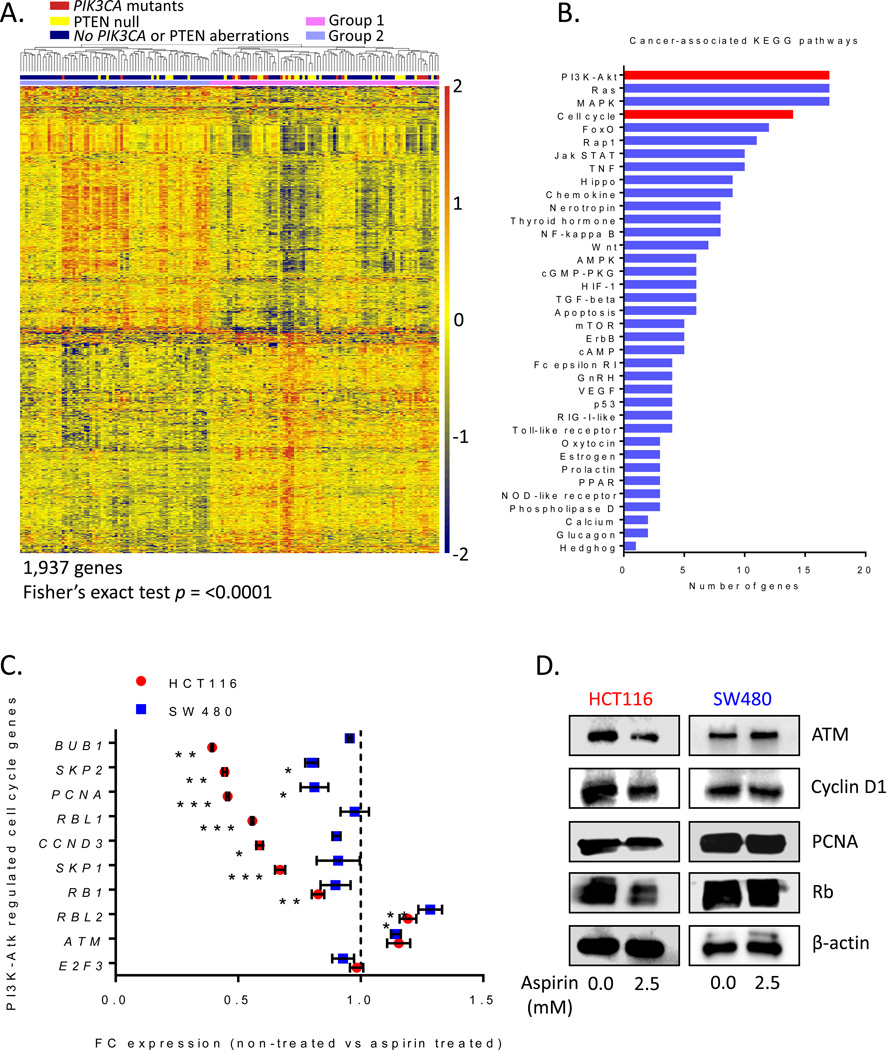
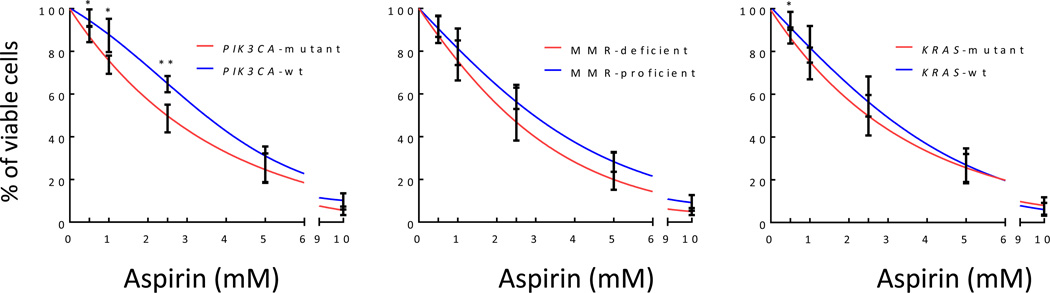
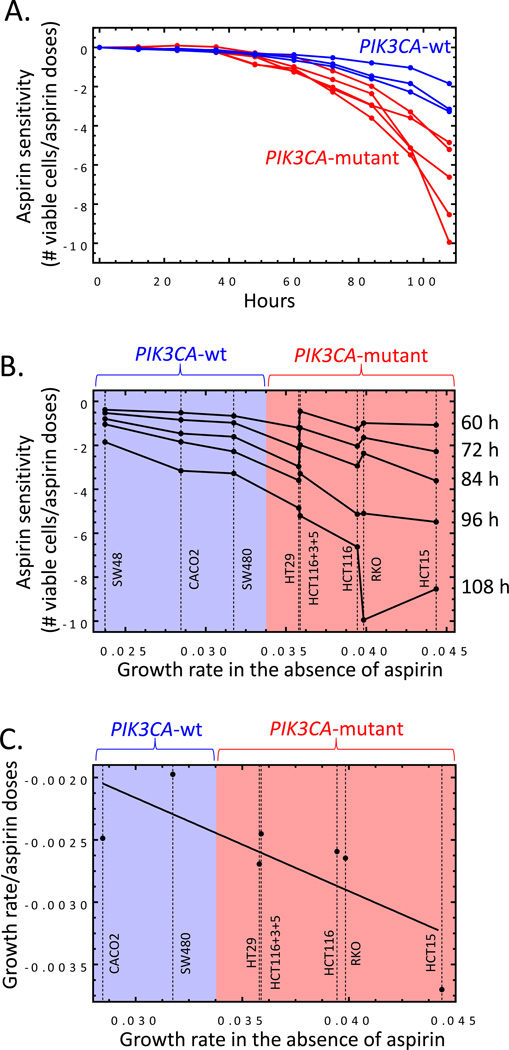
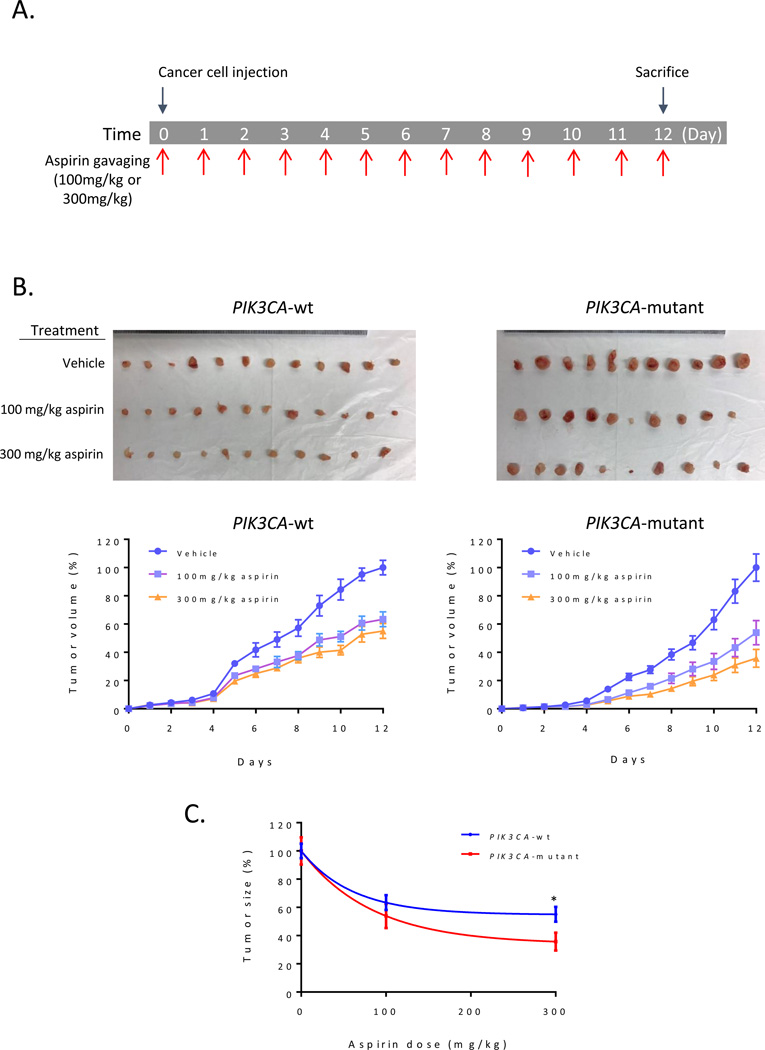
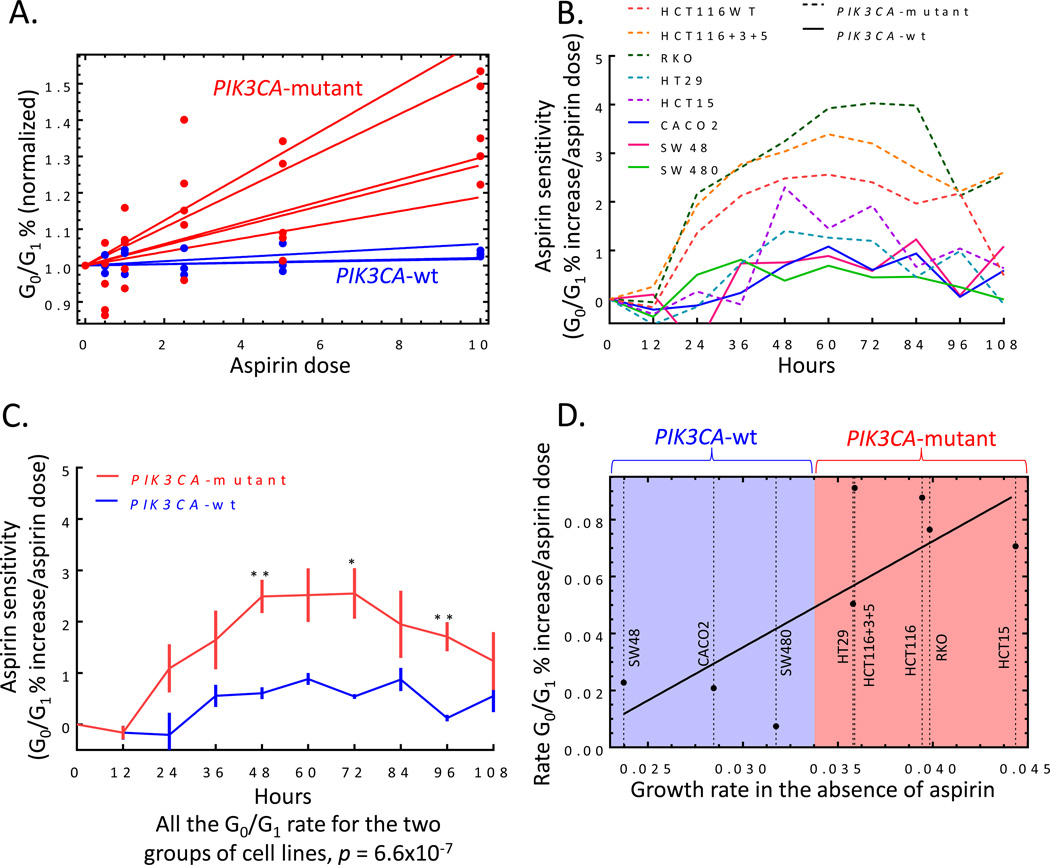
This study was designed to determine how aspirin influences the growth kinetics and characteristics of cultured colorectal cancer cells that harbor a variety of different mutational backgrounds, including - and -activating mutations, and the presence or absence of microsatellite instability. Colorectal cancer cell lines (HCT116, HCT116 + Chr3/5, RKO, SW480, HCT15, CACO2, HT29, and SW48) were treated with pharmacologically relevant doses of aspirin (0.5-10 mmol/L) and evaluated for proliferation and cell-cycle distribution. These parameters were fitted to a mathematical model to quantify the effects and understand the mechanism(s) by which aspirin modifies growth in colorectal cancer cells. We also evaluated the effects of aspirin on key G-G cell-cycle genes that are regulated by the PI3K-Akt pathway. Aspirin decelerated growth rates and disrupted cell-cycle dynamics more profoundly in faster growing colorectal cancer cell lines, which tended to be mutants. Additionally, microarray analysis of 151 colorectal cancer cell lines identified important cell-cycle regulatory genes that are downstream targets of PIK3 and were also dysregulated by aspirin treatment ( and ). Our study demonstrated what clinical trials have only speculated, that -mutant colorectal cancers are more sensitive to aspirin. Aspirin inhibited cell growth in all colorectal cancer cell lines regardless of mutational background, but the effects were exacerbated in cells with mutations. Mathematical modeling combined with bench science revealed that cells with -mutations experience significant G-G arrest and explains why patients with mutant colorectal cancers may benefit from aspirin use after diagnosis. .
本研究旨在确定阿司匹林如何影响具有多种不同突变背景的培养结肠癌细胞的生长动力学和特征,这些背景包括KRAS和NRAS激活突变以及微卫星不稳定性的存在与否。结肠癌细胞系(HCT116、HCT116 + Chr3/5、RKO、SW480、HCT15、CACO2、HT29和SW48)用药理学相关剂量的阿司匹林(0.5 - 10 mmol/L)处理,并评估其增殖和细胞周期分布。这些参数被拟合到一个数学模型中,以量化阿司匹林修饰结肠癌细胞生长的作用并理解其机制。我们还评估了阿司匹林对由PI3K - Akt途径调节的关键G1 - G2细胞周期基因的影响。阿司匹林在生长较快的结肠癌细胞系中更显著地减缓生长速率并扰乱细胞周期动力学,这些细胞系往往是KRAS突变体。此外,对151个结肠癌细胞系的微阵列分析确定了重要的细胞周期调节基因,它们是PIK3的下游靶点,并且也因阿司匹林处理而失调(CCND1和MYC)。我们的研究证实了临床试验仅推测的内容,即KRAS突变的结肠癌对阿司匹林更敏感。无论突变背景如何,阿司匹林在所有结肠癌细胞系中均抑制细胞生长,但在具有KRAS突变的细胞中作用加剧。数学建模与实验科学相结合表明,具有KRAS突变的细胞经历显著的G1 - G2期阻滞,并解释了为什么KRAS突变的结肠癌患者在诊断后可能从使用阿司匹林中获益。