Xie Xuping, Yang Yujiao, Muruato Antonio E, Zou Jing, Shan Chao, Nunes Bruno T D, Medeiros Daniele B A, Vasconcelos Pedro F C, Weaver Scott C, Rossi Shannan L, Shi Pei-Yong
Department of Biochemistry and Molecular Biology, University of Texas Medical Branch, Galveston, Texas, USA.
College of Animal Science and Technology, Southwest University, Chongqing, China.
mBio. 2017 Feb 7;8(1):e02134-16. doi: 10.1128/mBio.02134-16.
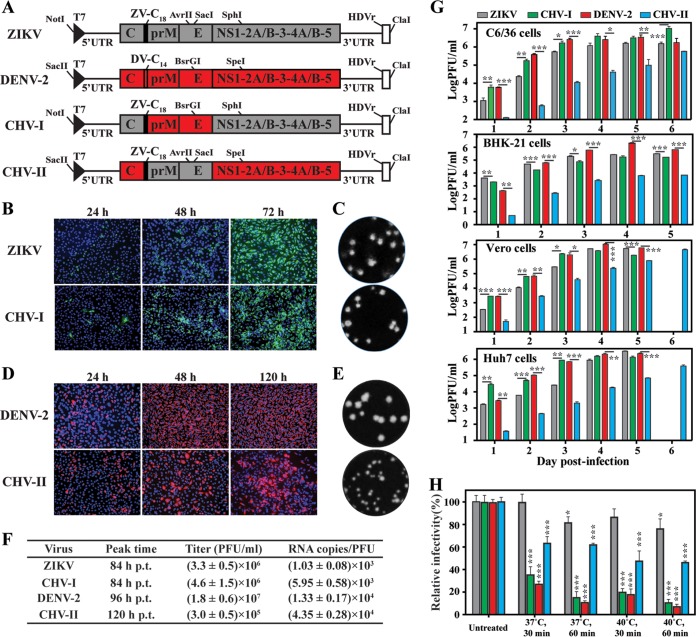
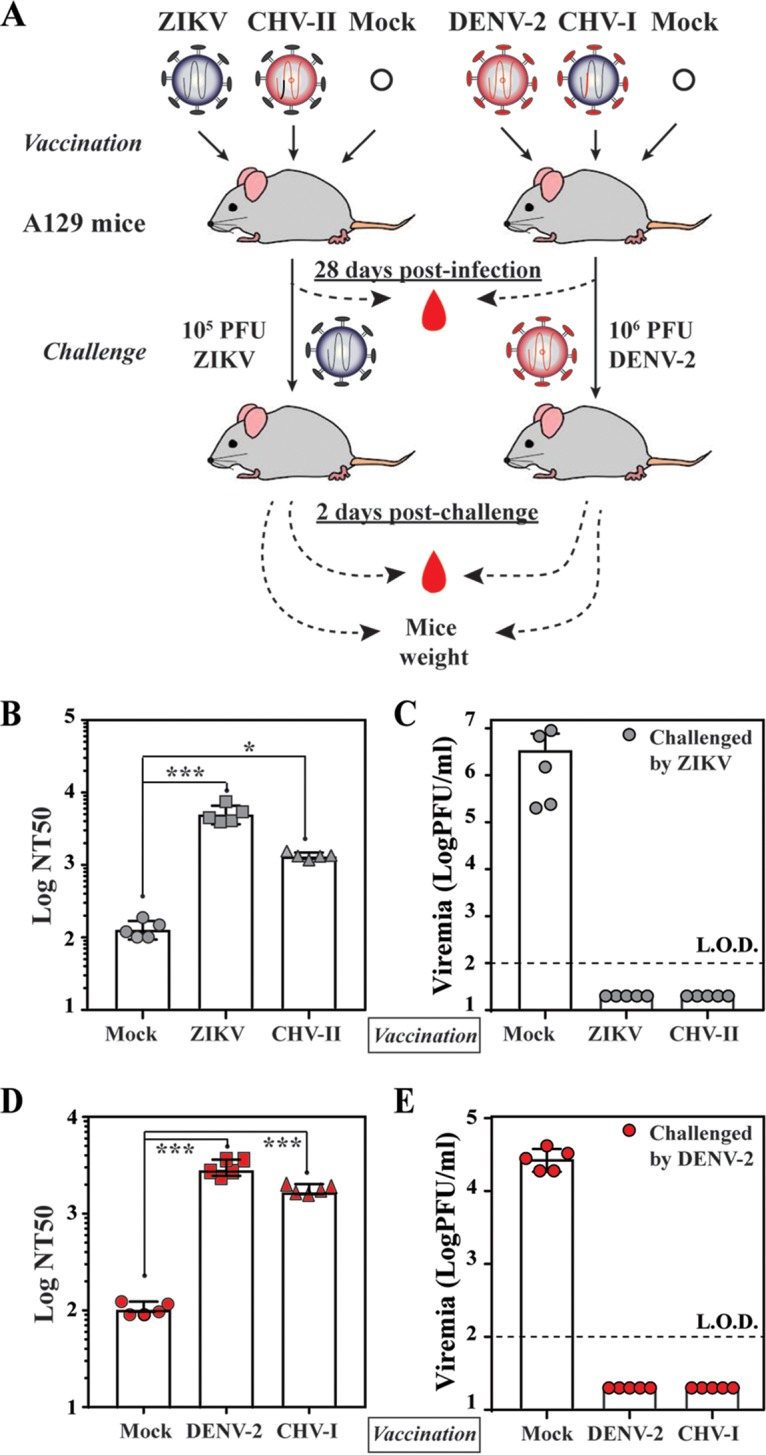
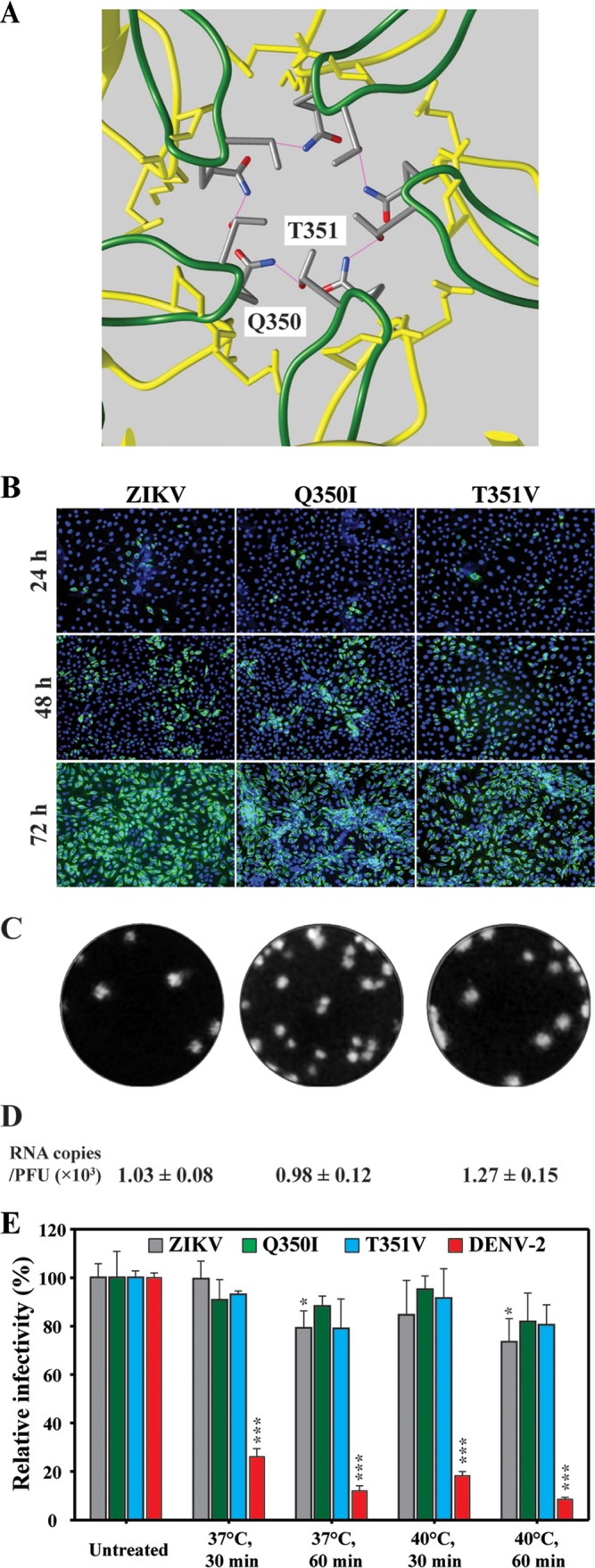
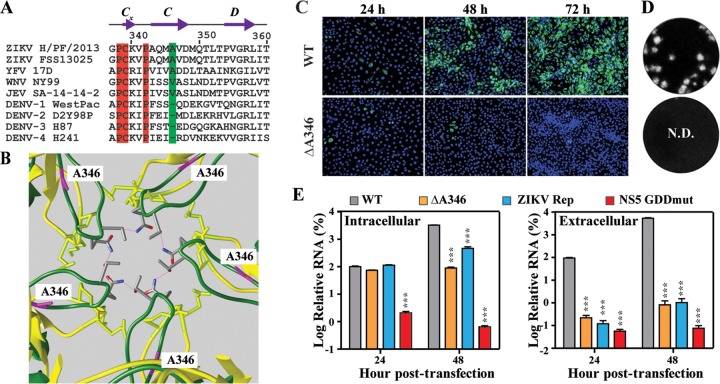
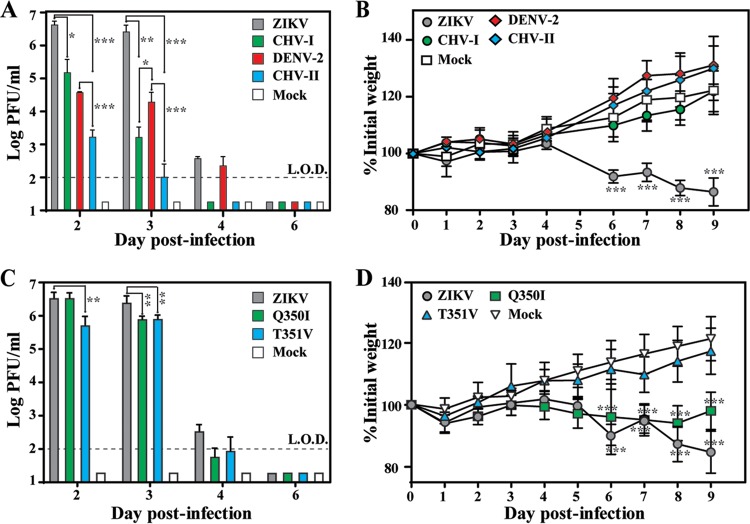
Compared with other flaviviruses, Zika virus (ZIKV) is uniquely associated with congenital diseases in pregnant women. One recent study reported that (i) ZIKV has higher thermostability than dengue virus (DENV [a flavivirus closely related to ZIKV]), which might contribute to the disease outcome; (ii) the higher thermostability of ZIKV could arise from an extended loop structure in domain III of the viral envelope (E) protein and an extra hydrogen-bond interaction between E molecules (V. A. Kostyuchenko, E. X. Y. Lim, S. Zhang, G. Fibriansah, T.-S. Ng, J. S. G. Ooi, J. Shi, and S.-M. Lok, Nature 533:425-428, 2016, https://doi.org/10.1038/nature17994). Here we report the functional analysis of the structural information in the context of complete ZIKV and DENV-2 virions. Swapping the prM-E genes between ZIKV and DENV-2 switched the thermostability of the chimeric viruses, identifying the prM-E proteins as the major determinants for virion thermostability. Shortening the extended loop of the E protein by 1 amino acid was lethal for ZIKV assembly/release. Mutations (Q350I and T351V) that abolished the extra hydrogen-bond interaction between the E proteins did not reduce ZIKV thermostability, indicating that the extra interaction does not increase the thermostability. Interestingly, mutant T351V was attenuated in A129 mice defective in type I interferon receptors, even though the virus retained the wild-type thermostability. Furthermore, we found that a chimeric ZIKV with the DENV-2 prM-E and a chimeric DENV-2 with the ZIKV prM-E were highly attenuated in A129 mice; these chimeric viruses were highly immunogenic and protective against DENV-2 and ZIKV challenge, respectively. These results indicate the potential of these chimeric viruses for vaccine development.
Analysis of a recently observed high-resolution structure of ZIKV led to a hypothesis that its unusual stability may contribute to the associated, unique disease outcomes. Here we performed a functional analysis to demonstrate that viral prM-E genes are the main determinants for the high stability of ZIKV. The extra hydrogen-bond interaction (observed in the high-resolution structure) between ZIKV E proteins did not enhance virion stability, whereas the extended loop of E protein (CD loop in domain III) was essential for ZIKV assembly. More importantly, we found that a chimeric ZIKV with DENV-2 prM-E genes and a chimeric DENV-2 with ZIKV prM-E genes were highly attenuated in A129 mice. Mice immunized with these chimeric viruses generated robust neutralizing antibody responses and were fully protected from DENV-2 and ZIKV challenge, respectively, indicating that these chimeric viruses could be further developed as vaccine candidates.
与其他黄病毒相比,寨卡病毒(ZIKV)与孕妇的先天性疾病有着独特的关联。最近的一项研究报告称:(i)寨卡病毒比登革病毒(DENV,一种与寨卡病毒密切相关的黄病毒)具有更高的热稳定性,这可能与疾病结果有关;(ii)寨卡病毒较高的热稳定性可能源于病毒包膜(E)蛋白结构域III中的一个延伸环结构以及E分子之间额外的氢键相互作用(V. A. Kostyuchenko、E. X. Y. Lim、S. Zhang、G. Fibriansah、T.-S. Ng、J. S. G. Ooi、J. Shi和S.-M. Lok,《自然》533:425 - 428,2016年,https://doi.org/10.1038/nature17994)。在此,我们报告了在完整的寨卡病毒和登革热病毒2型(DENV - 2)病毒粒子背景下对结构信息的功能分析。在寨卡病毒和登革热病毒2型之间交换prM - E基因改变了嵌合病毒的热稳定性,确定prM - E蛋白是病毒粒子热稳定性的主要决定因素。将E蛋白的延伸环缩短1个氨基酸对寨卡病毒的组装/释放是致命的。消除E蛋白之间额外氢键相互作用的突变(Q350I和T351V)并未降低寨卡病毒的热稳定性,表明这种额外的相互作用并未提高热稳定性。有趣的是,突变体T351V在I型干扰素受体缺陷的A129小鼠中减毒,尽管该病毒保留了野生型的热稳定性。此外,我们发现具有登革热病毒2型prM - E的嵌合寨卡病毒和具有寨卡病毒prM - E的嵌合登革热病毒2型在A129小鼠中高度减毒;这些嵌合病毒具有高度免疫原性,分别对登革热病毒2型和寨卡病毒攻击具有保护作用。这些结果表明这些嵌合病毒在疫苗开发方面具有潜力。
对最近观察到的寨卡病毒高分辨率结构的分析提出了一个假设,即其异常稳定性可能导致相关的独特疾病结果。在此,我们进行了功能分析以证明病毒prM - E基因是寨卡病毒高稳定性的主要决定因素。寨卡病毒E蛋白之间额外的氢键相互作用(在高分辨率结构中观察到)并未增强病毒粒子稳定性,而E蛋白的延伸环(结构域III中的CD环)对寨卡病毒组装至关重要。更重要的是,我们发现具有登革热病毒2型prM - E基因的嵌合寨卡病毒和具有寨卡病毒prM - E基因的嵌合登革热病毒2型在A129小鼠中高度减毒。用这些嵌合病毒免疫的小鼠产生了强烈的中和抗体反应,并分别完全免受登革热病毒2型和寨卡病毒攻击,这表明这些嵌合病毒可进一步开发为候选疫苗。