Baldwin Carole C, Robertson D Ross, Nonaka Ai, Tornabene Luke
Department of Vertebrate Zoology, National Museum of Natural History, Smithsonian Institution, Washington, DC 20560.
Smithsonian Tropical Research Institute, Balboa, Republic of Panama.
Zookeys. 2016 Dec 7(638):45-82. doi: 10.3897/zookeys.638.10455. eCollection 2016.
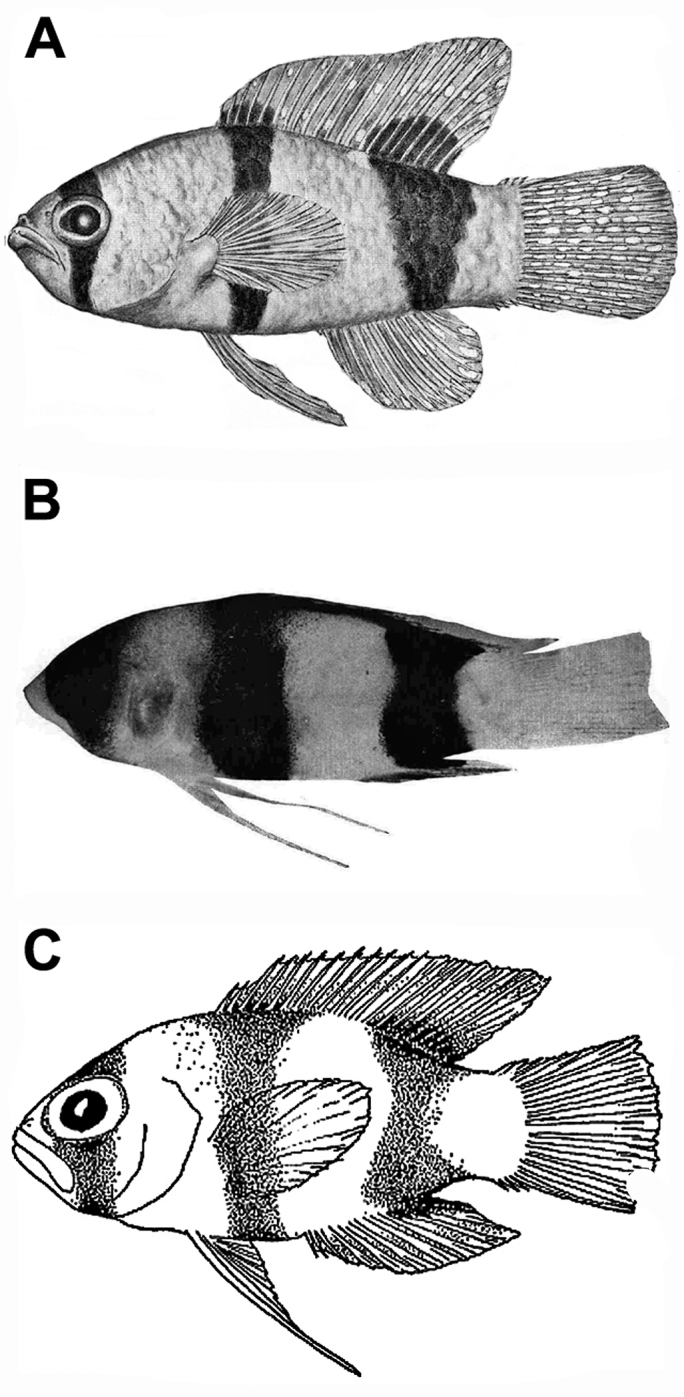
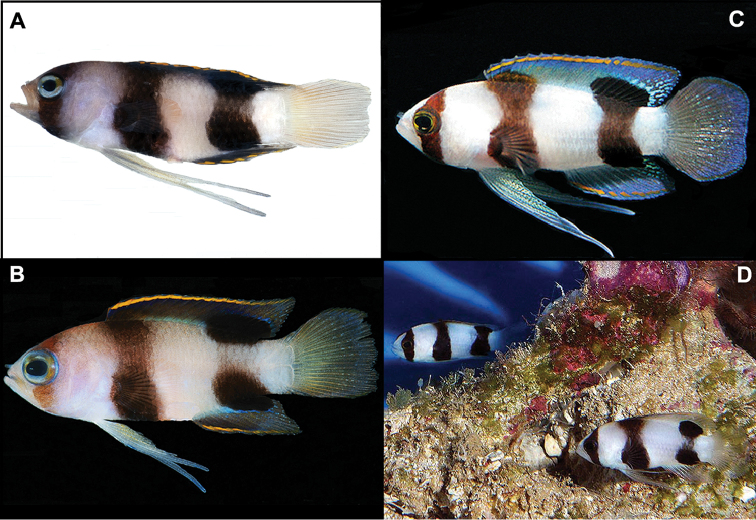
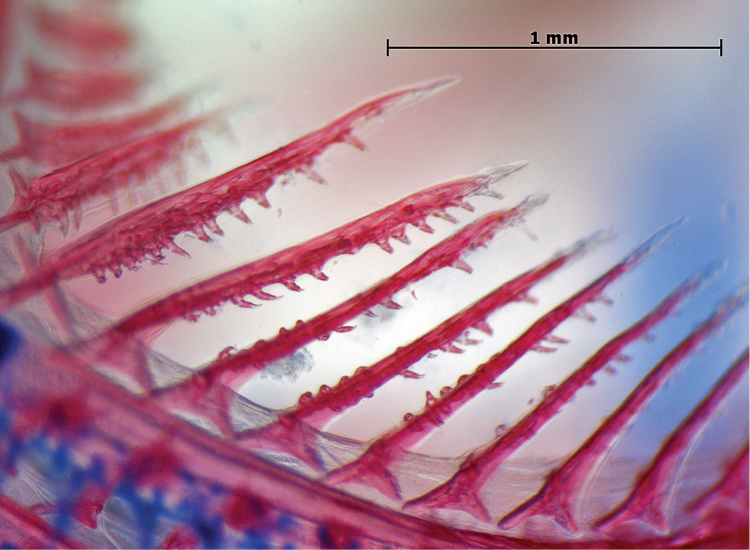
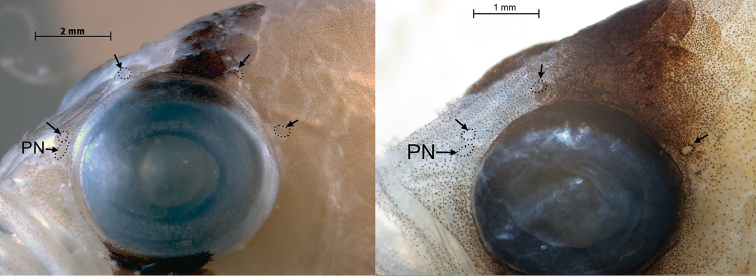
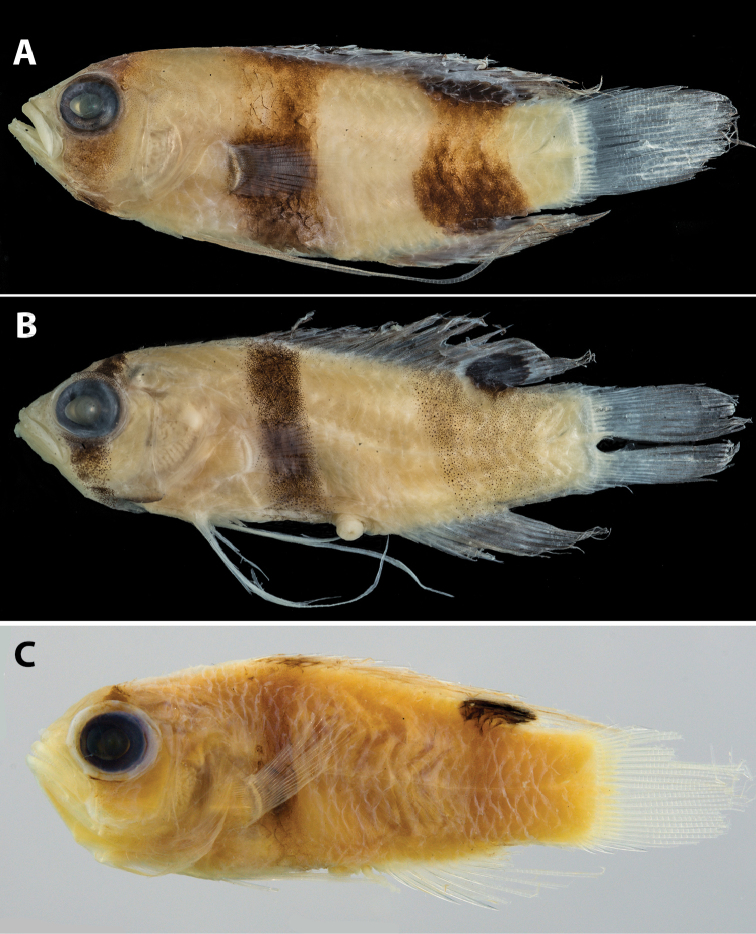
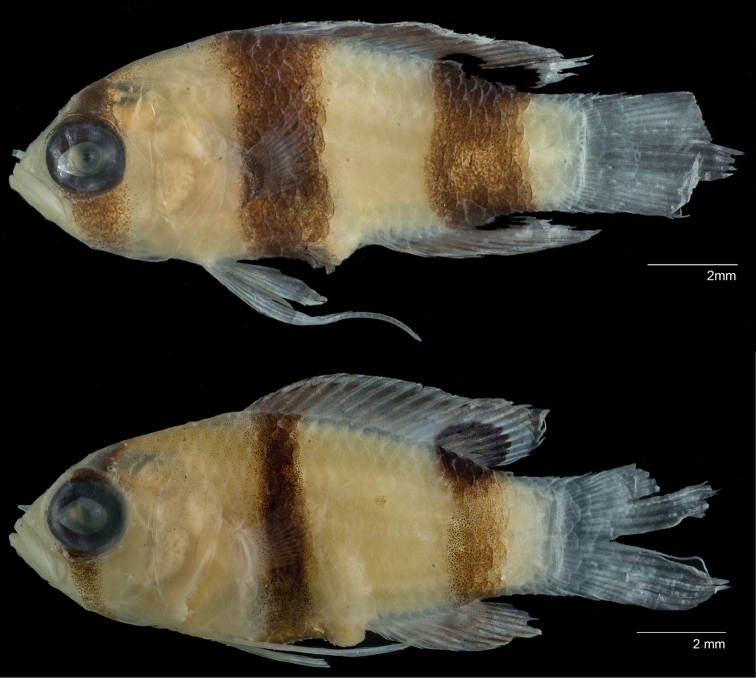
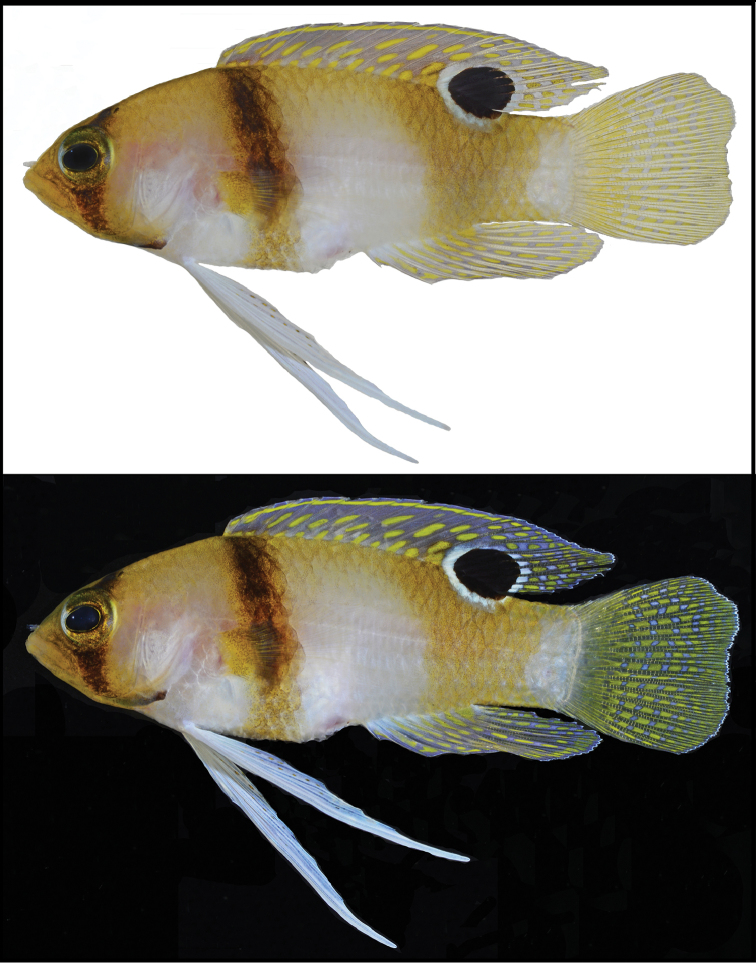
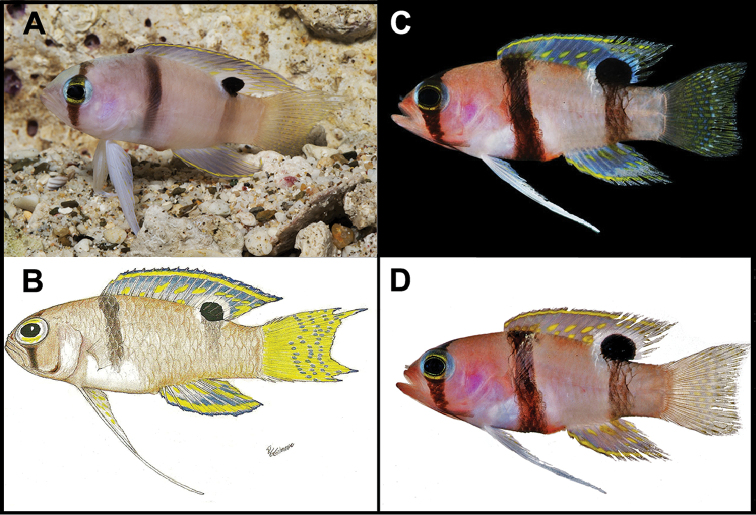
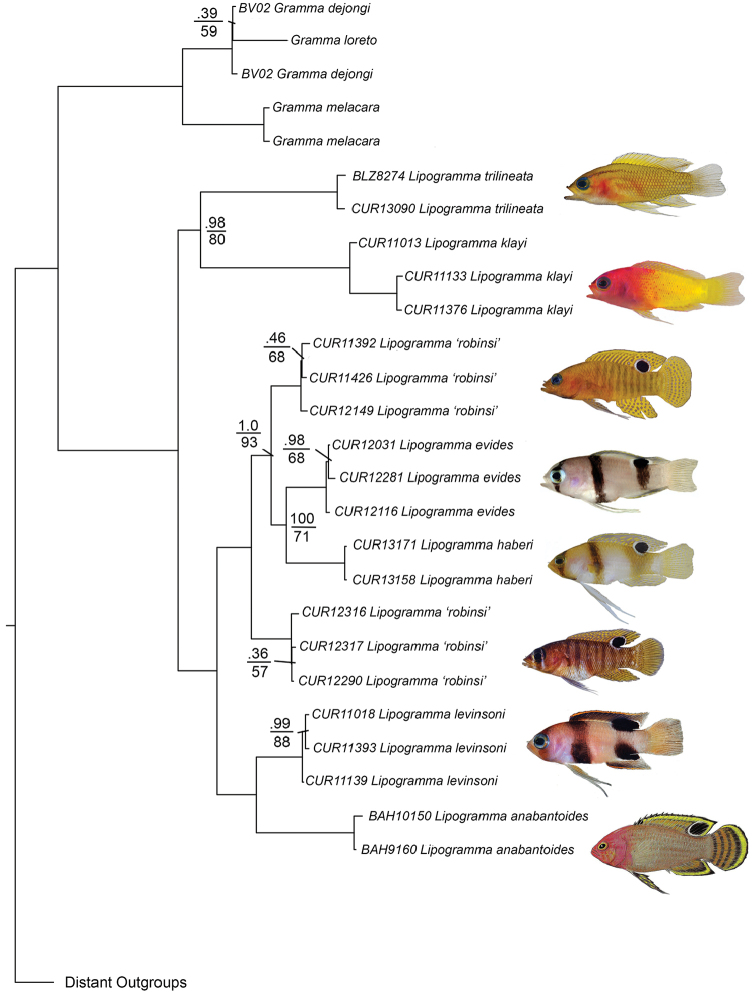
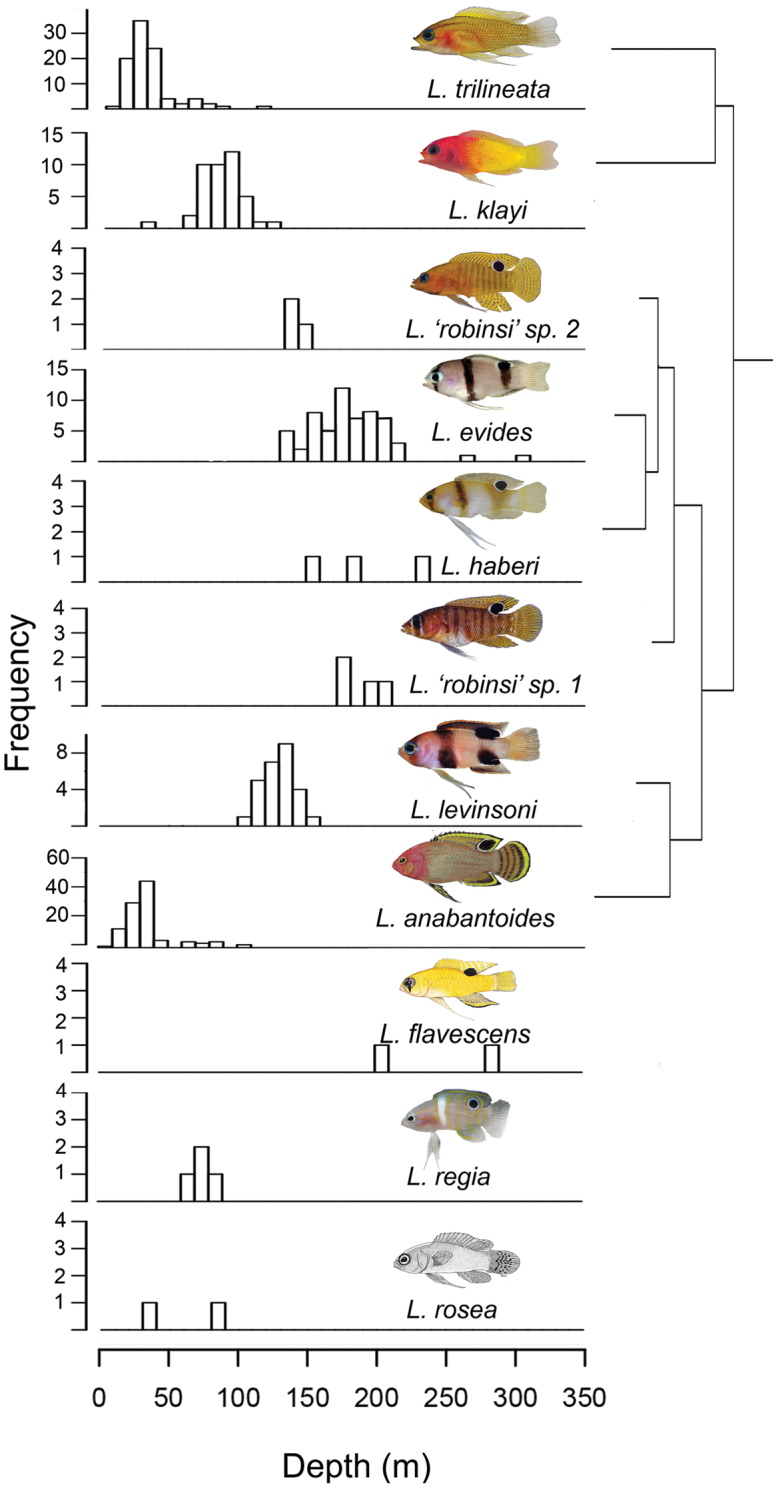
The banded basslet, Robins & Colin, 1979, is shown to comprise two species: , which inhabits depths of 133-302 m, and a new species described here as , which inhabits depths of 108-154 m and previously was considered to represent the juvenile of . A second new species of banded basslet, described here as , inhabits depths of 152-233 m and was previously not reported in the literature. Morphologically, the three species differ in color patterns and modal numbers of gill rakers, whereas various other morphological features distinguish from and . DNA barcode data and multilocus, coalescent-based, species-delimitation analysis support the recognition of the three species. Phylogenetic analysis of mitochondrial and nuclear genetic data supports a sister-group relationship between the two deepest-living of the three species, and , and suggests that the shallower is more closely related to Böhlke, 1960, which inhabits depths < 120 m. Evolutionary relationships within thus appear to be correlated with species depth ranges, an eco-evolutionary pattern that has been observed in other Caribbean marine teleosts and that warrants further investigation. The new species represent the eleventh and twelfth new fish species described in recent years from exploratory submersible diving in the Caribbean in the globally poorly studied depth zone of 50-300 m. This study suggests that there are at least two additional cryptic species of , which are being analyzed in ongoing investigations of Caribbean deep-reef ecosystems.
横带小鲈(Robins & Colin,1979年)被证明由两个物种组成:一种栖息于133 - 302米深处,另一种是本文描述的新物种,栖息于108 - 154米深处,此前被认为是前者的幼体。横带小鲈的第二个新物种,本文将其描述为[新物种名称],栖息于152 - 233米深处,此前文献中未报道过。在形态上,这三个物种在颜色模式和鳃耙的模态数量上有所不同,而其他各种形态特征将[物种名称1]与[物种名称2]和[物种名称3]区分开来。DNA条形码数据以及基于多位点、溯祖法的物种界定分析支持这三个物种的认定。对线粒体和核基因数据的系统发育分析支持了三个物种中栖息深度最深的两个物种[物种名称1]和[物种名称2]之间的姐妹群关系,并表明较浅栖息深度的[物种名称3]与栖息于深度小于120米的博氏小鲈(Böhlke,1960年)关系更密切。因此,[属名]内的进化关系似乎与物种深度范围相关,这种生态进化模式在其他加勒比海硬骨鱼类中也有观察到,值得进一步研究。这些新物种是近年来在加勒比海50 - 300米这个全球研究较少的深度区域通过探索性潜水描述的第11个和第12个新鱼类物种。这项研究表明,至少还有另外两个隐存物种的[属名],目前正在对加勒比海深海珊瑚礁生态系统的调查中进行分析。