Rowse Amber L, Gibson Sara A, Meares Gordon P, Rajbhandari Rajani, Nozell Susan E, Dees Kory J, Hjelmeland Anita B, McFarland Braden C, Benveniste Etty N
Department of Cell, Developmental and Integrative Biology, University of Alabama at Birmingham, Birmingham, AL, USA.
Department of Cell, Developmental and Integrative Biology, University of Alabama at Birmingham, 1918 University Blvd, MCLM 388, Birmingham, AL, 35294-0004, USA.
J Neurooncol. 2017 Apr;132(2):219-229. doi: 10.1007/s11060-017-2378-z. Epub 2017 Feb 8.
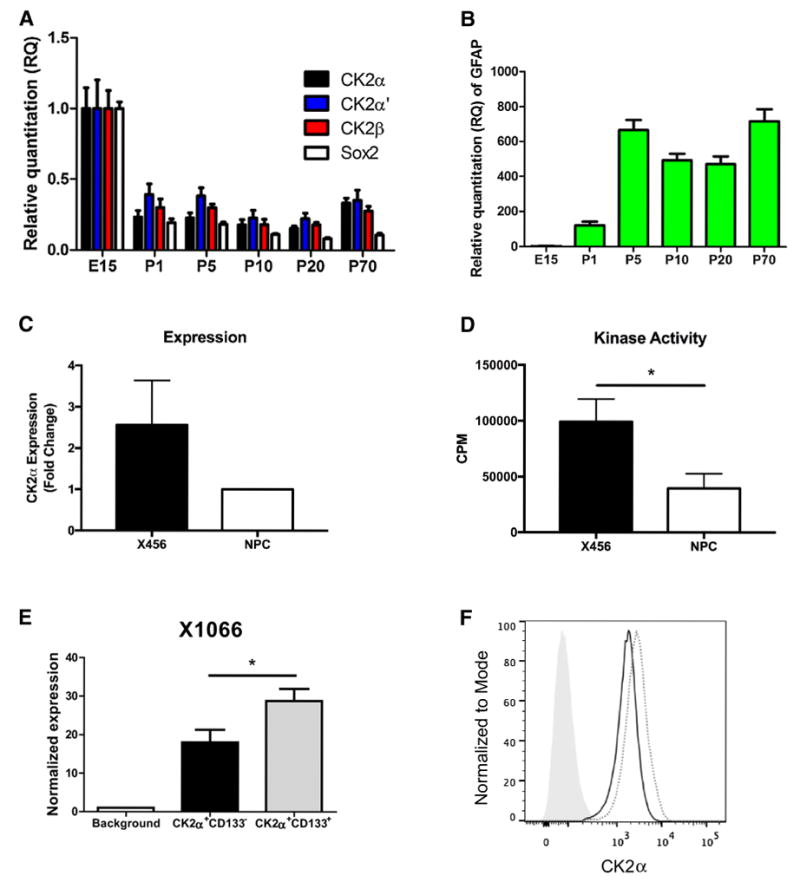
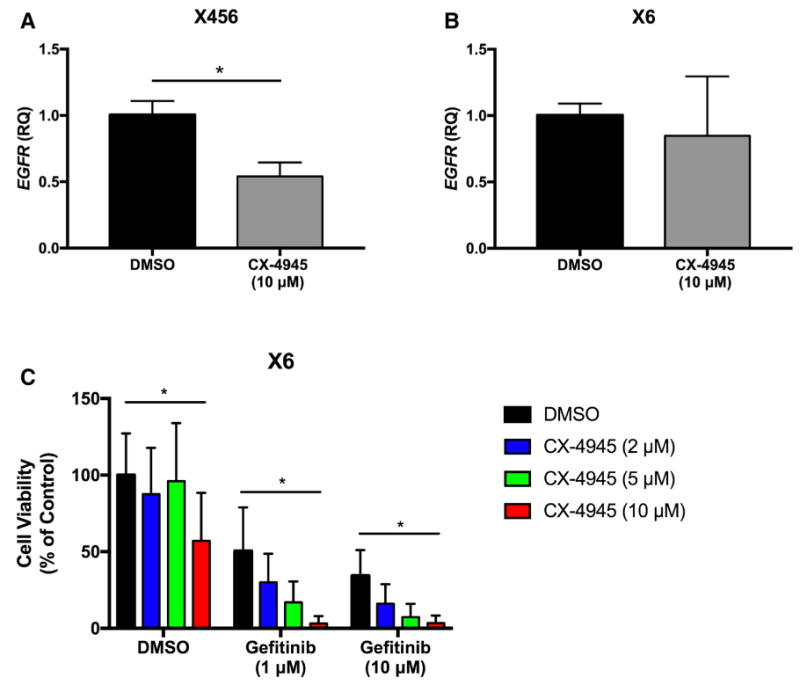
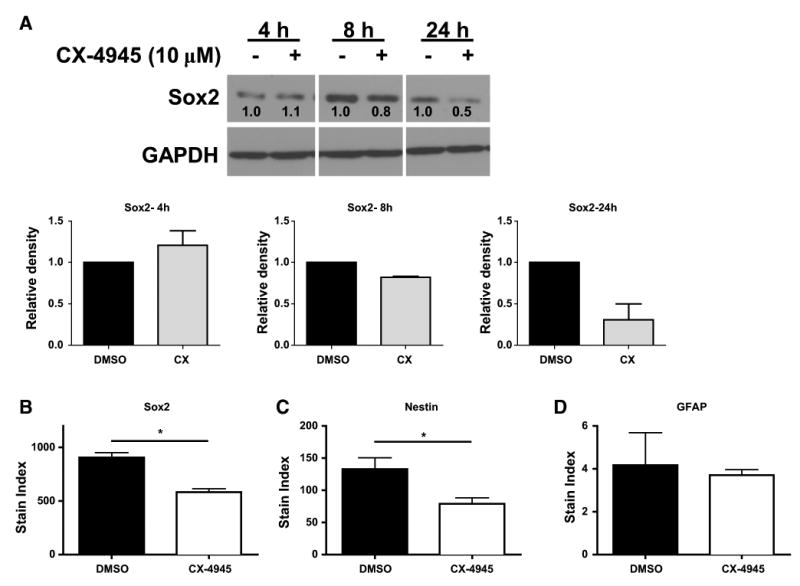
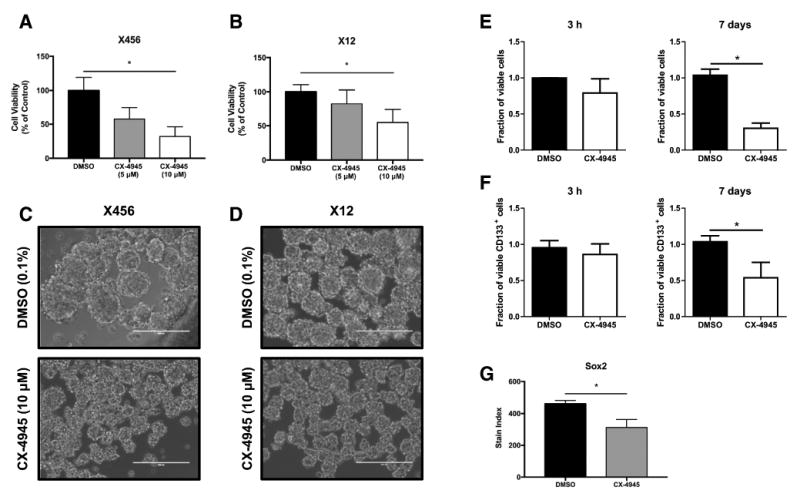
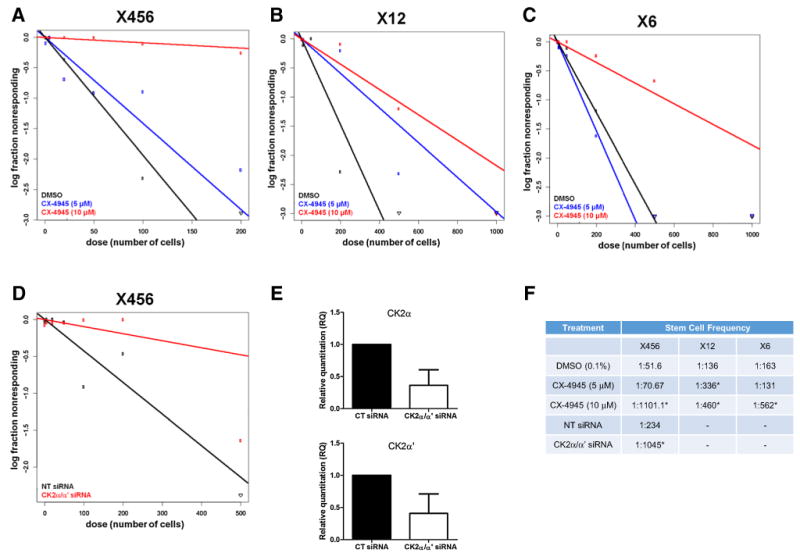
Protein kinase CK2 is a ubiquitously expressed serine/threonine kinase composed of two catalytic subunits (α) and/or (α') and two regulatory (β) subunits. The expression and kinase activity of CK2 is elevated in many different cancers, including glioblastoma (GBM). Brain tumor initiating cells (BTICs) are a subset of cells that are highly tumorigenic and promote the resistance of GBM to current therapies. We previously reported that CK2 activity promotes prosurvival signaling in GBM. In this study, the role of CK2 signaling in BTIC function was examined. We found that expression of CK2α was increased in CD133 BTICs compared to CD133 cells within the same GBM xenolines. Treatment with CX-4945, an ATP-competitive inhibitor of CK2, led to reduced expression of Sox2 and Nestin, transcription factors important for the maintenance of stem cells. Similarly, inhibition of CK2 also reduced the frequency of CD133 BTICs over the course of 7 days, indicating a role for CK2 in BTIC persistence and survival. Importantly, using an in vitro limiting dilution assay, we found that inhibition of CK2 kinase activity with CX-4945 or siRNA knockdown of the CK2 catalytic subunits reduced neurosphere formation in GBM xenolines of different molecular subtypes. Lastly, we found that inhibition of CK2 led to decreased EGFR levels in some xenolines, and combination treatment with CX-4945 and Gefitinib to inhibit CK2 and EGFR, respectively, provided optimal inhibition of viability of cells. Therefore, due to the integration of CK2 in multiple signaling pathways important for BTIC survival, CK2 is a promising target in GBM.
蛋白激酶CK2是一种广泛表达的丝氨酸/苏氨酸激酶,由两个催化亚基(α)和/或(α')以及两个调节亚基(β)组成。CK2的表达和激酶活性在许多不同的癌症中升高,包括胶质母细胞瘤(GBM)。脑肿瘤起始细胞(BTICs)是一类具有高度致瘤性并促进GBM对当前疗法产生抗性的细胞亚群。我们之前报道过CK2活性促进GBM中的促生存信号传导。在本研究中,我们检测了CK2信号传导在BTIC功能中的作用。我们发现,与同一GBM异种移植瘤中的CD133细胞相比,CD133 BTICs中CK2α的表达增加。用CK2的ATP竞争性抑制剂CX - 4945处理导致Sox2和Nestin(对干细胞维持很重要的转录因子)的表达降低。同样,抑制CK2在7天的过程中也降低了CD133 BTICs的频率,表明CK2在BTIC的持久性和存活中发挥作用。重要的是,使用体外有限稀释试验,我们发现用CX - 4945抑制CK2激酶活性或通过小干扰RNA敲低CK2催化亚基可减少不同分子亚型的GBM异种移植瘤中的神经球形成。最后,我们发现抑制CK2会导致一些异种移植瘤中表皮生长因子受体(EGFR)水平降低,分别用CX - 4945和吉非替尼联合处理以抑制CK2和EGFR,可提供对细胞活力的最佳抑制。因此,由于CK2整合到对BTIC存活重要的多个信号通路中,CK2是GBM中有前景的治疗靶点。