Department of Obstetrics and Gynaecology, Taichung Veterans General Hospital, Taichung, Taiwan.
School of Medicine, Lab of Biomaterials, Graduate Institute of Basic Medical Science, Graduate Institute of Biomedical Sciences, Graduate Institute of Integrated Medicine, Department of Biological Science and Technology, Research Center for Chinese Medicine &Acupuncture, China Medical University, Taichung, Taiwan.
Sci Rep. 2017 Feb 9;7:42280. doi: 10.1038/srep42280.
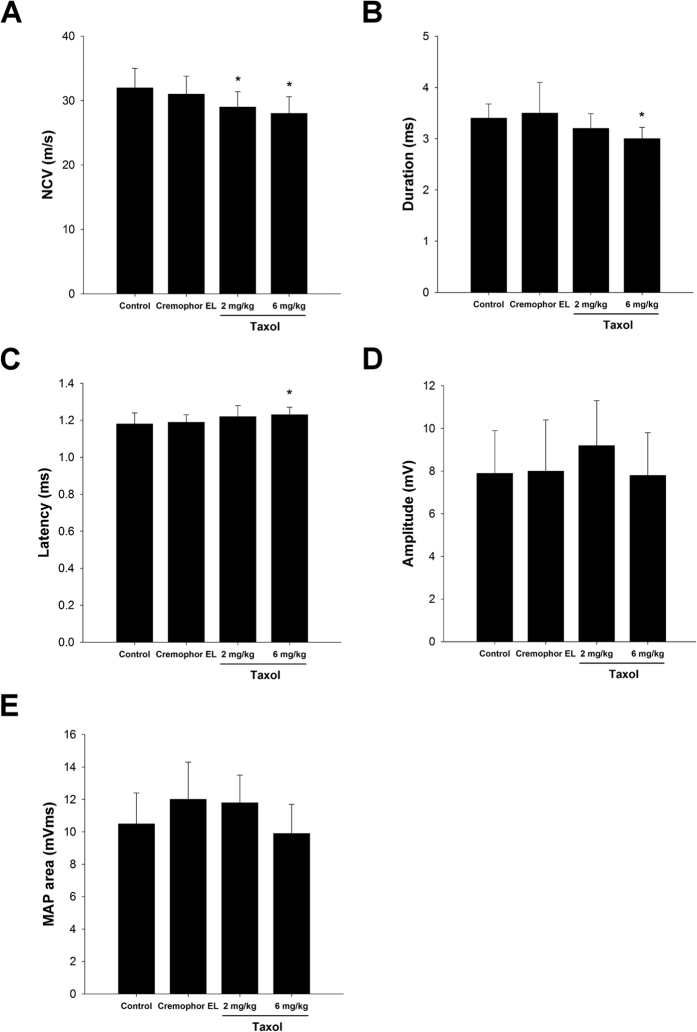
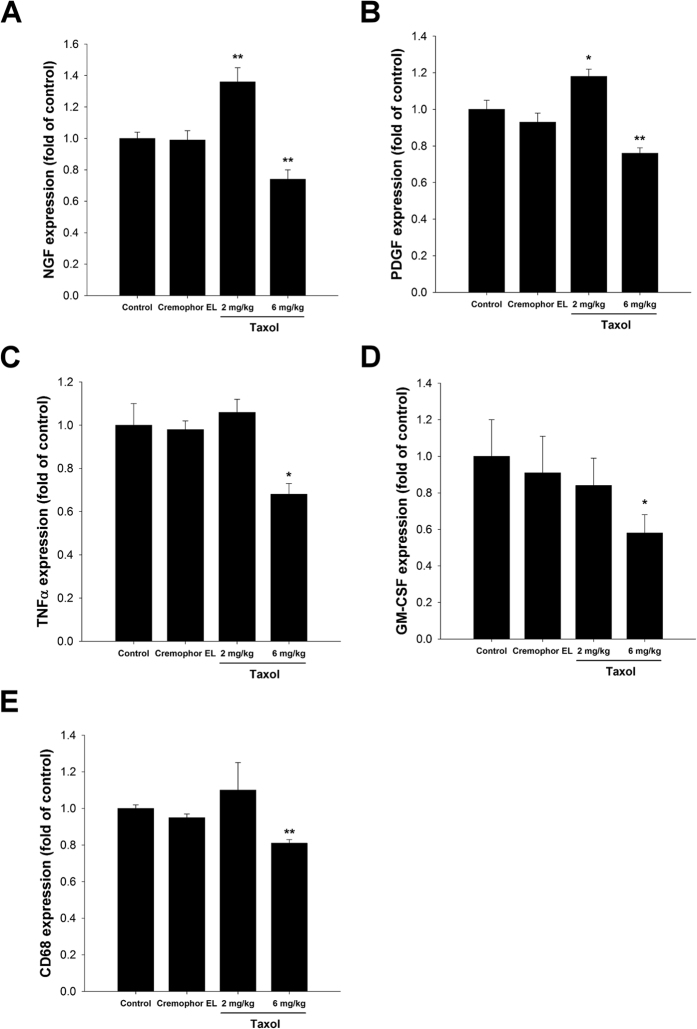
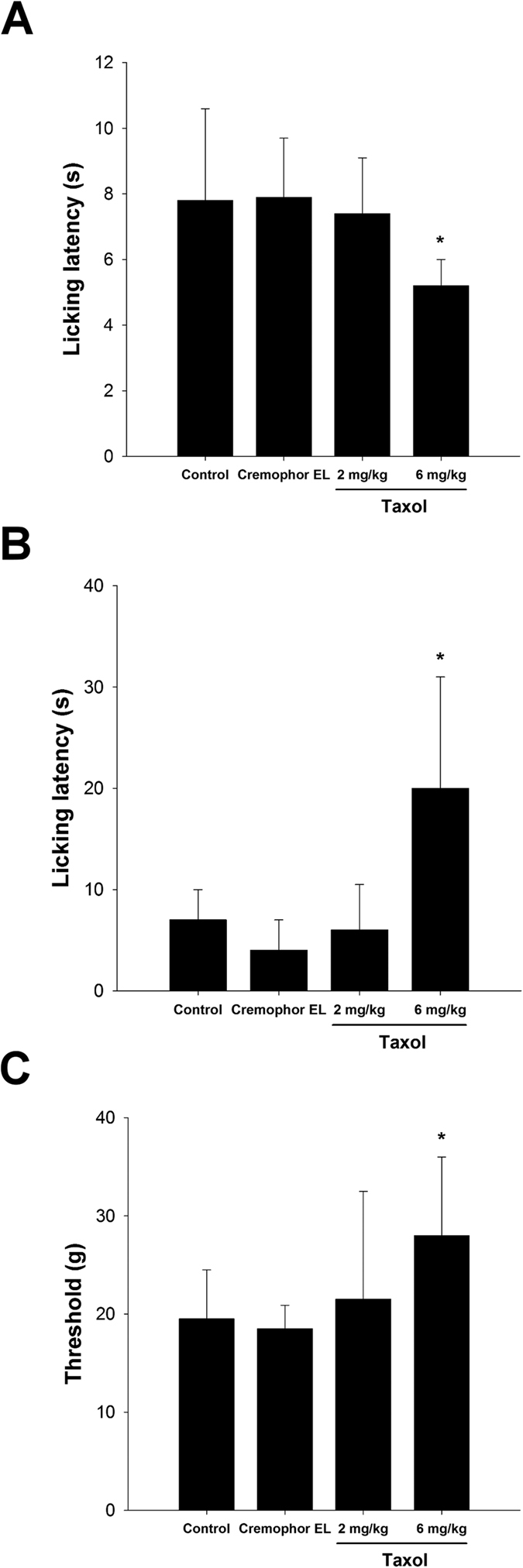
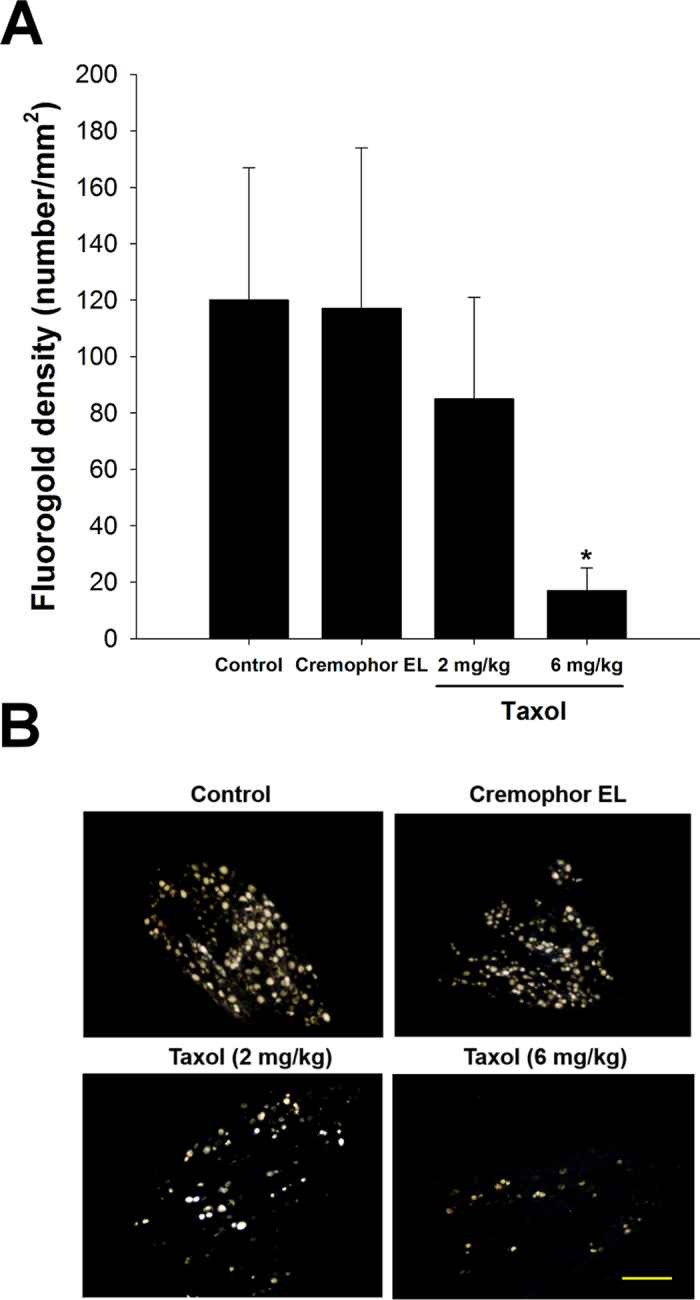
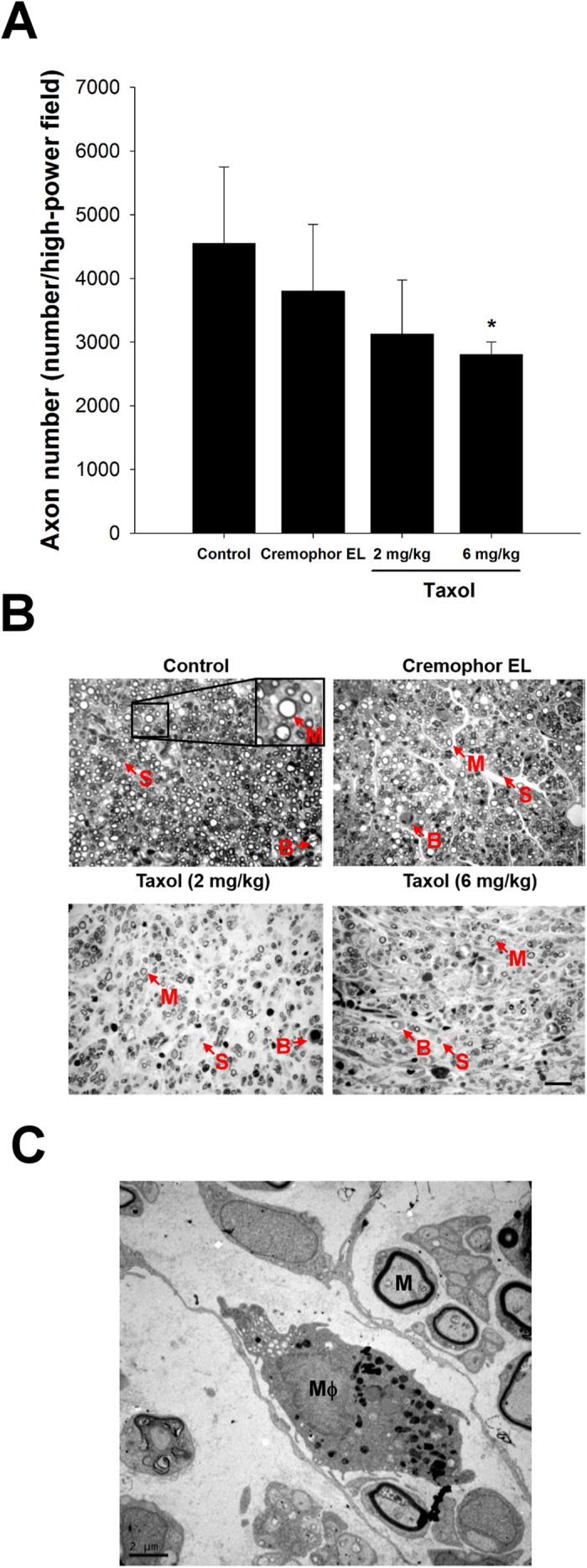
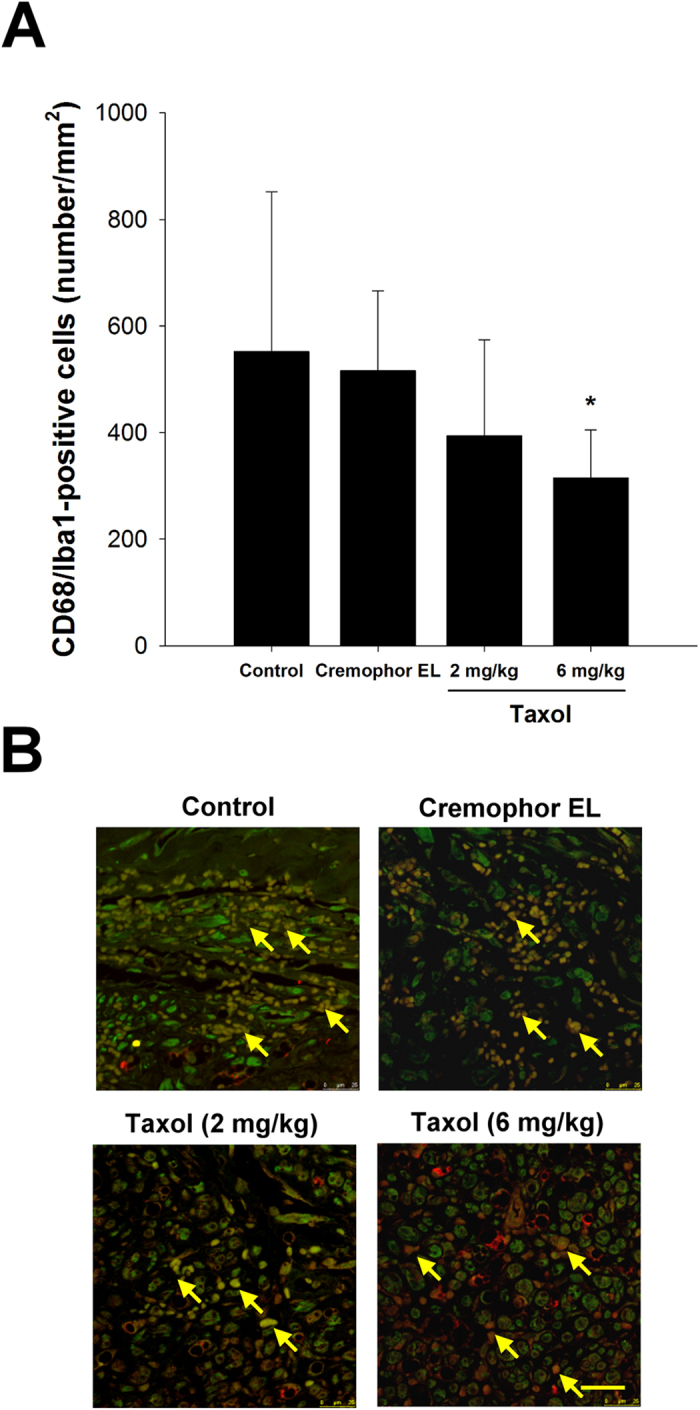
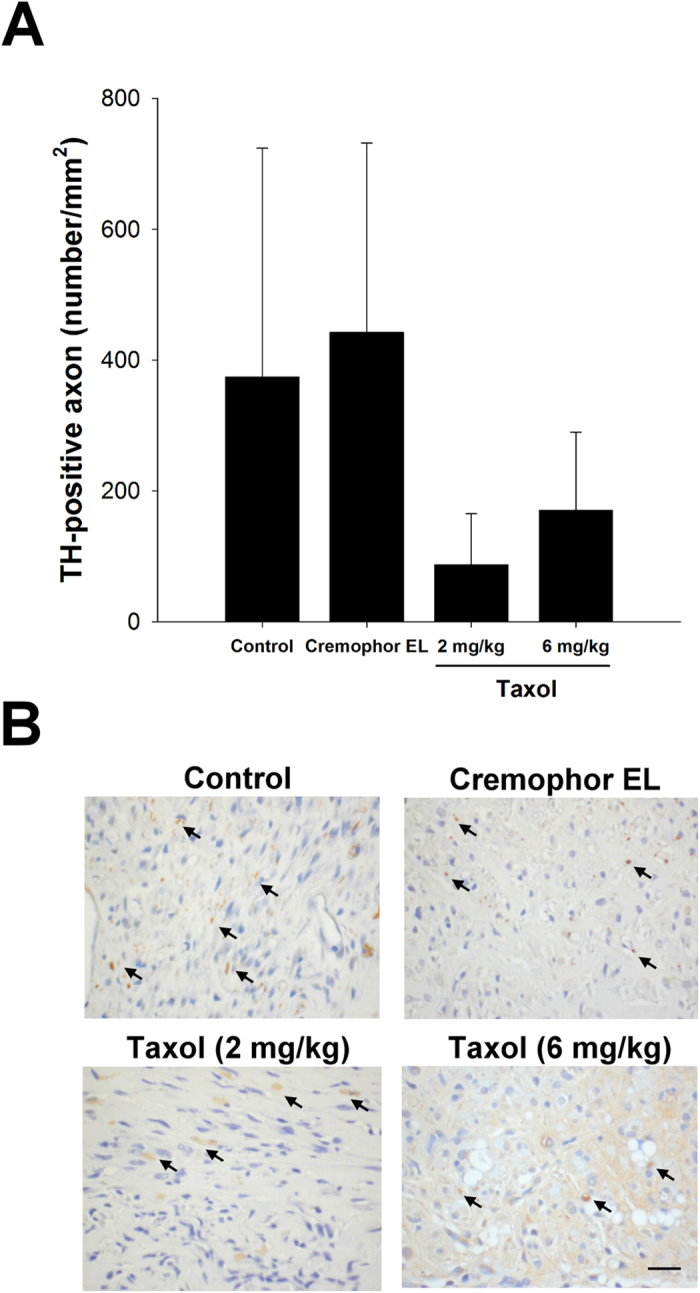
Recent studies describe taxol as a candidate treatment for promoting central nerve regeneration. However, taxol has serious side effects including peripheral neurotoxicity, and little information is known about the effect of taxol on peripheral nerve regeneration. We investigated the effects of taxol on regeneration in a rat sciatic nerve transection model. Rats were divided into four groups (n = 10): normal saline (i.p.) as the control, Cremophor EL vehicle, and 2 or 6 mg/kg of taxol in the Cremophor EL solution (four times in day-2, 4, 6, and 8), respectively. We evaluated neuronal electrophysiology, animal behaviour, neuronal connectivity, macrophage infiltration, location and expression levels of calcitonin gene-related peptide (CGRP), and expression levels of both nerve growth factors and immunoregulatory factors. In the high-dose taxol group (6 mg/kg), neuronal electrophysiological function was significantly impaired. Licking latencies were significantly changed while motor coordination was unaffected. Neuronal connectivity, macrophage density, and expression levels of CGRP was dramatically reduced. Expression levels of nerve growth factors and immunoregulatory factors was also reduced, while it was increased in the low-dose taxol group (2 mg/kg). These results indicate that taxol can modulate local inflammatory conditions, impair nerve regeneration, and impede recovery of a severe peripheral nerve injury.
最近的研究表明紫杉醇是一种促进中枢神经再生的候选治疗药物。然而,紫杉醇有严重的副作用,包括周围神经毒性,而关于紫杉醇对周围神经再生的影响知之甚少。我们研究了紫杉醇在大鼠坐骨神经横断模型中的再生作用。大鼠分为四组(n=10):生理盐水(腹腔注射)作为对照,Cremophor EL 载体,以及 2 或 6mg/kg 的紫杉醇在 Cremophor EL 溶液中(分别在第 2、4、6 和 8 天每天 4 次)。我们评估了神经元电生理学、动物行为、神经元连接、巨噬细胞浸润、降钙素基因相关肽(CGRP)的定位和表达水平,以及神经生长因子和免疫调节因子的表达水平。在高剂量紫杉醇组(6mg/kg)中,神经元电生理功能明显受损。舔舐潜伏期明显改变,而运动协调不受影响。神经元连接、巨噬细胞密度和 CGRP 的表达水平显著降低。神经生长因子和免疫调节因子的表达水平也降低,而在低剂量紫杉醇组(2mg/kg)中则增加。这些结果表明,紫杉醇可以调节局部炎症状态,损害神经再生,并阻碍严重周围神经损伤的恢复。