Vadukul Devkee M, Gbajumo Oyinkansola, Marshall Karen E, Serpell Louise C
School of Life Sciences, University of Sussex, Falmer, UK.
FEBS Lett. 2017 Mar;591(5):822-830. doi: 10.1002/1873-3468.12590. Epub 2017 Feb 28.
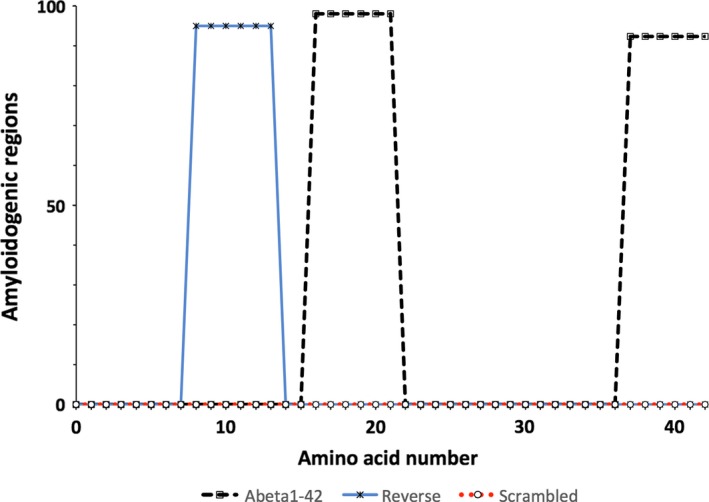
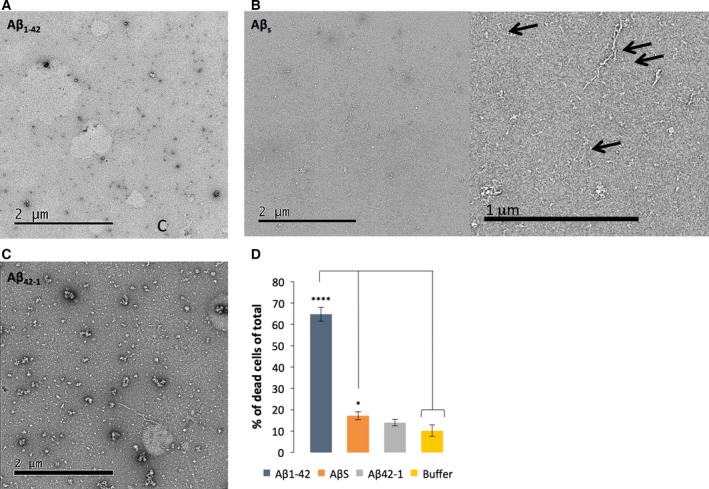
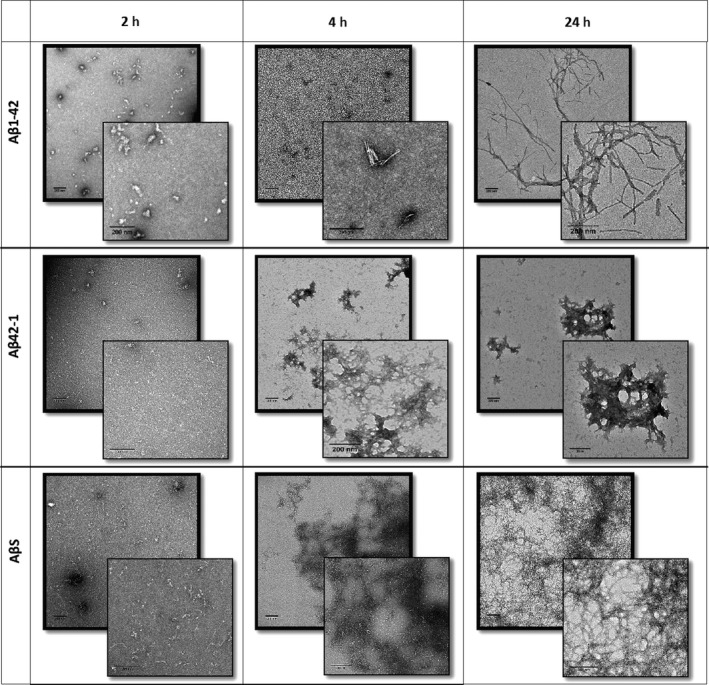
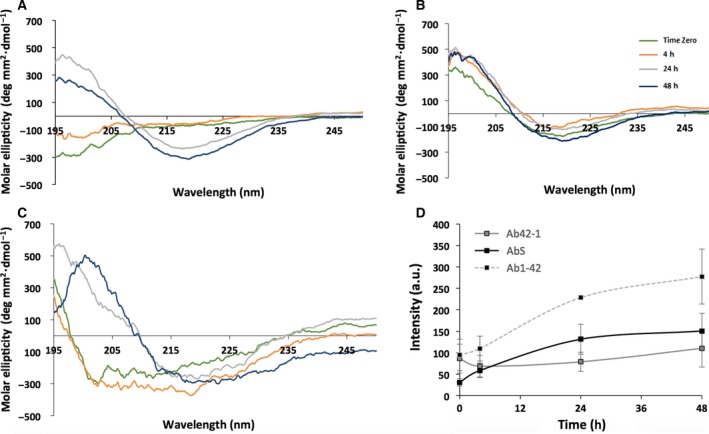
β-amyloid 1-42 (Aβ1-42) is a self-assembling peptide that goes through many conformational and morphological changes before forming the fibrils that are deposited in extracellular plaques characteristic of Alzheimer's disease. The link between Aβ1-42 structure and toxicity is of major interest, in particular, the neurotoxic potential of oligomeric species. Many studies utilise reversed (Aβ42-1) and scrambled (AβS) forms of amyloid-β as control peptides. Here, using circular dichroism, thioflavin T fluorescence and transmission electron microscopy, we reveal that both control peptides self-assemble to form fibres within 24 h. However, oligomeric Aβ reduces cell survival of hippocampal neurons, while Aβ42-1 and Aβs have reduced effect on cellular health, which may arise from their ability to assemble rapidly to form protofibrils and fibrils.
β-淀粉样蛋白1-42(Aβ1-42)是一种自组装肽,在形成沉积于阿尔茨海默病特征性细胞外斑块的纤维之前,会经历许多构象和形态变化。Aβ1-42结构与毒性之间的联系备受关注,尤其是寡聚体的神经毒性潜力。许多研究使用β-淀粉样蛋白的反向(Aβ42-1)和随机排列(AβS)形式作为对照肽。在这里,通过圆二色性、硫黄素T荧光和透射电子显微镜,我们发现两种对照肽在24小时内都会自组装形成纤维。然而,寡聚体Aβ会降低海马神经元的细胞存活率,而Aβ42-1和AβS对细胞健康的影响较小,这可能是由于它们能够迅速组装形成原纤维和纤维。