Faculty of Science and IT, University of Newcastle, Ourimbah, New South Wales 2258, Australia.
Sir Alister Hardy Foundation for Ocean Science, The Laboratory, Citadel Hill, Plymouth PL1 2PB, UK.
Nat Commun. 2017 Feb 10;8:14434. doi: 10.1038/ncomms14434.
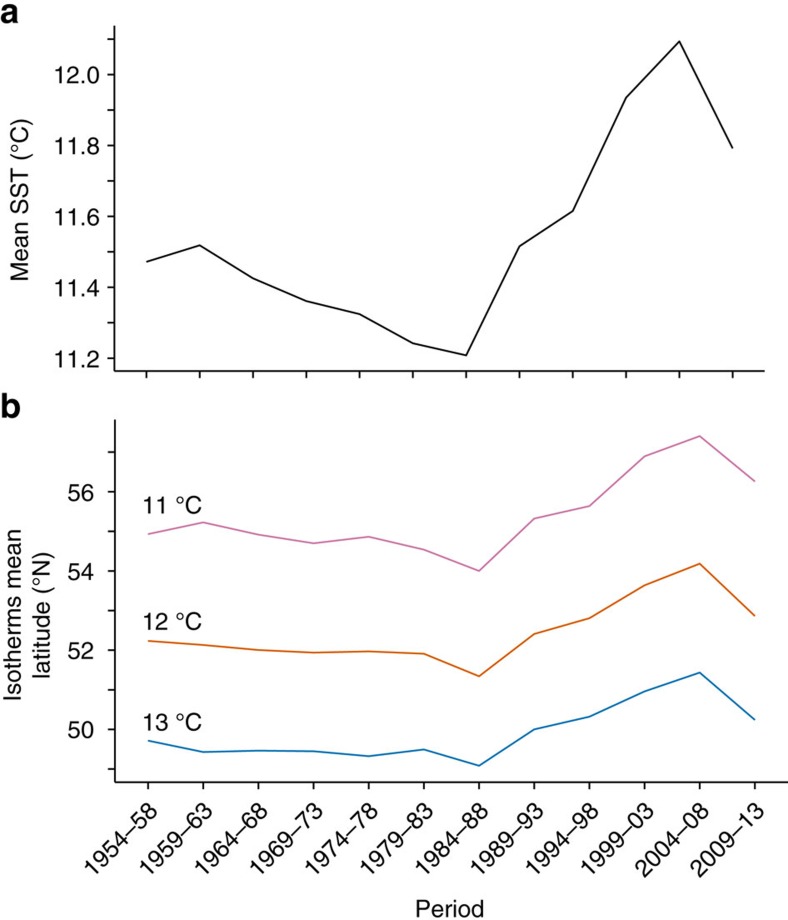
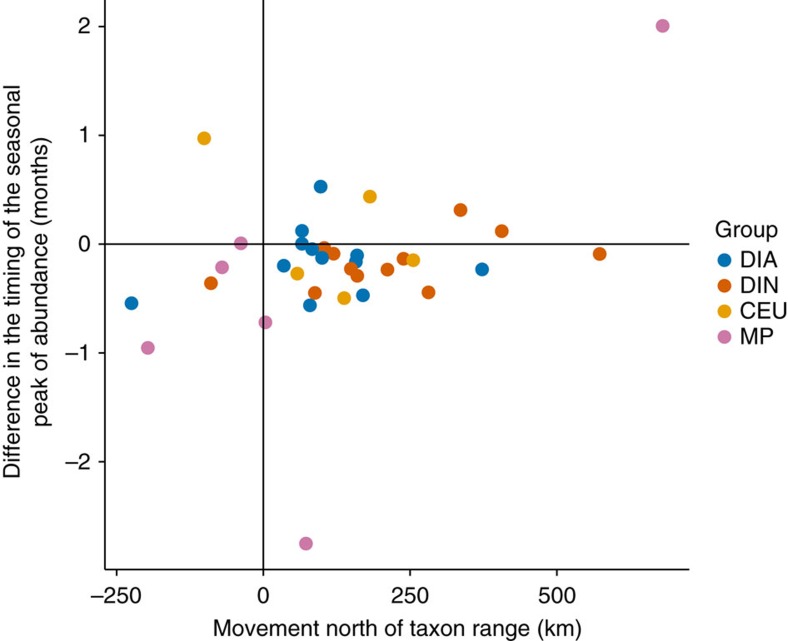
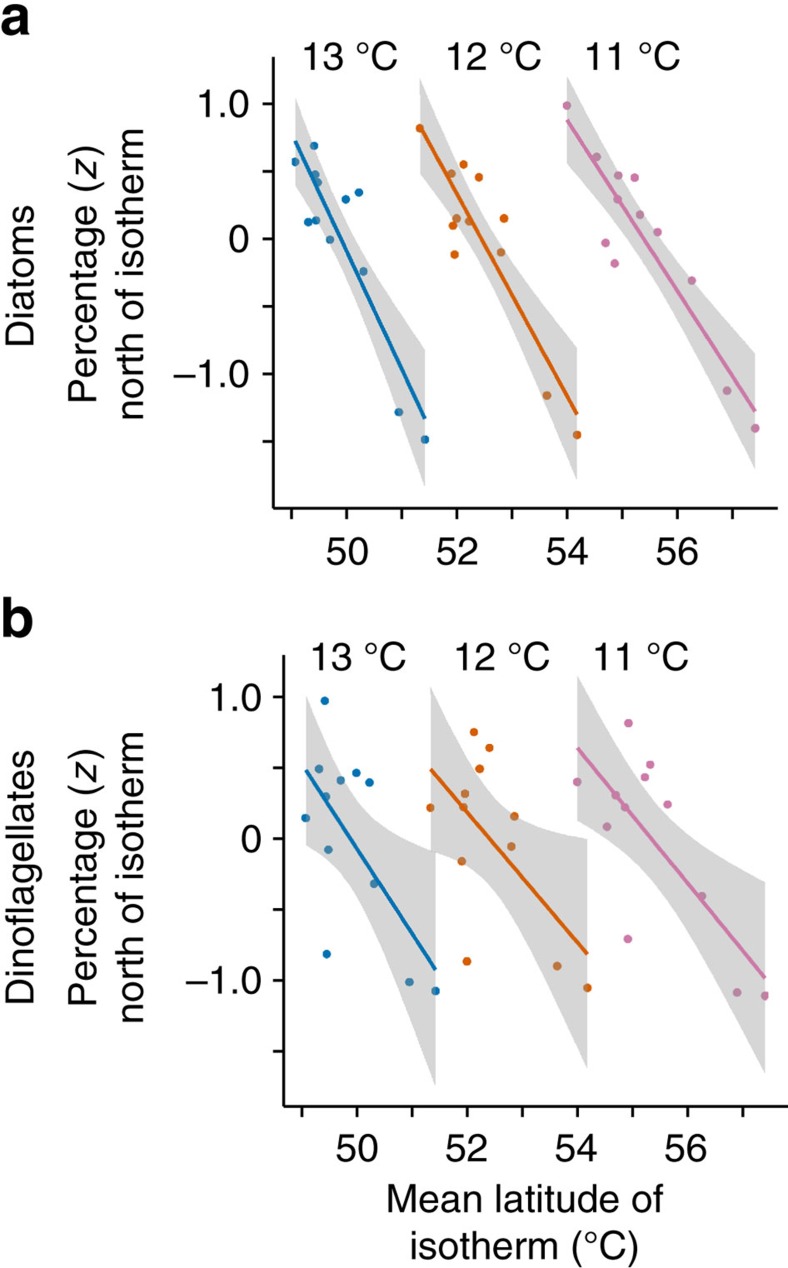
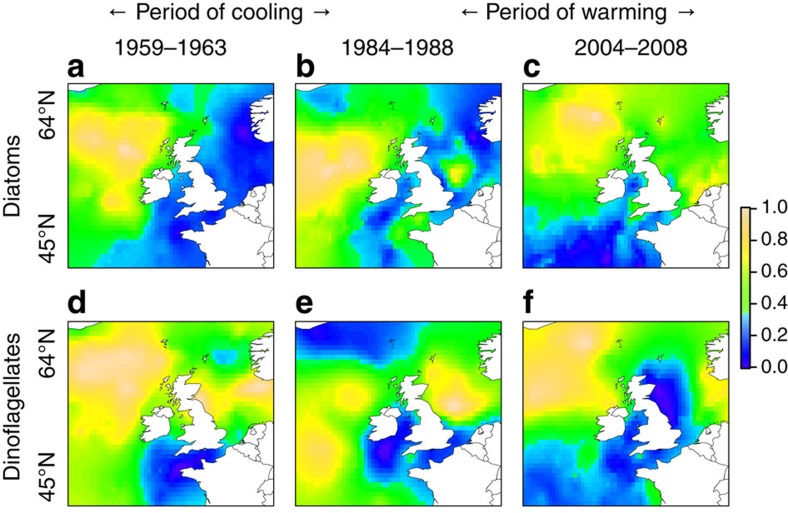
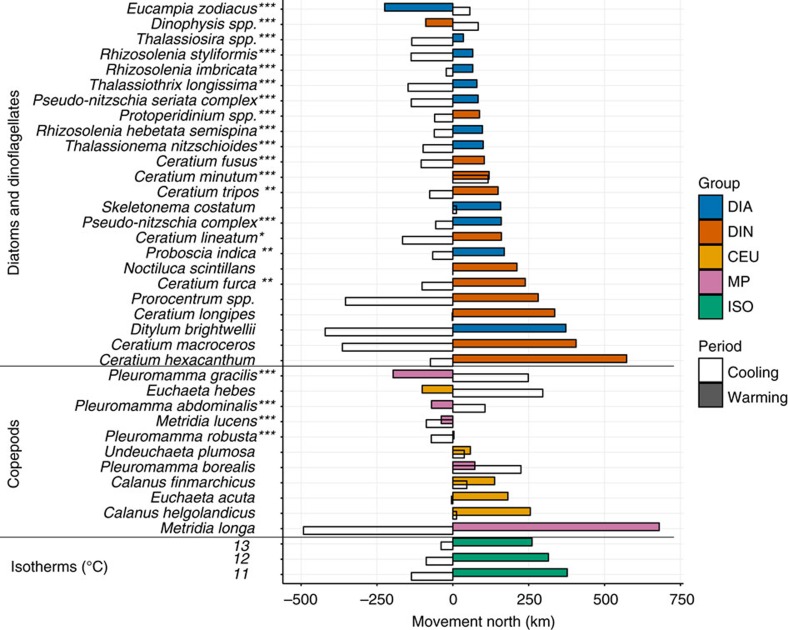
The response of marine plankton to climate change is of critical importance to the oceanic food web and fish stocks. We use a 60-year ocean basin-wide data set comprising >148,000 samples to reveal huge differences in range changes associated with climate change across 35 plankton taxa. While the range of dinoflagellates and copepods tended to closely track the velocity of climate change (the rate of isotherm movement), the range of the diatoms moved much more slowly. Differences in range shifts were up to 900 km in a recent warming period, with average velocities of range movement between 7 km per decade northwards for taxa exhibiting niche plasticity and 99 km per decade for taxa exhibiting niche conservatism. The differing responses of taxa to global warming will cause spatial restructuring of the plankton ecosystem with likely consequences for grazing pressures on phytoplankton and hence for biogeochemical cycling, higher trophic levels and biodiversity.
海洋浮游生物对气候变化的反应对海洋食物网和鱼类资源至关重要。我们使用了一个包含超过 148000 个样本的 60 年海洋流域范围数据集,揭示了 35 种浮游生物类群与气候变化相关的范围变化存在巨大差异。虽然甲藻和桡足类的范围变化往往与气候变化的速度(等温水体移动的速度)密切相关,但硅藻的范围变化则要慢得多。在最近的一次变暖期,范围变化的差异高达 900 公里,具有生态位可塑性的类群的范围移动平均速度为每年向北移动 7 公里,而具有生态位保守性的类群的范围移动平均速度为每年 99 公里。类群对全球变暖的不同反应将导致浮游生物生态系统的空间重构,这可能对浮游植物的摄食压力产生影响,从而影响生物地球化学循环、更高营养级和生物多样性。