
慢性皮质酮处理对青春期和成年大鼠行为及神经生物学的不同影响
Differential Behavioral and Neurobiological Effects of Chronic Corticosterone Treatment in Adolescent and Adult Rats.
作者信息
Li Jitao, Xie Xiaomeng, Li Youhong, Liu Xiao, Liao Xuemei, Su Yun-Ai, Si Tianmei
机构信息
National Clinical Research Center for Mental Disorders (Peking University Sixth Hospital/Institute of Mental Health) and the Key Laboratory of Mental Health, Ministry of Health (Peking University) Beijing, China.
Department of Psychiatry and Mental Health, North China University of Science and Technology Tangshan, China.
出版信息
Front Mol Neurosci. 2017 Feb 2;10:25. doi: 10.3389/fnmol.2017.00025. eCollection 2017.
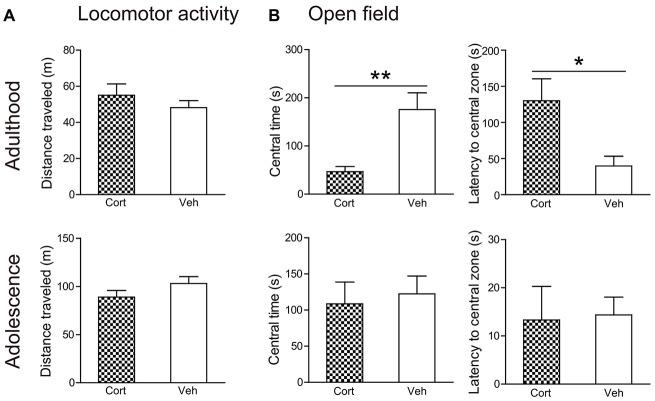
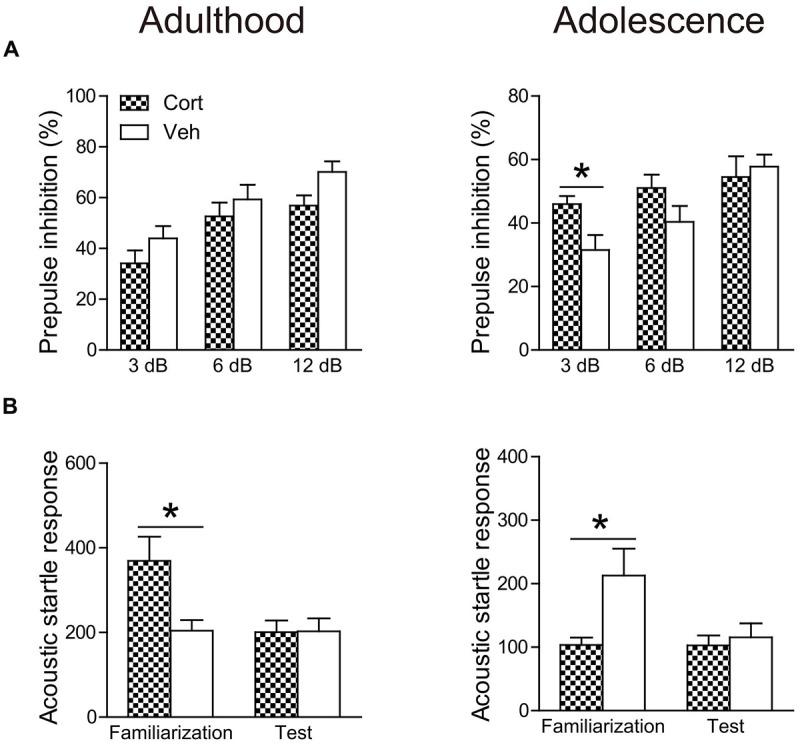
Adolescence is a critical period with ongoing maturational processes in stress-sensitive systems. While adolescent individuals show heightened stress-induced hormonal responses compared to adults, it is unclear whether and how the behavioral and neurobiological consequences of chronic stress would differ between the two age groups. Here we address this issue by examining the effects of chronic exposure to the stress hormone, corticosterone (CORT), in both adolescent and adult animals. Male Sprague-Dawley (SD) rats were injected intraperitoneally with CORT (40 mg/kg) or vehicle for 21 days during adolescence (post-natal day (PND) 29-49) or adulthood (PND 71-91) and then subjected to behavioral testing or sacrifice for western blot analyses. Despite of similar physical and neuroendocrine effects in both age groups, chronic CORT treatment produced a series of behavioral and neurobiological effects with striking age differences. While CORT-treated adult animals exhibited decreased sucrose preference, increased anxiety levels and cognitive impairment, CORT-treated adolescent animals demonstrated increased sucrose preference, decreased anxiety levels, and increased sensorimotor gating functions. These differential behavioral alterations were accompanied by opposite changes in the two age groups in the expression levels of brain-derived neurotrophic factor (BDNF), the phosphorylation of the obligatory subunit of the NMDA receptor, GluN1, and PSD-95 in rat hippocampus. These results suggest that prolonged glucocorticoid exposure during adolescence produces different behavioral and neurobiological effects from those in adulthood, which may be due to the complex interaction between glucocorticoids and the ongoing neurodevelopmental processes during this period.
青春期是应激敏感系统持续成熟的关键时期。虽然与成年人相比,青少年个体表现出应激诱导的激素反应增强,但尚不清楚慢性应激的行为和神经生物学后果在这两个年龄组之间是否以及如何不同。在这里,我们通过研究慢性暴露于应激激素皮质酮(CORT)对青少年和成年动物的影响来解决这个问题。雄性斯普拉格-道利(SD)大鼠在青春期(出生后第29 - 49天)或成年期(出生后第71 - 91天)腹腔注射CORT(40 mg/kg)或溶剂,持续21天,然后进行行为测试或处死以进行蛋白质印迹分析。尽管两个年龄组在身体和神经内分泌方面有相似的影响,但慢性CORT治疗产生了一系列行为和神经生物学影响,且存在显著的年龄差异。虽然接受CORT治疗的成年动物表现出蔗糖偏好降低、焦虑水平增加和认知障碍,但接受CORT治疗的青少年动物表现出蔗糖偏好增加、焦虑水平降低和感觉运动门控功能增强。这些不同的行为改变伴随着两个年龄组大鼠海马体中脑源性神经营养因子(BDNF)表达水平、NMDA受体必需亚基GluN1的磷酸化以及PSD - 95的相反变化。这些结果表明,青春期长期暴露于糖皮质激素会产生与成年期不同的行为和神经生物学影响,这可能是由于糖皮质激素与该时期正在进行的神经发育过程之间的复杂相互作用所致。





 Zotero 插件