Department of Otolaryngology-Head and Neck Surgery, Kresge Hearing Research Institute, University of Michigan, 1150 West Medical Center Drive, Ann Arbor, Michigan 48109, USA.
MOE Key Laboratory of Model Animals for Disease Study, Model Animal Research Center of Nanjing University, Nanjing, Jiangsu Province, China.
Nat Commun. 2017 Feb 17;8:14487. doi: 10.1038/ncomms14487.
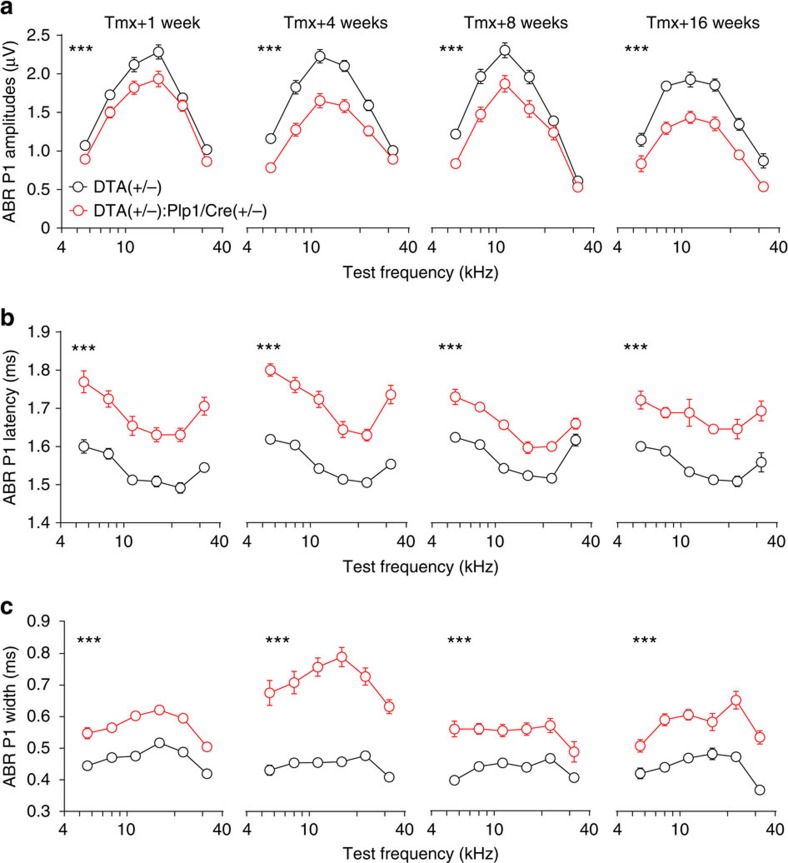
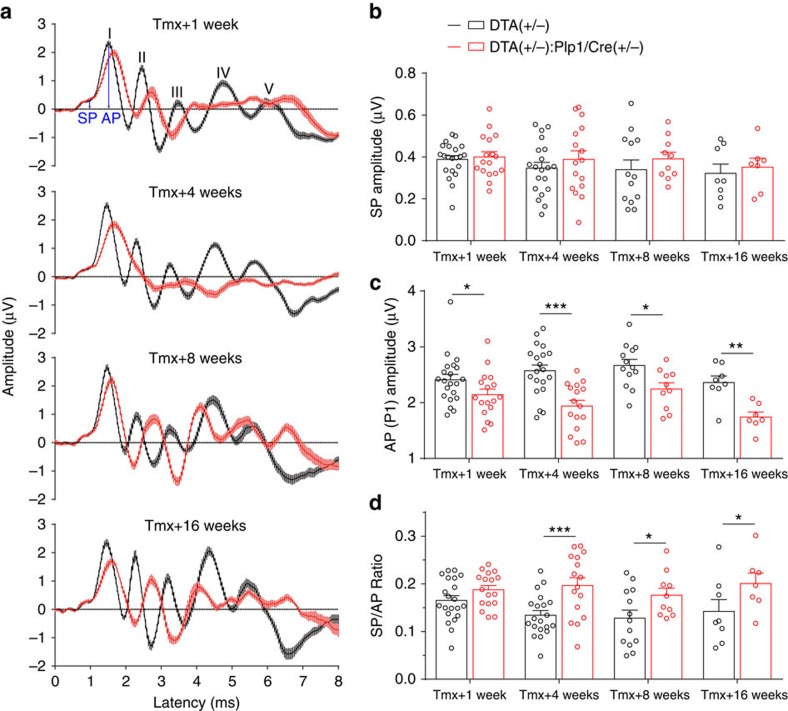
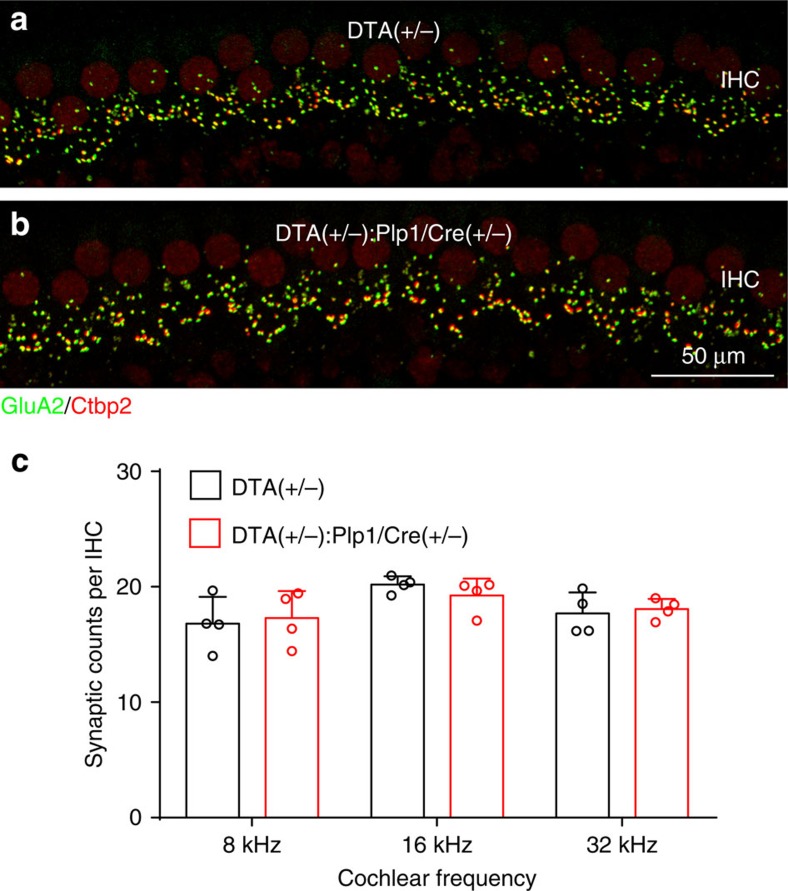
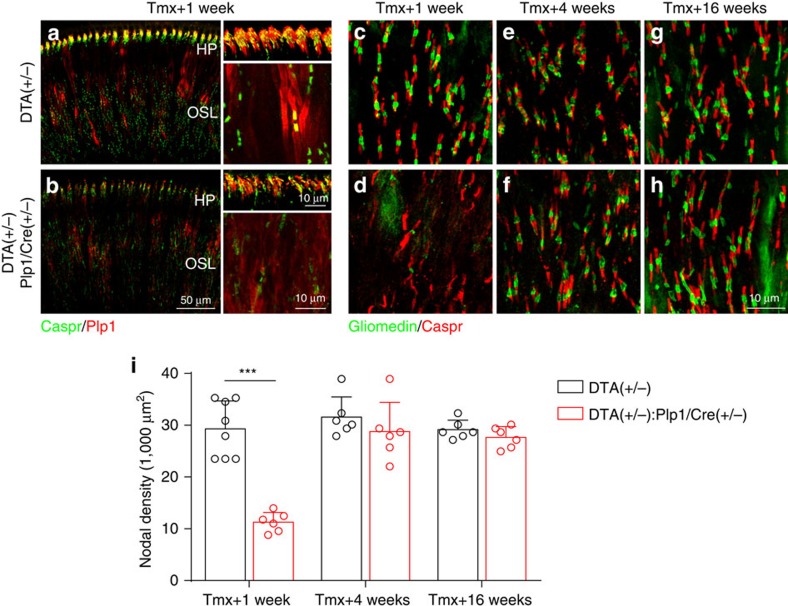
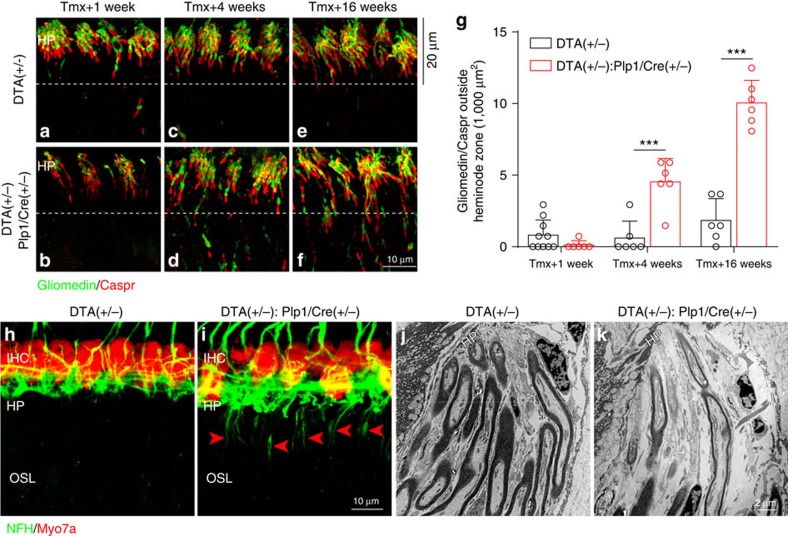
Hidden hearing loss (HHL) is a recently described auditory neuropathy believed to contribute to speech discrimination and intelligibility deficits in people with normal audiological tests. Animals and humans with HHL have normal auditory thresholds but defective cochlear neurotransmission, that is, reduced suprathreshold amplitude of the sound-evoked auditory nerve compound action potential. Currently, the only cellular mechanism known for HHL is loss of inner hair cell synapses (synaptopathy). Here we report that transient loss of cochlear Schwann cells results in permanent auditory deficits characteristic of HHL. This auditory neuropathy is not associated with synaptic loss, but rather with disruption of the first heminodes at the auditory nerve peripheral terminal. Thus, this study identifies a new mechanism for HHL, highlights the long-term consequences of transient Schwann cell loss on hearing and might provide insights into the causes of the auditory deficits reported in patients that recover from acute demyelinating diseases such as Guillain-Barré syndrome.
隐性听力损失(HHL)是一种最近描述的听觉神经病,据信它导致了在听力测试正常的人群中言语辨别和可理解度的缺陷。具有 HHL 的动物和人类具有正常的听觉阈值,但耳蜗神经传递有缺陷,即,声音诱发的听神经复合动作电位的阈上幅度降低。目前,已知 HHL 的唯一细胞机制是内毛细胞突触(突触病)的丧失。在这里,我们报告说,耳蜗施万细胞的短暂丧失导致了 HHL 特征的永久性听觉缺陷。这种听觉神经病与突触丧失无关,而是与听觉神经末梢的第一半神经节的破坏有关。因此,这项研究确定了 HHL 的一种新机制,强调了施万细胞短暂丧失对听力的长期影响,并可能为急性脱髓鞘疾病(如格林-巴利综合征)患者从听力损失中恢复的原因提供一些见解。