Department of Ophthalmology, Ruijin Hospital, Shanghai Jiaotong University School of Medicine, 197 Ruijin 2nd Road, Shanghai, 200025, People's Republic of China.
Shanghai Key Laboratory for Prevention and Treatment of Bone and Joint Diseases with Integrated Chinese-Western Medicine, Shanghai Institute of Traumatology and Orthopedics, Ruijin Hospital, Shanghai Jiaotong University School of Medicine, 197 Ruijin 2nd Road, Shanghai, 200025, People's Republic of China.
Sci Rep. 2017 Feb 17;7:42846. doi: 10.1038/srep42846.
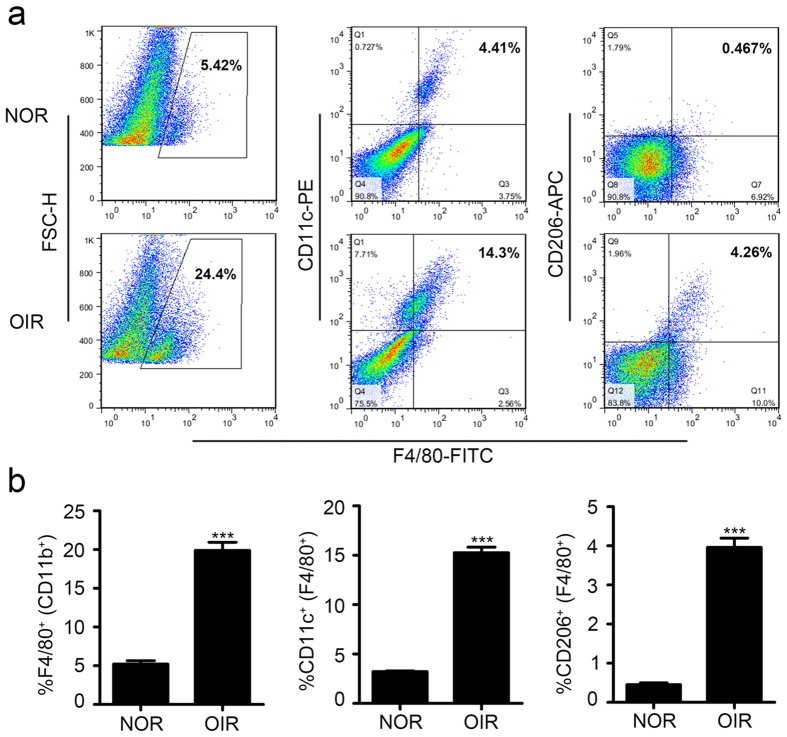
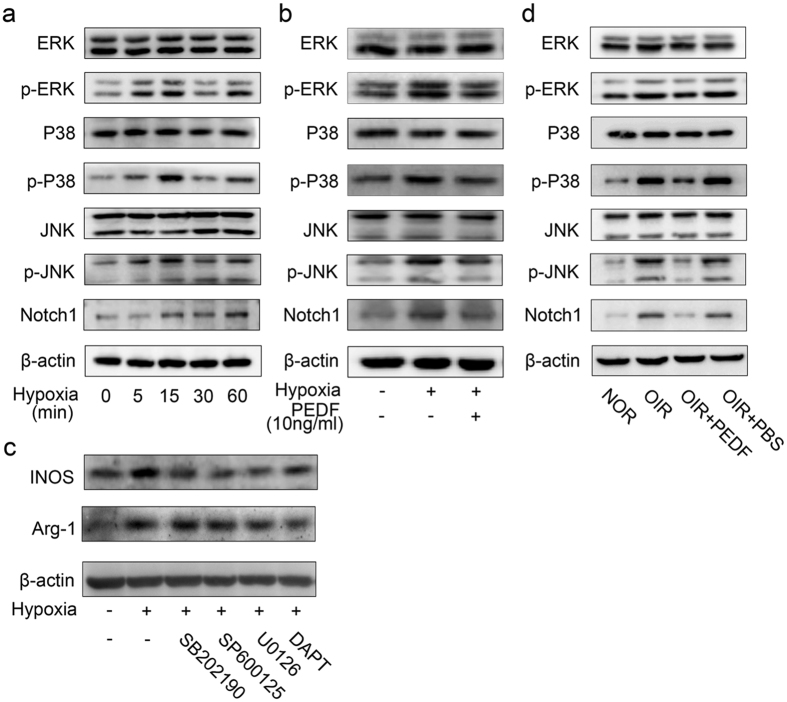
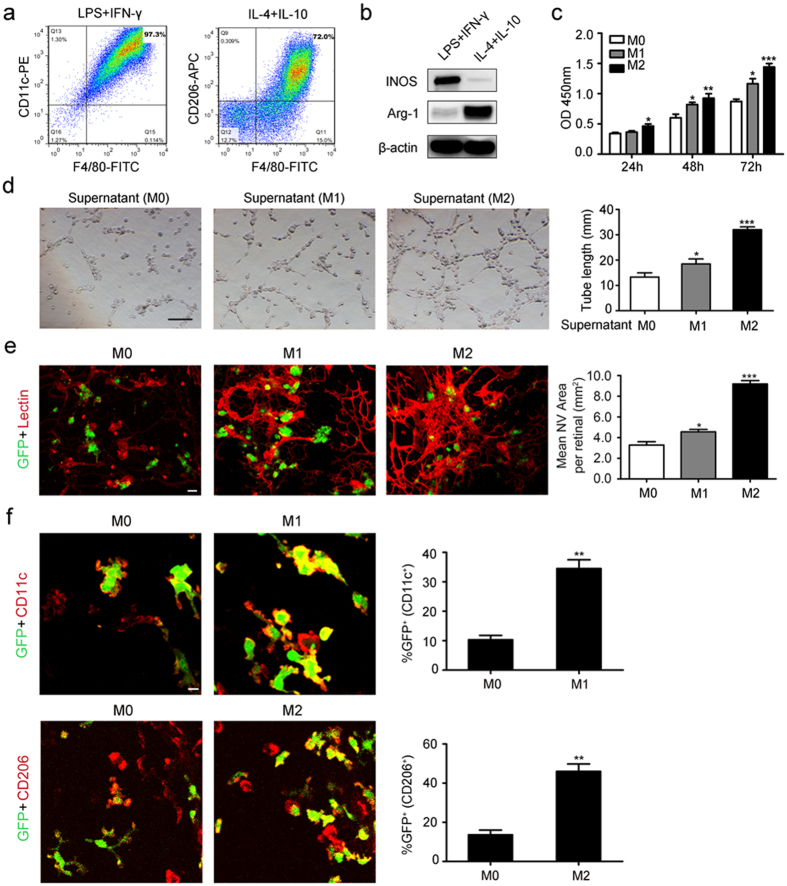
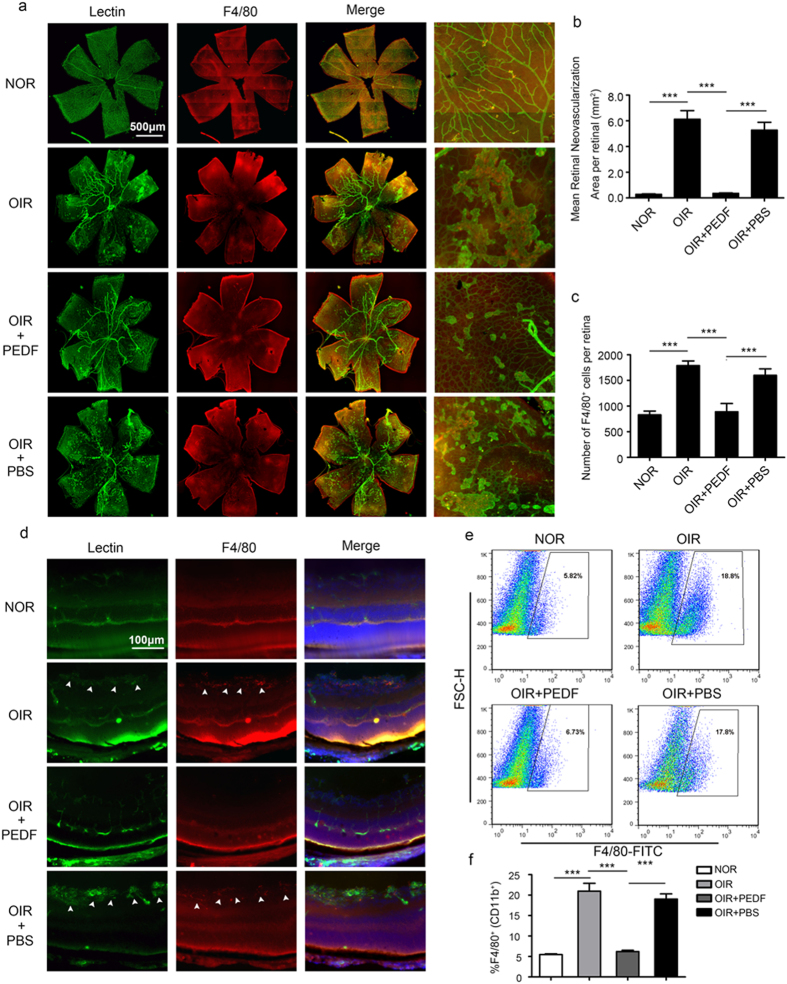
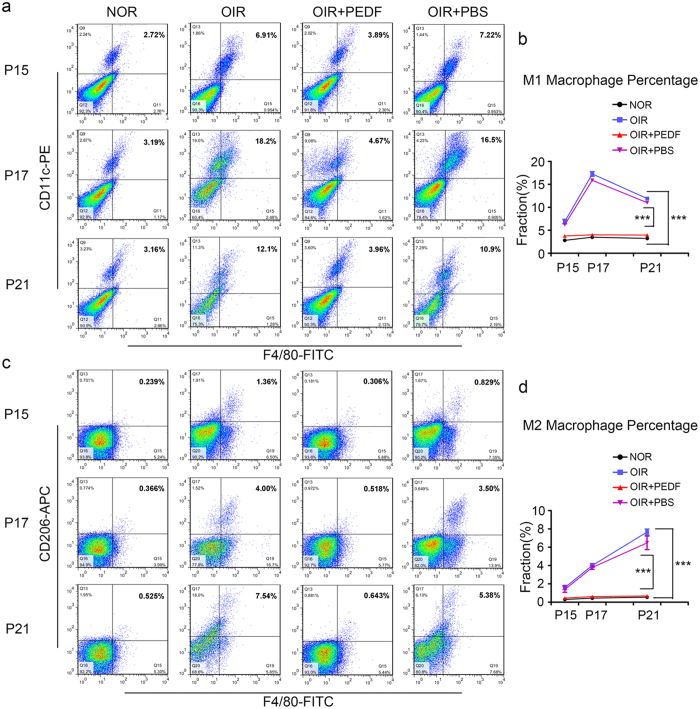
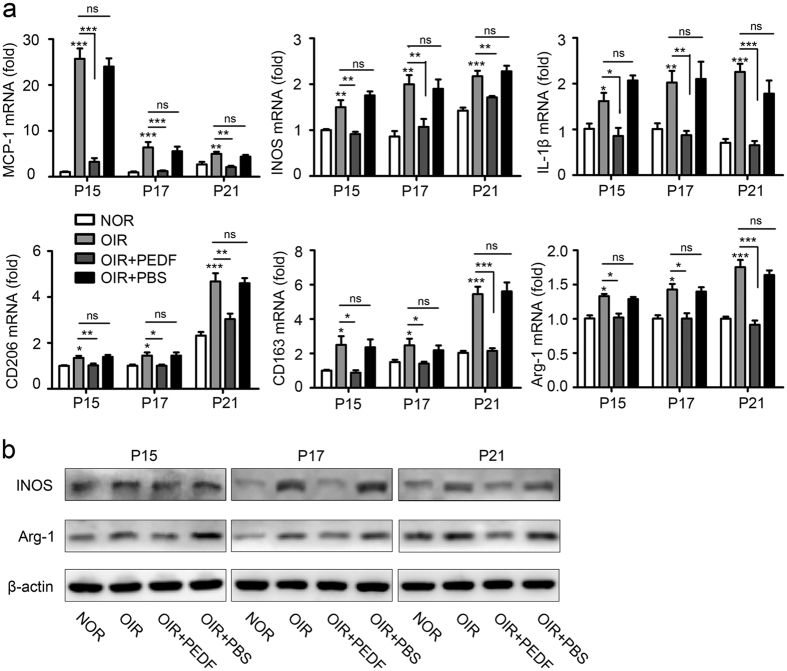
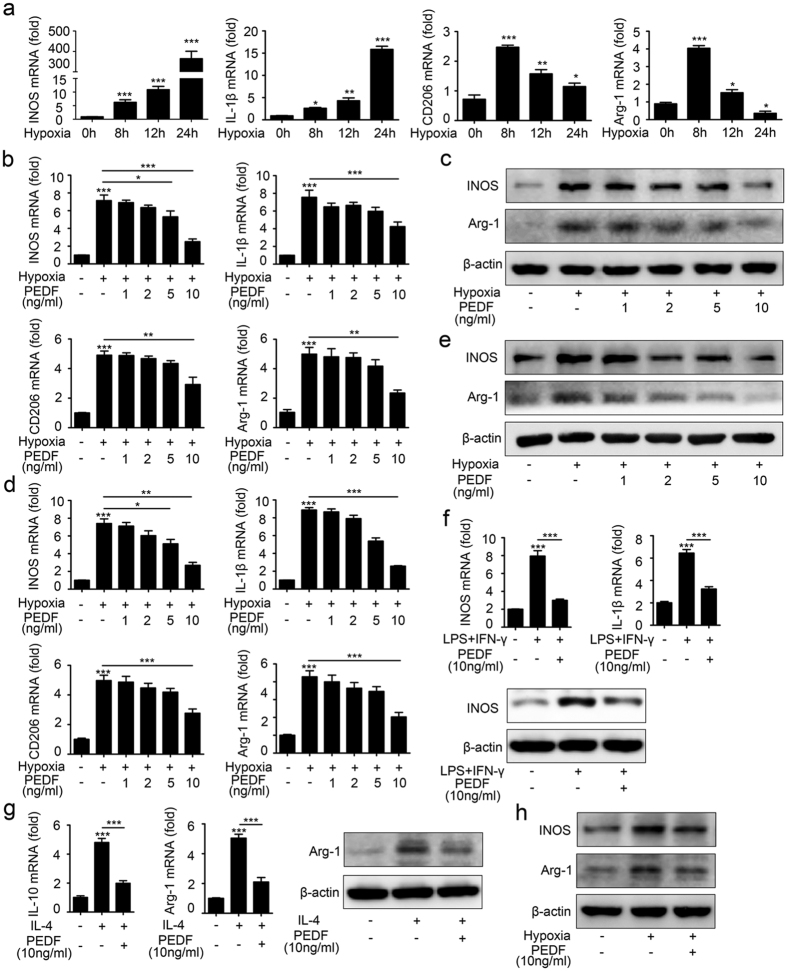
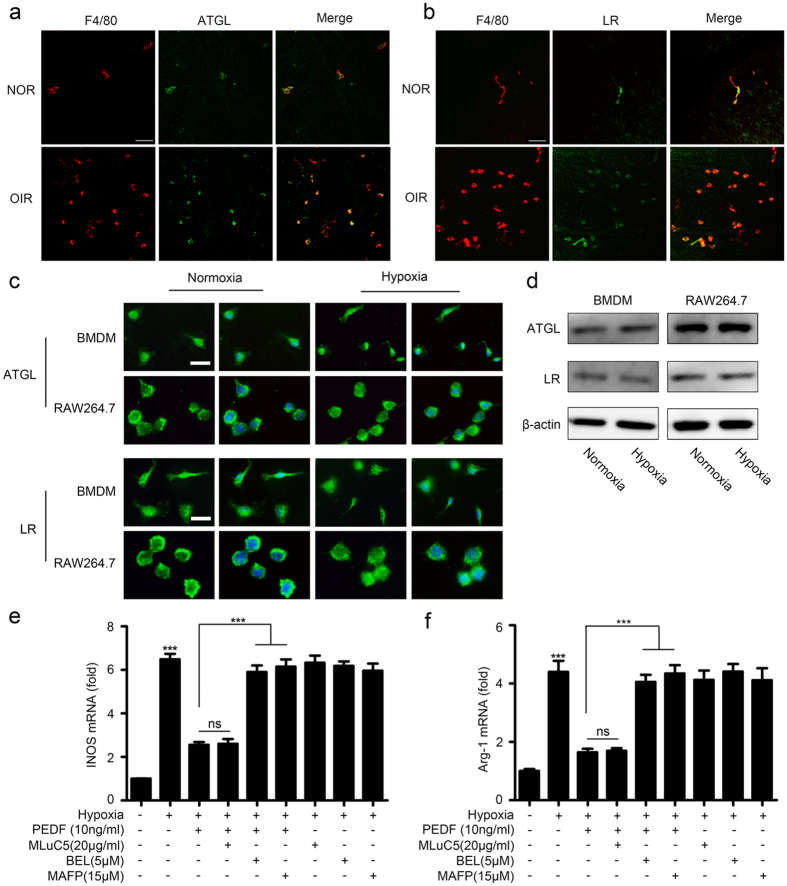
Macrophages have been demonstrated to play a proangiogenic role in retinal pathological vascular growth. Pigment epithelium-derived factor (PEDF) works as a powerful endogenous angiogenesis inhibitor, but its role in macrophage recruitment and polarization is largely unknown. To explore the underlying mechanisms, we first evaluated macrophage polarization in the retinas of the oxygen-induced retinopathy (OIR) mouse model. Compared to that in normal controls, M1- and M2-like macrophages were all abundantly increased in the retinas of OIR mice. In addition, both M1 and M2 subtypes significantly promoted neovascularization in vitro and in vivo. In addition, we found that PEDF inhibited retinal neovascularization by dampening macrophage recruitment and polarization. Furthermore, PEDF inhibited macrophage polarization through adipose triglyceride lipase (ATGL) by regulating the activation of MAPKs and the Notch1 pathway, as we found that the phosphorylation of MAPKs, including p38MAPK, JNK and ERK, as well as the accumulation of Notch1 were essential for hypoxia-induced macrophage polarization, while PEDF significantly dampened M1 subtype-related iNOS and M2 subtype-related Arg-1 expression by inhibiting hypoxia-induced activation of Notch1 and MAPKs through ATGL. These findings reveal a protective role of PEDF against retinal neovascularization by regulating macrophage recruitment and polarization.
巨噬细胞在视网膜病理性血管生长中发挥促血管生成作用已得到证实。色素上皮衍生因子(PEDF)作为一种强大的内源性血管生成抑制剂,但它在巨噬细胞募集和极化中的作用在很大程度上尚不清楚。为了探索潜在的机制,我们首先评估了氧诱导的视网膜病变(OIR)小鼠模型中视网膜的巨噬细胞极化。与正常对照组相比,OIR 小鼠视网膜中 M1 样和 M2 样巨噬细胞均大量增加。此外,M1 和 M2 两种亚型均显著促进体外和体内新生血管形成。此外,我们发现 PEDF 通过抑制巨噬细胞募集和极化来抑制视网膜新生血管形成。此外,PEDF 通过脂肪甘油三酯脂肪酶(ATGL)抑制巨噬细胞极化,通过调节 MAPKs 和 Notch1 通路的激活,因为我们发现 MAPKs 的磷酸化,包括 p38MAPK、JNK 和 ERK,以及 Notch1 的积累,对缺氧诱导的巨噬细胞极化至关重要,而 PEDF 通过抑制 Notch1 和 MAPKs 的缺氧诱导激活,通过 ATGL 显著抑制与 M1 亚型相关的 iNOS 和与 M2 亚型相关的 Arg-1 表达。这些发现揭示了 PEDF 通过调节巨噬细胞募集和极化来防止视网膜新生血管形成的保护作用。