Balduzzi Mathilde, Binder Brad M, Bucksch Alexander, Chang Cynthia, Hong Lilan, Iyer-Pascuzzi Anjali S, Pradal Christophe, Sparks Erin E
INRIA, Virtual Plants Montpellier, France.
Department of Biochemistry and Cellular and Molecular Biology, University of Tennessee-Knoxville Knoxville, TN, USA.
Front Plant Sci. 2017 Feb 3;8:117. doi: 10.3389/fpls.2017.00117. eCollection 2017.
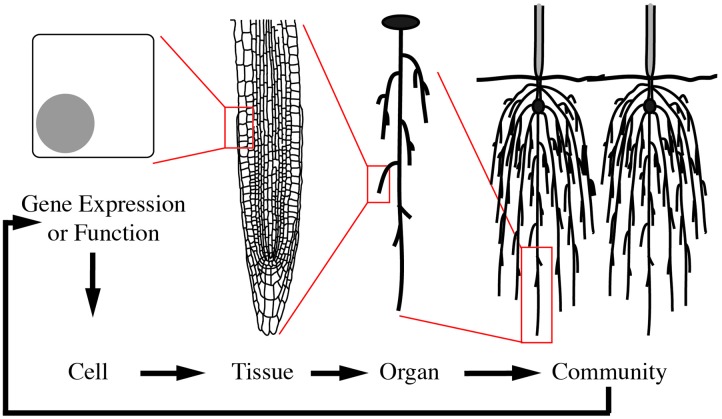
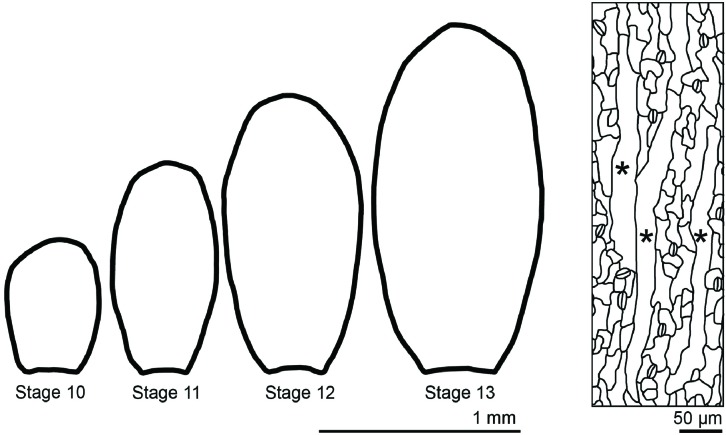
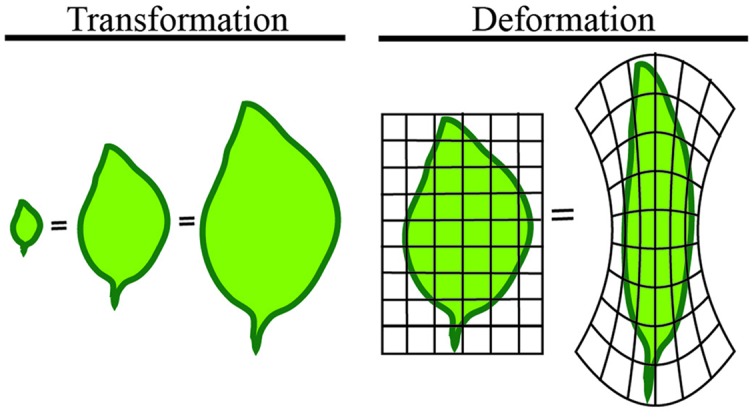
An emerging challenge in plant biology is to develop qualitative and quantitative measures to describe the appearance of plants through the integration of mathematics and biology. A major hurdle in developing these metrics is finding common terminology across fields. In this review, we define approaches for analyzing plant geometry, topology, and shape, and provide examples for how these terms have been and can be applied to plants. In leaf morphological quantifications both geometry and shape have been used to gain insight into leaf function and evolution. For the analysis of cell growth and expansion, we highlight the utility of geometric descriptors for understanding sepal and hypocotyl development. For branched structures, we describe how topology has been applied to quantify root system architecture to lend insight into root function. Lastly, we discuss the importance of using morphological descriptors in ecology to assess how communities interact, function, and respond within different environments. This review aims to provide a basic description of the mathematical principles underlying morphological quantifications.
植物生物学中一个新出现的挑战是通过整合数学和生物学来开发定性和定量的方法,以描述植物的外观。开发这些指标的一个主要障碍是在各个领域找到通用术语。在本综述中,我们定义了分析植物几何形状、拓扑结构和形态的方法,并举例说明这些术语如何应用于植物以及可以如何应用于植物。在叶片形态量化中,几何形状和形态都被用于深入了解叶片功能和进化。对于细胞生长和扩展的分析,我们强调几何描述符在理解萼片和下胚轴发育方面的作用。对于分支结构,我们描述了如何应用拓扑结构来量化根系结构,以便深入了解根系功能。最后,我们讨论了在生态学中使用形态描述符来评估群落如何在不同环境中相互作用、发挥功能和做出反应的重要性。本综述旨在对形态量化背后的数学原理进行基本描述。