Sakakibara Brodie M, Lear Scott A, Barr Susan I, Benavente Oscar, Goldsmith Charlie H, Silverberg Noah D, Yao Jennifer, Eng Janice J
Department of Physical Therapy, University of British Columbia, Vancouver, British Columbia, Canada; Faculty of Health Sciences, Simon Fraser University, Burnaby, British Columbia, Canada; Rehabilitation Research Program, Vancouver Coastal Health Research Institute, Vancouver, British Columbia, Canada.
Faculty of Health Sciences, Simon Fraser University, Burnaby, British Columbia, Canada; Division of Cardiology, Providence Health Care, Vancouver, British Columbia, Canada.
Arch Phys Med Rehabil. 2017 Jun;98(6):1195-1202. doi: 10.1016/j.apmr.2017.01.019. Epub 2017 Feb 20.
To describe the systematic development of the Stroke Coach, a theory- and evidence-based intervention to improve control of lifestyle behavior risk factors in patients with stroke.
Intervention development.
Community.
Individuals who have had a stroke.
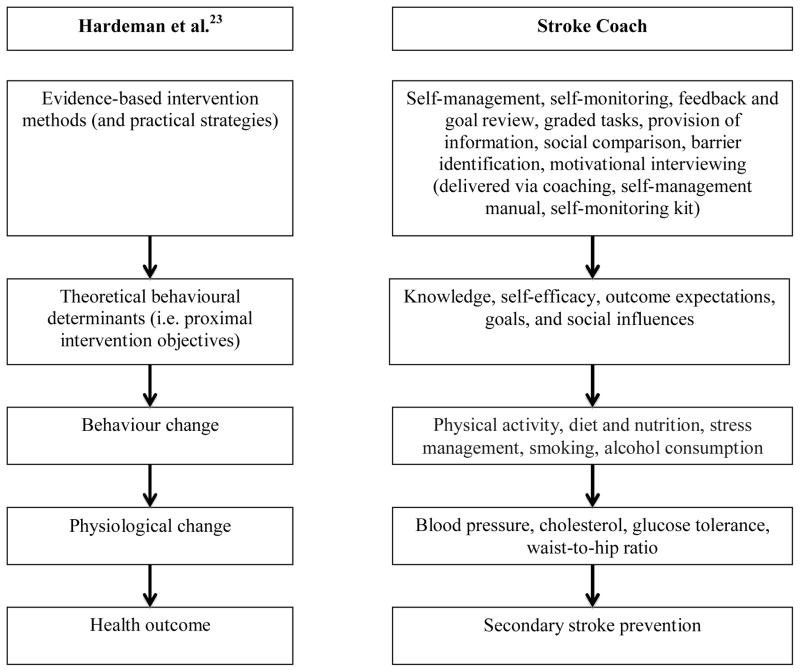
We used intervention mapping to guide the development of the Stroke Coach. Intervention mapping is a systematic process used for intervention development and composed of steps that progress from the integration of theory and evidence to the organization of realistic strategies to facilitate the development of a practical intervention supported by empirical evidence. Social cognitive theory was the underlying premise for behavior change, whereas control theory methods were directed toward sustaining the changes to ensure long-term health benefits. Practical evidence-based strategies were linked to behavioral determinants to improve stroke risk factor control.
Not applicable.
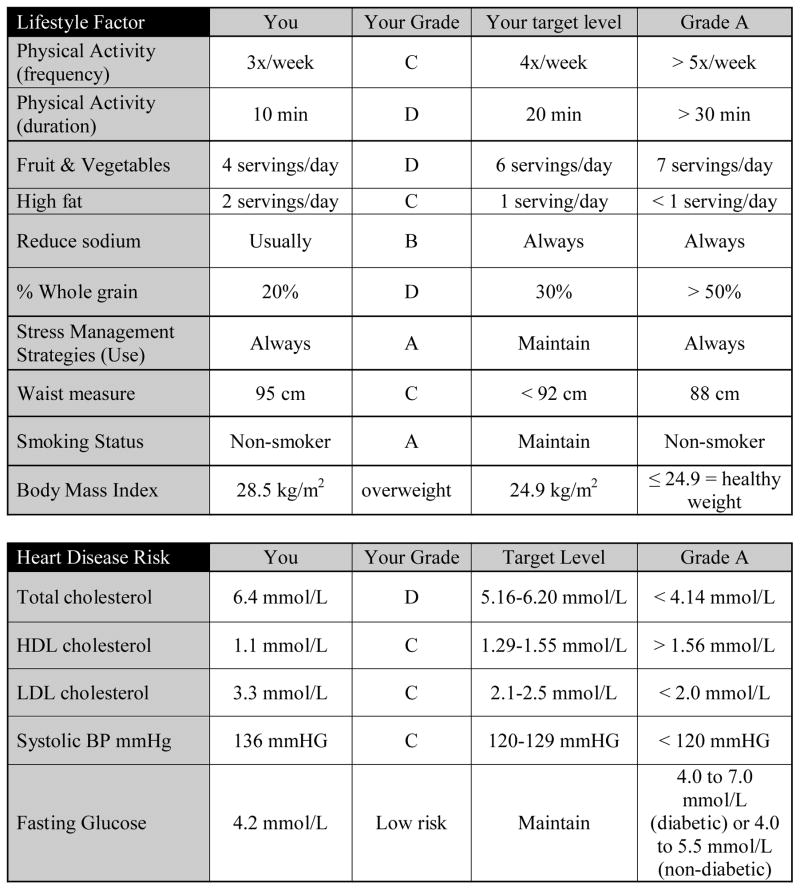
The Stroke Coach is a patient-centered, community-based, telehealth intervention to promote healthy lifestyles after stroke. Over 6 months, participants receive seven 30- to 60-minute telephone sessions with a lifestyle coach who provides education, facilitates motivation for lifestyle modification, and empowers participants to self-management their stroke risk factors. Participants also receive a self-management manual and a self-monitoring kit.
Through the use of intervention mapping, we developed a theoretically sound and evidence-grounded intervention to improve risk factor control in patients with stroke. If empirical evaluation of the Stroke Coach produces positive results, the next step will be to develop an implementation intervention to ensure successful uptake and delivery of the program in community and outpatient settings.
描述中风教练(Stroke Coach)的系统开发过程,这是一种基于理论和证据的干预措施,旨在改善中风患者对生活方式行为风险因素的控制。
干预措施开发。
社区。
中风患者。
我们使用干预映射法来指导中风教练的开发。干预映射法是一种用于干预措施开发的系统过程,由一系列步骤组成,这些步骤从理论与证据的整合逐步推进到切实可行策略的组织,以促进开发出有实证依据支持的实用干预措施。社会认知理论是行为改变的基本前提,而控制理论方法则旨在维持这些改变,以确保获得长期的健康益处。基于实际证据的策略与行为决定因素相关联,以改善中风风险因素的控制。
不适用。
中风教练是一种以患者为中心、基于社区的远程医疗干预措施,用于促进中风后的健康生活方式。在6个月的时间里,参与者会与一名生活方式教练进行七次30至60分钟的电话沟通,教练会提供教育、促进改变生活方式的动力,并使参与者能够自我管理中风风险因素。参与者还会收到一本自我管理手册和一套自我监测工具包。
通过使用干预映射法,我们开发出了一种理论上合理且有证据支持的干预措施,以改善中风患者的风险因素控制。如果对中风教练的实证评估产生积极结果,下一步将是开发一种实施干预措施,以确保该项目在社区和门诊环境中能够成功被采用并实施。