Hamaoui Alain, Alamini-Rodrigues Caroline
Laboratoire de Physiologie de la Posture et du Mouvement, Centre universitaire de formation et de recherche Jean-François ChampollionAlbi, France; Laboratoire Mouvement, Equilibre, Performance, Santé (EA 4445), Université de Pau et des Pays de l'AdourTarbes, France.
Laboratoire Mouvement, Equilibre, Performance, Santé (EA 4445), Université de Pau et des Pays de l'Adour Tarbes, France.
Front Hum Neurosci. 2017 Feb 6;11:32. doi: 10.3389/fnhum.2017.00032. eCollection 2017.
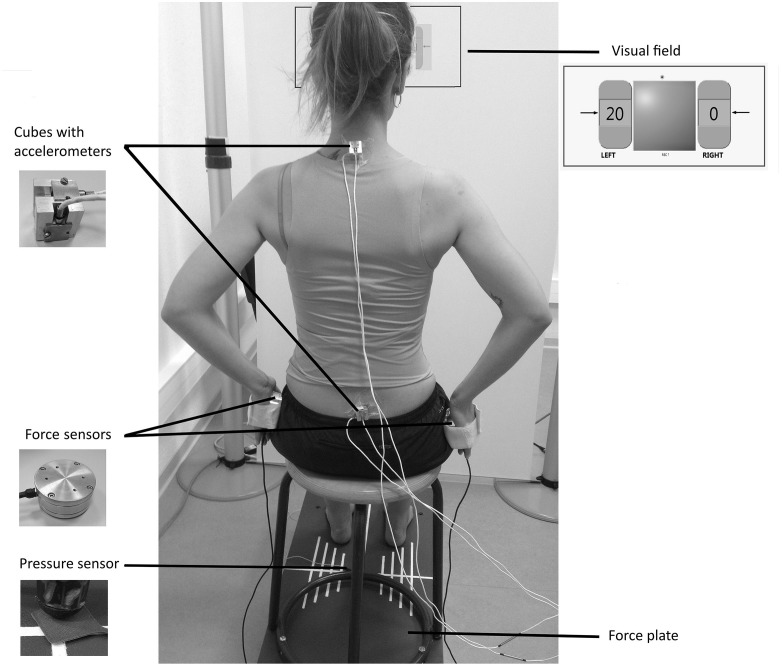
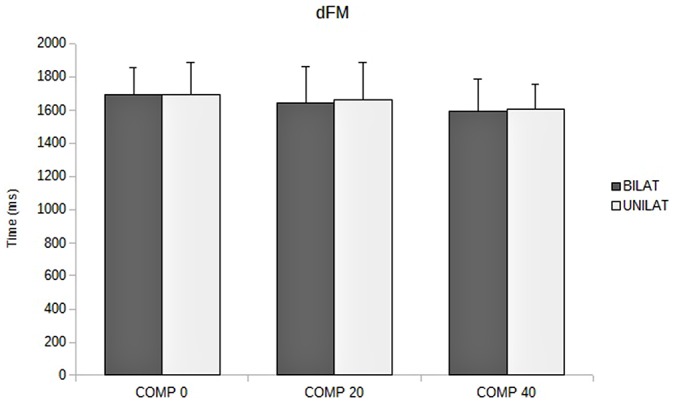
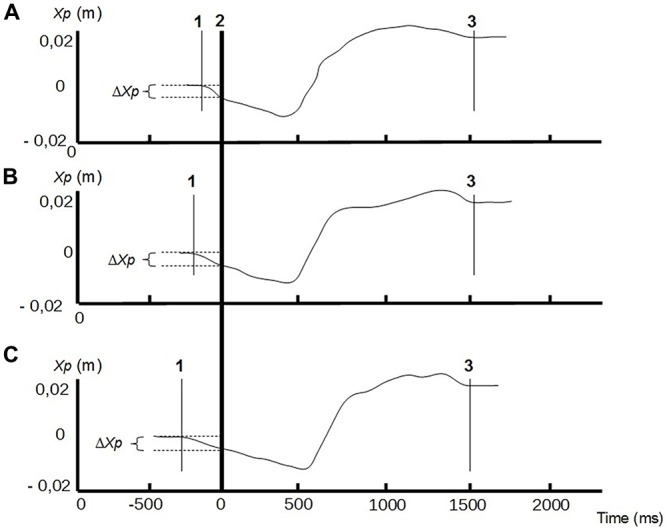
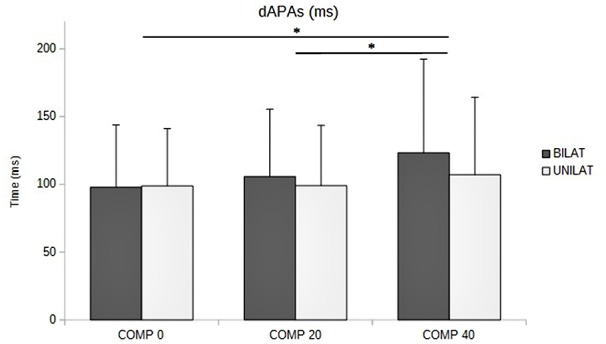
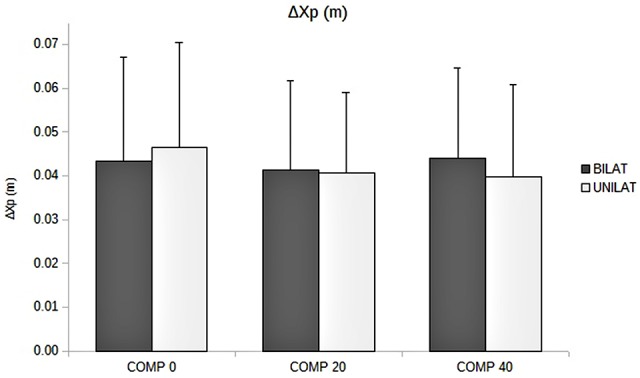
It has been shown that increased muscular activity along the trunk is likely to impair body balance, but there is little knowledge about its consequences on more dynamic tasks. The purpose of this study was to determine the effect of unilateral and bilateral increases of muscular tension along the trunk on the sit-to-stand task (STS) performance and associated anticipatory postural adjustments (APAs). Twelve healthy females (23 ± 3 years, 163 ± 0.06 cm, 56 ± 9 kg), free of any neurological or musculoskeletal disorders, performed six trials of the STS at maximum speed, in seven experimental conditions varying the muscular tension along each side of the trunk, using a specific bimanual compressive load paradigm. A six-channel force plate was used to calculate the coordinates of the center of pressure (CP) along the anterior-posterior and medial-lateral axes, and the kinematics of the head, spine and pelvis, were estimated using three pairs of uni-axial accelerometers. The postural and focal components of the task were assessed using three biomechanical parameters calculated from CP signals: the duration and magnitude of APAs, and the duration of focal movement (dFM). Results showed that beyond a given level, higher muscular tension along the trunk results in longer APAs, but with a stable duration of the focal movement. In addition, no significant variation of APAs and FM parameters was found between bilateral and unilateral increases of muscular tension. It was suggested that restricted mobility due to higher muscular tension along the trunk requires an adaptation of the programming of APAs to keep the same level of performance in the STS task. These findings may have implications in treatment strategies aimed at preserving functional autonomy in pathologies including a rise of muscular tension.
研究表明,躯干肌肉活动增加可能会损害身体平衡,但对于其在更具动态性的任务中的后果却知之甚少。本研究的目的是确定躯干肌肉张力单侧和双侧增加对坐立任务(STS)表现及相关预期姿势调整(APA)的影响。12名健康女性(年龄23±3岁,身高163±0.06厘米,体重56±9千克),无任何神经或肌肉骨骼疾病,在七种实验条件下以最大速度进行六次STS试验,这些条件改变了躯干两侧的肌肉张力,采用特定的双手压缩负荷范式。使用六通道测力台计算压力中心(CP)沿前后轴和内外侧轴的坐标,并使用三对单轴加速度计估计头部、脊柱和骨盆的运动学。使用从CP信号计算出的三个生物力学参数评估任务的姿势和焦点成分:APA的持续时间和幅度,以及焦点运动(dFM)的持续时间。结果表明,超过给定水平后,躯干更高的肌肉张力会导致更长的APA,但焦点运动的持续时间保持稳定。此外,在肌肉张力的双侧和单侧增加之间,未发现APA和FM参数有显著变化。研究表明,由于躯干肌肉张力较高导致的活动受限需要对APA编程进行调整,以在STS任务中保持相同的表现水平。这些发现可能对旨在保持包括肌肉张力升高在内的病理状态下功能自主性的治疗策略具有启示意义。